Police ‘School Liaison Officer’ Agreement Reached

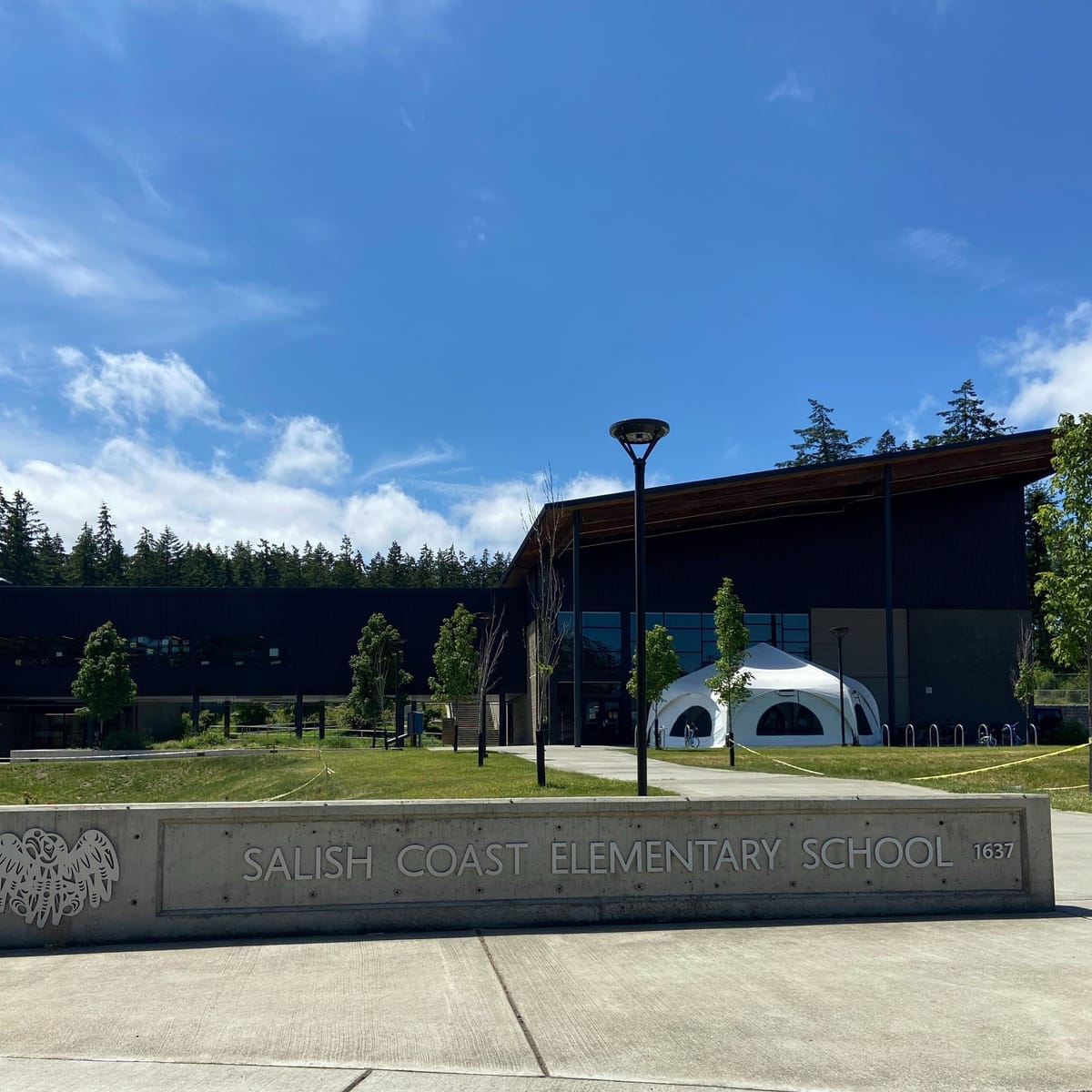
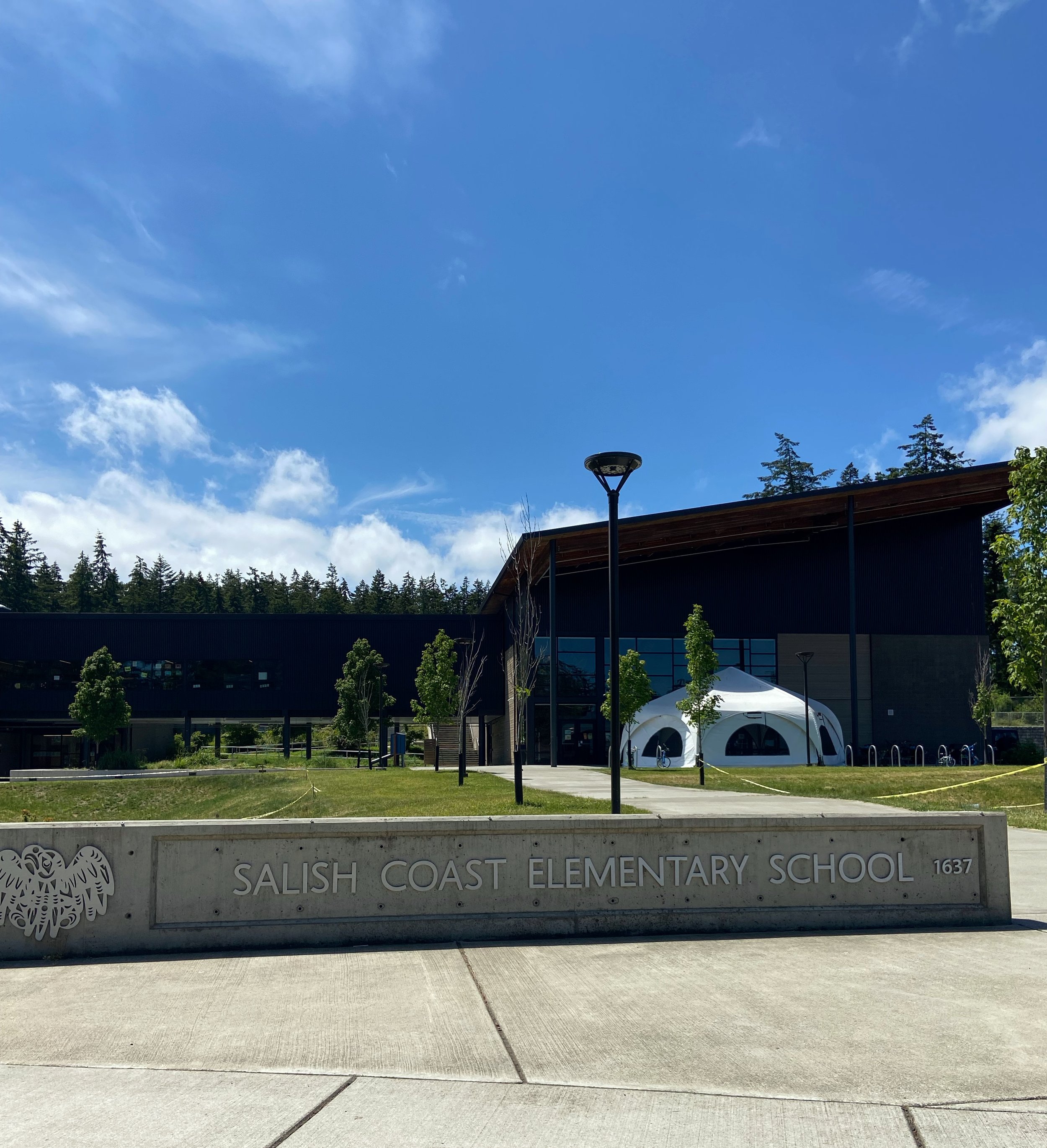
A School Liaison Officer has already been working on a trial basis in the Port Townsend School District, including at Salish Coast Elementary. Photo by Nhatt Nichols. [/caption]
BY Nhatt Nichols
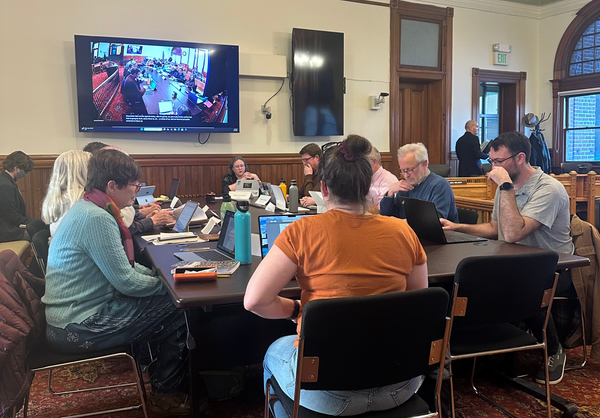
After taking time to consider public opinion and the limited police resources, on Monday the 16th, the city council voted to give city manager John Mauro the power to sign an agreement between the Port Townsend Police Department and the Port Townsend School District. This agreement consists of assigning a School Liaison Officer (SLO) to work in the school district, instead of the initially proposed School Resource Officer (SRO).
There hasn’t been a police presence in the schools since 2021 due to the police department being understaffed. With enough officers to bring a police presence back to the schools for the 2024 school year, Superintendent Linda Rosenbury brought the discussion to the public in May. Parents and community members present at that meeting brought up concerns over having an armed and uniformed officer patrolling the schools. After taking their concerns into consideration, further discussions took place over the summer.
“We had two different round tables where the city manager, the police chief, the supervised sergeant, and the officer interested in the school position, a school board member, myself, and leaders from all of our four schools talked through situations we've had over the past three years and how we'd like to partner to support students,” Rosenbury said.
The SLO will be one officer assigned to the schools but will not be embedded in the schools full-time. Instead, they will be the primary officer making site visits, responding to calls from the schools, and fulfilling any other legal requirements the school may have for law enforcement, including the mandatory reporting of sexual assault or when students want to report something to the police.
One other marked change is that the SLO will not be in the school without first reporting to the office, and staff and students will be made aware when the officer is in the school. At public meetings, one primary concern was that there would be an armed, uniformed police officer routinely in the school, creating a police presence that many parents were concerned about.
Rosenbury said, “I think the hardest part was talking about whether the person would be armed, and we could not adjust the fact that the police officer who comes to the schools would need to be uniformed and armed because our police department is so short staffed and every second counts in an emergency.”
The school district hopes that the SLO program will not require students to interact with the officer if they do not feel comfortable doing so.
“We don't want this to be like a police officer goes and sits down with a group of students in the cafeteria. That's not what this role is. This police officer might be in the cafeteria and students approach them for conversation, but they're not forcing students into conversation they're not comfortable with.”
Though the SLO will not be on campus without reason, they will be coming into classes to provide proactive education, such as situational awareness training for students on how to be aware when walking in their neighborhood, cyberbullying, and the definition of sex crimes. The schools have found that in previous years, high schoolers didn't always know certain age limits and what it meant for them to be involved in relationships or to share photos.
According to Rosenbury, student body president Zen Cook was concerned that the principal would notify the counselors and students if a police officer came into a classroom and talked about sensitive topics, feedback that the School District has taken on.
The SLO program will be reviewed on an annual basis, which includes looking at data from interactions between the SLO and students that led to any police action. They are tracking the demographics of student age, race, gender, and whether or not they qualify for special education services to ensure there aren’t any discrimination patterns. At the annual review, school leaders, students, and the community will have the opportunity to provide input, and the program will be adjusted for the following school year. In the meantime, Rosenbury wants to assure the public that “if there's any adult student or family member who believes the SLO has not treated their child appropriately, there's a complaint process that's outlined in the agreements, and we will take that very seriously and work with SLO to make improvements .”