Port Commission Approves Increased Docking Fees and Limits Cruise Ship Traffic Amid Community Concerns

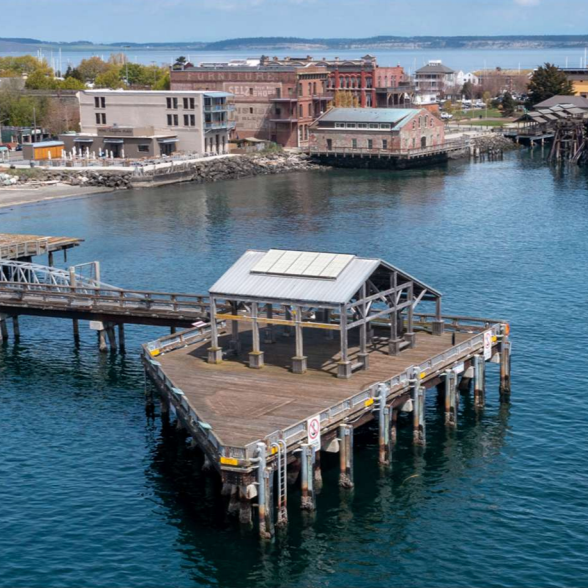
[caption id align="alignnone" width="1179"]
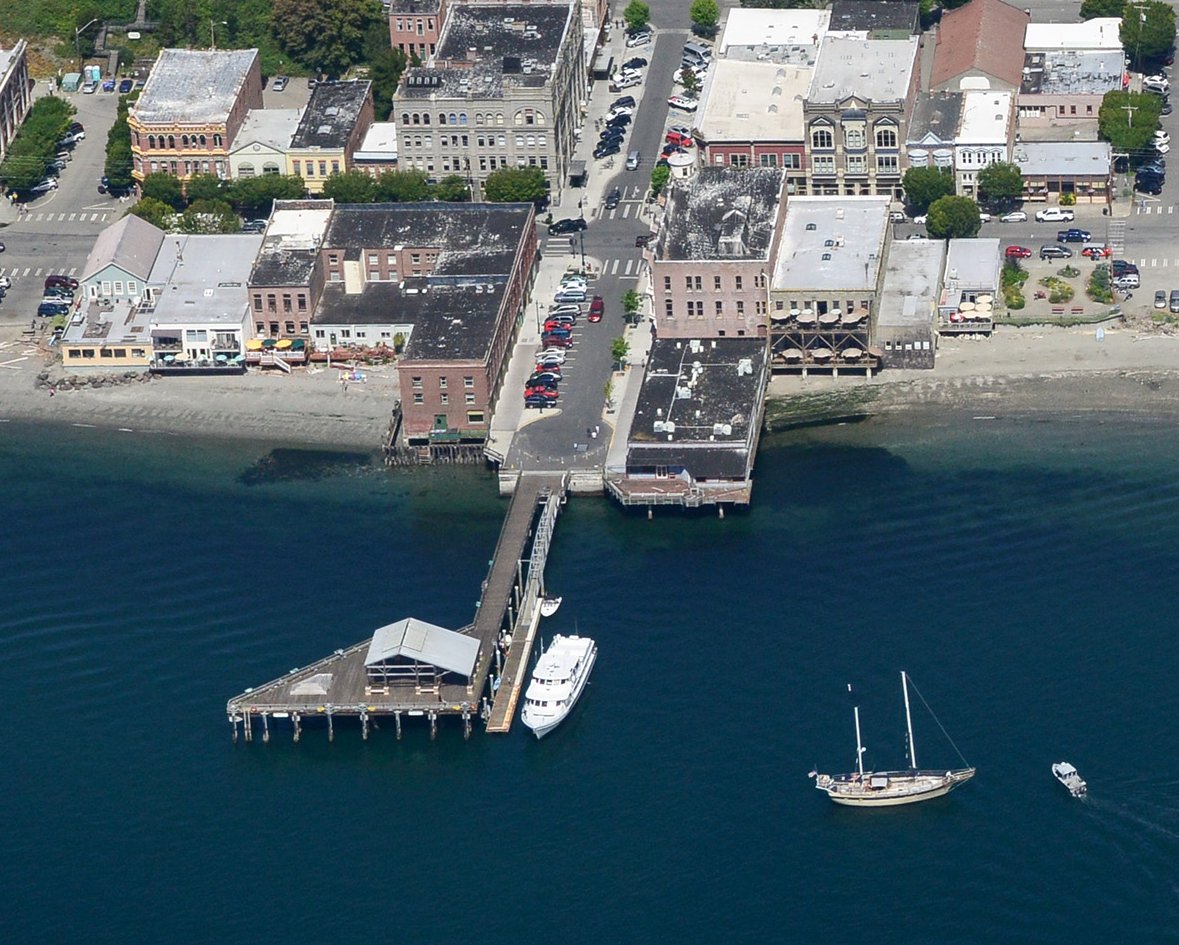
Union Warf. Photo courtesy of the Port of Port Townsend [/caption]
News by Angela Downs
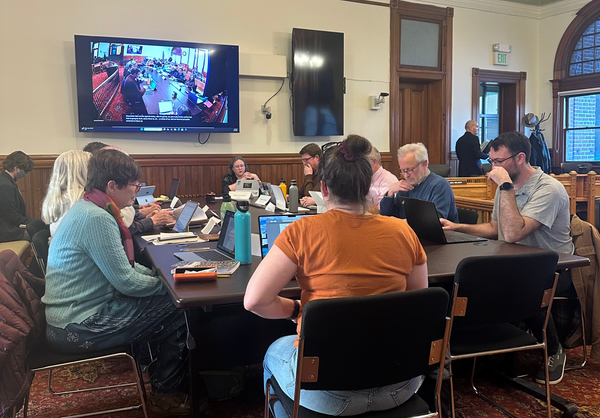
After a proposed increase in cruise line traffic caused some public concern, the port commission voted, on November 12, to increase the fee for a cruise ship docking at Union Wharf to $2000 starting January 1. They also decided to limit dockings to 40 per year.
The Port’s main revenue comes from rates and fees, not from taxpayers. Facilities must operate to finance upkeep and maintenance, including at Union Wharf.
Historically used for trade, Union Wharf was originally designed and constructed to accommodate the docking of larger vessels and the short-term moorage of large commercial passenger vessels.
“One of the things that we're all committed to as commissioners is to make certain that the public has access to get out on the water,” Port Commissioner Carol Hasse said.
Access has always been a priority, and at times, a problem for Port Townsend. The Port inherited cruise ship traffic when it took over the City Pier and Union Wharf as part of a 2012 litigation settlement agreement with the City of Port Townsend.
American Cruise Lines (ACL) is the largest American-based cruise ship operator and a private company. They're responsible for everything related to the cruise, and the Port provides a docking facility for them. They have been the primary company docking at Union Wharf since 2013 and are charged the Port’s docking rate per night. There is no formal contract.
Between April and August, they reserve a space and, in the past, pay the Port $1,200 a night. In those five months in 2025, they paid $31,517 to tie up at Union Wharf. May was their biggest month; ACL spent over $10,000 to dock two boats a week.
[caption id align="alignnone" width="1200"]
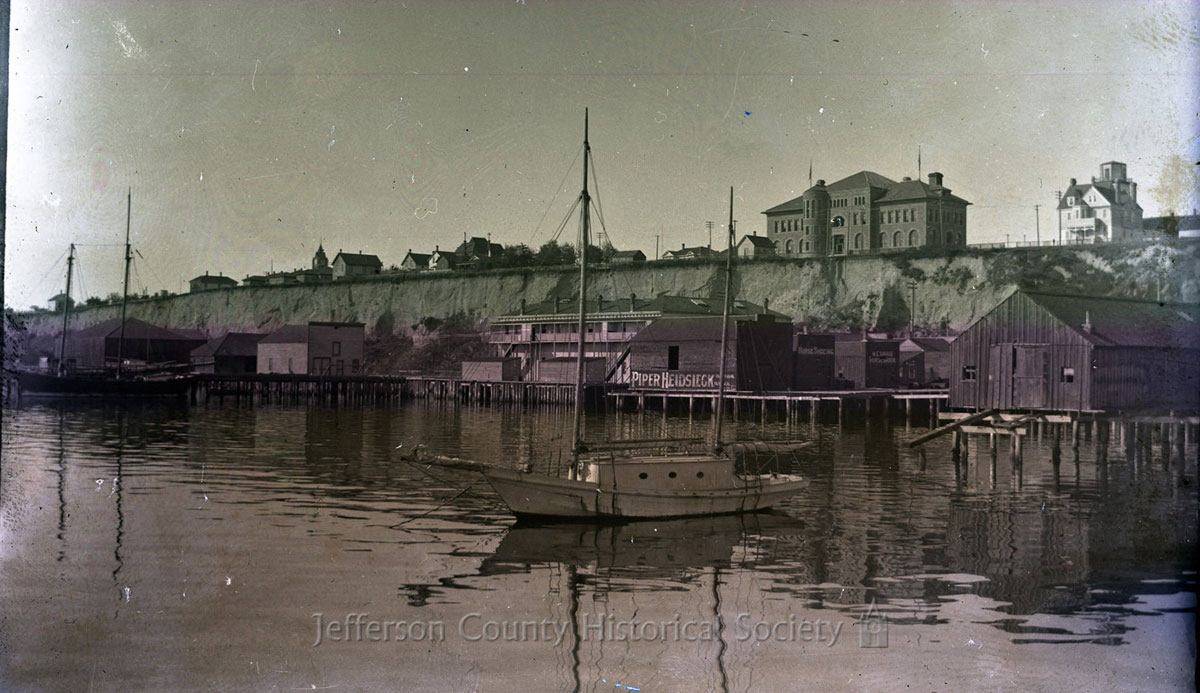
Union Warf is a large part of Port Townsend’s historical identity. Photo courtesy Port Towsend Historical Society [/caption]
A typical boat has about 100 passengers; its largest capacity is 180 passengers. But the future of American Cruise Lines is building smaller boats. They produce a 100-passenger boat every four months. They want smaller boats, more often.
“With the new rates, I expect ACL to pay about $80,000 next year,” said Eron Berg, the Ports Executive Director.
It’s important to note that the Port cannot prevent cruise ships from tendering their passengers from open-water anchorage.
“We asked Main Street to conduct a survey about whether or not the cruises are helpful economically,” said Berg. “If it's not something that downtown businesses want, then I'm not particularly thinking it's the best thing for town. But if the downtown businesses get a lot out of it, and they're of a size, don't leave garbage here, or use utilities, they aren’t a problem,”
The results of both the PT Mainstreet survey and a privately conducted informal survey were shared at the Port Commission's November 12 meeting.
“The businesses here are homegrown, individual human beings with a passion, a skill, a dream and and are exercising that one of the great gifts in our country, this ability to have your own business in which everything is gender blind, age blind. It's all about what you make and whether or not that is something that's desired. This town thrives on making things of quality, beauty, and function, " said Hasse.
Survey shows cruise ships perceived to offer negligible benefits
According to the PT Mainstreet survey, 40% said they supported the increased number of small cruises, 32% said no, and 27% said they needed more information. 24% are not currently tracking whether revenue increases when the cruises come in, but 32% said yes, there is an increase in revenue, and 44% said there is no increase in revenue.
Many who supported the increase in cruise ship traffic felt it was a good way to attract non-driving visitors and felt it strengthened Port Townsend's identity as a tourist destination. Importantly, they felt it was an opportunity for ACL passengers to return on their own and generate lodging tax, sales tax benefits and that small ACL ships fit the character of the town.
[caption id align="alignnone" width="1430"]
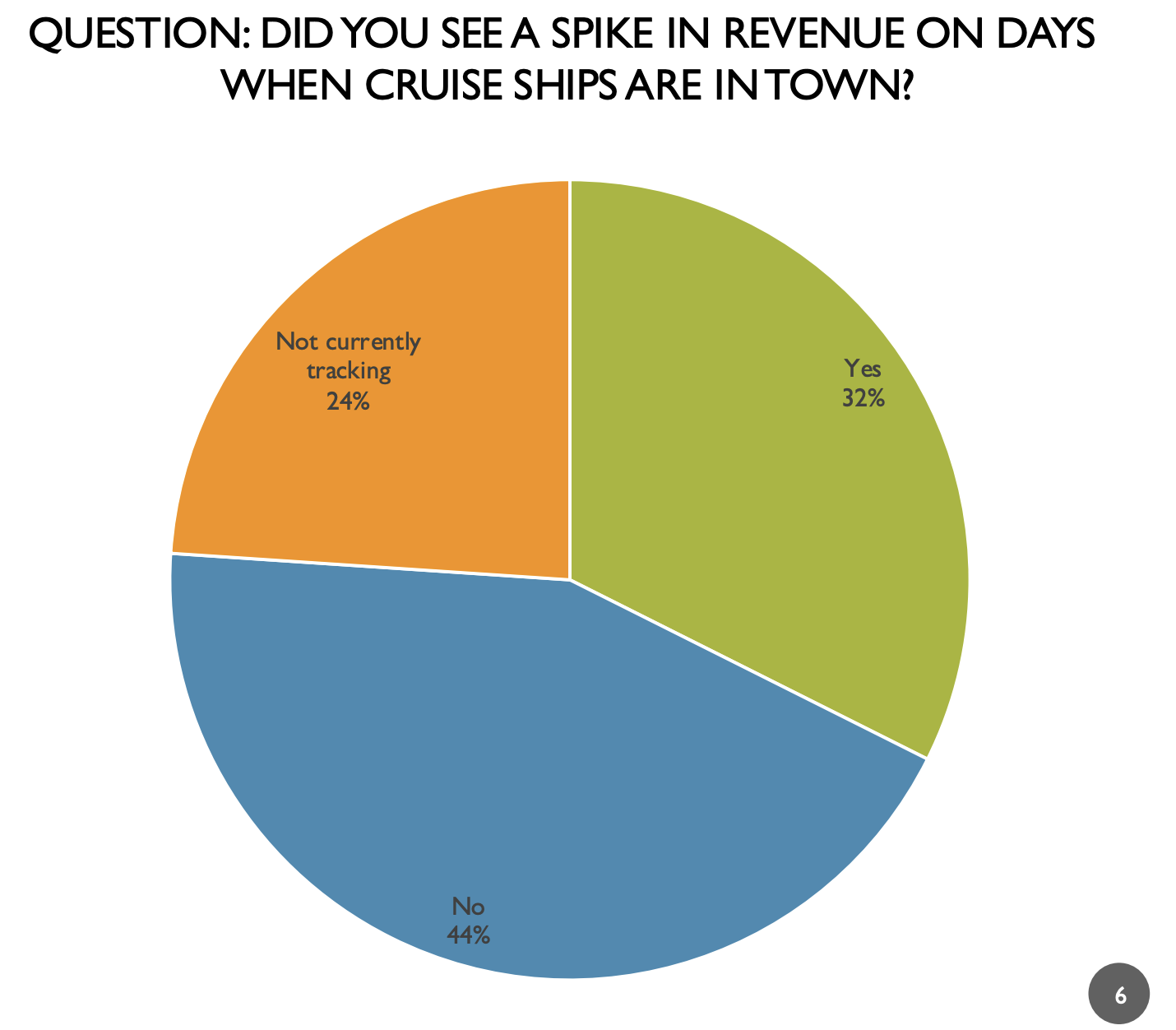
Pie chart from PT Main Street’s survey of downtown business owners [/caption]
Around 35% of the commenters expressed opposition to expanding port calls over concerns of environmental risks, the visual impact of a boat sitting on the wharf and overcrowding of businesses. Around 20% of mixed-support respondents shared they were open to more off-season port calls, but wary of summer crowding.
“Please consider, more remarkably, the delicate balance of our at-risk orca pods, gray whales, sea kelp, plankton, etc., faced with the potential for constant ship traffic on the Sound,” a survey participant said.
Common concerns were that Port Townsend lacks the infrastructure to handle more passengers. Repeated comments called for transparency between ACL, the Port and residents. Skeptics questioned the positive economic impacts, given that lodging and food is provided on the ship.
41.4% of people may not like the ships, but did not want to remove the potential to help town businesses at critical times of the year, and wanted cruise visitation during shoulder season only. Many complained that town businesses cater too much to tourism now and residents avoid Water Street in particular.
Another survey participant said, “My business serves as an essential supply resource for our town and the region; however, I'm troubled by the way that local support for my business and Water Street in general has suffered in direct proportion to the waves of tourist traffic flowing off the boats and roaming the streets.”
Though the increase in fees seems like a pragmatic solution to keeping the wharf sustainable without overwhelming the town, Berg also feels sentimental about the role cruise ships play in Port Townsend. “At least, for me, not sure that everybody feels that there's some romantic connection,” He said. “But I kind of love the idea that we're still using that place to draw people to and from town, even if they're just going for a boat ride.”