Port Hadlock Residents’ Right to a Speedy Trial Challenge A Success


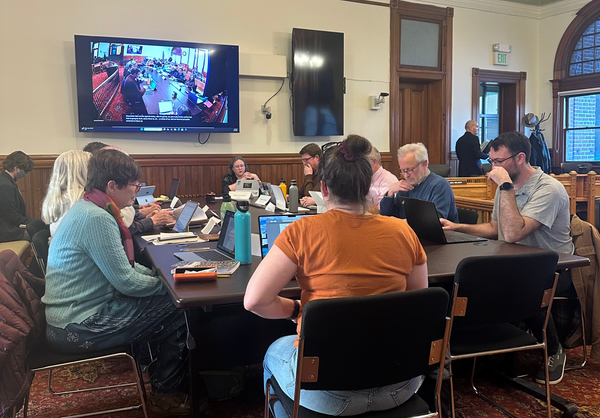
[caption id align="alignnone" width="2838"]

Photo by Nhatt Nichols [/caption]
News by Angela Downs
Ty Hodge, a longtime resident of Port Hadlock, had been charged with a series of misdemeanor-level crimes in the District Court, including fourth-degree assault, mischief, and disorderly conduct. Hodge, arrested April 14, 2025, was set to appear in court July 10, three days before the 90-day Speedy Trial rule was set to expire.
The Constitution structures our politics, providing us with the protection we have for our fundamental rights. Issues of fairness, efficiency, and access to justice are constant negotiations when navigating the Criminal Justice System.
The Speedy Trial Act sets two clear time limits: formal accusations must follow within 30 days of arrest, and a trial must begin within 70 days of indictment or arraignment.
The right to a speedy trial is a foundational Federal law guaranteed by the 6th Amendment, though it has variations within each state. For example, in Washington State, if a defendant is in custody, they must be brought to trial within 60 days; those not in custody have 90 days.
Because the ramifications of delay can be so damaging to the prosecuted, state delays are weighed heavily. Federal law dictates that violations of the right to a speedy trial result in a case dismissal.
A week before Hodge’s trial date, prosecutor Chris Ashcroft requested a continuance —a legal request to postpone the trial —because they had not yet subpoenaed their witness, a police officer who was unavailable on the scheduled trial date.
Judge Mindy Walker granted the continuance and set a new trial date for July 17, which falls after Hodge’s speedy trial expiration date of July 13.
Delays continue with a new prosecution strategy
A week before Hodge’s new trial date, the prosecutor filed to dismiss the case without prejudice in district court, meaning they could re-file charges.
Which they did, but this time in the superior court. The escalation was based on a new damage report of the offence. This meant that Hodge was charged with a felony instead of a misdemeanor, and the prosecutor wanted to reset the 90-day speedy trial timeline.
Hodge’s defense team, led by attorney Jack Range, had been prepared to go to trial since July 10. Psychological and emotional distress while living with a pending trial, even if a defendant is not incarcerated, is one reason why the Speedy Trial laws exist.
The US Supreme Court has explicitly recognized that it is important to minimize the prolonged uncertainty that comes with awaiting trial. Long waits can affect the defendant’s health, relationships and professional life.
The courts consider delays with harm in these areas to be significant prejudice. If prejudice is found in any speedy trial case, then the case is dismissed.
The right to a speedy trial
The case that formed our modern understanding of a right to a speedy trial, Barker vs. Wingo, was a 1972 Supreme Court case where the defendant experienced a five-year delay between his arrest and trial.
The case established a balancing test for discerning whether a defendant's right to speedy trial has been violated through four factors: length of delay with timeline beginning at the arrest, reason for delay, evidence of prejudice, and if the accused asserted their right early and often.
The accused must prove early and often assertion of their right to a speedy trial on record in court, or through filing motions requesting the case be set for trial.
Proof one suffered prejudice can include lost evidence, lost witnesses (death), prolonged detention without conviction, or anxiety and concern suffered because of the delay.
Delays are an unfortunate reality of the criminal justice system. Common reasons for delays include the high number of cases filed, staff shortages in both the court system and the prosecutor's office, and the fact that there simply aren’t enough courts. Routine delays are not considered damaging.
Asking the court for a speedy trial may result in a harsher sentencing. Lawyers can also decide to delay a case as a tactical and strategic choice for more favorable plea bargains, evidence gathering, and argument of isolated incidents with accumulated mitigating evidence (clean urine samples, improved work history, furthering education, etc.).
Hodge’s ticking clock
On Friday, August 8, in Jefferson County Superior Court, before Superior Court Judge Brandon Mack, Hodge’s defense attorney, Jack Range, argued to preserve the original speedy trial date and asked the court not to restart the trial clock.
The state prosecutor argued they were inundated with cases, leading to the previous extensions, and asked for a two-week extension, stating they hadn’t had time to respond to the defence’s recent correspondence.
Superior Court Judge Brendan Mack granted the state one week with reluctance, “To be most respectful would have been to respond [to defense correspondence]."
Because Hodge was not in custody, Mack did not see prejudice, but said, “The Court recognizes the inconvenience of uncertainty and waiting with charges weighing over your head can be stressful.“
The hearing was rescheduled a week later to Friday, 15, with Mack preceding.
The defense opened with the request of analysis under Criminal Rule 3.3, meant to ensure timely justice.
“It is our position, still, that speedy trial ran on July 13, 2025, and as a result of that, we are asking this court to dismiss this case,” said Range. “There is insufficient evidence that the state provided that there ever was a continuance allowed because of requiring the administration of justice without prejudice."
Drawing inferences from the minutes, Mack agreed, “I just don't have a whole lot of records there separately to give the court the opportunity to say the state was just doing the best they could under the circumstance.”
There was, however, evidence of Hodge objecting to the motions of continuance, a key action in the four considerations of the Barker vs Wingo test.
“Maybe the state will appeal the Court, but I'm going to grant the dismissal,” Mack ruled,
The state’s dismissal and refiling on the same day makes for a unique case. “I'd love the court of appeals to weigh in on it,” Mack said. “How in the world do you calculate everything we've been talking about?”