Port Townsend Relaxes Code to Ease Path to Develop Homeless Encampment

[caption id align="alignnone" width="3472"]
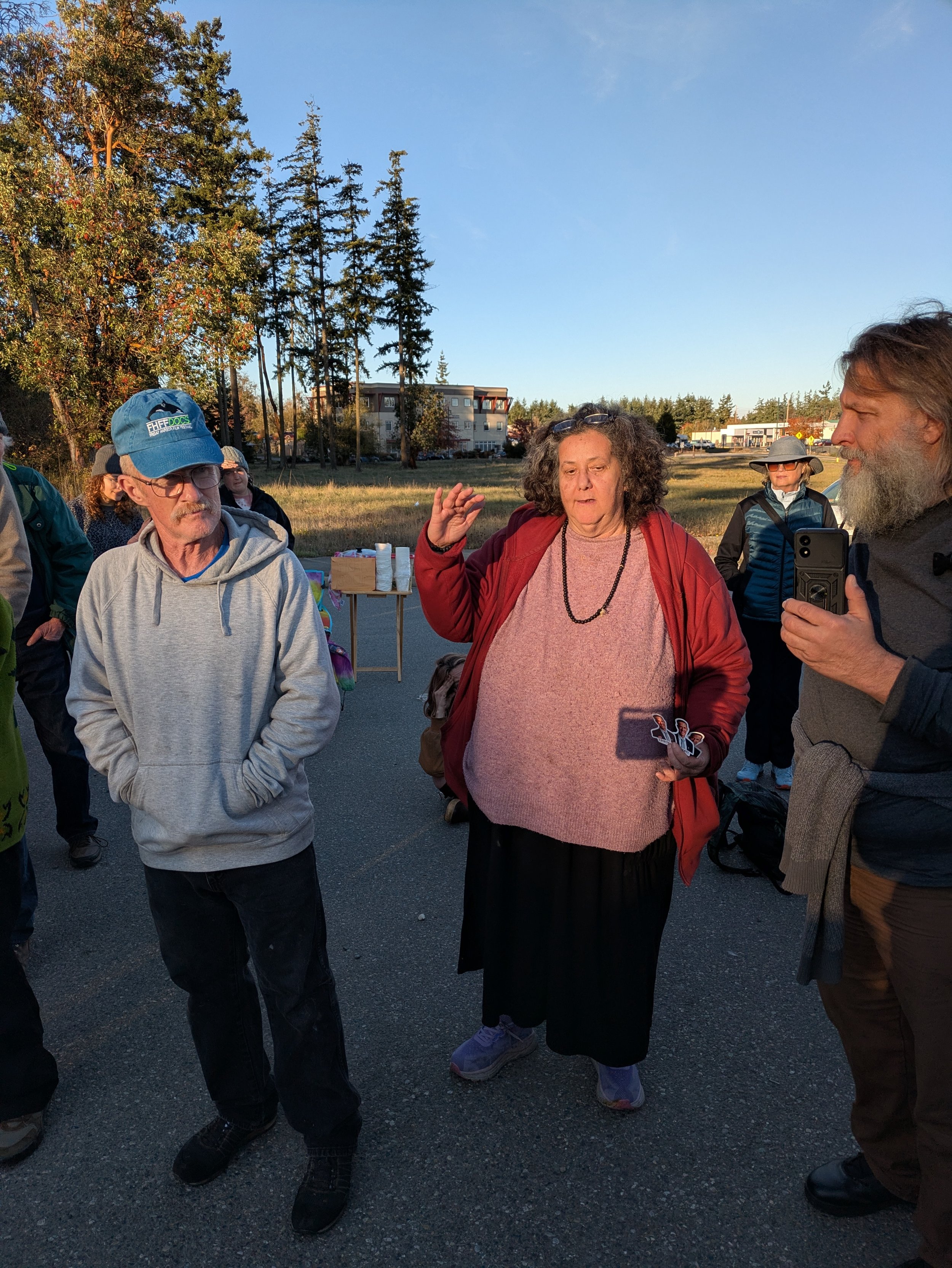
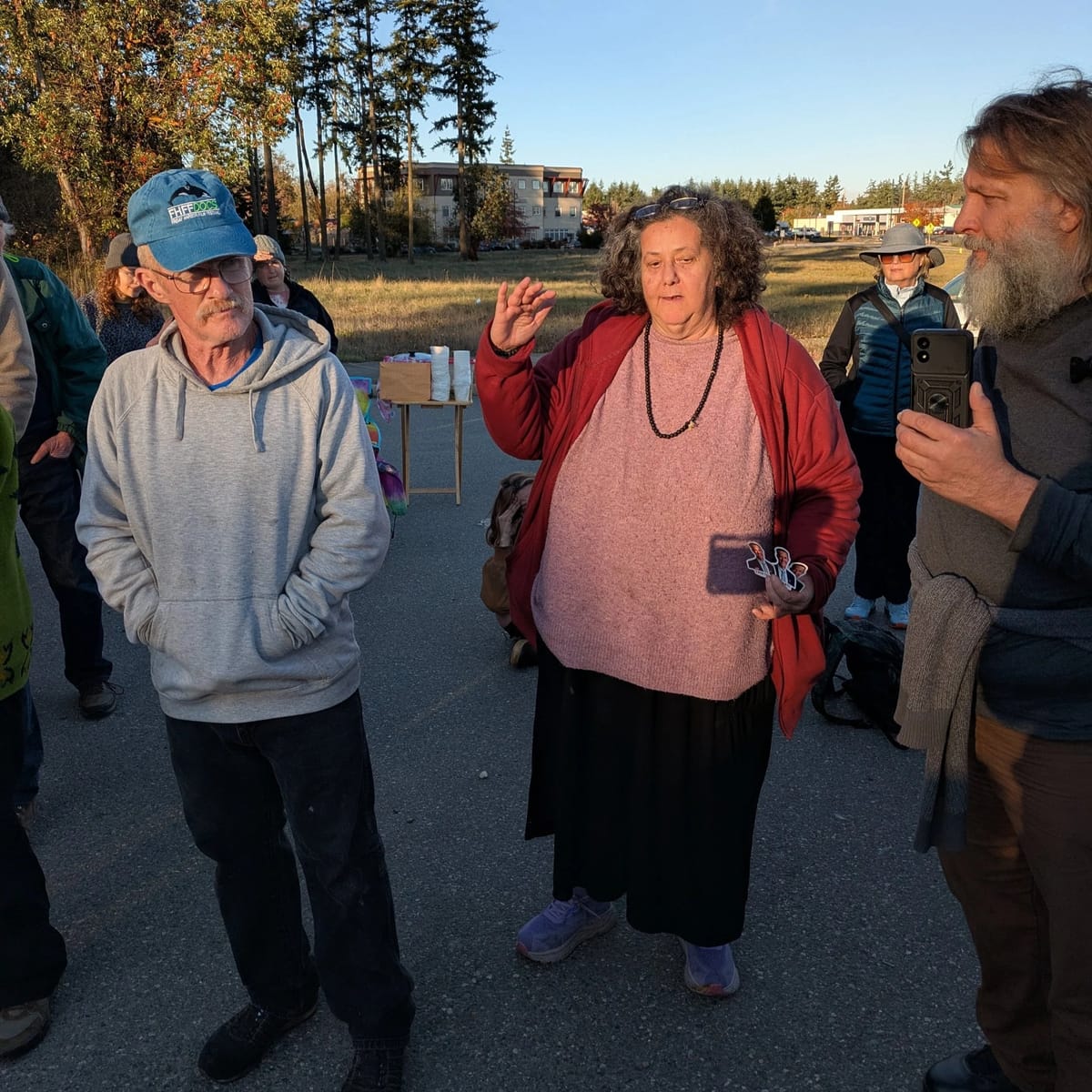
An injuction filed by Michele Goodwin (pictured), an encampment resident, has temporarily halted the encampment closure. Photo by Scott France [/caption]
News by Scott France
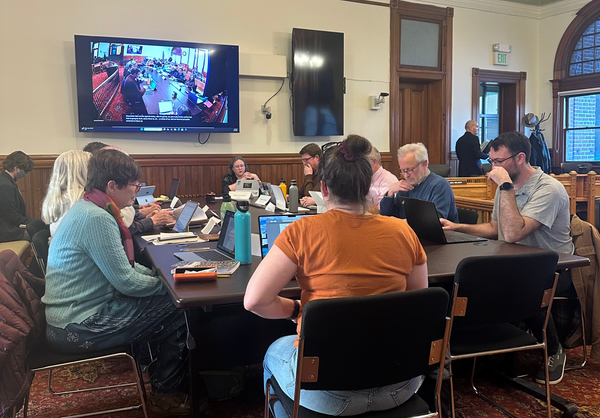
The City of Port Townsend voted in a special City Council meeting tonight to change the City code to facilitate an easier permitting process for establishing a supported homeless encampment.
“We want to make sure we are authorizing the lowest possible barrier to shelters,” Mayor David Faber said.
The vote culminated a tension-filled week that began with a groundswell of opposition, voiced during the public comment session at last Monday’s City Council meeting, to the City’s intention to close the Evans Vista homeless encampment on November 3.
On October 23, Judge Brandon Mack of the Jefferson County Superior Court reserved judgment on an injunction set to be heard on Friday*, stating that the City be “temporarily restrained and enjoined from closing, sweeping, or otherwise dismantling the Evans Vista encampment” in response to a lawsuit filed by Michele Goodwin, an encampment resident, to halt the encampment closure.
Since City manager John Mauro announced in mid-September, the November 3 closure date, opposition has grown among homeless services providers, encampment residents, others with lived homeless experience and Jefferson County citizens.
*Correction: article originally stated that the Judge issued an injunction, when he merely reserved judgement on an injunction set for Friday, October 31.
Closure Timing Challenged on Moral Grounds
While most acknowledge the unsuitability of this site for an encampment, objections have mostly focused on the timing of the edict coming as winter is approaching, as well as the City’s low level of collaboration with homeless residents, advocates and providers to develop transition solutions.
Even Mayor David Faber joined the chorus of morally-based objections at last Monday’s Council meeting.
“I agree on a moral basis that if there is not a solution identified, moving that encampment is not morally justified,” Faber said. At the same time, we need service providers to do the job of getting the people into a different location.”
Faber asserted that the “Council has a very limited capacity to do anything outside of nuclear options which would be incredibly destructive. We’re a legislative body— a policy-making body—we’re not executives in our own right.”
[caption id align="alignnone" width="4624"]
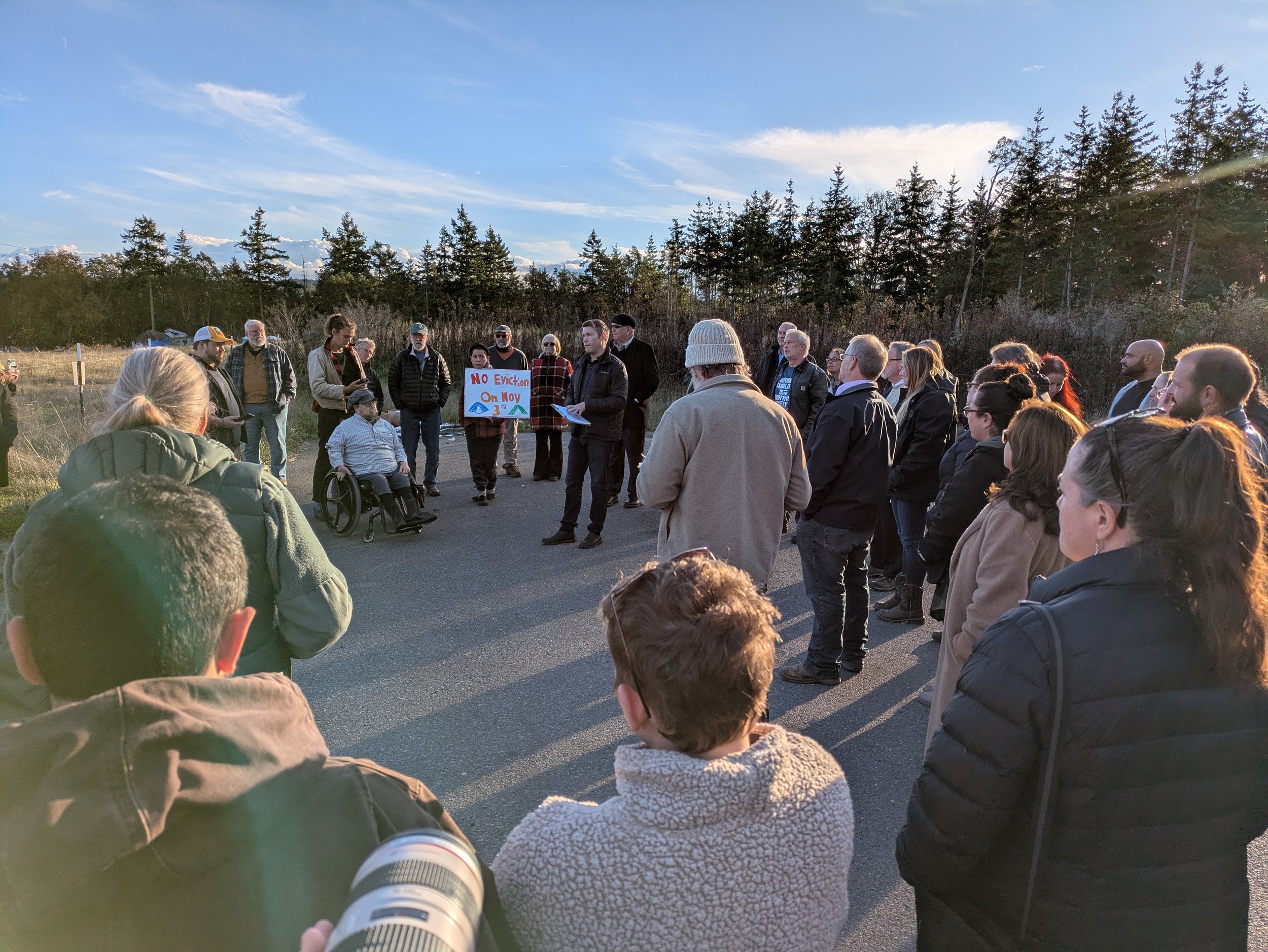
Mayer Faber at the Evans Vista site. Photo by Scott France [/caption]
Today’s special meeting of the City Council occurred in two parts. It commenced at the Evans Vista site so that encampment residents could more easily attend and speak in a setting that is more easily accessible and comfortable than the council chambers. Most of the local service providers attended. The second phase of the special meeting took place in the council chambers.
Many of the Evan’s Vista attendees who spoke asserted that disbanding the camp without a plan would severely endanger the residents, many of whom are struggling with physical or mental health issues.
“I cannot explain to you how it feels to be homeless in this town, to have anyone notice me and not see right through me,” said Blanchard Alice, who is now housed. “I am a business owner, a hard worker, and this happened to me while I was working 80 hours a week and employing others. This town eats people alive. If that hasn’t been your experience, folks, come talk to one of us.”
Several employees of the providers expressed incredulity at their coworkers' reactions when the City announced the closure. “Why are they doing this to us?" said one who noted that they work hard, long hours for low pay in service to the most disadvantaged in our community.
Holly Morgan, executive director of Olympic Community Action Program (OlyCAP), said the City’s September announcement was delivered with little to no effort by the city to participate in discussions or planning.
“These are people living day by day, doing their best just to survive,” Morgan said. “A move such as this demands the time for thoughtful planning initiated by the city and engaging not only service providers but the residents themselves and we just didn't get that in this situation. The impact on residents, providers and advocates has been pretty stressful - when the city points fingers and alludes to the idea that providers should have already gotten these folks housed given that the encampment has been around for a period of years now it seems very disingenuous.”
Morgan added that since the encampment sweep was announced, Olycap has sent case managers to the encampment to conduct vulnerability assessments and capture individuals’ risk and protective factors. They found some of the highest vulnerability scorers they have ever seen. “These folks are at very high risk and in very great need of supportive assistance,” Morgan said.
What’s Next?
A key impediment to developing a viable encampment site was a rather restrictive city code. Providers like OlyCAP and Bayside Housing Services, which owns some vacant land in town can now expedite a process toward developing a permanent encampment site.
The city code change will surely be the hot topic of discussion beginning tomorrow, and for as long as it takes to arrive at the best possible, implementable solution
City planning director Emma Bolin said at tonight‘s Council meeting that the new permitting measure will require that Sani-cans or permanent toilets be established, as well as trash facilities. There will also be rules regarding food preparation and storage.
Faber said that he expects “some pretty notable backlash from parts of the community for letting homeless people live near them. “I think that is a risk worth taking,” he said
Vice Mayor Amy Howard recalled that when Pat’s Place, a tiny home homeless shelter community, was being discussed during City Council meetings, the chamber was “filled with people who were super upset that there would be homeless people in a family neighborhood. It’s literally in my backyard. It’s been nothing but a benefit to have people there.”