Port Townsend Students Receive Messages of Empowerment and Cultural Diversity from Native Americans’ Hip Hop Performances

[caption id align="alignnone" width="4512"]
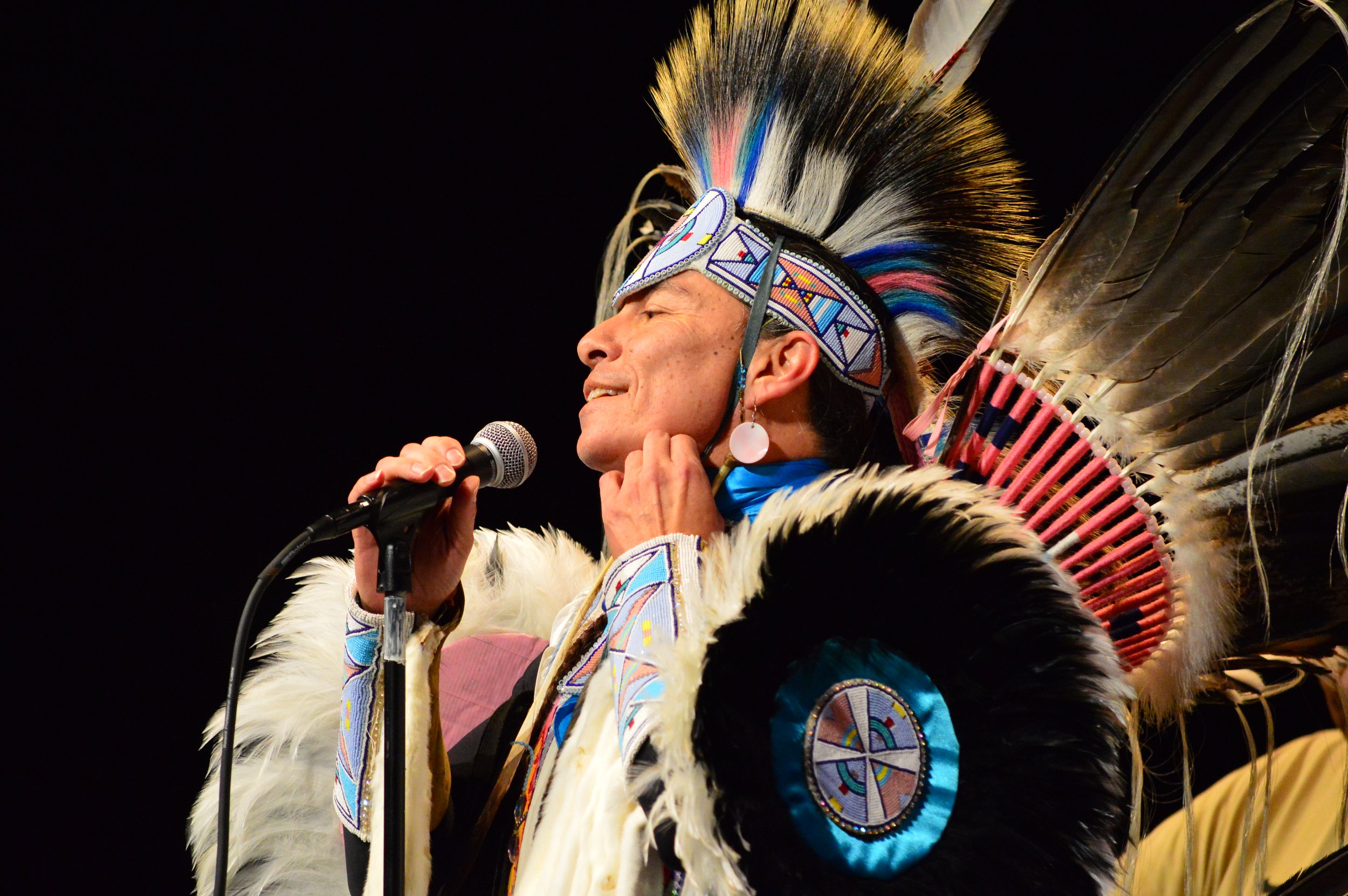
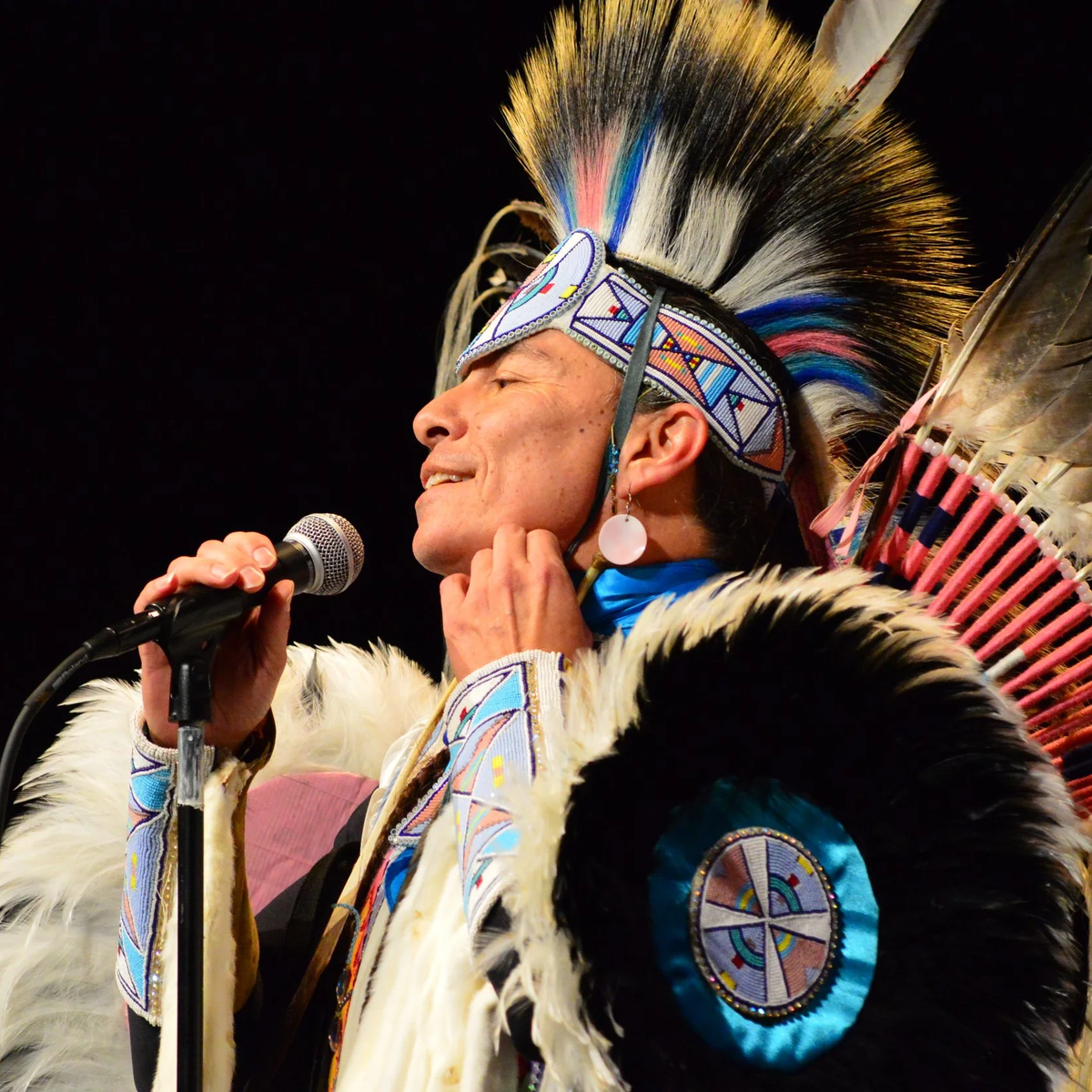
Supaman brought a message of joy and Indigenous pride to Port Townsend High School on Thursday evening. photo by Diane Urbani de la Paz [/caption]
News by Scott France
Port Townsend elementary, middle and high school students were treated to a lesson in cultural fusion on November 20 with the music and talks of an Apsaalooka Nation member who goes by the stage name, Supaman.
To the accompaniment of his partner, DJ Element, Supaman danced and rapped in his full Native regalia during 45-minute sets at each of the three Port Townsend schools. He also performed two music shows at Port Townsend High School that evening for the school community and the community at large.
The assemblies and performances consisted of songs showcasing a blend of hip-hop and native music. He peppered his talks with the importance of living proactively.
“You gotta take action for your knowledge,” Supaman told an audience of about 200 students and teachers at the Blue Heron Middle School, who he energized and kept engaged with call-and-response songs. “Read some books. Talk to elders. Gain knowledge and grow. Don’t ever stop growing. Don’t ever stop reading. Listen to all kinds of perspectives.”
Supaman grew up on the Apsaalooke Nation in Montana, also called the Crow Nation, which he says is a mistranslation.
“It’s a culturally rich tribe culture that I participated in, but hip-hop came later for me, which I really related to,” Supaman told The Beacon between sets at Blue Heron.
[caption id align="alignnone" width="4512"]
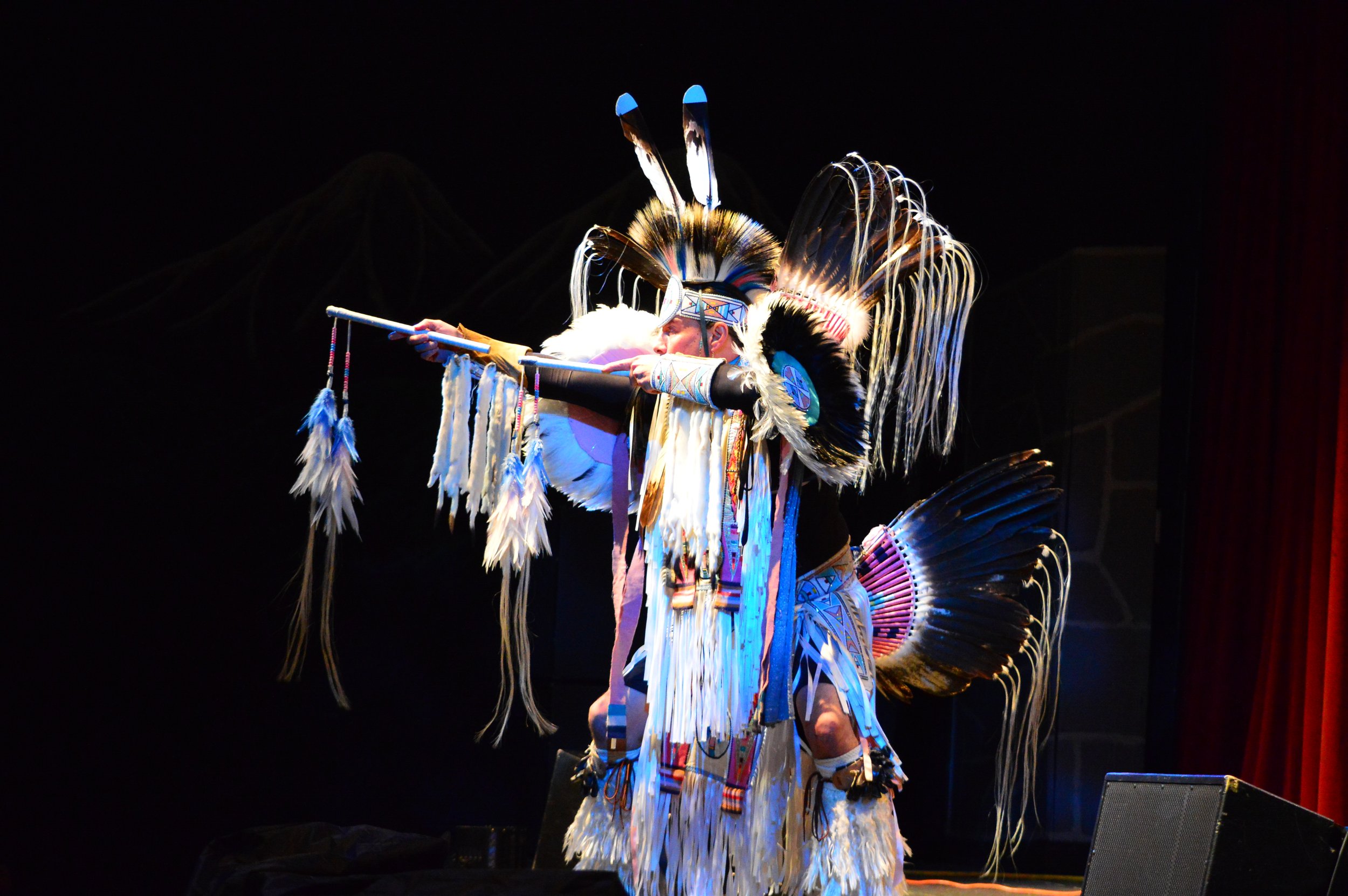
Supaman dances for the crowd at Port Townsend High School on Thursday evening. photo by Diane Urbani de la Paz [/caption]
“As time progressed, we started to tell our stories in that medium. Then elders and people who are cultural bearers said that it was powerful to do those types of things to reach the young people who were losing their culture and struggling with suicide. The idea was to share the values and culture of indigenous people, and to say, ‘hey indigenous people do all kinds of stuff, like hip-hop’”.
Peoples Choice Music Award in Canada for best video and was voted MTV’s new Art
In 2011, Supaman and several compatriots had finished a presentation about Native dancing for a college in Bozeman, Montana. After they left the stage, Superman says, “a lady came up and said where are you going? I need you to go on right now. Our other speaker didn't show up, so can you go up and finish’? We're in our outfits, our regalia and so we got on stage and started rapping in our outfits.”
After finishing the set, Superman said that one of his elders from his tribe back home, a historian who knows every protocol, approached him. “I was like, oh no. He's going to scold me. Instead, he said, ‘Grandson, that was damn powerful. You showed these people that you're proud to be Native. You knew the history of the dance and you showed them that you come from that world. Then you spoke the language of those youth, which was hip hop. Talking about being drug and alcohol free, being a husband and a father, and that's powerful. You guys keep going because our youth are dying. They're committing suicide, they're on drugs and alcohol. Anything you can do to reach them in a good way, with good intentions is worth the effort.’”
“So that was the green light for us to say this is a good thing, mixing the cultures together as long as you have good intentions and positive vibes that you're sending out.”
Supaman, whose tribal name is Christian Parrish Take the Gun, spreads his message through a range of lyrics, instruments and rhythms. One of his songs, Ethnocide, is about the U.S. government's practice of prohibiting Native American dances and ceremonies for over 50 years beginning late 19th century until 1933, when the ban on Native dancing was lifted, as part of its effort to wipe out native culture.
“I combine comedy, dancing, flute playing, DJ-ing, pow wow drumming, looping and rapping all in one,” Supaman said. “I wanted to show Native youth that it's okay to embrace other cultures, so long as you don't forget who you are and where you come from.
I identified with rappers because the struggles of the ghetto and the reservation were similar.”
In his hip hop song, Sonshine, Supaman evokes a different perspective and type of music, which includes several lines from Harry Chapin's 1974 folk hit, Cat’s in the Cradle. Both songs speak to the challenges of parenthood, particularly spending sufficient time with one's children.
Growing up in Seattle, he had a rough childhood as a child of parents who struggled with alcoholism, and he spent time in foster care, he says. He adopted the professional name Supaman on the spur of the moment during a DJ contest.
He received the 2017 MTV VMA award for Best Fight Against the System. He is also a Nammy “Native American Music Award” winner, and was awarded the North American Indigenous Image Award in Canada.
He has won awards for Best Hip Hop Album and Best Producer for the Indigenous Music Awards.
“I didn’t start out as an activist, but as I realized that our schools don’t teach much about indigenous history, I felt it was my responsibility to share about Native stuff and about humorous stuff. It’s all about raising the quality of life, so kids can leave here and feel good about life like, ‘I’m smiling. I’m alive’. What a concept!”