Port Townsend Unveils 20-Year Vision: Community Comment Concerned with Future of Agricultural Zoning

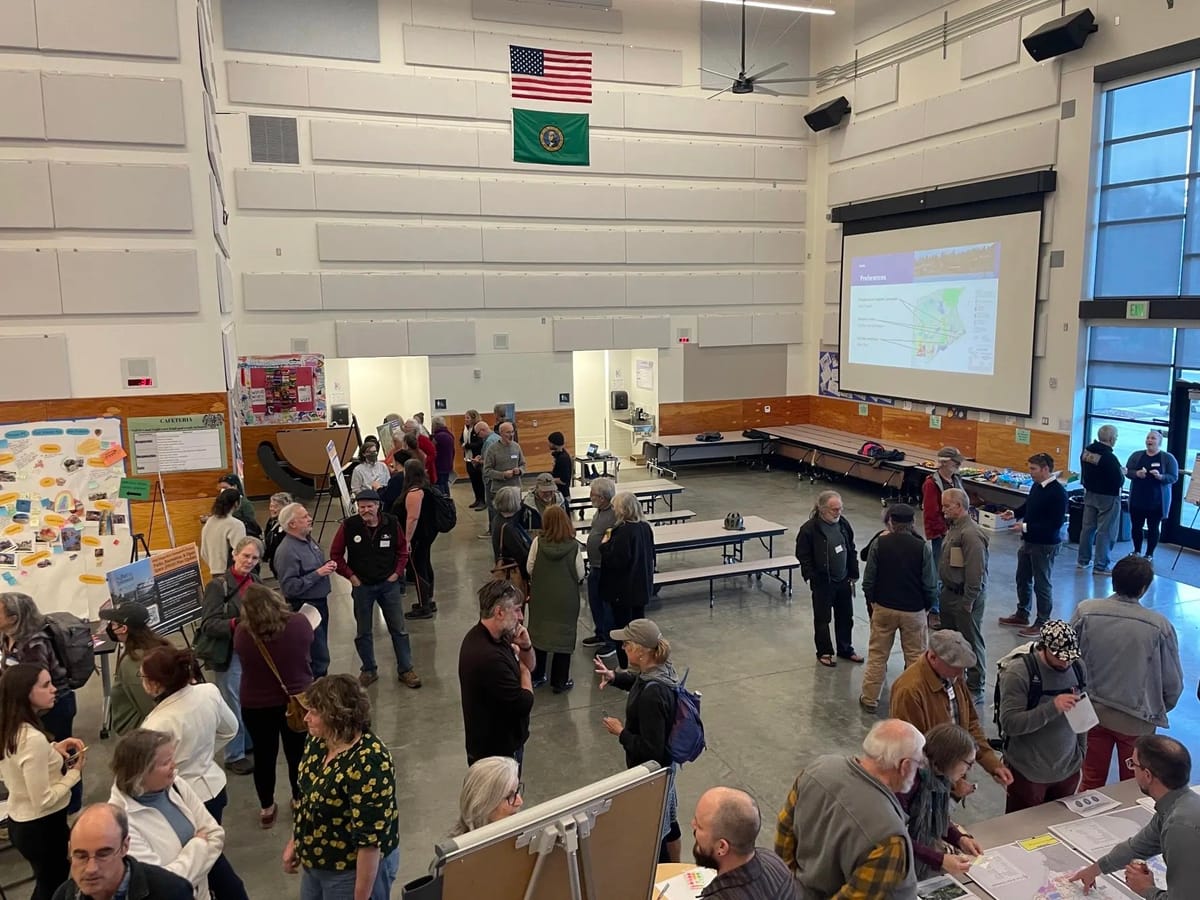
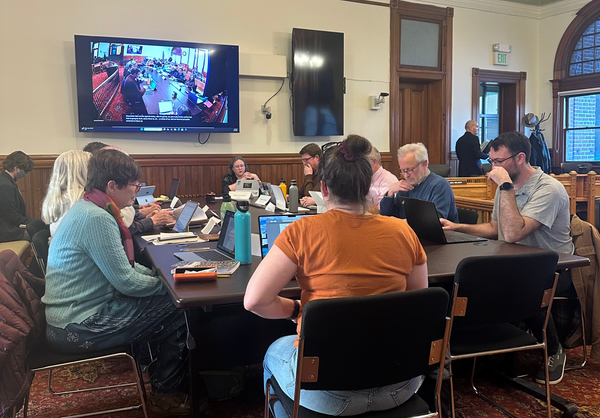
[caption id align="alignnone" width="1778"]
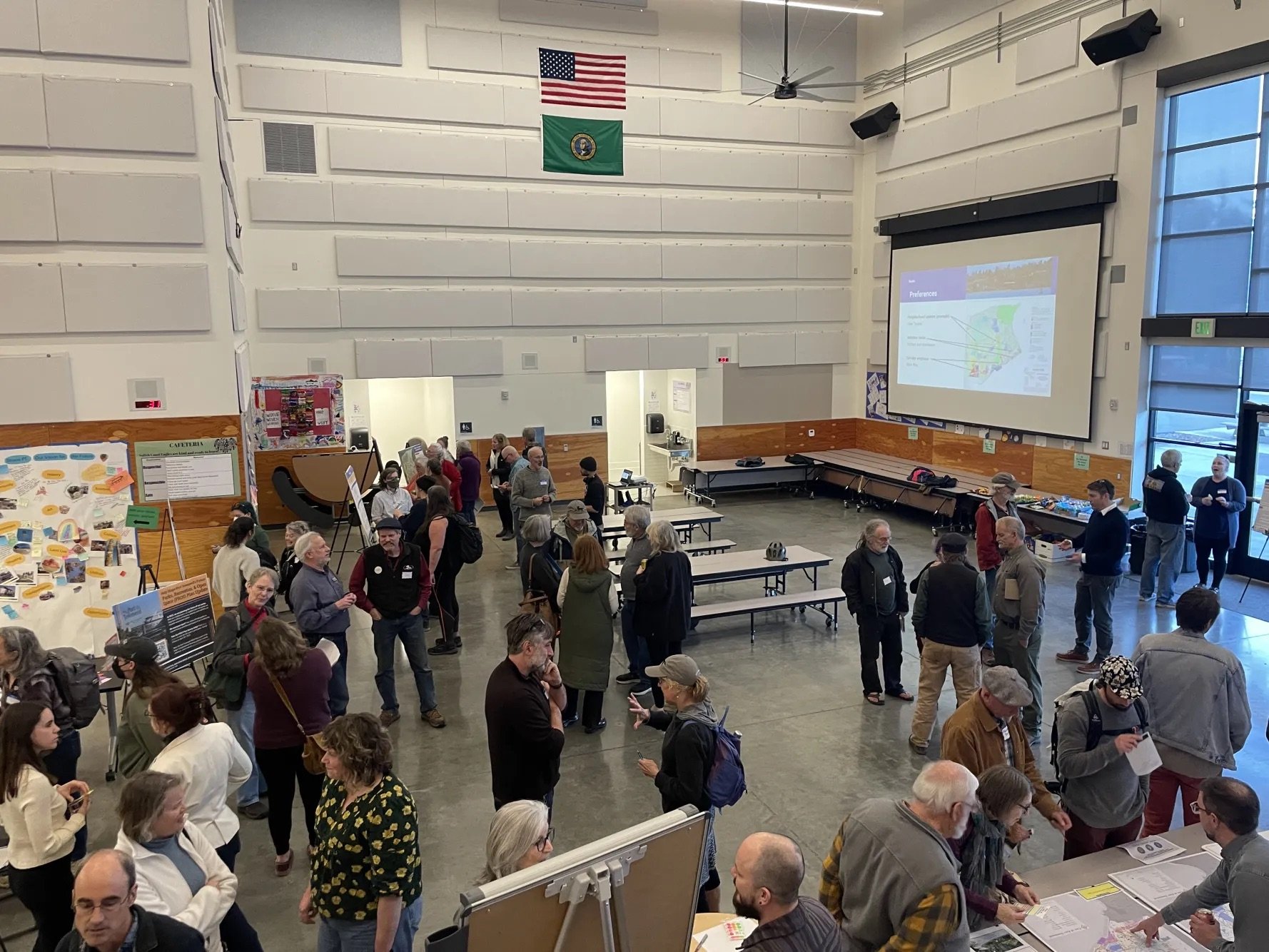
Community members gather at Salish Coast Elementary to give feedback on the city’s 20-year plan. Photo by Angela Downs. [/caption]
News by Angela Downs
Maintaining a city is a major undertaking; it’s a delicate balance between holding values and adapting to changing times.
City staff shared their collective 20-year “vision and roadmap” for Port Townsend and their plan of action this past Wednesday 26th, at the Salish Coast Elementary School Commons. Elected officials, consultants, and members of the public gathered to see the presentation, contribute to how policies are put into action, and voice their priorities.
Informational boards were set up around the room for people to read. City staff were nearby, ready to answer questions. Each person was allowed the opportunity to place stickers to indicate their approval or disapproval of policy wordage and write a comment on the board.
Topics presented ranged from Mixed Use Centers that combine residential and commercial development, high-density developments for housing solutions for future populations and growth objectives, updates to the 2020 Parks, Recreation and Open Space (PROS) plan, developing Americans with Disabilities Act (ADA) priority routes, connection points for walking/biking routes, the arts, and projected climate crisis impacts.
The last Comprehensive Plan was updated in 2016, and it did not go through a public opinion-gathering process. So, while it may be a concern that so many plan evaluations are happening at once, and many of them overdue, it’s not to be overlooked that the city is working to shift towards involving the public.
Without a template for collecting opinions from the public, the city offered a data collection model by using stickers to mark if the people liked or disliked policy wordage. They also provided stickers to indicate opinions of urgency on proposed plans of action. There was limited space to offer feedback, but the public took to writing in the allocated space on the presentation boards, largely commenting on the climate proposals.
[caption id align="alignnone" width="1778"]
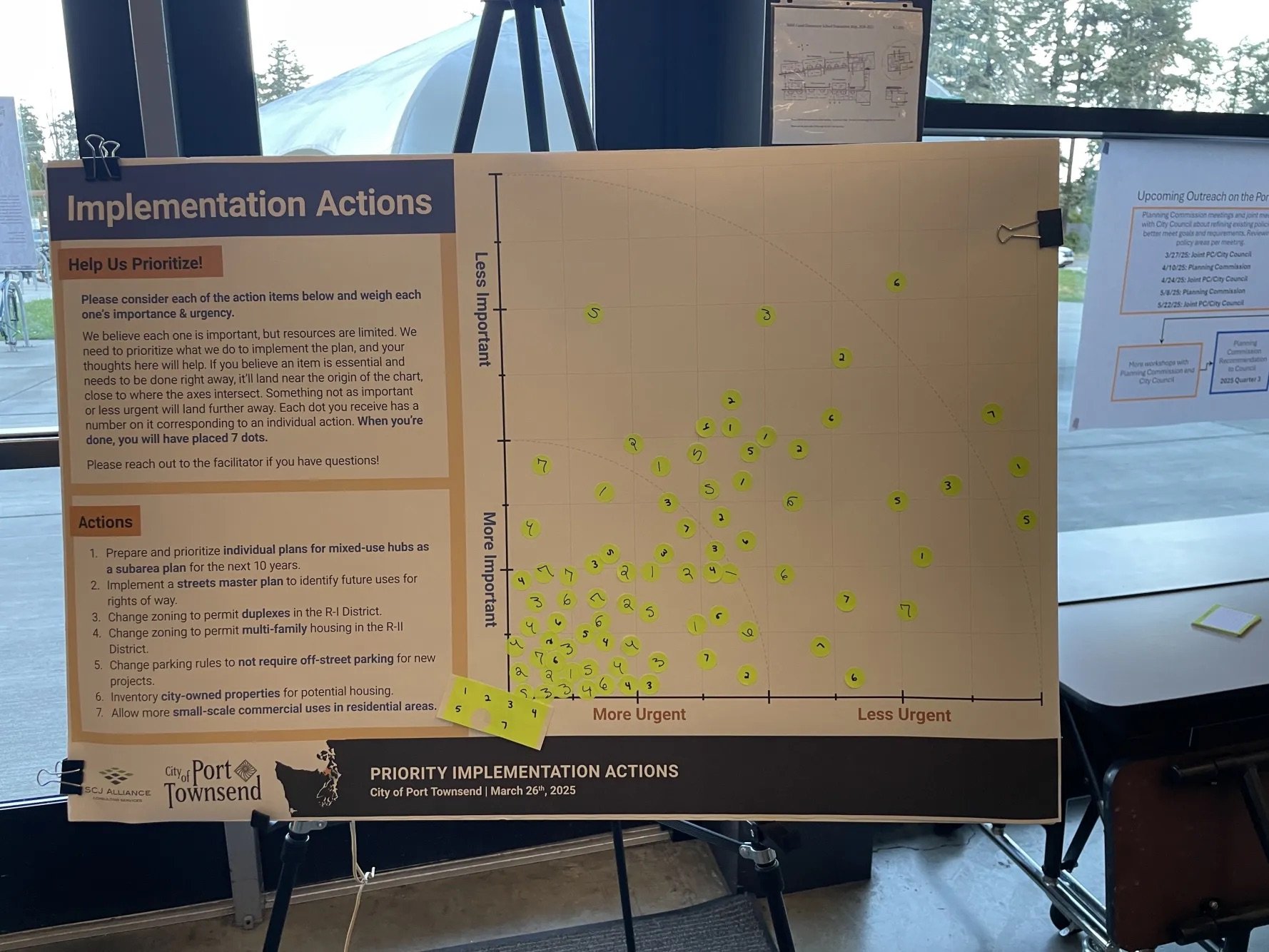
Participants marked on a board where they felt the city’s priorities should be. Photo by Angela Downs. [/caption]
With the climate crisis already here, federal food fund cuts, and impending land taxes, there was concern about food security and why farms and agriculture inside city limits were not being promoted, especially in conjunction with the push for more developments.
Comments written on the climate board included, "Promote farms/gardens as part of food web preparedness- local food,” “I would like to see ‘Urban Agriculture’ added to ‘natural resource lands,’” “... including existing and historical agricultural land,” "Resilience equals food security.”
The city’s presentation stated, “The Workgroup of the Jefferson County Climate Action Committee is following state guidance and building on our existing climate policies.” There were no further details that outlined what these policies are.
The 2016 plan has areas marked for “mixed-use nodes” that have yet to be developed. The city wants to act on these opportunities to “develop areas that are transit-oriented, pedestrian-friendly, convenient for shopping, and more affordable, denser housing.” They are imagining these areas to function like Uptown and Downtown.
Their housing solutions for Port Townsend propose more high-density developments.
The plan indicates locating denser development in areas where the existing land use plan already allows them, as well as modifying zoning to make building these units easier. When asked why only Bayside is using the Adaptive Reuse codes (federal procedures to renovate existing housing), city staff said they were not sure and that there are no plans to promote the Adaptive Reuse policies for individuals investing in existing structures.
Parks and Recreation plans emphasize the importance of building and nurturing relationships to respond to the needs and interests of Port Townsend residents. “The PROS plan also includes policies to step up conservation efforts in areas of sensitive habitat, working with local, state, and national groups to identify, protect, and, where appropriate, enhance trail access to Port Townsend's open spaces.”Many of the comments on this board emphasized prioritizing prairie land.
Proposals for Existing & Undeveloped Streets include Streets Circulation Plan to “de-emphasize redundant city-maintained streets and allow conversion to owner-maintained driveways or abandonment to open space or trails.” They also wanted to know people’s preferences for Edge Lane Roads (ELR), or Greenways (utilizee low traffic roads as walking and biking ways.)
While much of the presentation was difficult to read or contained few details, there were seven tangible “implementation actions” offered, and people were invited to mark their perceived level of importance. These action steps are to prepare and prioritize individual plans for mixed-use hubs as a subarea plan for the next 10 years; implement a streets master plan to identify future uses for rights of way; change zoning to permit duplexes in the R-l District; change zoning to permit multi-family housing in the R-ll district; change parking rules to not require off-street parking for new projects; inventory city-owned properties for potential housing, and allow more small-scale commercial uses in residential areas.