City of Port Townsend Works Towards a Strategic Budget for a Resilient Future

[caption id align="alignnone" width="3024"]
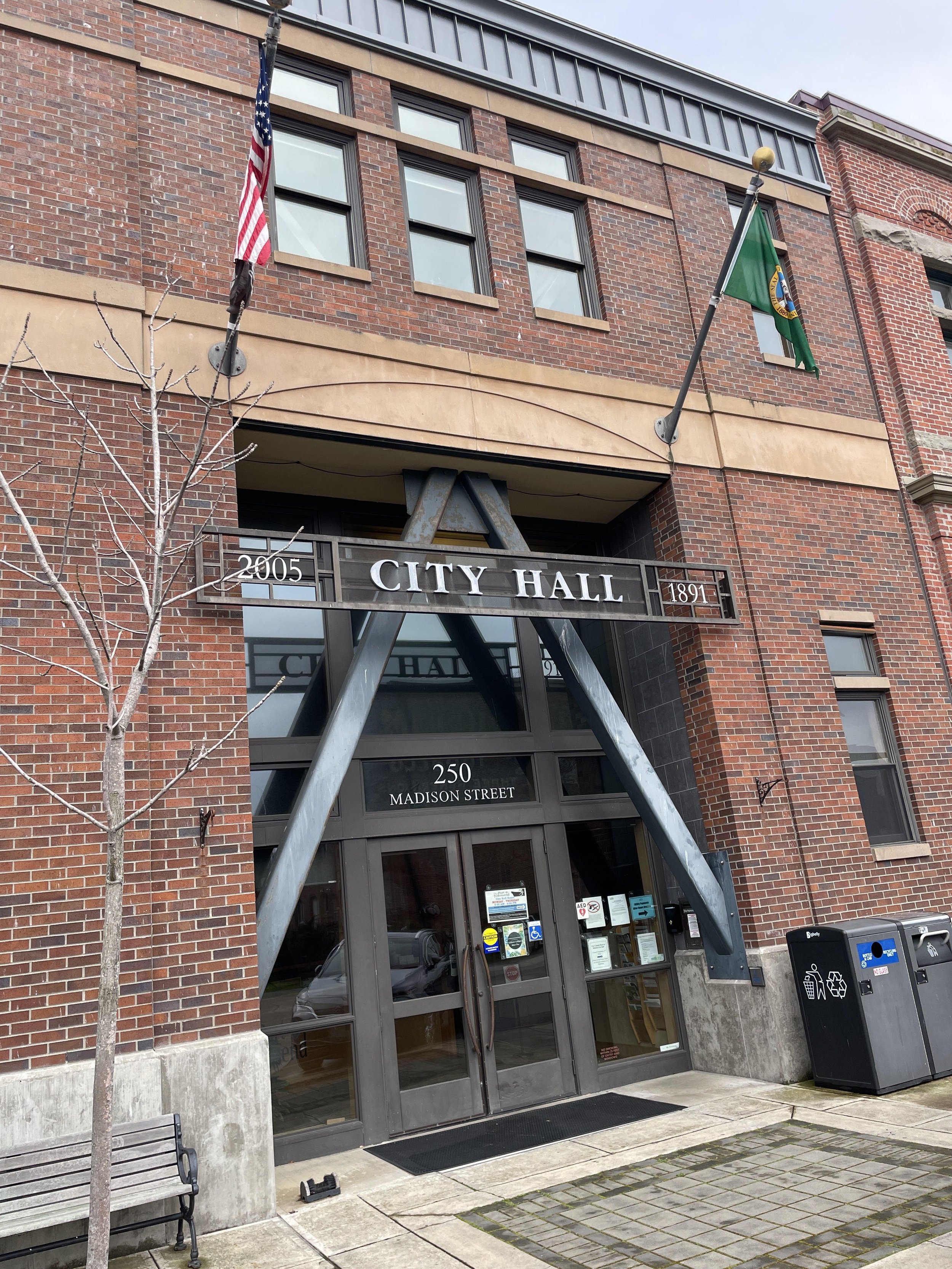
Photo by Nhatt Nichols [/caption]
News commentary by Angela Downs
The City budget is built out of codes that enable and finance the balance between maintaining the character of Port Townsend with its historic buildings, dynamic arts and culture, immense beach access, walking trails, and small farms, with the developing modern times needing climate resilience planning, housing crisis response, and sewer, water, and transportation updates.
When the City looks at its finances, it looks at the income sources, and then it considers the humans behind those sources. This, in part, is what makes their financial considerations so complex.
City Manager John Mauro said, “We do not break down our budget by age or other demographic group, as most everything in the budget is meant to deliver services to all ages and every member of our community.”
This is reflected in the golf park playground, marked in the budget for $500,000, (including $350,000 from a state grant) as a place for all family members to enjoy together or in their solitude. Prioritizing ADA access and traffic calming measures also highlights the holistic spending approach.
The City’s role through laws and codes makes possible the many solutions needed to guide the ship of Port Townsend’s future, build from past decisions, and act in the present. It’s a complex web, and breaking it down one crisis at a time can be helpful for a comprehensive view.
Let’s start with the Housing Crisis.
Leveraging for Infrastructure
The City makes things development-ready with core infrastructure. They leverage their strength as a municipality to get state and federal grants for infrastructure so that the cost of housing can be a lot lower.
Evans Vista is an example of this, with half a million dollars from the county for master planning, 1.7 million from the state for purchasing the land, 1.4 million from the state for sewer, and 2.5 million from Environmental Protection Agency (EPA) for sewer infrastructure.
Development and fees
Large projects like Madrona Ridge, a housing development with approximately 150 homes, are a heavy rush of systems development charges. Permit revenue, utility connection fees, sales tax from the large amount of construction materials, business and occupation taxes, and real estate excise tax when they sell the houses.
It can be tempting to spend with the influx that comes from big construction projects, but it's important for the City to identify those revenue sources as one or two year revenue sources, so the sudden loss of revenue doesn’t shock the system when the project is done.
While homes are needed, and the high density of Madrona Ridge follows a lot of the City’s ideals, the price tags of the homes don't exactly scream local, working class, affordability. But there are still other ways the City’s budget design supports affordable housing.
Housing Code
Development costs a lot of money, and there are a lot of spaces that can be used creatively. Tiny Houses on Wheels (THOW) is an example of the City’s response to the housing crisis through permits creating more cost effective options for people.
While the tiny homes only fundraise a modest amount through fees, these permits attempt to define and provide a flexible housing option, on existing single-family home lots, or potentially THOW communities.
A THOW is licensed and registered with the Department of Motor Vehicles; constructed and certified to building and inspections standards in PTMC 17.58.030; no larger than allowed for movement on public highways; has at least 150 square feet of first floor living space and does not exceed 16 feet in height’ and is a detached self-contained unit which includes areas for cooking, sleeping, and sanitation.
Taxes, Exemptions, and Deferrals
There is a small amount of sales tax that goes to affordable housing, and an interlocal transfer to the County for the Housing Fund Board that issues grants with the money.
There is also the Multi-Family Housing Property Tax Exemption Program (MFTE), designed to offer developers an exemption from property taxes in exchange for developing multifamily and affordable housing in specific target areas. The exemptions are typically between 8 and 20 years.
“The Port Townsend City Council adopted the multi-family tax exemption (Ordinance 3200 Chapter 3.15) in 2018, providing limited or 12-year exemptions,” said Mauro.
With the power to enforce codes is also the power to defer codes. There were about $240,000 in fees to connect with infrastructure for groups like Habitat for Humanity that were waived. "We do a lot of fee deferrals for affordable housing. That's a very real budget impact, because those would be fees we normally collect and put in to deliver city services,” Mauro said.
The City is working to adapt the laws and codes to respond to the changes of our times. To respond to the needs of residents, the city needs people to go to the meetings, share their experiences, needs, and creative solution ideas, and get familiar with the bureaucracy. Collaboration is key.