Port Townsend’s Uptown Theatre is for sale

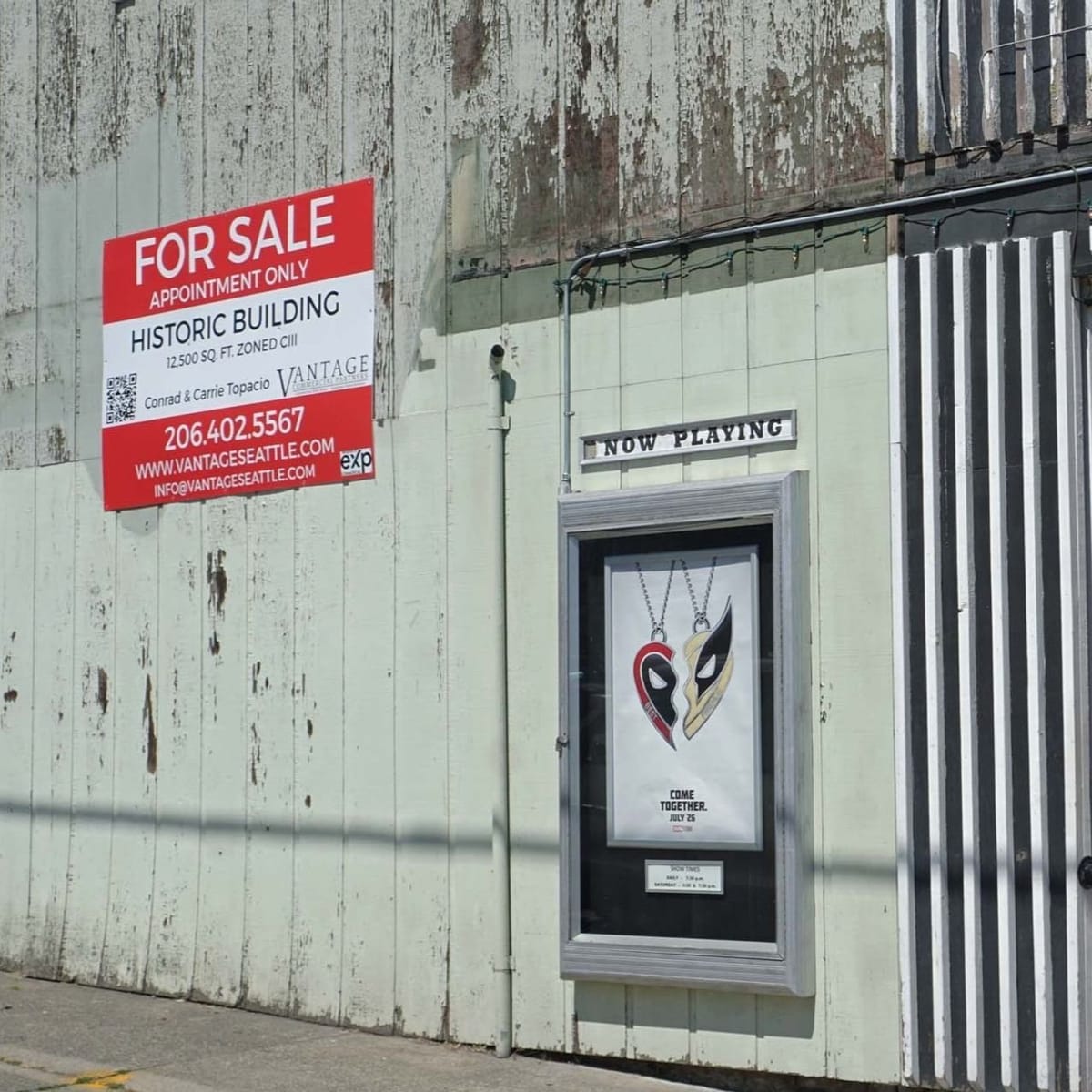
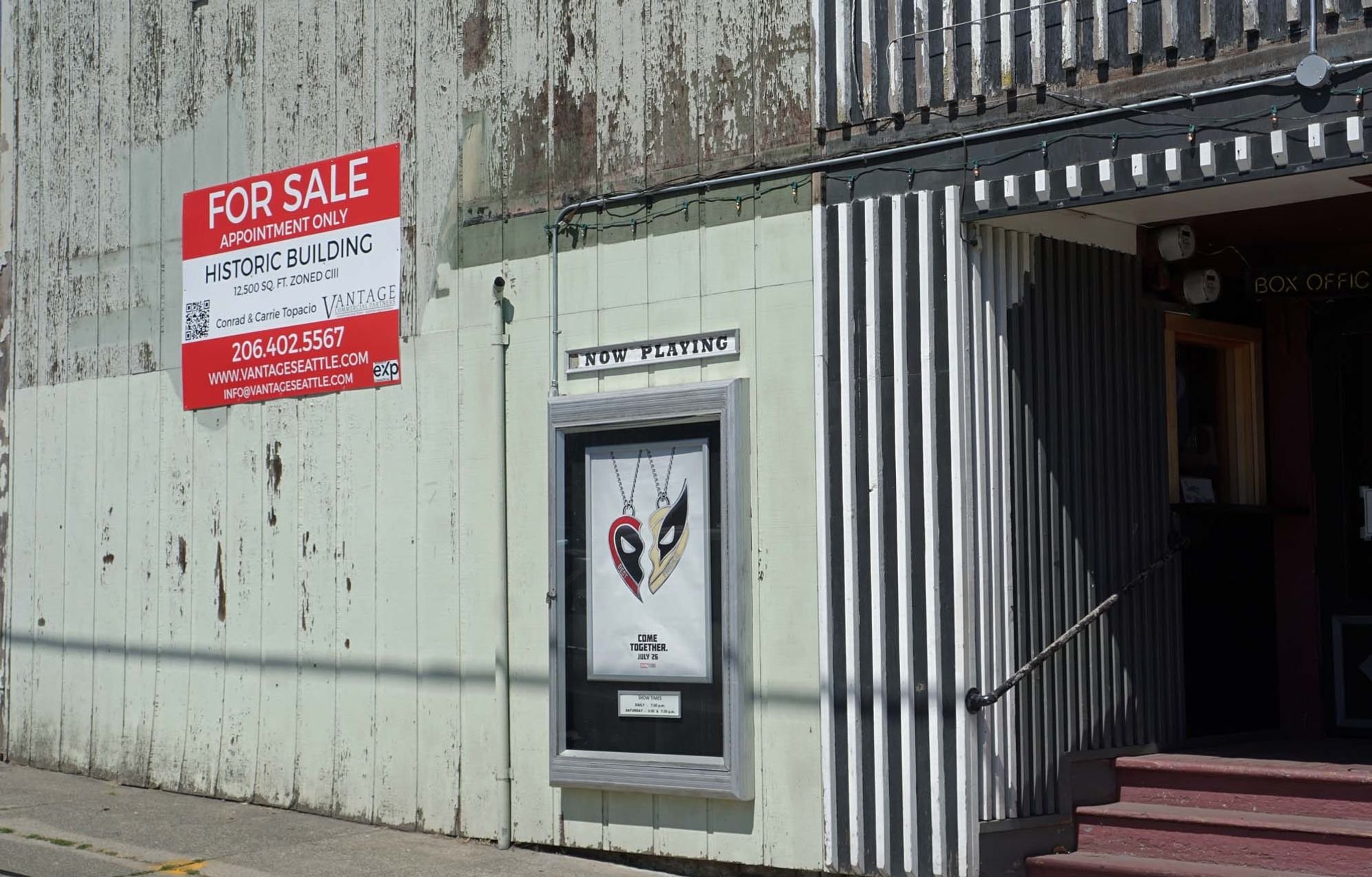
The Uptown Theatre plans to reopen to show Deadpool & Wolverine at the end of July. Photo by Charlie Bermant
Port Townsend’s Uptown Theatre, once a local entertainment touchstone that has fallen upon hard times, is for sale.
The theater, located on the corner of Lawrence and Polk Streets in
the historic area of Uptown, has been owned and operated by three generations of the Wiley family since 1947. Owner Sharon Wiley, a nonagenarian who grew up in the theater, hopes that any buyer will continue to operate the theater and not retrofit it for some other use, according to Carrie Tapacio, the listing agent.
“[Sharon Wiley] wants to bring the theater back to life,” Tapacio said.
The sale price is $875,000. Tapacio said this is below the initial recommendation of $1.1 million, bringing it into an acceptable range for a buyer who wants to keep the theater going.
A public notice of the sale was posted on the building on July 8. It has been on sale for several months as an unspecific listing but drew no interest, according to Tapacio.
The Wiley family also operates the Wheel-In Motor Movie Drive-In, which is not for sale and remains open through the summer. Rick Wiley (Sharon’s son), who has managed both theaters for several years, did not return a call for comment.
Chris Moore, executive director of the Washington Trust for Historical Preservation, said the Uptown Theater “is a fantastic building that deserves to be preserved.” And though any new owner could spend millions for reconfiguration and rehabilitation, there are no requirements that it continue as a theater. The new owner could reopen as a bowling alley or an art gallery, but would face significant restoration challenges.
“I love the building,” said former Port Townsend Film Festival Executive Director Jeanette Force. “I know it would be a challenge for anyone to renovate the space. It is a rare and remarkable piece of architecture.”
The purchase price is just the beginning. The theater portion is in relatively good shape, but creating several performance spaces would be another cost category. The outside of the building, governed by historical preservation rules, could be tricky. Retrofitting the theater to become ADA-compliant is potentially the most expensive aspect.
Currently, there is no apparent accessible entrance in to the theater .Once inside, a disabled person faces a greater challenge as the bathrooms are impossible to navigate in a wheelchair. This has forced patrons to exit the theater and use a port-a-potty in the alley.
An elevator, necessary to access the upper floors, could cost around $500,000. While historic buildings can circumvent ADA requirements, the Port Townsend Post Office still requires disabled customers to drive to the loading dock. However, sources say operating as an arts center will require full access.
The building was constructed in 1897 and became a theater 50 years later. Since then, it has operated continuously, showing first-run movies to eager audiences. Ten years ago, the owners renovated the inside, adding comfortable new seats and a modern digital projection system. While the viewing experience was first-rate, the building’s dilapidated appearance contradicted the luxurious interior.
The building includes its original staircase and wainscoting from when it was first used as a theater. It has a projectionist’s apartment and two studios with high ceilings and wood trim on the second and third floors. These, the listing suggests, can be used for dance, art, and meeting rooms once they are renovated.
The main floor theater and the third floor (most recently a dance studio) are each approximately 5500 square feet. The mezzanine, or second floor, is 1500 square feet and is currently configured as an apartment.
Port Townsend Film Festival Executive Director Danielle McClelland, who operated a historic theater in Bloomington, Indiana, for 20 years before moving to their current position, recently consulted with a community that had a historic theater that they wanted to renovate, determining that the move could cost between $15 million and $50 million “depending on how fancy you wanted to go.” Even with a less astronomical cost, McLelland said that in order for the space to support itself, it needs to have the widest variety of uses.
“We need all three of the spaces to be soundproofed so that you could have more than one thing going on at a time,” they said.
To complete renovations, an undetermined amount of funds beyond the purchase price is necessary. The effort would also need a project manager, adequate funding, either private, public, or nonprofit, and the ability to raise more money when the cost increases.
“As a film festival director, I'd be thrilled and willing to be involved in a collaborative effort of arts presenters in the community who might be interested in working together to create a movement to restore the building, McClelland said. “ But it doesn't make financial or mission sense to the Port Townsend Film Festival to take on the renovation of that space ourselves.”
McClelland said that the Port Townsend Arts Commission and the Creative District are among those who could provide support for the project.
“As far as the city's involvement, I can't imagine it would be financial,” said City Council Member Ben Thomas. “Although perhaps a partnership with grants could be possible.”
The Uptown is currently closed but is scheduled to reopen to show Deadpool & Wolverine at the end of July.
This is a developing story.