Proposed Wastewater Permit for Paper Mill Raises Concerns Over Potential Pollutant Levels

By Derek Firenze
If you produce more, you’re allowed to pollute more. The state Department of Ecology’s latest proposed draft of the wastewater permit for the Port Townsend Paper Co. increases the mill’s potential pollutant levels in light of its increased paper production.
“The more we have, the more we have. And the more we discharge,” said James DeMay, the industrial section manager for Washington’s Department of Ecology who oversees some of the state's biggest industrial polluters, during a public hearing on the proposed permit on Wednesday, Dec. 4.
The federal Environmental Protection Agency law ties pollutant limits directly to a ratio of product output, and the Department of Ecology enforces those rules. The current wastewater permit accounts for the mill producing about 900 tons of paper products per day, while the proposed draft accounts for about 1,000 tons per day.
Limits in the proposed draft allow for an increase of about 7% in the biochemical oxygen demand compared with the current permit. That means more oxygen would be consumed, leaving less for aquatic life. Less oxygen in the water can lead to stress, suffocation, and death for aquatic organisms.
Climate studies have shown that areas of the world with historically low oxygen conditions, which includes the Hood Canal, are growing in size. At the same time, new low-oxygen areas are being formed. One study in Nature estimates that the total volume of deadly-low-oxygen waters has quadrupled since 1960.
Additionally, the proposed draft increases the limit for total suspended solids by about 2%. Total suspended solids are solid particles suspended in water that are larger than 2 microns. Increases in total suspended solids can have a negative impact on water quality and aquatic life in several ways, including decreased water clarity, clogged gills, destroyed habitats, and increased photosynthesis, leading to lower dissolved oxygen levels. Sediment can also carry chemicals attached to the particles, which can have harmful environmental effects.
The mill discharges wastewater into Port Townsend Bay through an outfall and diffuser that disperses the wastewater so it doesn’t build up in any one place.
Ecology issued the current wastewater permit to the paper company in 2013. The permits typically last only five years, but the permit was extended in 2018. In that time, the mill has changed ownership and increased production.
Since the issuance of the previous permit, the mill shut down one of its digesters that generated kraft pulp, a particularly chemical intensive process. The mill also upgraded its cleaner cardboard recycling plant from a batch process to a continuous process. This upgrade has increased the maximum capacity of the recycling plant from 480 oven-dried tons of pulp per day to 720.
Despite moving in this cleaner direction, the mill is still allowed to add more pollutants to Port Townsend Bay’s water.
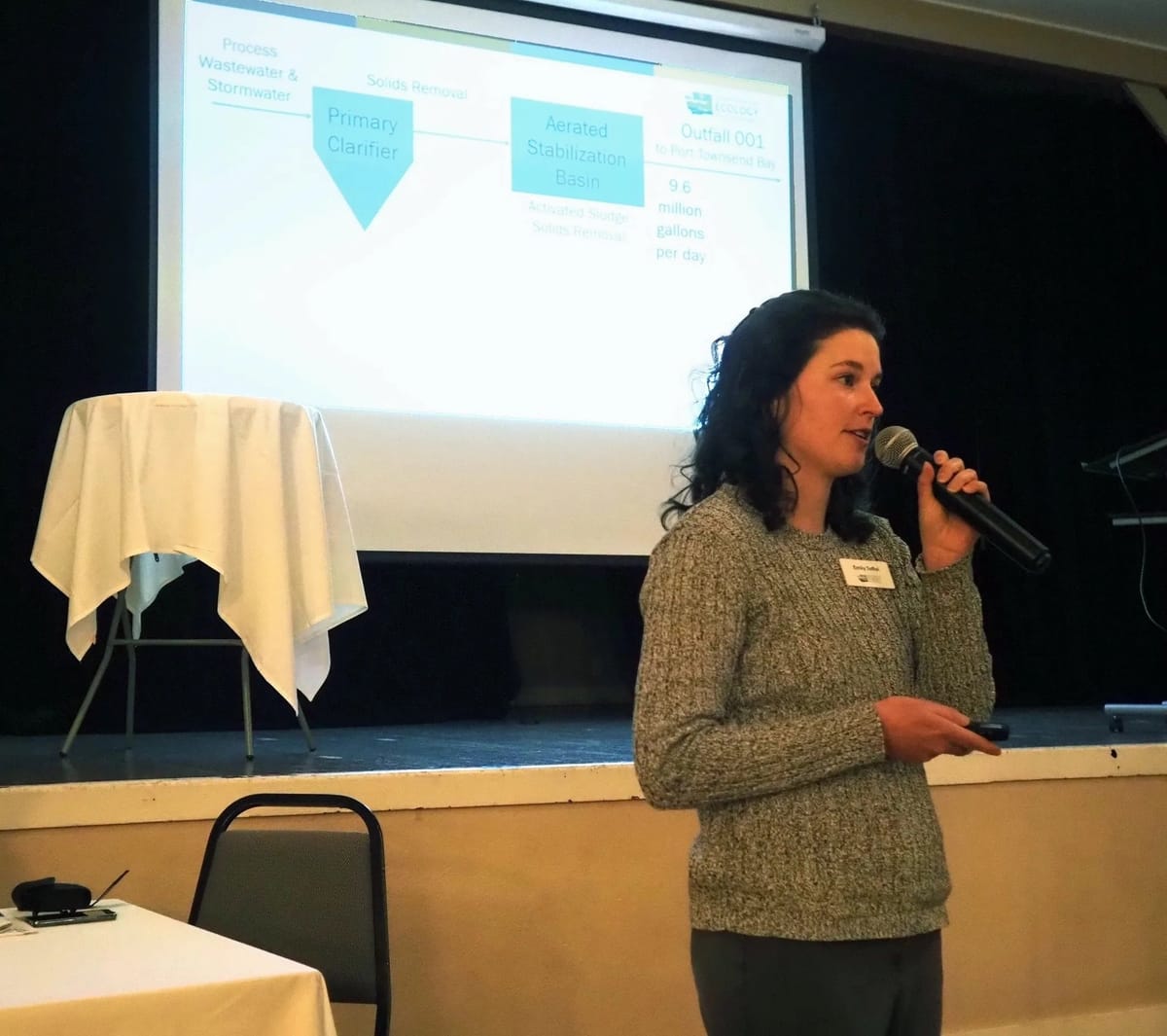
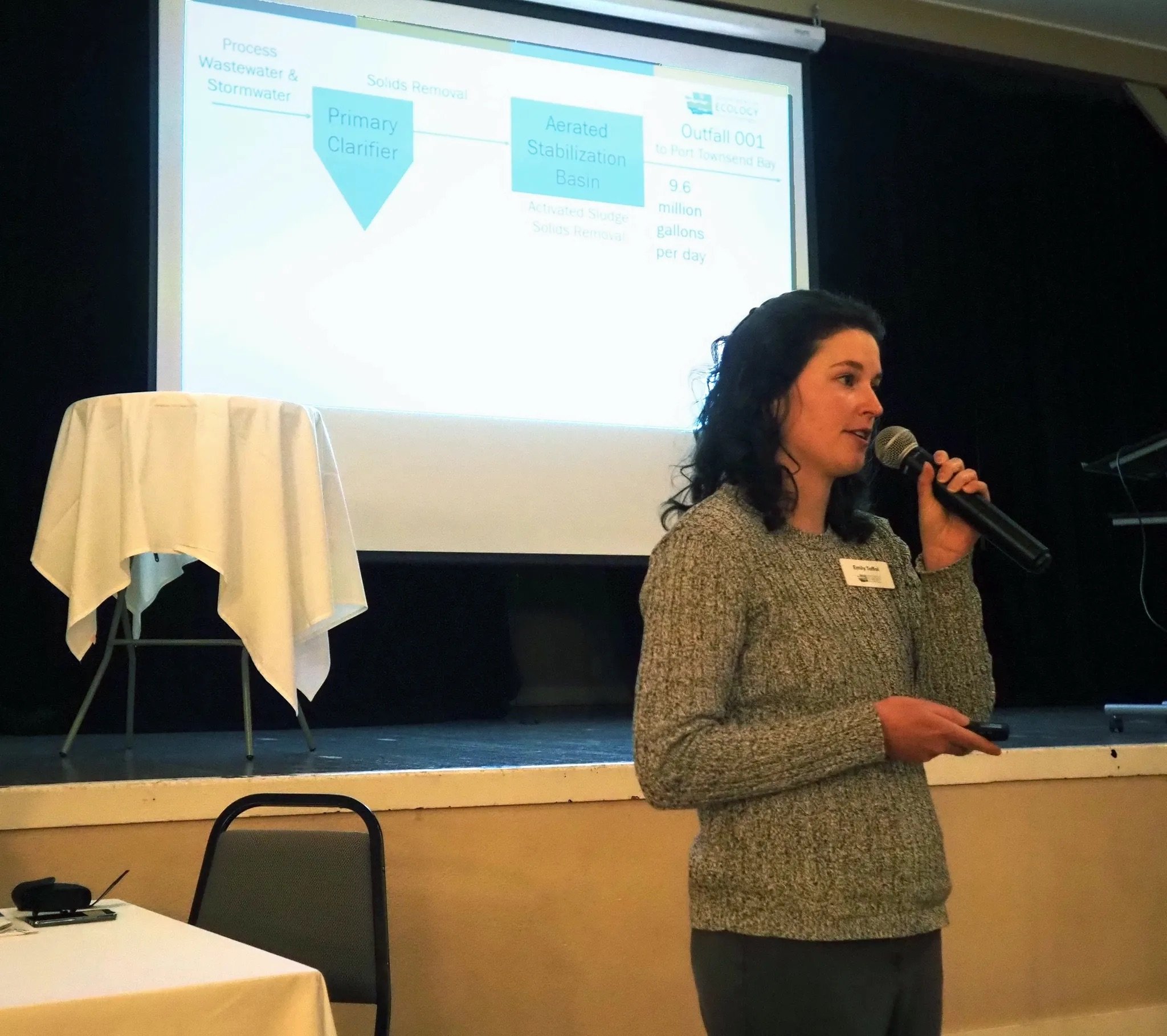
One of the stickiest things about the new permit is that although federal law ties pollutants to production, the additional product the mill is putting out should be cleaner. Emily Toffol, the environmental engineer who authored the proposed draft on behalf of Ecology, explained:
“There has been a shift at the facility to focus more on the recycling side of the business, but with the overall increase in production rate, it did lead to an increase in limits even though the recycling process is generally less polluting than the kraft process.”
New limits for old dangers
The draft also includes new water-quality limits for benzo(a)anthracene, chlordane, and pentachlorophenol. The mill’s existing permit does not list these chemicals despite the fact that both chlordane and pentachlorophenol have long been banned in the European Union. Chlordane was banned in the EU in 1981 and is now banned in most other countries. Pentachlorophenol was banned in the EU in 1991. Both are considered carcinogenic to humans and highly toxic to aquatic organisms, and neither are currently in use at the mill, according to Ecology.
“They do not use those chemicals today at all,” said Brittny Goodsell, Ecology’s communications manager. “The limits put the owners of the mill in a place where they are even more responsible for making sure even their historic use is not going to impact the wastewater in the discharge.”
Chlordane is a manufactured chemical that was used as a pesticide in the United States from 1948 to 1988. In 1988, EPA banned it in the United States. Chlordane was detected in the mill’s wastewater only once, in 2022, during the mill’s current permit cycle, but it was at a high enough level that Ecology expressed concern about “a reasonable potential for discharge to cause an exceedance of both human health and aquatic life-based water quality criteria for chlordane.” Which is a very scientific way of saying there’s potential danger.
Ecology noted that despite the detection of chlordane in PTPC’s discharge in 2022, it does not indicate that PTPC is now using chlordane on-site. Chlordane can stay in the environment for many years after it is used.
“That can really stick around for a while which is a big reason it got banned in the first place,” Goodsell said.
According to the EPA, chlordane does not dissolve easily in the water and will stick to the sediment at the bottom of water bodies. Chlordane in the environment breaks down slowly. It can build up in fish, birds, and land animals.
Pentachlorophenol was once one of the most widely used biocides in the United States, but it is now a restricted use pesticide and is no longer available to the public. Historically, it was primarily used as a wood preservative. According to the EPA, pentachlorophenol is extremely toxic to humans from acute (short-term) ingestion and inhalation exposure.
EPA began phasing out all use of pentachlorophenol beginning in 2022. Pentachlorophenol was detected in the mill’s effluent in 2016 and 2019 at levels indicating EPA’s concern “that there is a reasonable potential for PTPC’s effluent to cause an exceedance of human health-based criteria.” Again, dangerous.
Another chemical named in this draft comes with a study to evaluate whether the mill is sending per- and polyfluoroalkyl substances to the wastewater treatment plant. These PFAS, recently branded as “forever chemicals,” have been classified as carcinogenic and as endocrine disruptors. Endocrine disruptors can interfere with hormonal systems and cause numerous adverse human health outcomes, including alterations in fertility and the nervous system or immune function; certain cancers; respiratory problems; metabolic issues; diabetes, obesity, or cardiovascular problems; growth; and neurological and learning disabilities.
Ecology environmental engineer Emily Toffol said, “Port Townsend does not apply any PFAS to their products, however, EPA has identified the pulp and paper industry as a potential industry of concern when it comes to discharges of PFAS so that is why we’re including this monitoring requirement in the draft proposed permit.”.
“Reports that EPA have put out about PFAS and the pulp and paper industry in general have said that PFAS could come in through things like the recycling stream, or potentially cleaners, or pipe fittings in the industry in general,” she added.
Public hearing makes a stink
[caption id align="alignnone" width="2048"]
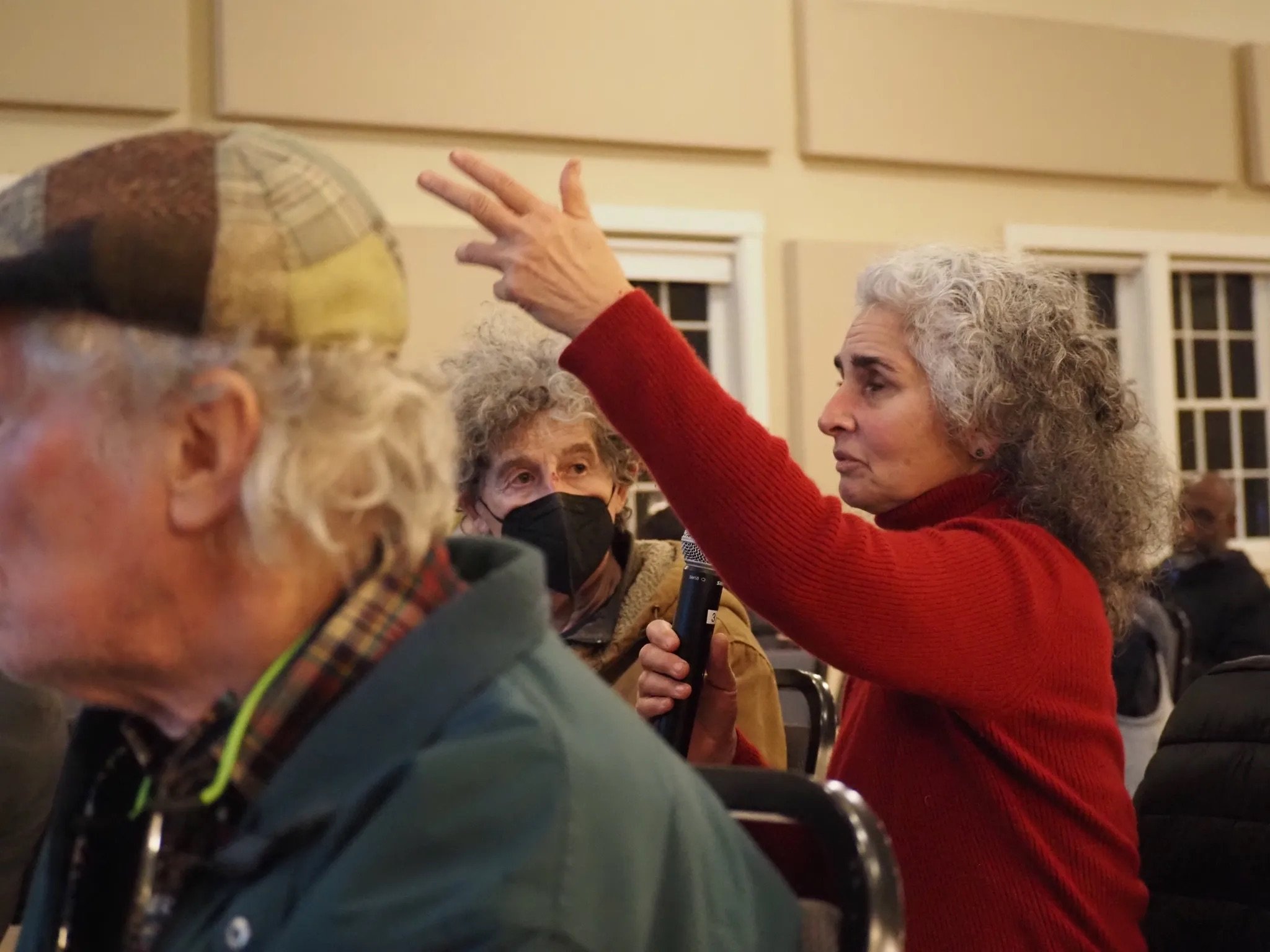
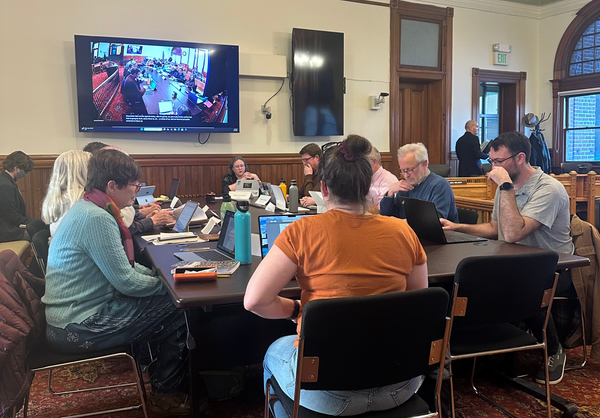
Members of the public spent close to two-hours debating the proposed draft during a question and answer segment. [/caption]
One of the topics most commented on during the public hearing was the famous odor of the mill. Another new feature of this proposed permit comes in the form of an odor minimization study focused on reducing odors from the wastewater treatment plant.
The permit does not ask the mill to change anything regarding the odors it emits from the digesters where sulfur is used to break down pulp. But it asks the PTPC to look into possible ways it could reduce odors related specifically to the wastewater treatment plant the mill operates onsite. As the mill implements a new permit during the next four years, it would also be required to develop ways to do that study.
Of the more than 40 people in attendance, many were unaware the mill conducts all the aforementioned studies and testing.
“The framework of the Clean Water Act is all based on self reporting,” Toffol clarified. “In order for Ecology to do that work, we would need a lot more employees, a lot more time.”
She also noted that once a year Ecology does its own water sample, and if the mill were caught falsifying its reporting that would be a criminal offense with the possibility of jail time.
In the past, the mill has been subject to only fines for violations, such as when the mill spilled 800 gallons of untreated wastewater into Port Townsend Bay between November 2021 and March 2022. At that time, the mill reported 14 times when it exceeded pollution discharge levels allowed in its water quality permit.
A decision on the proposed permit is expected in March 2025, but there’s still time to be included in the conversation.
Public comments can be submitted online or by mail postmarked by Dec. 12, 2024, to:
Emily Toffol
Department of Ecology
Industrial Section
P.O. Box 47600
Olympia, WA 98504-7600