Puget Sound Restoration Fund Creates Collaborative Efforts to Restore Coastal Ecosystems
[caption id align="alignnone" width="3024"]
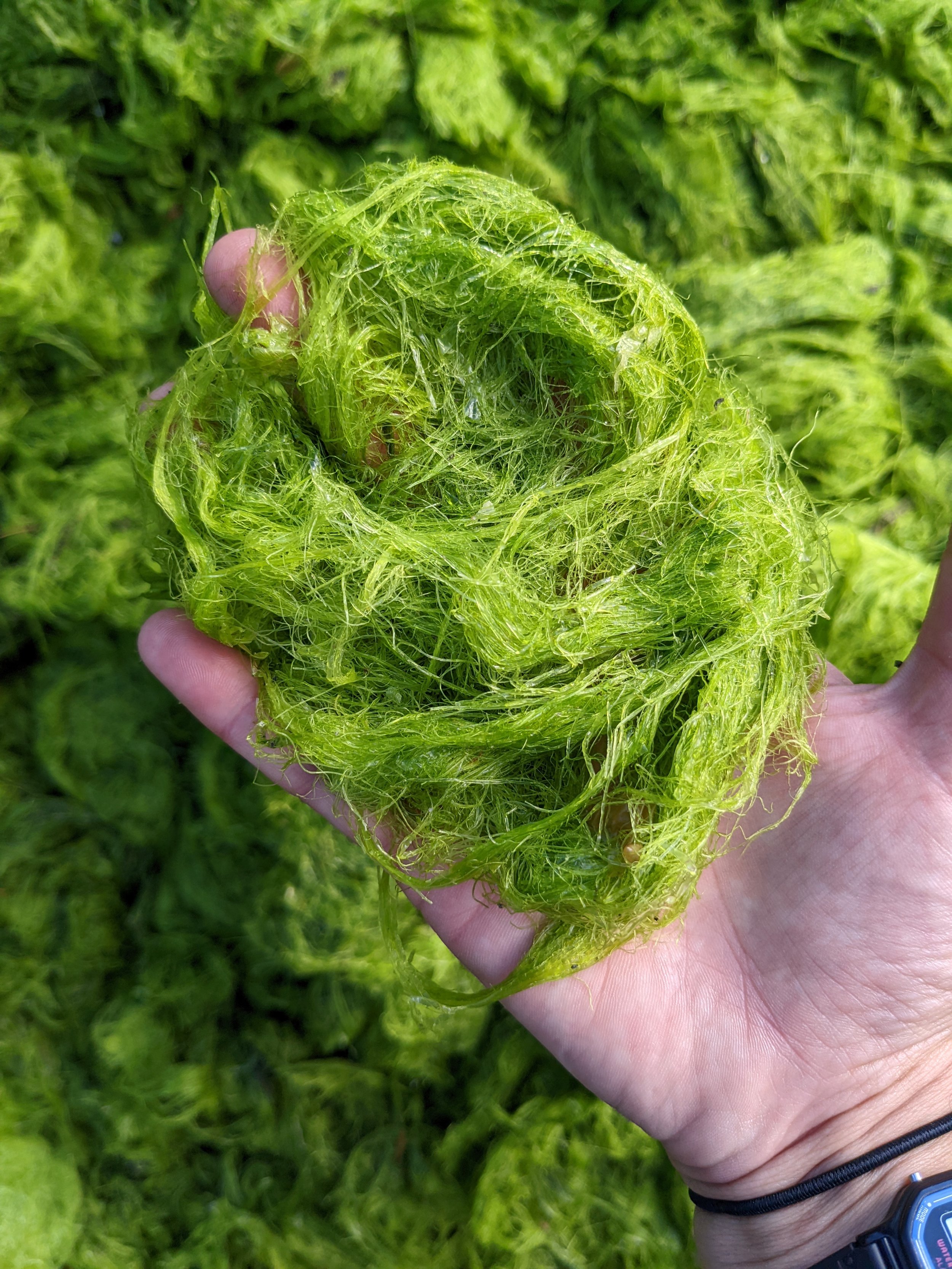
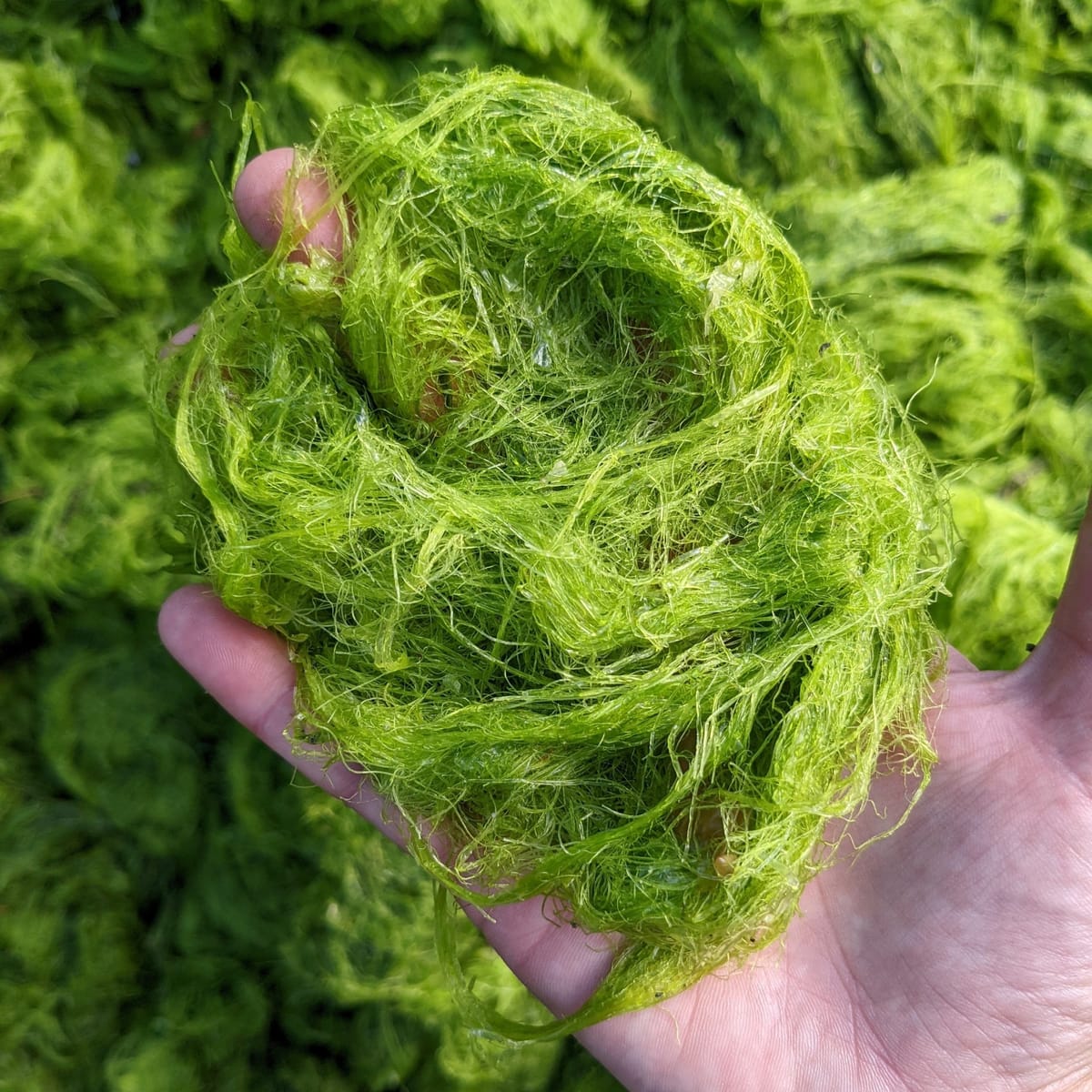
Ulva Algea, a nuisance species, is being tested on local farms as fertilizer. Photo courtesy of the Puget Sound Restoration Fund [/caption]
News by Angela Downs
“Long kelp fronds waving through clear green waters evoke a strong sense of home in many people who live on the coast, but the impact of forest-forming kelps such as bull kelp stretches much further than the beach,” Hilary Hayford, Habitat Program Research Director at Puget Sound Restoration Fund (PRSF), said, invoking a sense of hope in human reconnection to these underwater forests.
Hayford and Emily Buckner are with PSRF, a nonprofit organization working on Bull Kelp forest restoration and controlling the invasive species that might harm it.
Hayford is the research director at PSRF, leading the team in caring for the kelp gardens.
Bull kelp is the only floating kelp in the Puget Sound, and it is a key species for food and habitat. It is irreplaceable for the foraging fish like herring, sand lance, and surf smelt that salmon then eat, and essential for the success of rockfish and killer whales.
As an essential part of the Puget Sound's food chain, the decline in Bull Klep for 70 years is a priority for PSRF. “In southern Puget Sound, Washington Department of Natural Resources researchers found bull kelp decreased by 63% between 1878 and 2017, and substantially less bull kelp was seen in surveys in 1999 or later than in surveys in 1978 or earlier (Berry et al. 2021),” Hayford said.
PSRF monitors Bull kelp from the surface using planes, satellites and drone photography. But just like in terrestrial forests, there are unknowns about the health of the understory species, which is much harder to monitor. But PSRF is working with divers to record data from below.
Questions of what happens when kelp is planted, what are the best methods for gardening, and what can we learn from the process, motivate the decisions PSRF makes as the only program in Washington investigating the part Bull Kelp plays in our ecology and how we can serve it best.
“Planting for aquaculture has been done for many years, but only for some types of kelp. Planting kelp for restoration is new. The difference is really the outcome. The goal of aquaculture is quick-growing, beautiful kelp that can be harvested not long after planting. The goal of restoration is long-lived kelp that reproduces and, ideally, mimics wild kelp as much as possible. Bull kelp is not yet a common commercial species, so planting it at all is relatively new,” Hayford said.
Local citizen-scientists and farmers track kelp growth and use
The Jefferson Marine Science Center Science Committee has been working with citizen-scientists for ten years on an ongoing project to monitor the kelp beds at North Beach and learn kelp gardening techniques such as wrapping seeded strands around rocks.
The mission of these restoration projects is for both people and the environment. According to Buckner, deep connection comes from “deriving a sense of place with the ability to harvest food from clean water and spaces.”
Buckener is part of a team working to weave the marine space with the terrestrial space through soil amendment using the overgrowth of Ulva algae, a nuisance species on shellfish beds that degrades water quality.
These coastal margins are places of regulation, producing oxygen, nutrient cycling and carbon cycling. There is a common misunderstanding that seaweeds sequester carbon, but they do not produce long-term stabilization of the carbon. Instead, they are habitat and a food source in the food chain, moving carbon through the food system. So Buckner and the team are looking for soil in need of carbon that grows salt-resistant plants.
Ulva’s potential to be a local source of nutrients that can be added into the commercial food system is being tested by several small farms in Chimicum within the watershed connections.
[caption id align="alignnone" width="1170"]
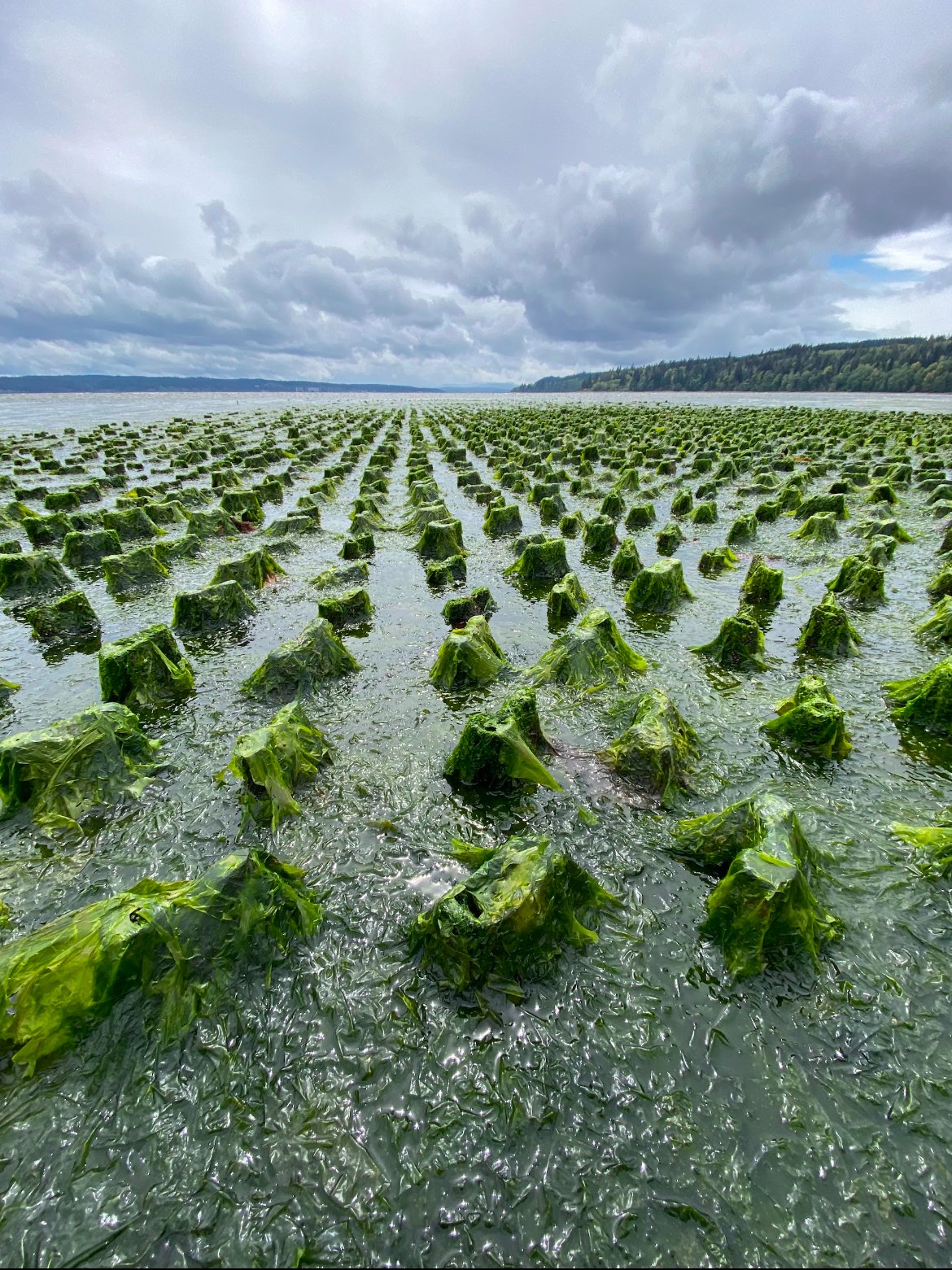
One of the sites where PSRF are working with Ulva. Image courtesy of PSRF [/caption]
“We're still in the process of making connections with farms in Chimacum, but have previously given Ulva to Chimalow Produce, Woodbridge Farms and Chimacum Valley Dairy. We are hoping in the coming year to establish some longer-term farmer partnerships,” Buckner said.
The harvesting practices of the Ulva are safe and sustainable, meeting one of the key values of PSRF’s mission of community cohesion and resilience.
Seaweed harvesting has been practiced for thousands of years across all coastal peoples and has many uses, such as broths, mixed seasonings and spices, pickling, navigation, art, and compost. Specific species, especially red macro algae, have been shown to reduce methane in cows and can also be used as an indirect feed source for livestock (PLOS One).
While the West Coast seaweed industry is friendly in Alaska with many seaweed farms at work, and fair in B.C. with Cascadia Seaweed operating seven commercial farms, it is considered “non-friendly” in Washington. There are three permitted farms in Washington: Blue Dot Sea Farms, Lummi Island SeaGreens, and Pacific Sea Farms. It was a long process for them to get into the water.
With constrained, competing waterways, special use conflicts, and tribal fisheries taking precedent, the real estate is tight. But more so, the rules around permitting don’t yet exist. So the current farmers are forming the way forward.
It is too soon to tell if the seaweed farming industry is having a positive or negative impact on our waterways, emissions, and wild animals, and both Buckner and Hayford believe that small-scale farming is far more sustainable. “Tribal treaties and fishery rights will be the farmer’s first partners,” Buckner said, advising anyone curious to farm seaweed to start there.
Scaling up too far can pose dangers to the water. Gear is also a concern for the animals using the farms as habitat, but the farms' seeding of the water could be a potential positive. With limited processing infrastructure and costly shipping, it is yet to be seen how seaweed farming develops in the West.
The PSRF field team found 30 baby Bull Kelp recruits from last year's plant, at PSRF's kelp enhancement (i.e. restoration experimentation) site by Indianola called Jefferson Head, a self-propagating generation, which will hopefully drop additional spores once they mature. This is huge news for PSRF and the Puget Sound ecology.
These ongoing research efforts are celebrating, protecting and serving cornerstone species in our ecological web. Their success depends on the community believing in the value of their efforts and supporting them in the ways they can, through conversation, citizen research, trying out seaweeds, volunteering, and donating.