Quimper Grange has a History Worth Growing On
By Angela Downs
Even before Oregon, Washington, and Idaho were states, there were Grange Halls. “Its primary function back then was to help farmers help themselves and to provide education to farmers from trusted sources.” Says current Quimper Grange President, Doug Groenig.
At one time, there were over 400 granges in Washington state alone. But now, granges all over the country are struggling to stay alive. Granges were a part of the big cooperative movement of the 19th and early 20th centuries. Granges did everything from provide inexpensive fire, liability, and car insurance to creating affordable gunpowder for blowing up stumps and removing them from fields. They had their own contracts with oil and gasoline providers, and were huge proponents of the PUD, water rights, and rural mail delivery. Almost anything you can think of as a service or a good that a farmer would need granges had a relationship to. If it was too much money or not available locally, then other Granges would come together. Granges were also the political force behind Washington's initiatives and referendums.“But all the co-ops started to die because conglomerates could provide the services cheaper than the cooperatives could,” Groenig explains as we visit the hall.
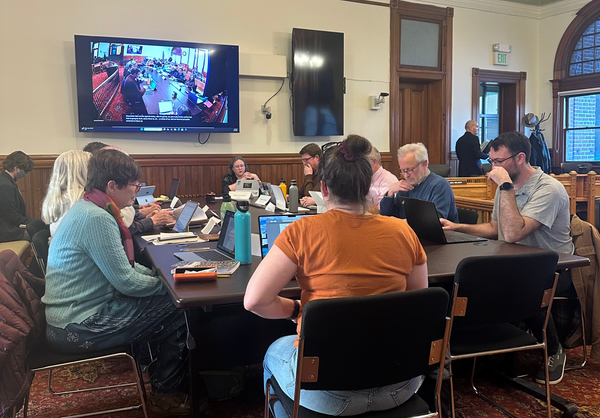
At this moment, there are only eight actively practicing members of the Quimper Grange, none of which are farmers or politically passionate. They are in search of people who feel inspired to dedicate time and efforts towards organizing and lobbying the needs of the Port Townsend agricultural community in Olympia. Meetings are held usually once a month, covering committee reports and adopting motions or resolutions.
Old rituals don’t attract new members
Granges use Masonic blueprints for their meeting requirements, with opening and closing prayers, many levels of accomplishments for initiation, and a heady, wordy emphasis on cultivating the mind. Their use of seasonal measures to hoist their ideologies, often based on the images and archetypes of farming implements, can be found in the Seven Degrees. One being,
"The Hoe, with which we cut up weeds, and stir the soil, is emblematic of that cultivation of the mind which destroys error and keeps our thoughts quickened and ready to receive and apply new facts as they appear, thus promoting the growth of knowledge and wisdom.”
And from the National Declaration of Purpose:
“The principles we teach underlie all true statesmanship, and if properly carried out, will tend to purify the whole political atmosphere of our country; for we seek the greatest good to the greatest number.”
“These fraternal organizations are all dying, which I don't think they need to be dying if they would just find a different way to legally be a fraternal organization.” The ritual needs to remain intact because that's how a Grange can be a non-profit registered with the government. It serves to indicate that you either all do something that other people don't, or you're with a group of like-minded people who provide services to just themselves as a group. That's a pretty tricky place to be in, to have that requirement of ritual, but that being the thing that stops people from wanting to engage. “To try and find time in your day and have to research this old book written in King James Bible like wordage, it's like learning Latin in high school. Most people dropped out.” Groenig soberly jokes.
Grange members stay true to its agricultural history
Part of the membership requires a certain amount of time throughout the month outside of the meeting dedicated to bettering the grange. Volunteer contributions can include mowing the lawn, weeding, painting, putting fundraisers together, helping at the door, moderating, and grant writing. “Anything that you would do at your own home to keep it alive, there's usually some tasks involved at the Grange that need that.” Says Groenig, summing the Grange’s needs. The Quimper Grange also opens the building to rentals for classes on watercolor painting, dance classes, club meetings, and live music. The board feels it is important to keep the space available to encourage these celebrations and the tradition of the grange as a main gathering place and a proponent of music and dance, but would prefer that renters were also members. “We don't need to be a fraternal organization to do what we're doing. But to get a little help from the state and from the national level, we have to retain a branch and be responsible for that. Because there are federal programs that can help people.” Says Groenig.
Though it matches the Grange’s original purpose as agriculture-focused, it's going to have to remain an arm of what the goals are, it doesn't have to be local, of the earth, people who produce food or animals to join. “But there are a lot of people who grow things. There's people who have animals.” Groenig imagines a future for the quiet Grange to have a voice in the direction of the community. Depending on where you're near the city, the rules are fairly open to allow for miniature farms. “The laissez-faire decades of Port Townsend, I think, are due to go away, just because the population is changing so strongly. It feels like a pretty prime moment to have people join the Grange so that when things start to change, they have a group of people that can say, actually, this needs to remain a certainty.”
New members needed to grow
Because the Grange has a connection with food bank growers, that is where they are going to start looking for new members. “Anybody with any ideas that could help people that have anything to do with feeding the rest of the world? I think we'll try to hang on to that part.” Says Groenig. The hope for the Grange is to get people to start working amongst themselves and try to make their own lives a little better by coming up with ideas to take to the state and take to the legislature. Groenig states, “We need dependable people that would run it, keep track of it, and decide how it needs to change in order to keep bringing people in and money in. People that we can reach out to and say, would you like to come and teach a class to the neighborhood?” They also want people who are having troubles dealing with the world around them to offer a place to raise their animals or grow their food or start their business. “I know there are people out there scrapping around, either doing it because they love it or to put food in their mouths. I want to reach out to those people so they will have a place where they can get together and talk to each other about their difficulties. Because it's difficult to make a living.”
It’s a major concern there won't be anyone to fill the positions when current members are ready to retire, which for some, feels soon. It’s important that new members are guided and taught by their predecessors, and working with a new President would be a great sign of hope for the grange. Another available leadership position is called lecturer. At every meeting, part of the meeting is set aside for an educational program- from waterway usage, animal vaccinations, herbal remedies, emergency medicine, or any other topic that feels relevant to the well-being of those in the organization. The array of offices gives an opportunity for widespread participation and leadership training, and Membership only costs $41 yearly for people 14 years and over.