Saving Seaweed: Indigenous history in need of attention

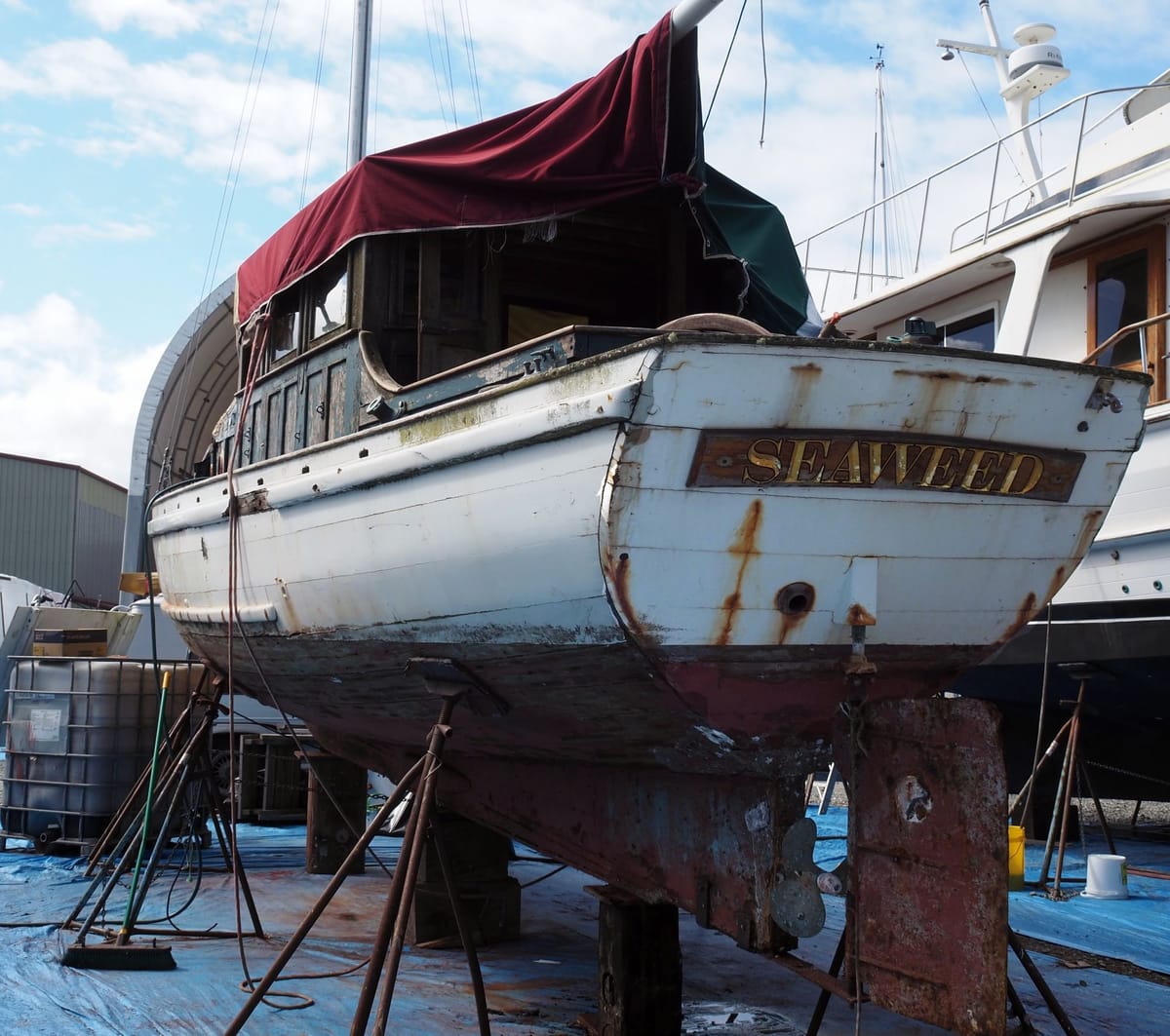
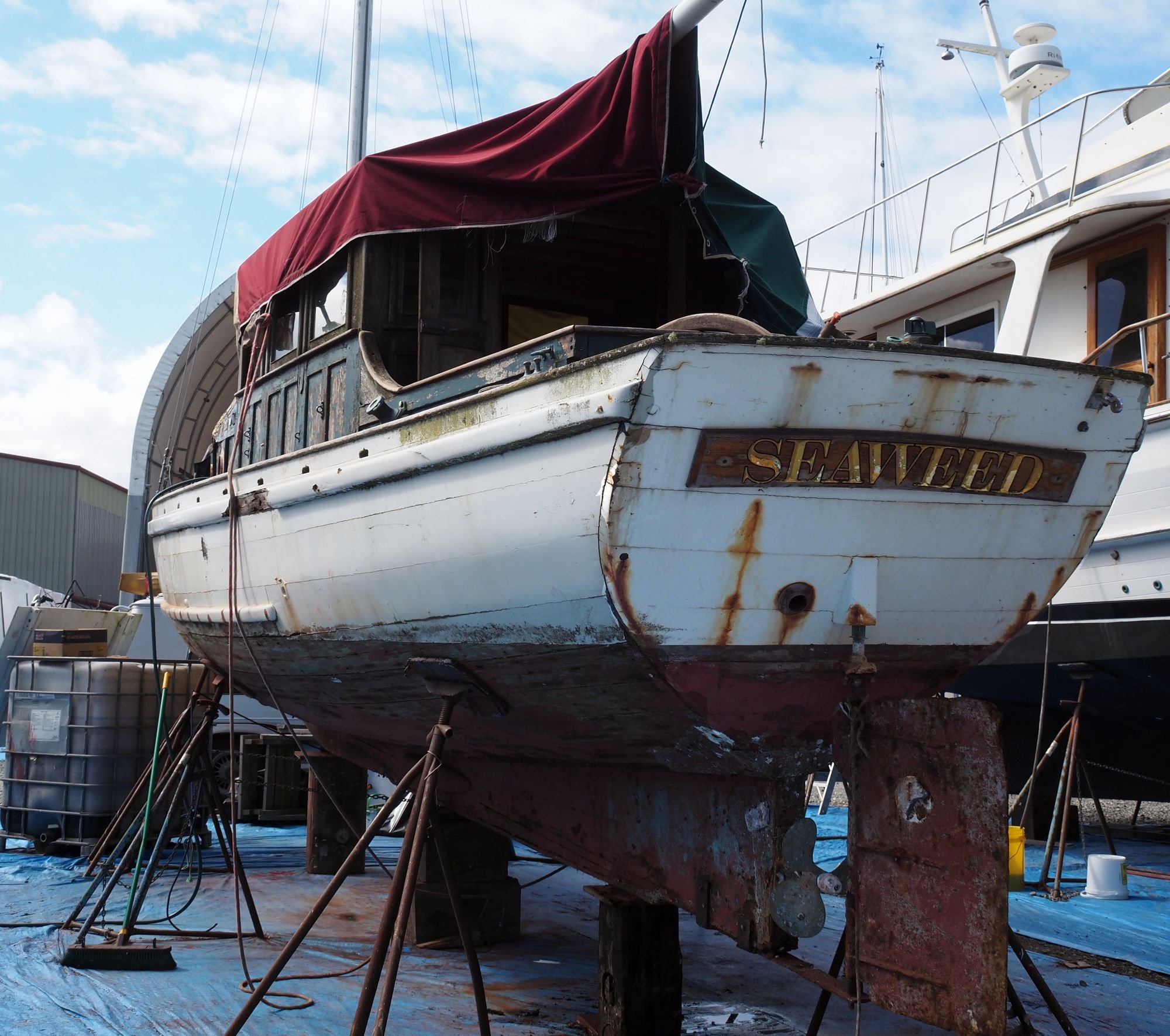
Despite her humble name, Seaweed manages to boast an impressive history. Before her exploits at Alcatraz, she dates back to 1932, and from the deck up she’s made of teak salvaged from the bridge of the US battleship, Missouri, BB-11. Photo by Derek Firenze. [/caption]
Stories are always told about seafaring vessels, though some are given more attention than others.
Sit right down and I’ll try to tell you the tale of Seaweed. Like any ship, she has many, but storming Alcatraz is certainly one for the ages.
Have you heard this one before? I hadn’t until Seaweed floated up my social media feed last week when I saw posts about local activist Mike Ferguson stepping in to try and save the 32-foot motorsailer from demolition. Even for her new Indigenous owner, it’s only been in the last few years that he learned the details of the 19-month occupation of Alcatraz Island by Indigenous activists, which Seaweed helped spark.
[caption id align="alignnone" width="2000"]
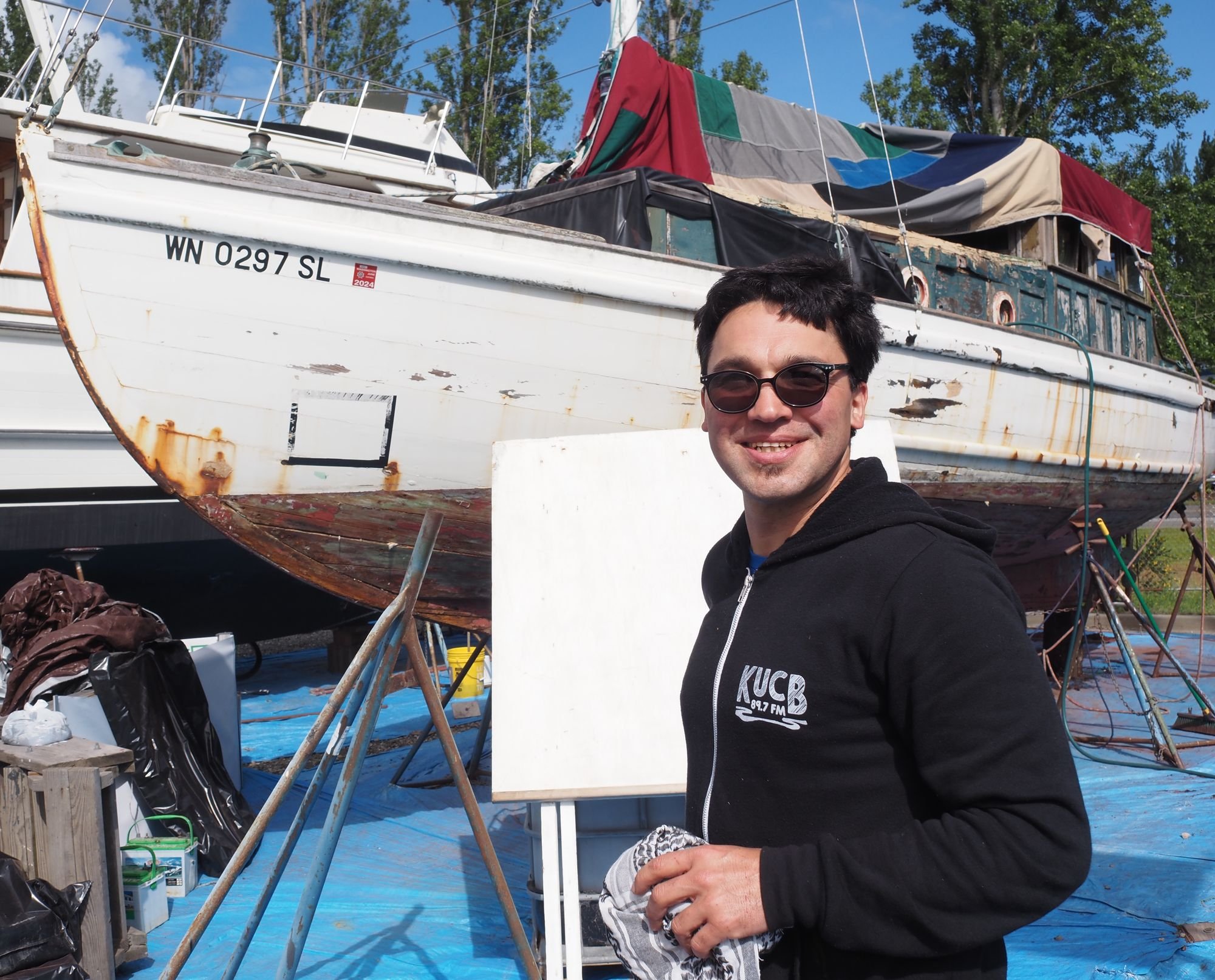
Mike Ferguson took over ownership of Seaweed on May 23, and began scraping away at her hull to get started on a restoration. Beacon photos by Derek Firenze [/caption]
Ferguson shared some of those details with me over coffee at the Boat Haven Marina in Port Townsend, where Seaweed is resting on the hard. He also noted that there’s still a lot to learn.
“I think one of the most neglected injustices in history is that of Indigenous communities, even so much so that my Alaskan Native self has not really turned my attention to Native issues,” Ferguson said.
While he recalled vaguely hearing of the Alcatraz occupation in the past, it wasn’t until Ferguson faced the very waters Seaweed crossed that he understood the full scope of its significance. A conversation in San Fransisco with a man wearing a “Water Is Life” shirt pointed Ferguson towards the Sunrise Ceremony, an annual event to commemorate the occupation, just a few days later. Ferguson found himself on a trip much like Seaweed’s first voyage to Alcatraz.
“People are up at Union Wharf by 3 in the morning, maybe even earlier, waiting for the four o’clock ferry to start loading people up,” Ferguson said.
Seaweed was the “flagship” and first of The Sausalito-Indian Navy to land on The Rock in the early morning hours when the occupation began on November 20, 1969. Indigenous activists remained at the former federal prison until June 11, 1971.
Seaweed was stuffed with souls that first night. While only 32-feet long with a single cramped cabin, she carried a couple dozen or so Indigenous activists packed like sardines, and she made plenty of repeat trips to bring more people to Alcatraz throughout the occupation.
At its height, there were 400 people occupying the former federal prison, highlighting issues of Native American civil rights and self-determination.
“Seaweed was instrumental in the occupation of Alcatraz, which sparked a whole wave of Indigenous sovereignty and resistance. The injustices to Indigenous communities are one of the least told stories, and maybe, just maybe, this will help contribute. At the very least, it’s going to inform me and other people who get involved,” Ferguson said.
Stories Restored
Leo Goolden recently launched the Tally Ho after his own seven-year restoration project that started when he found a 47-foot racing yacht rotting for years in a field in Oregon. With that success now behind him, he came by Seaweed to take a look.
“Leo came aboard and joined a list of people who poked at her with a knife to inspect the wood and inspect the hull from the bottom and the top side,” Ferguson said. While a list of difficulties and the possibility of failure were discussed, Ferguson told me their conversation was hopeful.
“She seems to be worth it from his perspective,” Ferguson said.
Of course, Seaweed hasn’t been seaworthy for a while now. With a split in at least one of her planks, she’s been sitting at the marina in Port Townsend for about a year. Her previous owner commuted back and forth from Brinnon trying to get her shipshape, but had to finally call an end to his chapter with her.
This will be the first wooden boat of its size Ferguson has worked on, but he’s been learning to build traditional vessels for years. After learning to build kayaks, he later worked on larger vessels like 25- and 27-foot boats called niĝilax̂, which are traditional to the part of Alaska his mother is native to.
Ferguson believes this doesn’t have to be the last of Seaweed’s story, however. And this is by no means the first desperate story he’s defended.
Ferguson has been an activist for much of his adult life, fighting for progressive political campaigns like Bernie Sanders, as well as for environmental issues, and most recently on behalf of the people of Palestine.
“I’ve had to do enough of my own fundraising, and I have a sense of when It’s important, it’s deserving, and it’s likely people will show up,” Ferguson said. “With the serendipity and energy swirling around this, I think people are going to show up.”
All Hands on Deck
[caption id align="alignnone" width="2000"]
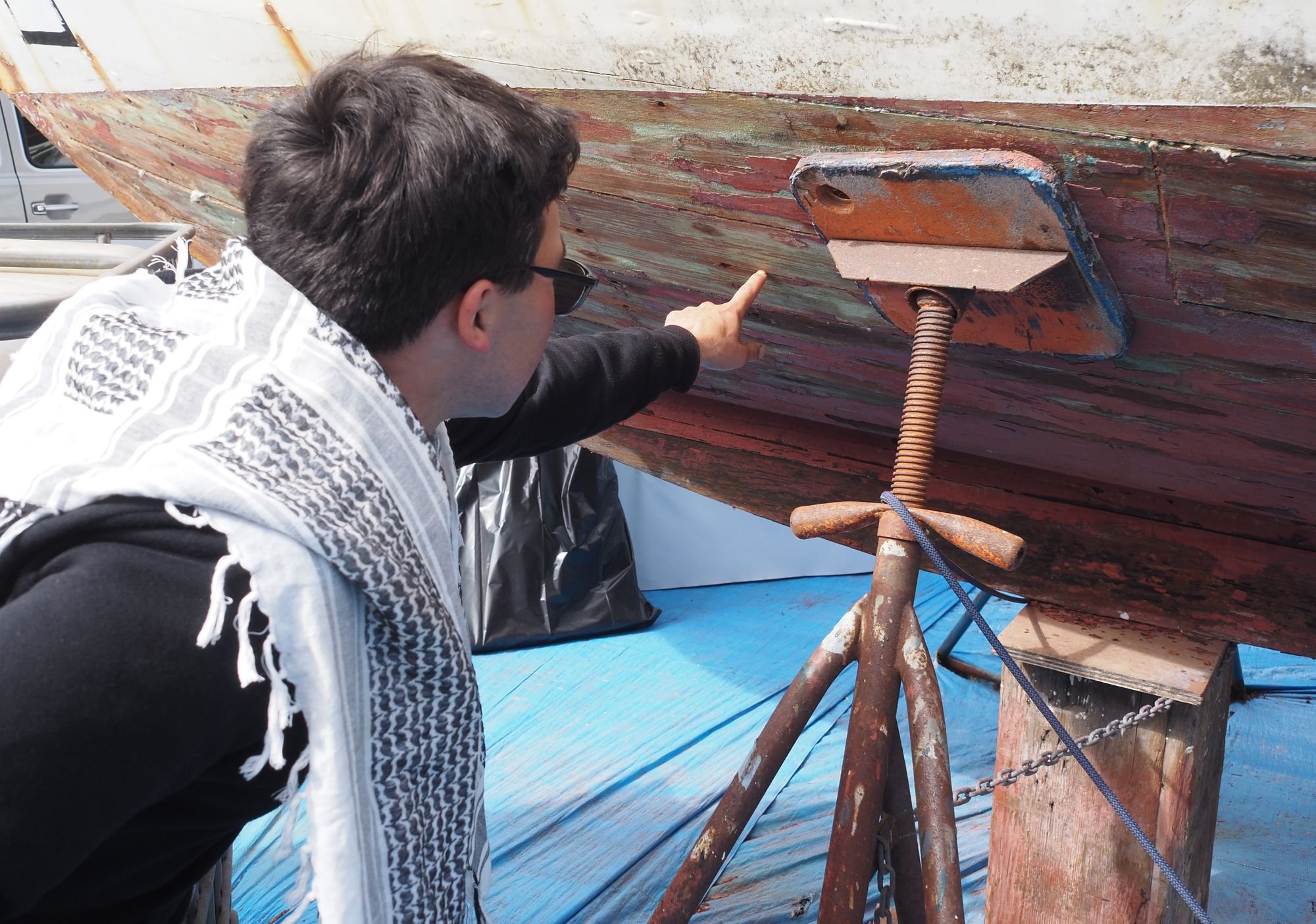
One of Seaweed’s biggest issues at the moment is a split in one of her planks that Ferguson pointed out to me when we spoke. Photo by Derek Firenze. [/caption]
Since taking over ownership of Seaweed a week ago, he’s been scraping away at her hull with the help of others and has gotten a loan for the first phase of work. Costs, of course, quickly add up, and to stay the course, Seaweed still needs to be surveyed and insured in order to get a bond to keep her in Boat Haven.
Ferguson is seeking an additional $3,000 during this first leg of fundraising, and hopes to raise somewhere between $15,000 to $20,000 by winter.
Others have encouraged him to move Seaweed on to private land off of Hastings that’s been offered, but there wouldn’t be access to electricity and water like at her current location, and there might not be the same access to helping hands.
“If this is going to become a community project, then you’re away from community. The boat yard is the place to be,” Ferguson said. He also noted that “if she’s going to be restored and back in the water, it’s going to take a lot.”
To spark community efforts, Ferguson started reaching out to people who were on Alcatraz during the occupation, as well as local organizations like The Wooden Boat School, Community Boat Project, and the Maritime Center. He’s also been in contact with the Daybreak Star Indian Cultural Center in Seattle.
“I think there’s different options of being realistic,” Ferguson said. “The spark is, see if she could be of service primarily to Indigenous causes and communities, but not limited to. If a community forms around her, that community will help decide what she does.”