
Learning to Love Unfamiliar Vegetables

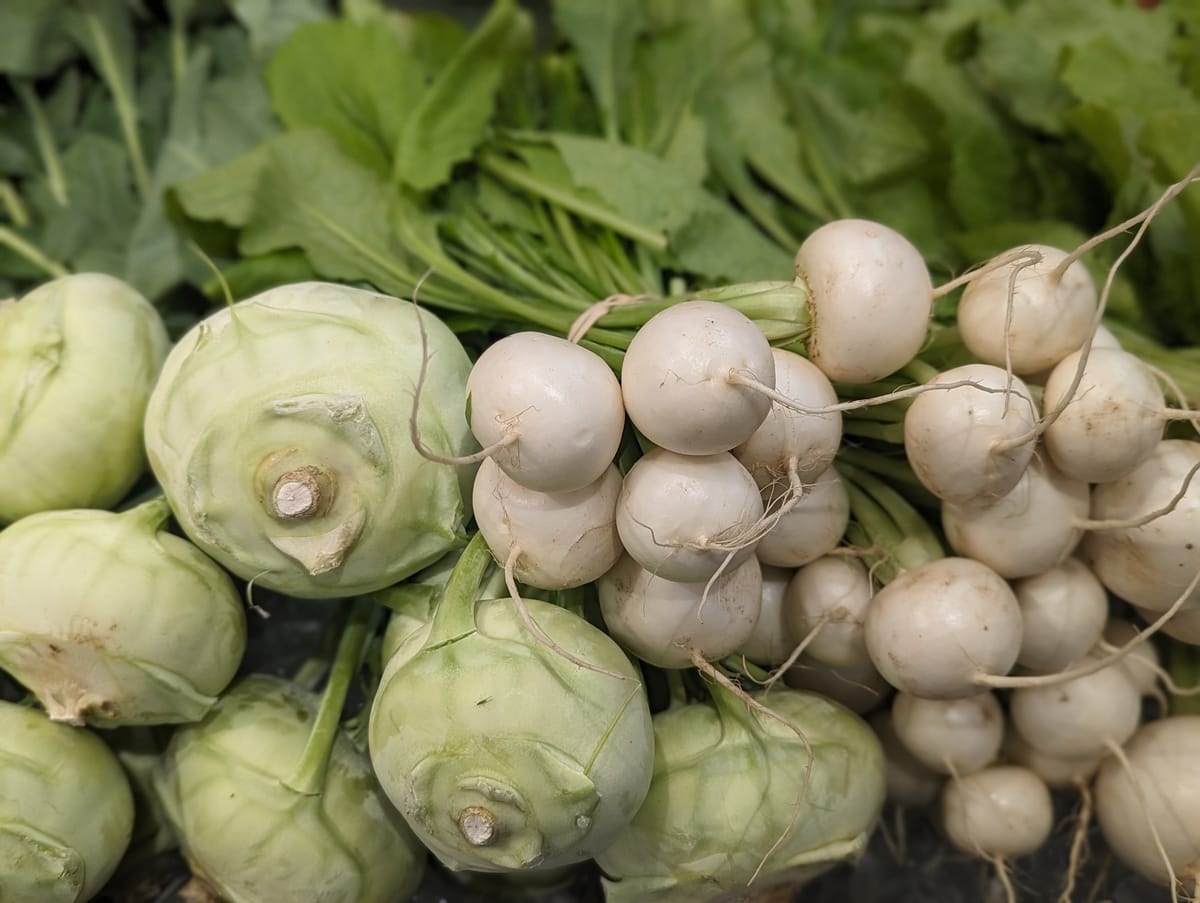
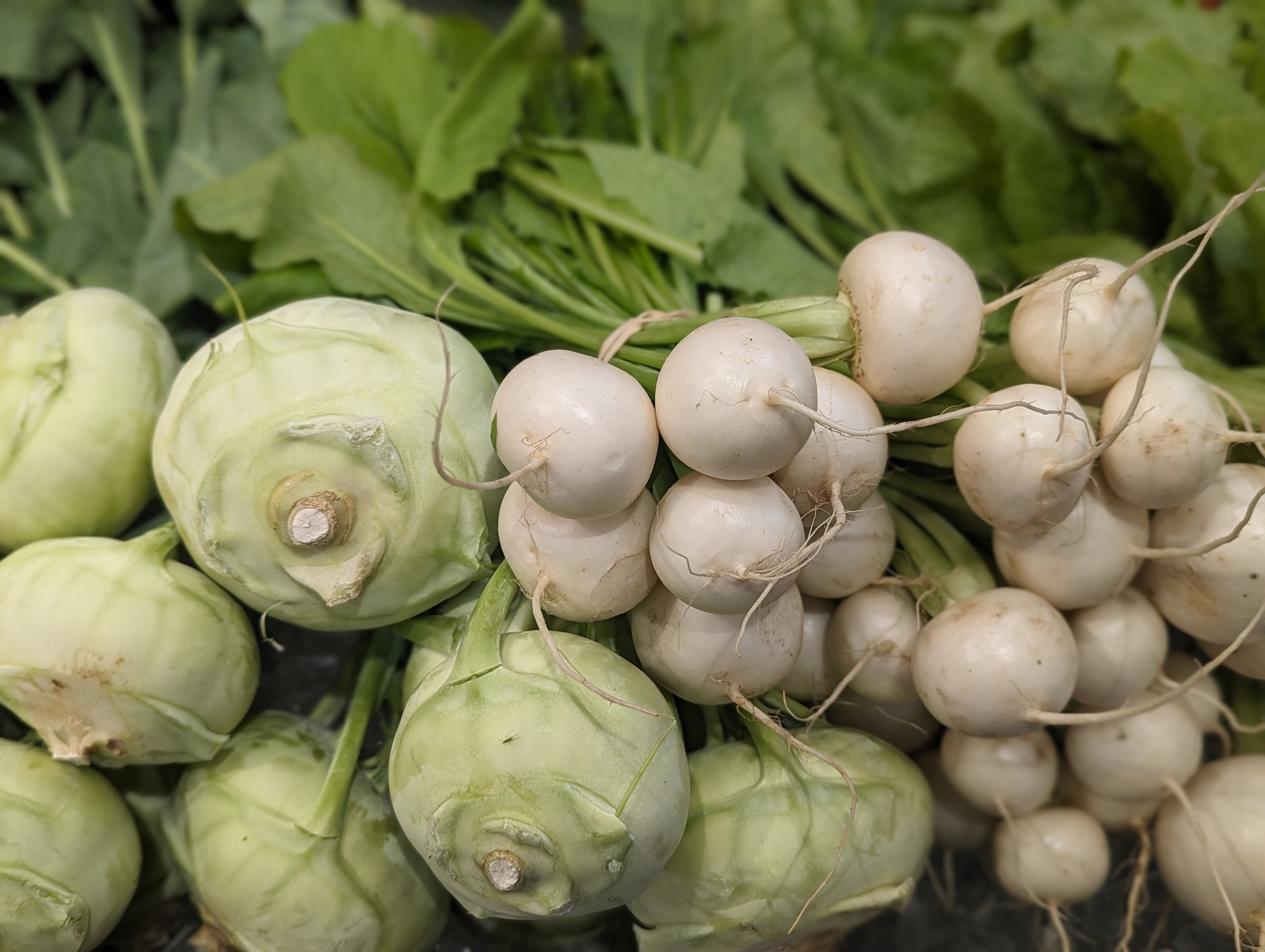
Kohlrabi and hakurei turnips at the Food Co-op [/caption]
By Emily Henry
You know that feeling when you’ve just been given a gift bag, and you can’t wait to dive into it to unveil all the goodies that reside within? That’s the feeling I frequently feel when I open a CSA box. It’s a capsule of curated vegetables that a local farmer has grown and selected for the subscriber to receive each week. Inevitably, there are often one or two items that are less familiar, creating one of two responses: “Yay! I have something new to discover!” or “Oh, no! I don’t know what this is or what to do with it!”
Up until recently, I often fell somewhere in between the two. I loved receiving the steadfast favorites such as strawberries, carrots, onions, and salad greens, but there was something thrilling – and a little terrifying – about discovering a veggie that I couldn’t identify. When I asked farmers at the Jefferson County Farmers Market which kinds of produce required more explanation, they eagerly pointed out fava beans, pea shoots, and wine cap mushrooms, to name a few. The two that were a landslide for needing the most clarification, though, were a German turnip, better known as kohlrabi, and the Japanese turnip, harukei.
[caption id align="alignnone" width="3072"]
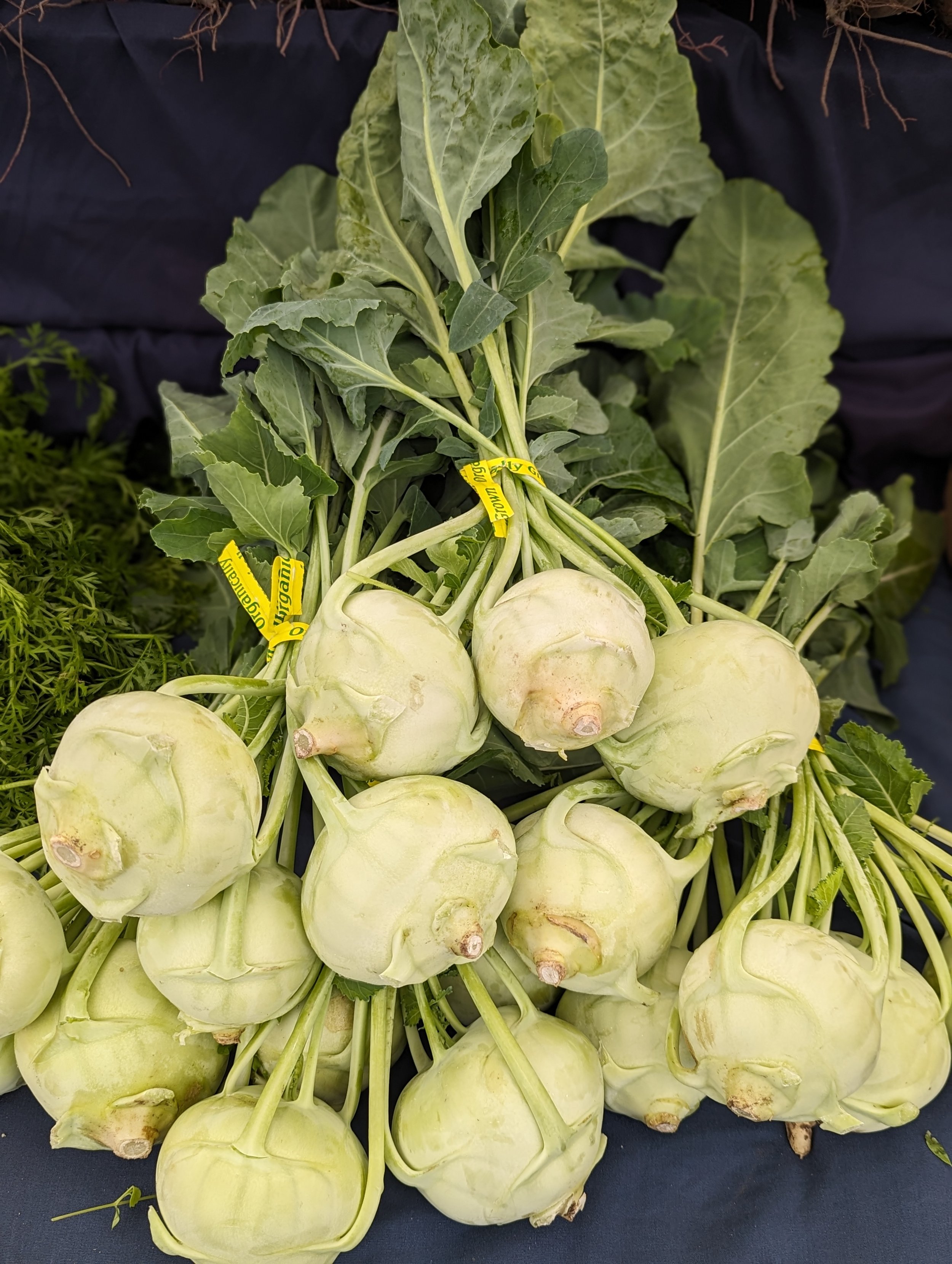
Stellar J Farm's kohlrabi at farmers market [/caption]
It’s no wonder that kohlrabi, a Sputnik-looking vegetable, fell into the group that needs further explanation. Intimidating, maybe, but what could be more intriguing than a brassica with a flavor profile described as the product of an agricultural ménage à trois? Grace Thompson with Kodama Farm explained, “It’s like if broccoli, apples, and potatoes had a baby.” This apt description illustrates why kohlrabi’s crisp texture and mildly sweet flavor make it a perfect snack to slice into and eat fresh. Along with its edible greens, it can also be julienned and added uncooked to salads and slaws. But if raw veggies aren’t preferred, it is delicious when sautéed with herbs and butter. This ambiguous beauty is not one to shy away from.
The hakurei turnip, or Tokyo turnip, is a late spring favorite among market sellers. It is also a root vegetable that can be befuddling to customers. These small, white bulbs offer such a sweet and mellow taste that they are barely recognized as turnips. Frequently mistaken for radishes, they have a delicate spiciness without the peppery bite. With leafy tops that are not to be overlooked, the hakurei’s nutrient-filled greens can be used in salads or blanched and tossed into a pan with the bulbs to enhance the vegetable’s natural sweetness. Meghan Mix with Hopscotch Farm recommended eating them on their own or slicing them thinly to pair with a salad or hummus. Red Dog Farm’s Marina DeMarco suggested roasting the turnips in a balsamic butter glaze.
It can be intimidating to approach food that is unfamiliar, but it can also be an exciting challenge. This community has an abundance of incredible farmers and produce. I implore you to get wild and step away from the list and go outside your comfort zone the next time you’re shopping for groceries. Whether you are unboxing your CSA treasures or you’re at the farmers market, the Food Co-op, or the Chimacum Corner Farmstand, don’t shy away from the unfamiliar. Investigate the local produce you normally ignore and discover a vegetable you just might love.
All photos courtesy of Emily Henry