Standing on the shoulders of (retiring) giants

Editorial By Jake Beattie
You might have heard the news already, or you might not even know what I’m talking about, but Betsy Davis, current Executive Director of the Northwest School of Wooden Boatbuilding, recently announced she’ll be retiring this coming June. You can read the press release here.
Unless you’ve spent decades following the Northwest School of Wooden Boat Building, you might not grasp the bigness of that news. First, it’s important to underscore that the Boat School is instrumental to the vibrancy of Port Townsend’s marine trades community and by that measure, the vibrancy of Port Townsend itself. It’s easy to take for granted the extent that our community is tied to the craftsmanship of the sea, but as an inveterate boat nerd, I have searched, and I’m here to tell you there is no place I’ve found that has the “talent density” of Port Townsend. Whether you know it or not, you live in a world-class maritime community, and the Boat School is one of its pillars. Former mayor and shipwright David King likens the school’s influence on PT’s marine trades to Stanford’s impact on Silicon Valley.
The community of Wooden Boats can be pretty tight-knit. When I started at the Northwest Maritime as a relative outsider, the pre-Betsy Boat School felt like the Knights Templar; they kept to themselves and guarded against the erosion of knowledge, holding fealty to a particular kind of wooden boatbuilding. To an extent, the school’s value derived from its separateness.
“By my estimation, Betsy is the alchemy at the intersection of a five-way Venn diagram: Stanford smarts, Jimmy Carter humility, Carhartt fashion, Machiavellian strategy, and Winnie the Pooh humanity. ”
Under Betsy’s leadership, I watched the positive transformation of the school from reactive to proactive, from limiting internal perceptions to proactive progress. I saw the school innovate and increase its relevance beyond the Templar; augmenting its facilities and updating its course offerings to keep up with the times. Her efforts have been impressive, community-oriented, and the institution is so much the better for it.
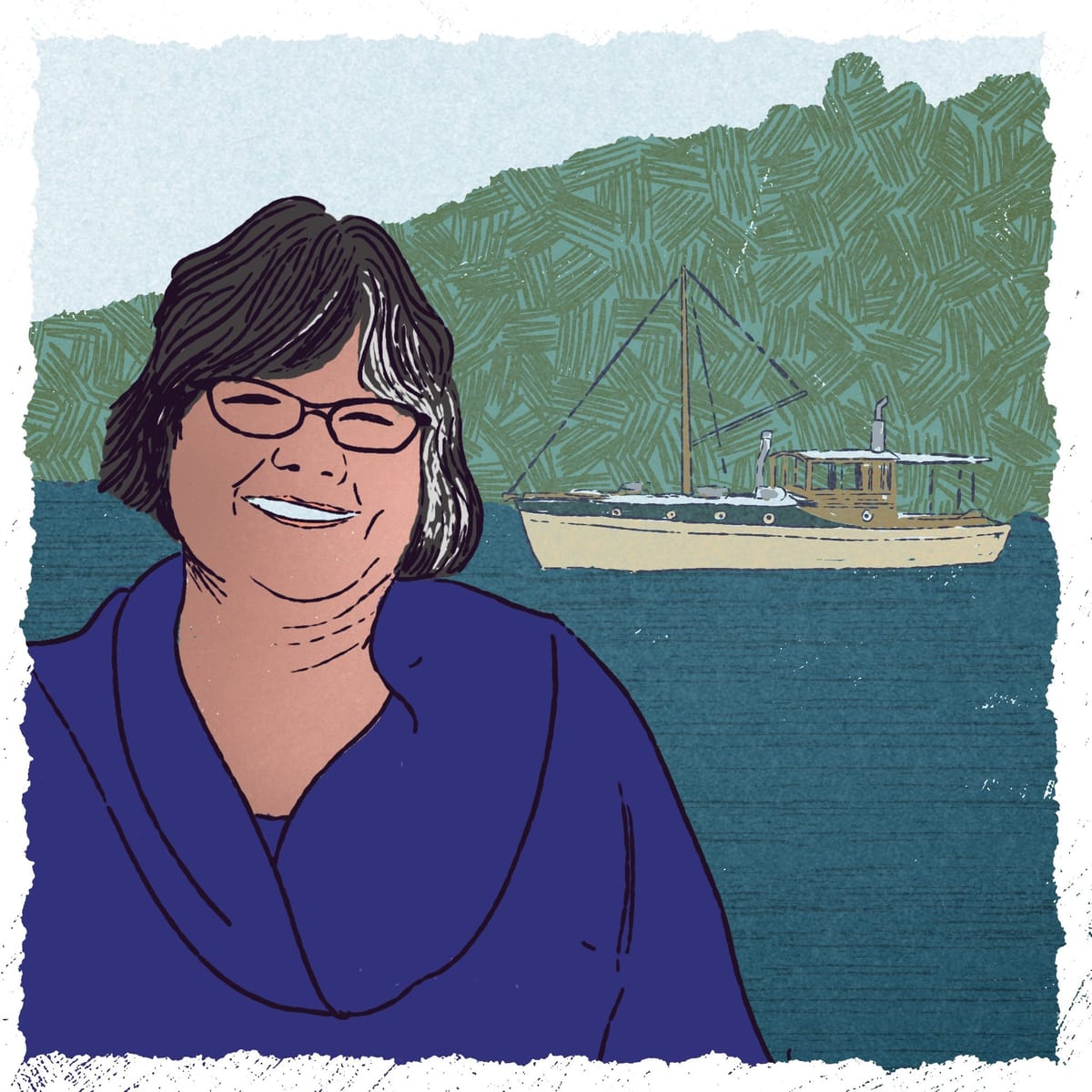
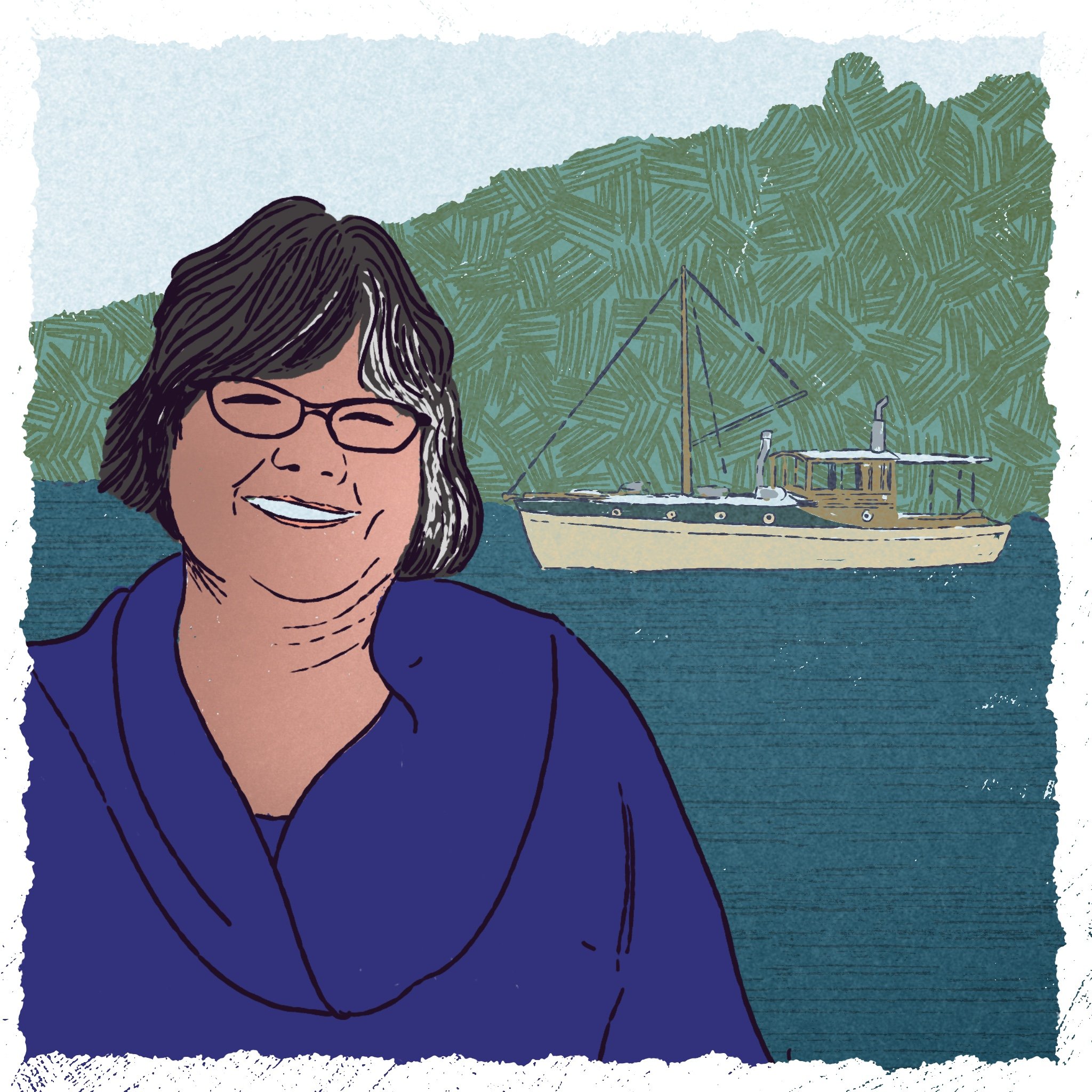
Beyond her hitch at the boat school, unless you’ve spent decades following Betsy, you might miss the bigger bigness of her retirement. Betsy has been a giant force in the PNW’s maritime world since she joined a boat-building program, restored her 1914 motor launch Glory Be, then in 2003, ascended to lead the Center for Wooden Boats. If you are like me, you know her as always intelligent, always human-centric, and never pretentious. I’ve known her for 25 years and whether in a room full of students, industry experts, or elected officials, no matter what room she walks into she is always the most prepared and least pretentious, all with the unassuming outward persona that I can only describe as “cat lady laureate.” By my estimation, Betsy is the alchemy at the intersection of a five-way Venn diagram: Stanford smarts, Jimmy Carter humility, Carhartt fashion, Machiavellian strategy, and Winnie the Pooh humanity.
Risking sounding like an obituary for someone still very much alive, Betsy had a full professional life. She grew up in Seattle, graduated from Stanford, then parlayed classical piano training and 90+ words per minute into a temp job doing data entry at a mail-order adult store. Not satisfied with the silicone rubber grind, she parlayed all of that into a gig at a little-known tech startup called “Microsoft”; roughly the 600th employee. She was there for years, at some point rising to product manager of Excel; like the whole thing. She once told me, “I always thought of Bill as Melinda’s husband.” She wasn’t just good by my estimation; she was Fortune 500 verified.
After all of that, she shepherded both the CWB and the Boat School through transition periods, modernizing approaches and assumptions left over from founders; preserving the spirit of that original DNA while throwing open the doors and making sure that everyone felt welcome to participate. I saw it firsthand.
At 26 I was her second hire at the CWB. She took a chance on a cocky, mostly housebroken Outward Bound instructor with short experience and big ideas and hired me to grow CWB’s programs. For six years Betsy took me under her wing—others, too—and gave us pretty long leashes, thus creating a cadre of young professionals who left seasoned and made impacts of their own. Myself, Heron Scott, ED at the PT School of Woodworking, and Shelly Leavens, the former ED of the Jefferson County Historical Society now running communications at the City of PT, are among them. Betsy has a singular ability to welcome participation from all kinds of people, excite people into leadership, and create allies, all while driving in a strategic direction. We were all so young, but she never made us feel anything other than equals. I had a front-row seat to her brand of leadership during my formative years and can draw a straight and thankful line from my self-described role of “holding her purse” to the success and progress of Northwest Maritime.
Betsy will be leaving some enormous shoes to fill, at an institution of vital importance to the regional maritime community. (In case you know anyone, here’s a link to the job announcement.) More than the community-level gratitude I feel for helping that important organization thrive, I’m personally grateful for Betsy’s leadership and mentorship, which have shaped my career. Besty, thank you for everything. I wouldn’t be the same without your mentorship, and this maritime community won’t be the same without you.