The Intersection of Grief and Movement: An Interview with Bill Evans

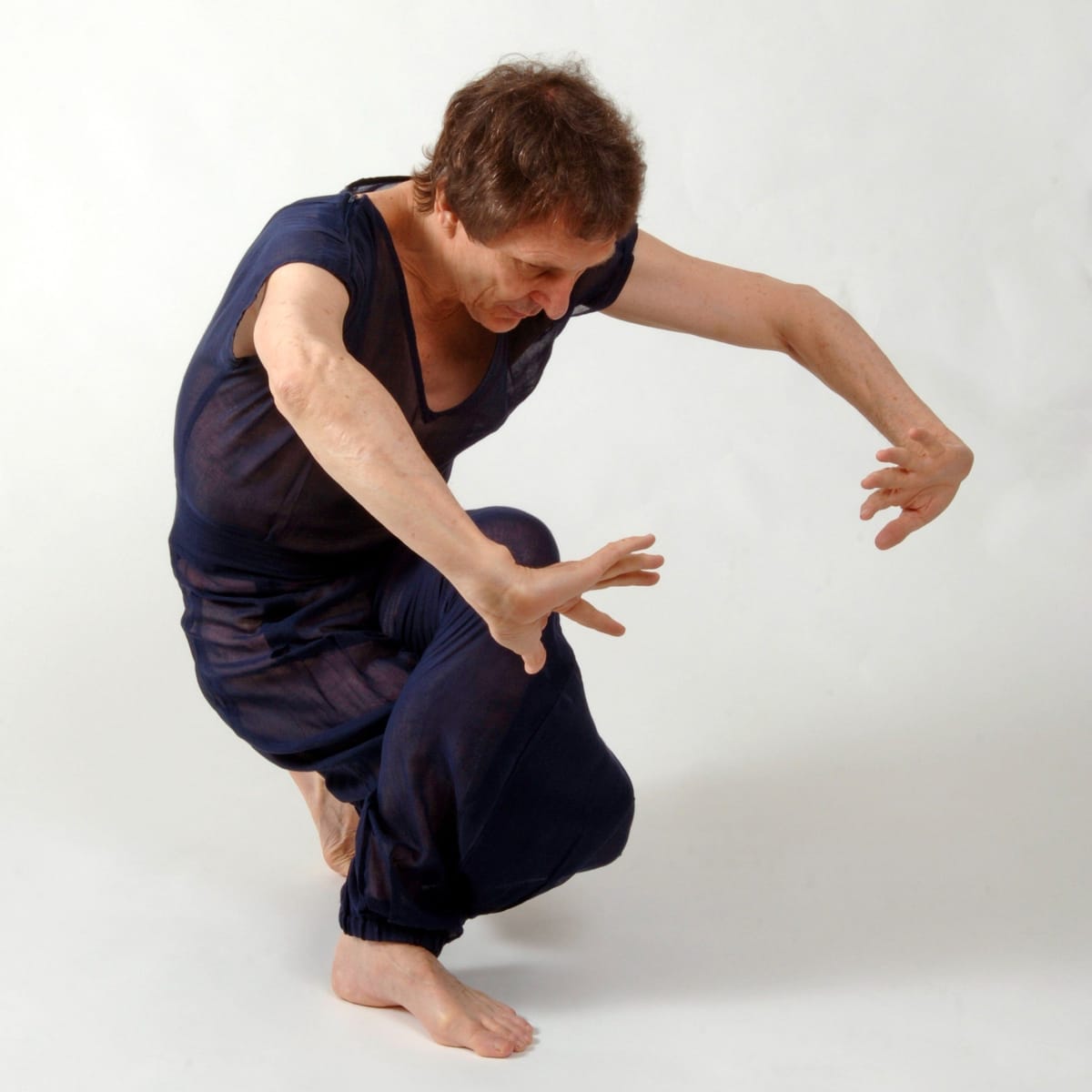
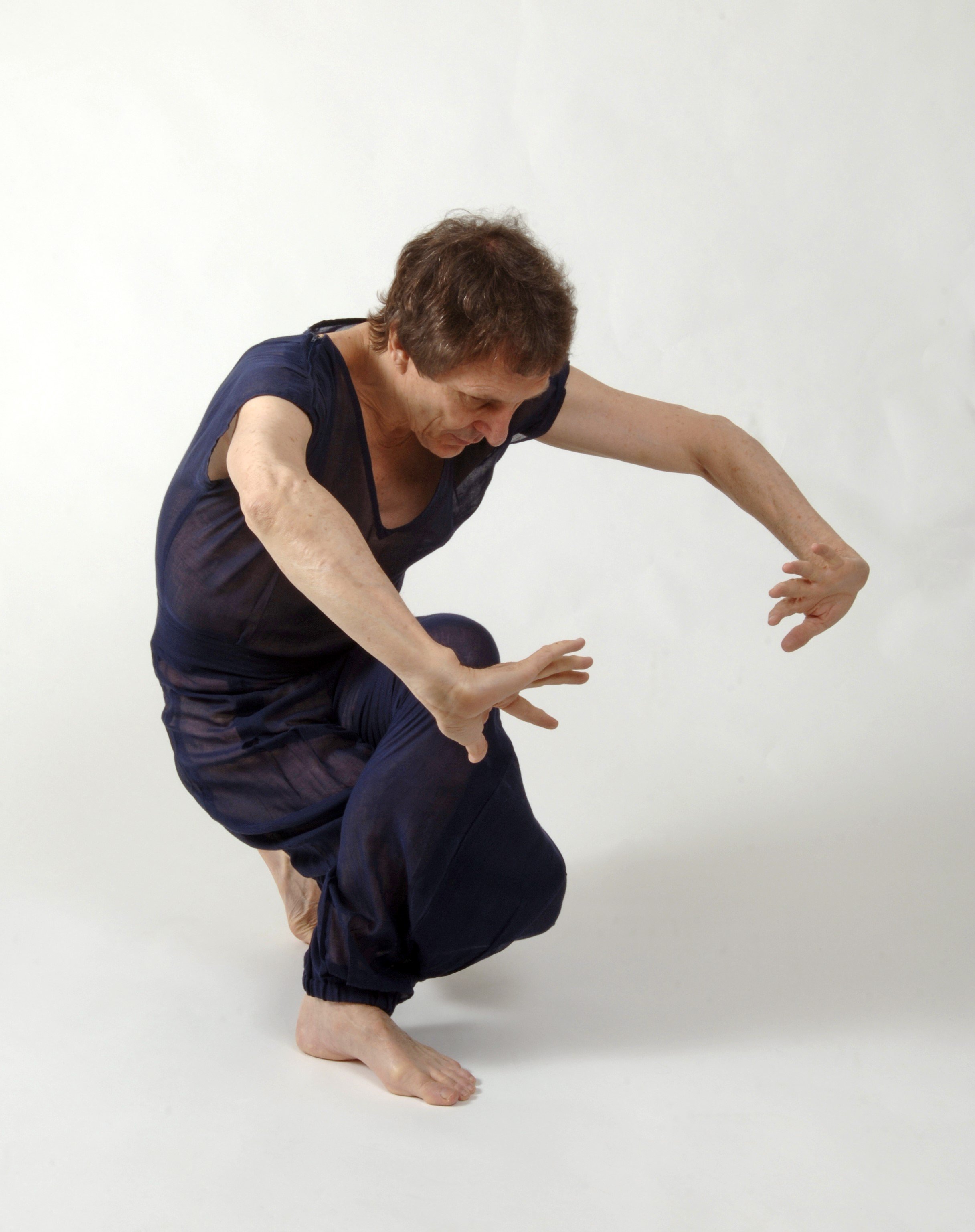
Bill Evans, photo by Jim Dusen [/caption]
By Angela Downs
When I was fifteen, I started in formal dance. When I was sixteen, my oldest brother accidentally killed himself. What took me through the dense forest of grief was improvisational dance. It was a transmission force of inner conflict through bodily processing– moving my blood, resisting sclerosis, releasing story.
I was in an improvisational movement class with a teacher named Morgan Kulas, at the time. Though I didn’t know then the value of participating in psychosomatic processing, I now see this wisdom as a human right. In ancient Chinese Medicine, they say, “To treat the mind, go through the organs. To treat the body, go through the spirit.” Dance engages and embodies these truths.
It works like this: You have an emotion, and each time it comes around, you weave it differently. Intellect is turned off as you follow the body’s impulse to release what is no longer serving you. You cycle through to transform the potential of illness into freedom of expression. From this, you build trust in the relationship to self and the body.
Through improvisational dance I’ve been asking the question, “How deeply can I listen to the story my body is telling?”
[caption id align="alignnone" width="1170"]
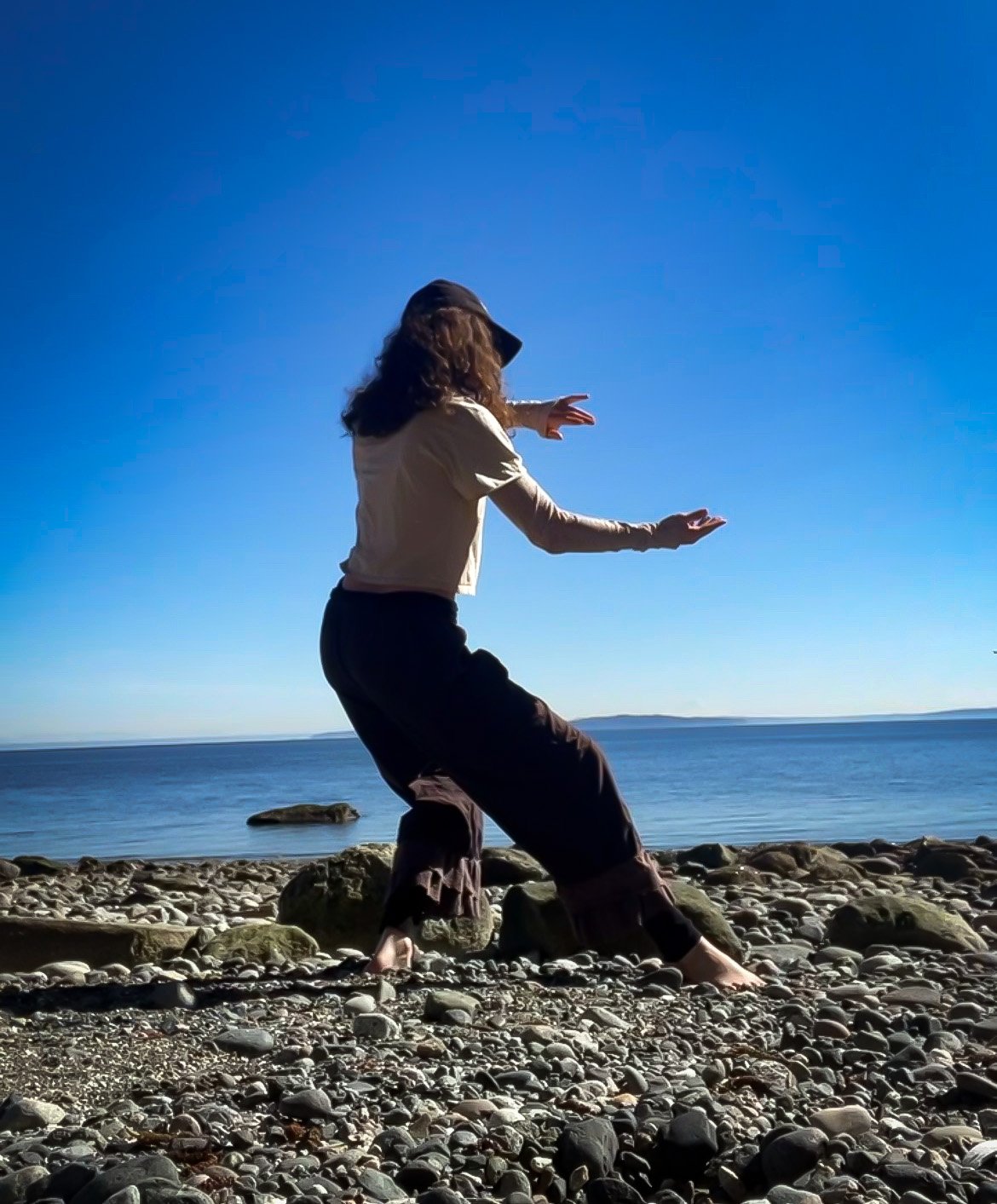
Angela Downs dancing, image courtesy of writer [/caption]
In February of 2022, I was introduced to Bill Evans and his dance technique through Madrona MindBody Institute. Evans is currently in the creative process for a memorial piece for a beloved member of his dance community, Suzie Lundgren. I sat down with Bill to ask a few questions about his understanding of the intersections between movement, grief, performance, and the ways the spirit and body are tethered together through dance.
“I've often made choreographic works as a place to put my feelings of grief when people I've loved have passed. It gives me something to do with that intense feeling. At first, when I hear bad news, I feel I can’t move, like a part of me has died. By focusing on a person I love and moving in ways that seem congruent with who they were it brings me back into my body.
I think the most significant piece I had done in which I was trying to honor someone who passed, is a piece called Requiem For Janet, in the early part of the 2000’s. She had been my friend for decades, and she took her life by jumping out of a nineteenth-story window in Manhattan. It was traumatizing to me. I was teaching a repertory class at the University of NY Brockport when I got the news, and asked the class if they would help me make a piece to process my grief. I asked them to find times in their life when they experienced grief, to help me create sound and movement both.
Another piece called Velario, was choreographed for someone I didn’t know, but his twin sister commissioned me to make the piece. The first day of rehearsal, Pam came in after getting off the phone with her brother, who the piece was for. He revealed that he was dying of AIDS and asked that no one see him in his emaciated state. One of the dancers grew up in Mexico City. She told me about the Velario, where people stay up all night around the casket and the deceased. She also told me about across the Rio Grande from El Paso, how people in grief do a ritual of crawling on their knees. So, I made the piece based on Anna Suffle’s input in honor of Pam Turley’s brother. I had experienced the loss of so many dear friends to AIDS, so it gave me an opportunity, a place, to put all that grief I had.
Coming from grief, I’m aiming for sheer beauty. I help myself deal with grief by focusing on the beautiful aspects of the person who’s diseased and the beauty of life itself; life is so fragile and yet so beautiful. When I did the piece about Janet, it was not about sheer beauty. It’s about mourning. The dancers make vocal sounds, which are really about painful painful mourning. I was tortured by her death. So, that piece is not about sheer beauty. It’s about ritualized mourning.
It is a different sort of process because it's coming from my heart. Most of my pieces come from my kinesthesia, my sense of motion. I move, and the movement phrases reveal to me what the piece is about. I look at the movements and can see where it’s coming from, so then my cognitive function comes into play. But first it's kinesthetic, then affective, emotional. But the pieces I've done in honor of the deceased are coming mostly from feeling, not from kinesthesia. I start from the sense of the heartache I’m experiencing. It’s more my organs than my muscles.
I can’t attempt now to do the type of piece for Suzie that I have done in the past. I chose the Memory’s Vault because it’s a place that was important to Suzie. She started coming here in the summers with me, I believe in 1981, she loved Fort Worden, and she particularly loved to spend time in the bunker, and in recent years, in Memory’s Vault. She would go there to spend time, read, meditate. I’ve had this image of Suzie sitting on the bottom of the stairway outside JFK, reading. When I see those stairs, I’m reminded of Suzie sitting there forty-some years ago.
I wish that circumstances were different and I could engage in a more rigorous creative process, but it’s not the case right now. In rehearsal last week, the canal between Lumbar 3 and 4 is so narrow the nerves are being pinched, but while I was rehearsing, I couldn’t feel the pain at all. It took me out of the pain and gave me something positive to focus on. The movement gives me something to do with the grief rather than to be overwhelmed by it. If I were a painter or a music composer, I could create something more substantial; dances are so ephemeral. But all I have to offer, the greatest gift I can give anyone, is choreographic creation. By making these dances, by focusing on this person and the beauty and complexity of their lives, it gives me somewhere to put the terrible sense of losing them.”
Bill Evans's new piece will be performed at 7:45-8:15 on Tuesday, July 16, at Memory's Vault. All are welcome.