The Intersectionality of Grief: Kitchen Medicine for the People, Part Two
By Angela Downs
I’m talking with Greta Montagne of Gentle Strength Botanicals in Arcata, CA. She has been sharing about her back-to-nature upbringing, emergency medicine, herbal grief care, and hope for the revolution of home medicine (see last month's column to catch the first half of our conversation). She has me thinking about the erosion of community support through the hyper-individual nuclear family, societal pressures, and the oppression of home medicine. When it comes time to accept and offer support, there’s a collapse that happens. Is it because small group care has become mass group care and government regulations, or from the cold, highly intellectualized perspective we’ve adopted?
“Stoicism is another thing that really blew my mind,” Montagne remembers from the experience of losing her young son. “I was not prepared for the level of stoicism. It was the most hurtful of all of the interactions because they didn't connect with me on a heart level, it would have been so much more meaningful if they could have at least touched my elbow to express that they felt some compassion for me.”
“What's so different for men and women, how we grieve and how we're treated in grieving. Men are expected to be very stoic in this culture. Thinking back through the repertoire of herbs I've used for grieving, most of them are what you would consider a feminine herb, peach leaf elixir, for example. Very few yang kinds of herbs in the grief repertoire.”
As I’m learning to orient my life towards a seasonal, cyclical approach– especially centered on my menstrual cycle– I’ve been having more conversations about the importance and difficulties of decolonizing and de-industrializing our bodies. I’m hearing in Greta’s wisdom the urgency behind uncovering all the places we can encounter, which is a great reckoning and an opportunity for undoing.
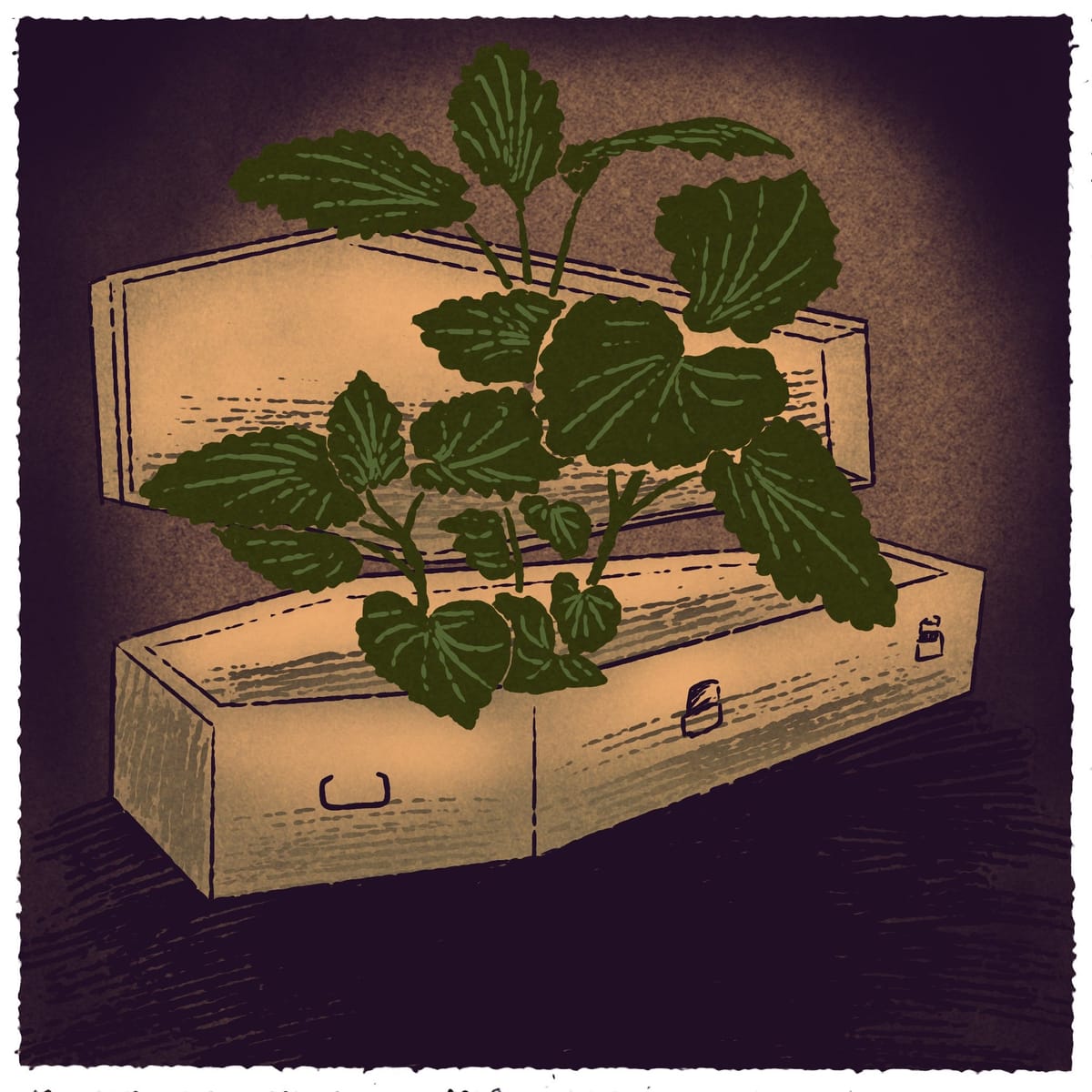
“Having radical hippie boomer parents who think outside of the box, they're in that genre of boomers who really want to be in control of the way they die and how they're buried,” Montagne says. “There's this new wave coming with these boomers who are alternative-minded and want green burials. They don't want their loved ones to have to suffer through the formalities of funeral homes and these kinds of staid, sterile memorial services that the industry forces us through. It’s from an activist perspective, “How can we start creating more healing experiences, and how can we bring death into our hands again?” It's been so removed from us by this very wealthy industry. You don't have to do it or see it or feel it or touch it.”
Fragmenting responsibilities and delegation to middleman industry leaves people dissociated and isolated with reduced accountability. How and why would we want to hold death in our own hands? What if we don’t feel like take-out, pharmacy benefit managers, and funeral homes are a threat to our freedom? Well, the recommendation is to look a little closer at the links between community, care, and our immunity. “I think it's a great niche for herbalists to become bereavement counselors or death doulas or, from the level of hospitality care that we can provide as herbalists,” Montagne suggests. “Memorial services, for example, instead of just plain tea or coffee, have some actual teas that help your nervous system or help promote tears. We know these tools already, they were just taken away from us. They've been undergrounded for a long time and oppressed. The U.S. pharmacopeia at one time was full of herbs. The eclectics had 30 teaching colleges, and they were all undergrounded by the AMA and really oppressed and persecuted, and some were even killed for practicing without the new licensures. The drug industry was capable of undergrounding this vast pharmacopeia. Death and dying is another area we need to make equal again!”
It can seem so daunting to respond to and demand change. There needs to be change in pharmaceutical companies and questions about the funeral industry’s profit margins. We need a vision, skills, incentives, resources, and an action plan. Radicalizing our most intimate human selves is incredibly scary. But what I understand from Montagn is that we can simplify, trust in the plants, and nourish our abilities to release.
“There's so much trauma on the planet right now. The whole planet is in mass anxiety. What particular plants are useful for global apocalypse fears? Which plants are wanting to come forward right now to do their work as we go through this journey? They want to get in our bodies, they want to use our thumbs. There are great herbs that help us let go. We have the homeopathic Ignatia amara, which midwives use to help the umbilicus cord disconnection. For softening, we have peace leaf and mimosa, and we've got invasive plants like the tree of heaven that are colonizing all these areas, showing us the way.”
Grief accompanies each of us as we navigate these times of incredible change, challenging us to become new to ourselves, strengthen our upright natures, connect us with who is in the room, and expand our community concerns to the more than human. As we finish our conversation, Montagne shares her hopes for humanity, “I hope we remain social beings, that we return to community and learn to be with one another again and live side by side and support each other, that our greater socialization skills come forward with our intellect to be better people, that war's end– this constant state of conflict, struggling and fighting, scrapping over land for food, for plants, this protracted struggle for water and power.”
If you’re feeling brave about integrating your grief to change the course we are on, maybe stop and listen to the flowers, try a tea from Gentle Strength Botanicals, ask your parents about their plans for their death, or let your neighbor know you’re available to listen. Big change starts with small, intentional actions.