The Intersectionality of Grief: Kitchen Medicine for the People
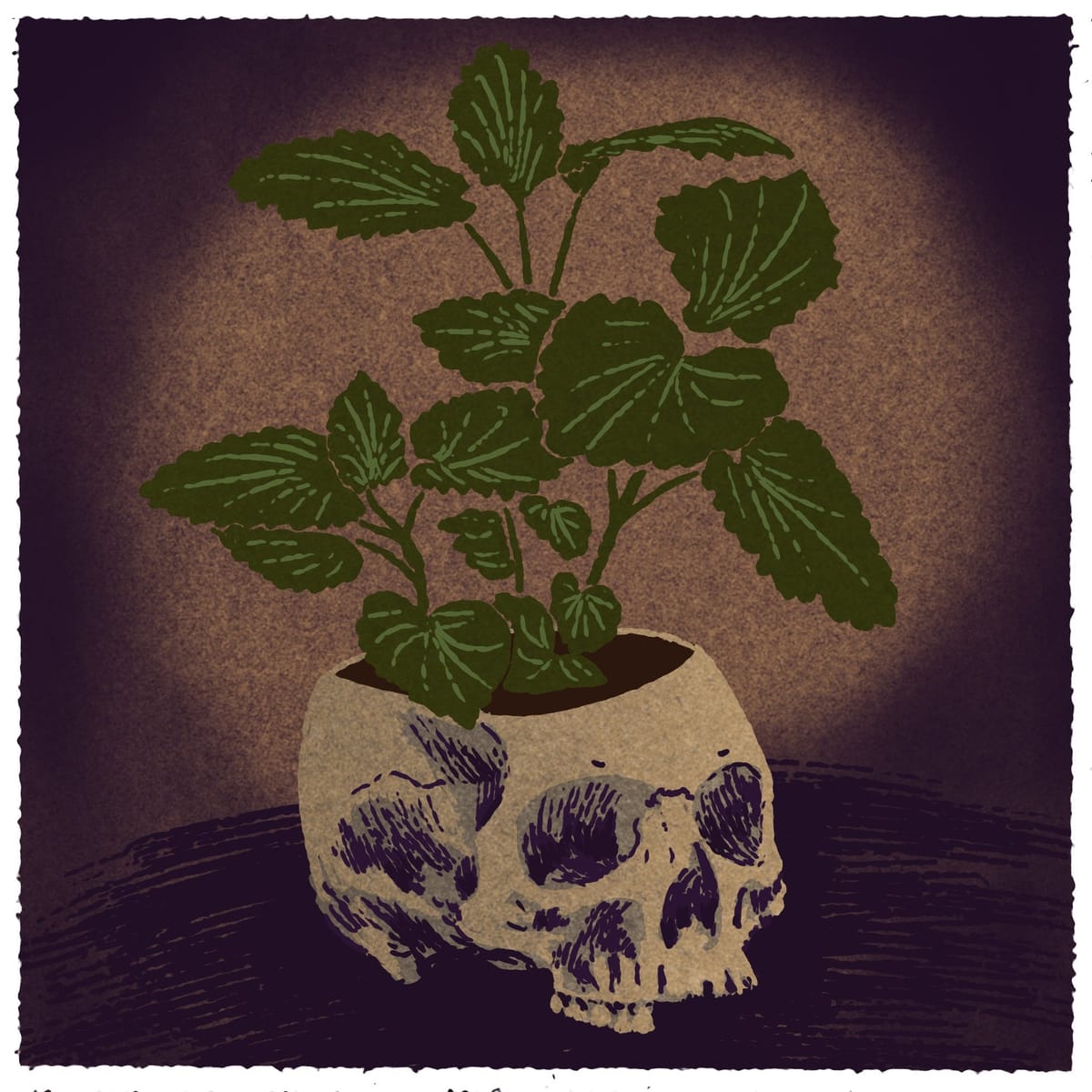
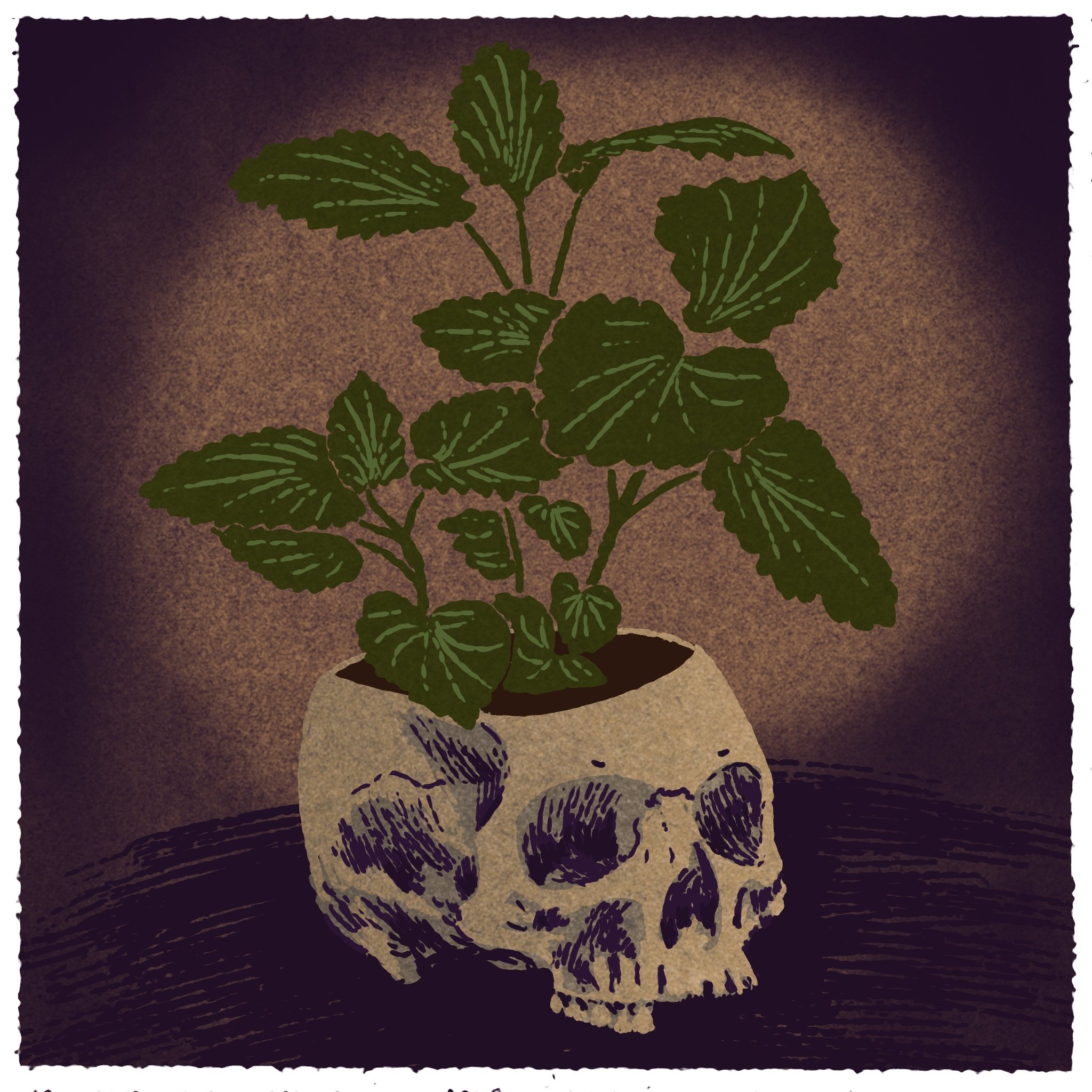
Illustration by Nhatt Nichols [/caption]
By Angela Downs
Greta Montagne is the founder and owner of Gentle Strength Botanicals, a garden-to-shelf apothecary outside of Arcata, CA, offering Western Clinical Herbalism, Herbal First Aid, and Ayurveda. I met Greta through the 2024 Northwest Herbal Fair in Quilcene when I attended her lecture on Herbs For Grief Support. We had a call after her return to California, and from the comfort of early fall in Port Townsend, I listened as she shared her life’s history. From weaving and dyeing wool with one rural grandmother in the Appalachian mountains to mushroom hunting and resin collection with another grandmother from Wyoming, backcountry emergency medicine, breaking her back in a horse accident, massage therapy at Heartwood Institute during the height of the Headwaters struggle, medical activism, teaching, the sudden loss of her young son and helping her daughter who witnessed it, Greta has put her whole life into the development of her upcoming book on herbal grief support.
“My dad did the soil mapping for Yellowstone National Park, so I spent all my summers witnessing a lot of the death and dying cycle in the park as a child. There was a huge elk die off one year because there were no predators in the park. I remember carcasses lining the roads in the early spring. All these elk had starved to death, flesh melting off the bones and returning to the earth. It wasn't until I moved to my first city, Albuquerque, that I realized that my experience of death is much different than most peoples. For me, it was very organic and natural recycling of energy back to the earth and becoming humus and fertile soil.”
Montagne told me their motivation comes from the push to bring death back into the people’s hands. “I'm making formulas for the masses. You have to transform your body, mind, and spirit on a really deep level. You have to reintegrate everything. I'm always looking for places where I can be the most effective. Obviously, it's still going to be a little bit niche because not everybody knows Ayurveda or Western botanical medicine, but still, almost everybody knows what chamomile is these days. Slowly, we're making progress in our society, people are accepting the use of herbs more and more. That's really what I love about Ayurveda so much is it's a kitchen medicine, it's the medicine of the people.”
As Greta spoke, I was learning that to retaliate against dissociation, we must reacquaint ourselves with what is in front of us. “I do believe really strongly in kitchen medicine and home-based medicine. I think those are the rituals and routines that are easiest for people to apply. That's how we get our power back is through our own spice cabinets in our own kitchens. So I've really tried to teach people first aid in their spice cabinets. What would you use cinnamon for? What can you use cayenne powder for? You have so many things available right there, just need to know how to put them together. It's not just flavoring enhancements. It's actual medicine right there. Bark from trees and ground up roots and powdered leaves.”
“Orna Isaacson at the Traditional Roots Institute in Portland invited me up there to do an intensive when I first developed my system of following the moon, coming up with the Ayurvedic constitutional model of how grief works. I saw it from a constitutional lens and realized the first stage is very vacuous and full of air and ether and space because you're in shock. So I corresponded that with the moons. That's the root of it, the five elemental theory with a little mix of planetary influences and earth medicine thrown in there for good measure, kitchen medicine, a little dab of this, a little dab of that.”
Our conversation opened into the rich ecosystem Montagne takes into consideration as she deciphers the deep relationships created between our bodies, the herbs, and the environment. “I landed on this triad of hawthorn and lemon balm and motherwort with rose under, being the low key star role to support the heart circulation and to make the capillary strong, fortification, support the nervous system and cut the head off from the body a little bit so the brain isn't playing out all of its grief in the body and the organs. I'm on a gallbladder journey right now trying to figure out how that organ plays such a strong role in grieving. The liver is processing all the physiological changes happening when you're grieving, so we do need medicine and herbs and to focus on eating and drinking correctly.”
“I haven't been able to find many conversations or resources talking about the different ways that we metabolize grief. Again, it goes back to Ayurveda because each dosha is going to metabolize it slightly differently. A vata person is going to metabolize it differently than a big, heavy-set kapha person. More of their grief is going to be in their head and their gallbladder. And a kapha person is going to sit in their lungs and they're going to be prone to lung issues if they don't process their grief.” So I wonder, are our metabolisms taking on more than the chemical breakdown of nutrients but also the assimilation of our experiences?
“One thing I wish that I had known after losing my son was I would be in a state of severe shock for three months and not be able to work, much less clean my house. So, I've tried to accumulate a list of tips and tricks for supporting someone. Use the meal train to also solicit help for cleaning the house, a top to bottom dusting after a month or two of being in crisis is really helpful. Grieving people are hungry and need protein because that takes a lot of effort. Rosemary Gladstar's small Zoom ball recipe of a nut butter base with syrup and goji berries is a really great way to mask powdered herbs. I've tried to incorporate more practical ideas for people to help others, to help their loved ones or help others grieve. I had a friend who really knew how to show up. She said, “can you meet at 11 o'clock at this cafe on Thursday?” It was forward, proactive. It's not having to do with herbs so much, but it is part of that whole picture, which the herbs are supporting.”
Montagne aims to reveal the dissociation of home medicine through the hyper individual nuclear family and address the complete collapse that occurs in society when it comes to accepting and offering support. “There was no how-to book, how to grieve or how to support. I started taking furious notes because I couldn't find any recipe books out there, how to grieve in a healthy way. I've been teaching the method that I developed, pulling from all these various threads– it's rooted in the traditions of Western botanical medicine, Ayurveda, and bodywork, This whole bigger picture of holistic healing I have been studying for over 30 years– it's time for me to share what's in my head and pass it down to others.”