The Intersectionality of Grief: Living in Resistance to a Complicated Life
A Grief Column by Angela Downs
Our vision of life is in flux, changing every day. We often become so overwhelmed by our personal struggles that we cannot see the struggles of others around us.
Richard moved against capitalism after he got out of the army, and after 1990 lived on no more than $550 a year off grid in West Virginia. Later in life, he moved to town and lived in a quaint house with an orchard. He rode the bus to the library, wore a pocket watch on his jeans, had a great mustache, cherry trees and a somewhat dark sense of humor. He was anti-America, but a full-blooded American.
Hank moved to Port Townsend after his sister Lynn’s death when he was 26. He sees himself as having been an ego-driven guy, working too much, drinking, being dishonest and treating people poorly up until then. Everything changes after death. “Cracks became crevices, and then the floor wasn’t there,” Hank said. “After her death, my view of the world changed and so did my lifestyle.” He came to Port Townsend in 2019, living in his car with his dog, then later in an old trailer with his girlfriend.
Richard and Hank met in the Walmart parking lot in Sequim, then again in the Coop lot. They became friends through shared values and ways of life: off-grid living, the freedom derived from treading lightly on the planet and speaking out on injustice. They would see each other four days a week, and they would have breakfast at least one of those mornings at one of Richard’s favorite local spots. And they would ask questions like, “Why are people taking and not giving?”, “What gets in the way of living a meaningful life?” Now that he was in his eighties, Richard needed help with the house, and Hank would clean the chimney, gutters and crawl space. But Richard was so particular about simplicity that things often became complex.
“I’m not sure when or where it happened, but he became one of my favorite people. He was a wise voice in my life.” Hank said.
Richard longed for uncomplicated kindness, a world where people thought more intentionally about the ramifications of their actions. ”People don’t think about the generations ahead,” he would say.
Hank got married in 2024, and Richard D took him to breakfast to celebrate and give him his gift. On September 27th, they went to Hudson Point, where Richard loved to see the seals. He ordered raspberry waffles for their table and said, “I’ve come to a really tough decision. I don’t want my house anymore. I want you and your wife to have it. Don’t make a scene. I have my will in the car.” Hank excused himself to the bathroom and threw up. Richard arranged for the Transfer On Death deed, and as the months passed, Hank went to the house to see how the special little, partially off-grid, house ran.
“The Sunday before Solstice, Richard told me he wanted a Voluntary End of Life,” Hank said. “He said he’s sticking out his galactic thumb.” It took me a moment to fully understand what he meant.” He asked Hank to be present for his death.
There was a small celebration at the house two days before he began his voluntary dying. Richard drank organic sake, looked at Hank, and said, “You have this. Don’t let anyone tell you what to do,” and kissed Hank’s cheek.
Richard’s death lasted 15 days, from Oct. 23 to Nov. 5. No eating, no drinking. He would wake tired but to a new day, chat with friends on the phone, and suck on ginger candy. Hank would come in the morning for check-ins, take his vitals, empty the urine bucket, help with mouthwash, and offer food and water. But before entering, he would sit in his car and cry, unsure of what he would meet inside. Hank held Richard’s hand until he was ready to go back to sleep, “Storytime is over,” he would say, and close his eyes.
After a windstorm, Hank was over to fix the roof on the toolshed, when Richard appeared at the door. Ten days of no food and eleven of no water, fully dressed and wanting to sit under the Blue Spruce in the front yard. On election day, Hank said, “You’re gonna find out who wins.”
“I don't think I’m gonna,” Richard said. His heart rate had been 60 bpm but began fading on the fifth. Even so he remained fully aware and peaceful. “One of the last things he told me was to buy a Chicago tarp, nothing cheap.”
Hank and his wife had gathered a few things after the morning’s check-in, and on their return, they found that Richard had passed. Hank was in shock, facing what he’d been afraid of since his sister died, losing the ones you love the most. Everything changes after death. His body opened into a devastated release of sacred wailing. “The EMT cried and thanked me for being there with him through his process. He said this is a common choice for people, and people in our community are just older, they don’t have anyone to be there with them and often aren’t found for days or weeks.”
“His death softened Lynn’s death. Showing me this is what is supposed to happen to both of us. It allowed open rooms in my mind about death to close. The not understanding doesn’t need my attention right now. The whys don’t really matter.”
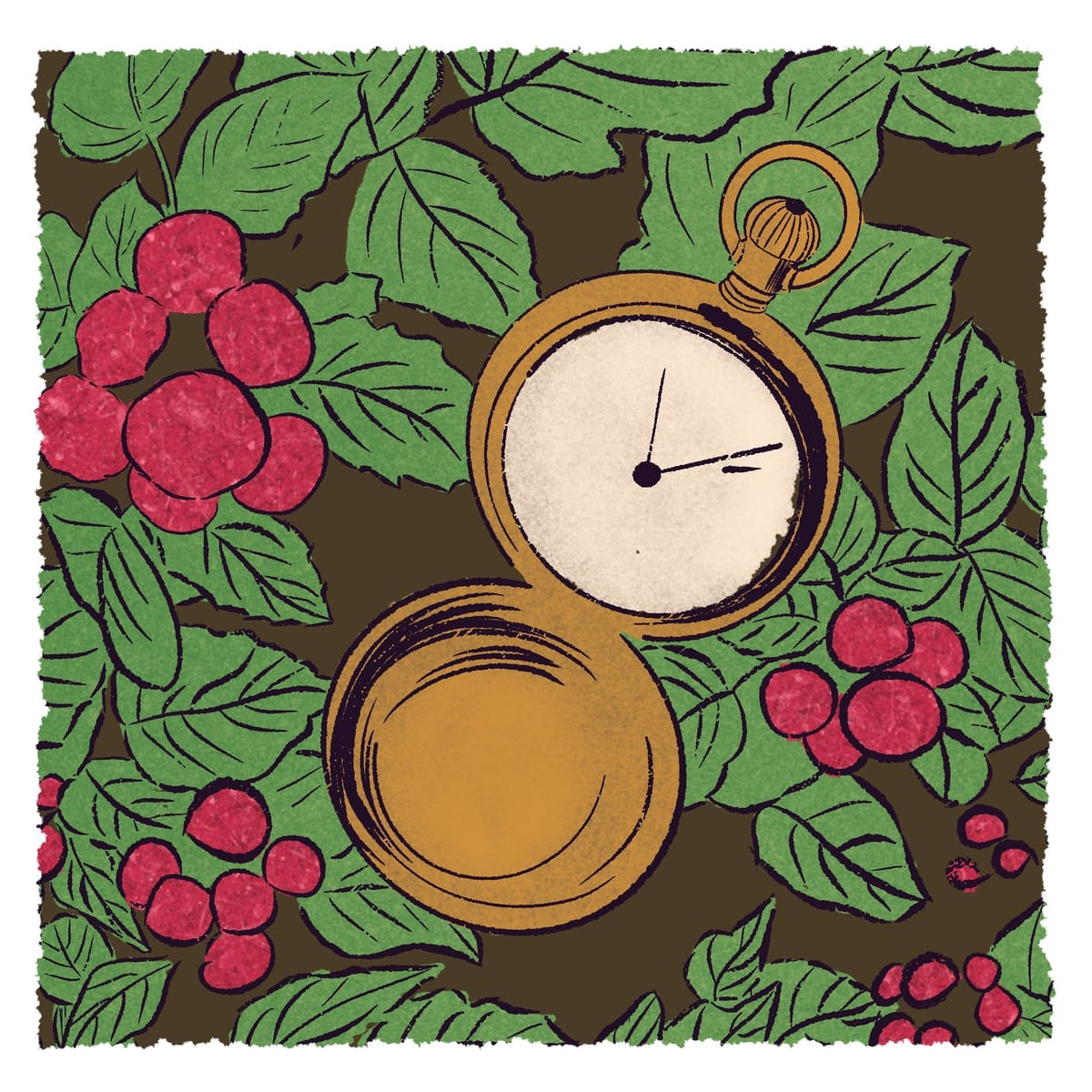
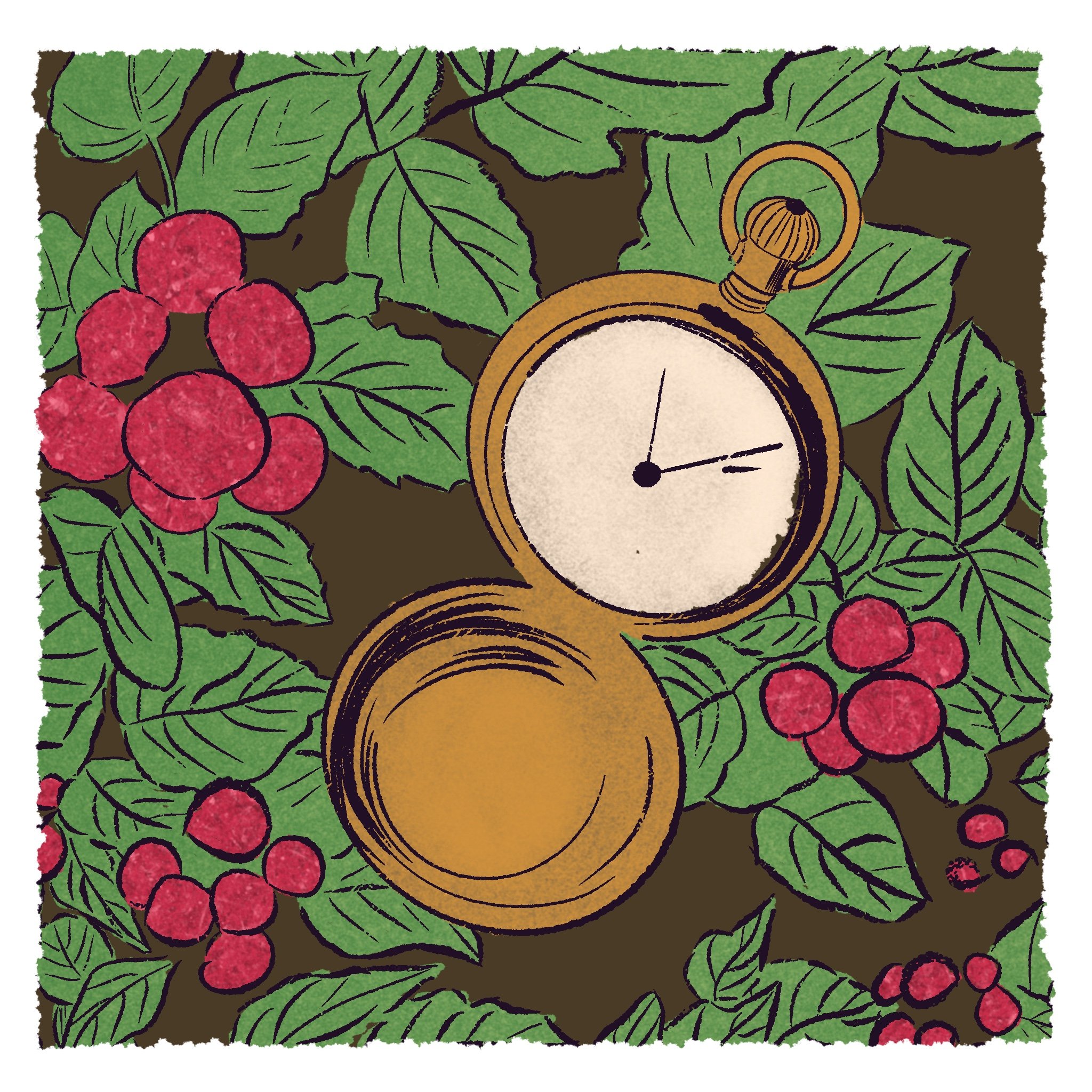
Hank couldn’t go to the house after Richard died. The executor of the estate, a good friend of Richard’s, called him and said, “The house is getting cold.” So, Hank and his wife moved in. He found two pounds of rainbow chocolates from the Coop squirreled away in a hiding spot and read the books he left behind. Richard’s pocket watch stopped working the same day he died, but Hank still wears it. A reminder that love is never lost.
Hank says he is going to keep living in resistance to a complicated life, continuing Richard’s vision of walking lightly. He’s planted raspberries and is taking care of the orchard. “I want to use my freedom to help people,” he said. “Richard wanted young people to be in a place where they can make a difference.”