Trump Administration Abruptly Eliminates Funding for Food Banks and Schools

[caption id align="alignnone" width="3472"]
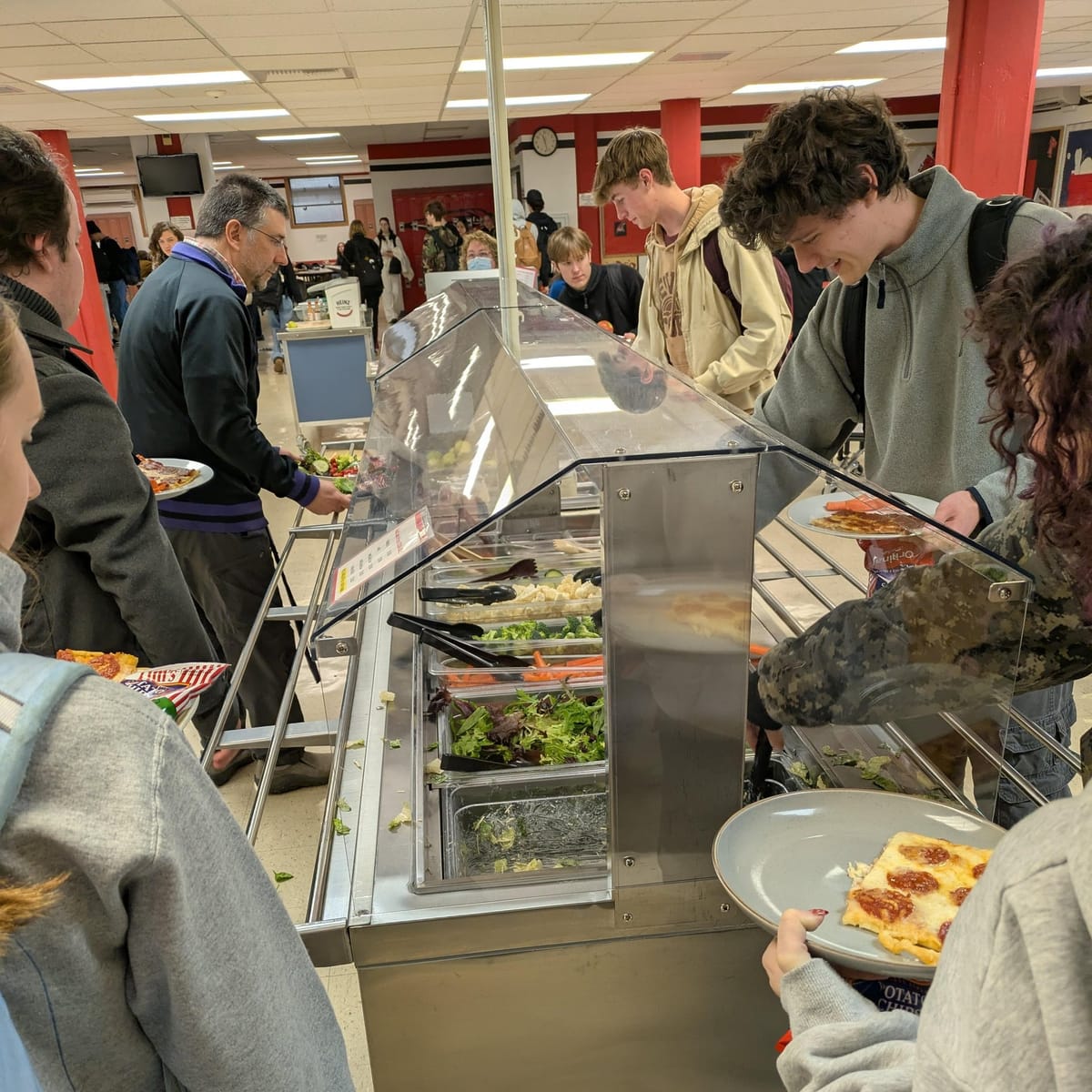
Students at Port Townsend High School currently benefit from a USDA program that helps fund local produce in school lunches, a program that was just eliminated by the current federal administration. Photo by Scott France. [/caption]
News by Scott France
Jefferson County farms, food banks, and school districts are scrambling to plug holes created by the U.S. Department of Agriculture’s (USDA) termination of funding for two programs that provided more than $1.1 billion for schools and food banks to purchase food from local farmers and producers in the U.S.
“This was an 100% gut punch for agencies like ours around the county,” said Patricia Hennessy, Executive Director of the Jefferson County Food Bank Association (JCFBA). The four food banks and one mobile unit operated by the JCFBA serve an average of 3,400 households per month. The number of households served rose 24% in 2024, according to Hennessy. “We might not find funding to replace the sudden shortfall,” Hennessy said. “Our largest line item is for food, and we need money to pay our staff and bills.”
The purpose of the programs was to maintain and improve food and agricultural supply chain resiliency. The food served feeding programs, including food banks and organizations that reach underserved communities. In addition to increasing local food consumption, the funds help build and expand economic opportunities for local and underserved producers.
The elimination of the two programs will affect local organizations in different ways.
Kai Wallin, Community Liaison with the Port Townsend School District, said that the District received funding from both programs, the Local Food for Schools (LFS) and the Local Food Purchase Assistance (LFPA). “We will still buy locally what we can, but without this matching grant from the USDA helping us purchase local ingredients, our dollars won't go as far, and we may need to buy more conventional, non-local ingredients to fill the gap,” she said.
“People have come to rely on this funding for meeting the demands for healthy food”
— Sallie Constant, Farm to Community Coordinator with Washington State University Extension for Clallam and Jefferson counties.
Other school districts in Jefferson County might not be as adversely affected by the cuts as the Port Townsend school district. Neither the Quilcene School District nor the Brinnon School District received any funding from either of the two programs, according to Ron Moag and Trish Beathard, superintendents of those respective school districts.
The Chimacum School District receives USDA funding through the Washington State Office of Superintendent of Public Instruction (OSPI), and is uncertain of the eventual effect on its funding pending finalization of OSPI’s budget, said Kelly Liske, Executive Director of Business and Finance at the District.
The Olympic Peninsula Community Action Program (Olycap) had an LFPA grant that served nine sites in Jefferson and Clallam counties. Between August 2023 and December, 2024, LFPA funded food purchases from farms in Jefferson and Clallam counties and distributed 135,875 pounds of produce to these nine sites.
Jefferson County food banks, local farmers and school districts with whom we talked say that the USDA's decision is likely to increase food insecurity among vulnerable populations and create economic hardships for these farmers who previously supplied local produce to schools and food banks.
“People have come to rely on this funding for meeting the demands for healthy food,” said Sallie Constant, Farm to Community Coordinator with Washington State University Extension for Clallam and Jefferson counties.
[caption id align="alignnone" width="640"]
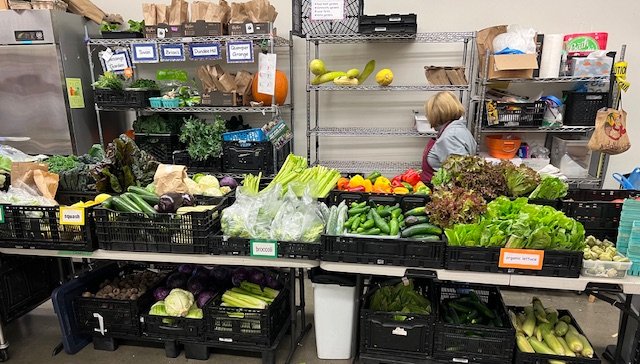
The produce at the Port Townsend Food Bank, a great deal of which was locally grown. Photo Courtesy of the Port Townsend Food Bank. [/caption]
LFS was a cooperative agreement between the federal government and state entities (OSPI in WA) to identify producers of Washington-grown products and make those products available for free or at a subsidized cost for schools. For the 2025-2026 school year, $660 million was going to go towards purchasing regional foods such as salmon, berries, lentils, tortillas and squash and providing those foods to schools at half market price. The contract for this coming school year was canceled, so while these products will still be available, they will no longer be subsidized by the USDA, according to Danielle Carson, with the WSU Clallam County Extension.
”The people who grow our food contribute to our local economy and food systems,” Hennessey said. Karyn Williams, owner of Red Dog Farm, said that the farm fills one order per week from Olycap, totaling approximately $50,000 annually, all of which will be eliminated. “I feel for people receiving this food, as well as my crew who get great satisfaction that the food they are growing feeds less advantaged people,” Williams said.
Hennessey is concerned about the consequences for seniors, houseless, domestic violence victims, and veterans, many of whom don’t have the capacity to shop in grocery stores if they can even afford to buy food. “Our mission is to “provide food to people in need,” Hennessey said. “They pulled the rug out from under us.”
Addendum:
The Beacon has learned that food bank officials in six states are reporting that up to $500 million dollars in funding for food banks through the USDA emergency food assistance program has been frozen. The New York Times reports that USDA representatives cannot be reached for comment. The Times reports that Vince Hall, the Director of Government Relations for Feeding America, a nationwide network of over 60,000 food, pantries and distributors, said that rural communities are likely to be most deeply affected. Emergency food assistance programs like this are “the food lifeline for rural America” because they come with funding to improve food storage and distribution, which can be more challenging in rural areas.
Anyone interested in supporting local purchasing for food access they can donate to the WSU Extension Olympic Peninsula Farm to Food Bank Fund or donate to their local food bank- JCFBA donations.