What Keeps the City Flowing—Water, Recycling, and Sewage Discussed at City Council Workshop
Rate increases, infrastructure challenges and economic disparity were on the docket for this week’s workshop.

City Council news by Angela Downs
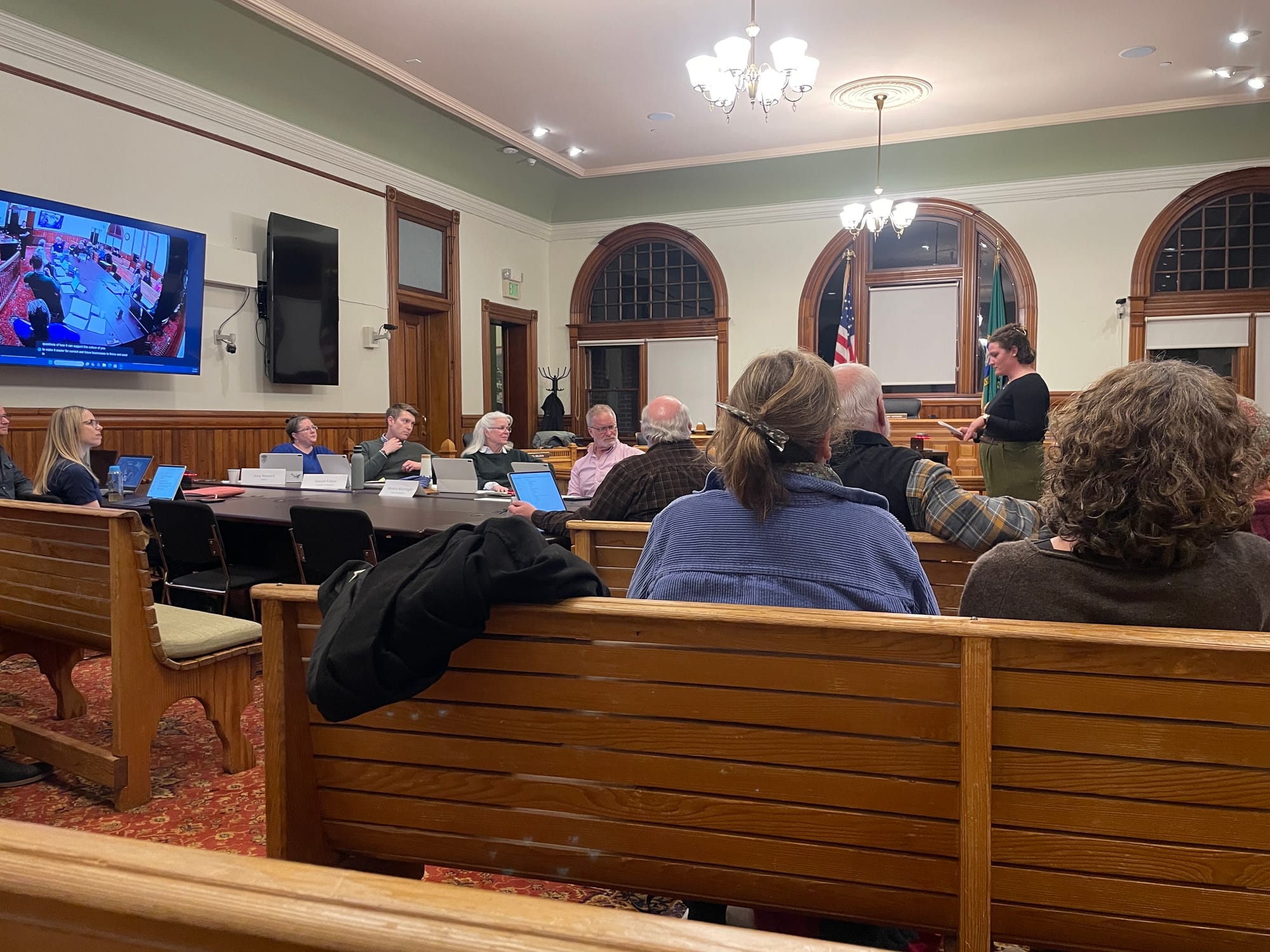
PORT TOWNSEND, WA — The February 9 City Council Workshop Meeting had presentations and discussion on the Water Utility Rates Update Work Plan Preview, the Recycling Collections Options, and the Economic Development and Review of Glen Cove Utility Extensions Analysis.
The City pays for raw water and charges the Olympic Gravity Water System (OGWS) Raw Water Fund for services provided. The city hasn’t been very involved in running the system for the last 100 years, despite being part owners. You can read the OGWS deep dive the Beacon published last year here.
The City underestimated operational costs in 2021. With sections of the pipeline in poor condition, they need to recalculate the capital spending plan to focus on those vulnerable areas. Established rates are coming to the end of their five year rate terms on January 1, 2027 so increases are being planned for next year.
For those worried about being able to afford their water bill, there is the 2024 income based discount program for utilities. The program has expanded for households earning less than 350% of the Federal Poverty level.
The city included in their presentation their work plan to create new rates for raw water. They will recalculate the Capital Spending Plan in the Water Supply Agreement, ask for advice from the Mill, and contract with Bowman to ensure the rates are fair and meet the systems needs.
Trash rates increased, and recycling bins with lids for less litter
On April 1, disposal customers will see a $2 residential and $3 commercial increase in the garbage rates and tipping costs for recycling. The city was presented with two options for a recycling system which the increase would be applied to; keep the old system, or switch to mixed recycling in a bin with a cover. Council collectively supported option two.
In the new model, every house will have their garbage bin, yard waste bin, a 67 or 96 gallon bin for mixed recycling and 18 gallon recycling bins for glass pick-up once a month. Overflow cardboard can be set next to the bins in 3x3 bundles. It would be a straightforward amendment so the change could become effective in May or June.
The income discount for city water applies to garbage rates as well, though there will not be major hikes if the new bins are implemented. These new recycling bins would require a new truck, which would be paid for through the contract’s recent five year extension. The old truck itself is from 2021 and in good condition, Olympic Disposal can find a use for it, District Manager Joey Deese said. This implementation would also mean less miles traveled for the new garbage truck with only one trip to the transfer station instead of two or three per round.
Port Townsend’s economy is suffering
The city planning department gave a presentation on the economic development efforts being enacted in the Comprehensive Plan. Director of Public Works, Steve King and Director of Planning and Community Development, Emma Bolin raised the red flag that 2,500 jobs were lost in Port Townsend between 2002-2022 largely due to house scarcity and wealth gaps. Income disparity between home owners and renters is getting worse, they noted.
The city’s planning team goes by a rule of thumb, “$1 public investment should yield $5 private investment or better. Private investment [(like the Economic Development Council (EDC))] is required for public entities to recover investment through rates and taxes.” But the city can only receive 16% of property tax and only 1/8th of sales tax. Utility tax and real estate excise tax are more lucrative. Along with the OGWS pipes, the sewer system also needs repairs.
The future of Glen Cove
The city’s vision for Glen Cove Light Industrial Area includes businesses that need truck access, large spaces for forklifts and equipment, potential jobs in food processing, manufacturing, boat repair and contractor shops. Ideally, these businesses would want access to a sewer hookup, which Glen Cove currently doesn’t have, and buy into the sewer line restoration.
King cited the Timber Collective on Port property at the airport as an example of the business they are intending to foster at Glen Cove. The Port’s Executive Director, Eron Berg spoke in an interview with the Beacon last year about the industrial symbiosis vision he learned from in Denmark and hopes to implement in Jefferson County.
Phoebe Reid, the Recompete Program Manager & Workforce Development Lead on the Economic Development Council shared that the EDC is prepared to support the Glen Cove effort with marketing in a public comment. This ten million dollar sewer project would intend to support local businesses that are already here and ready to grow or looking for a home. It could also be expanded to better the sewer system from the first roundabout to McPherson St. replacing the current service all on a small pump.