What to Drink: Climate Change & PNW Winemaking

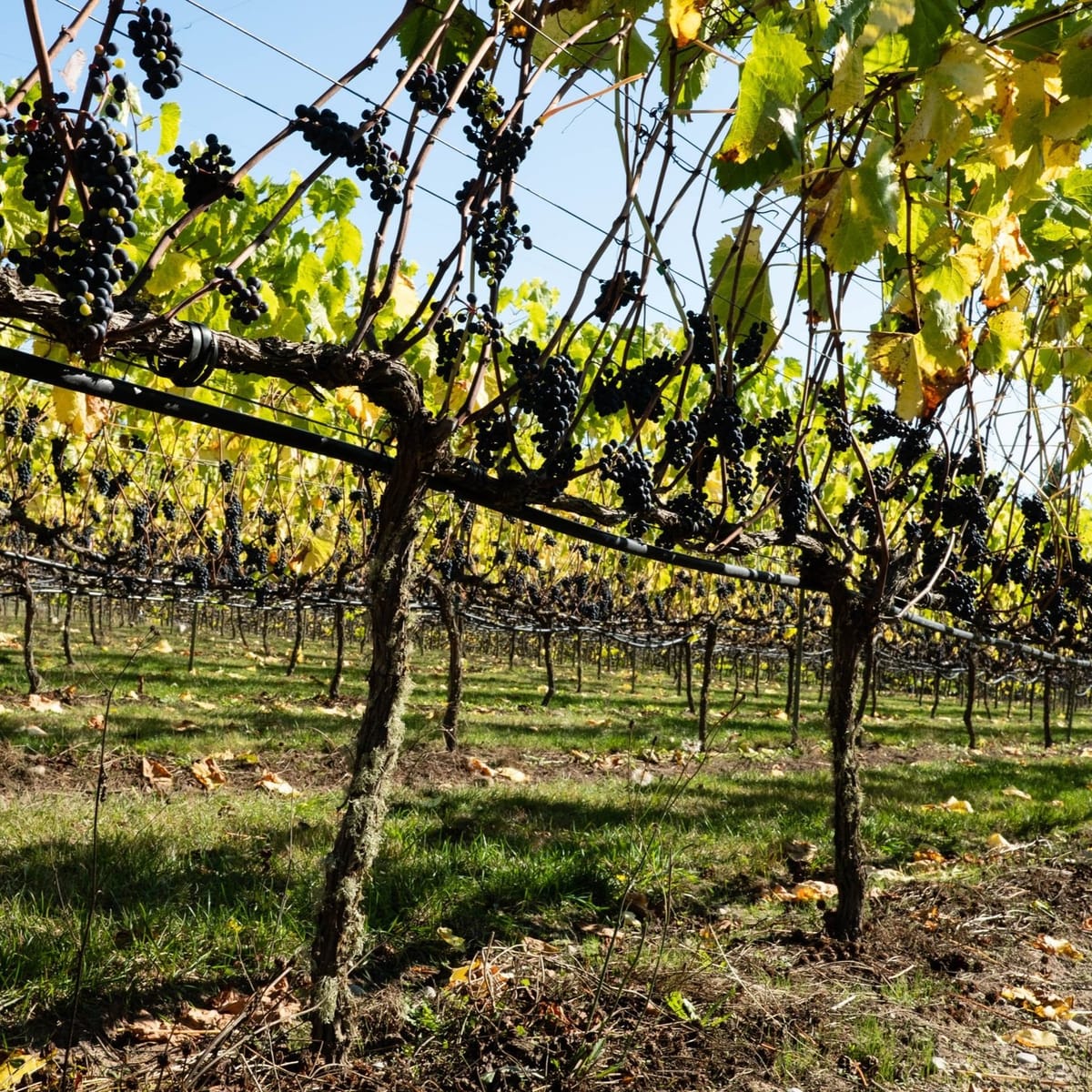
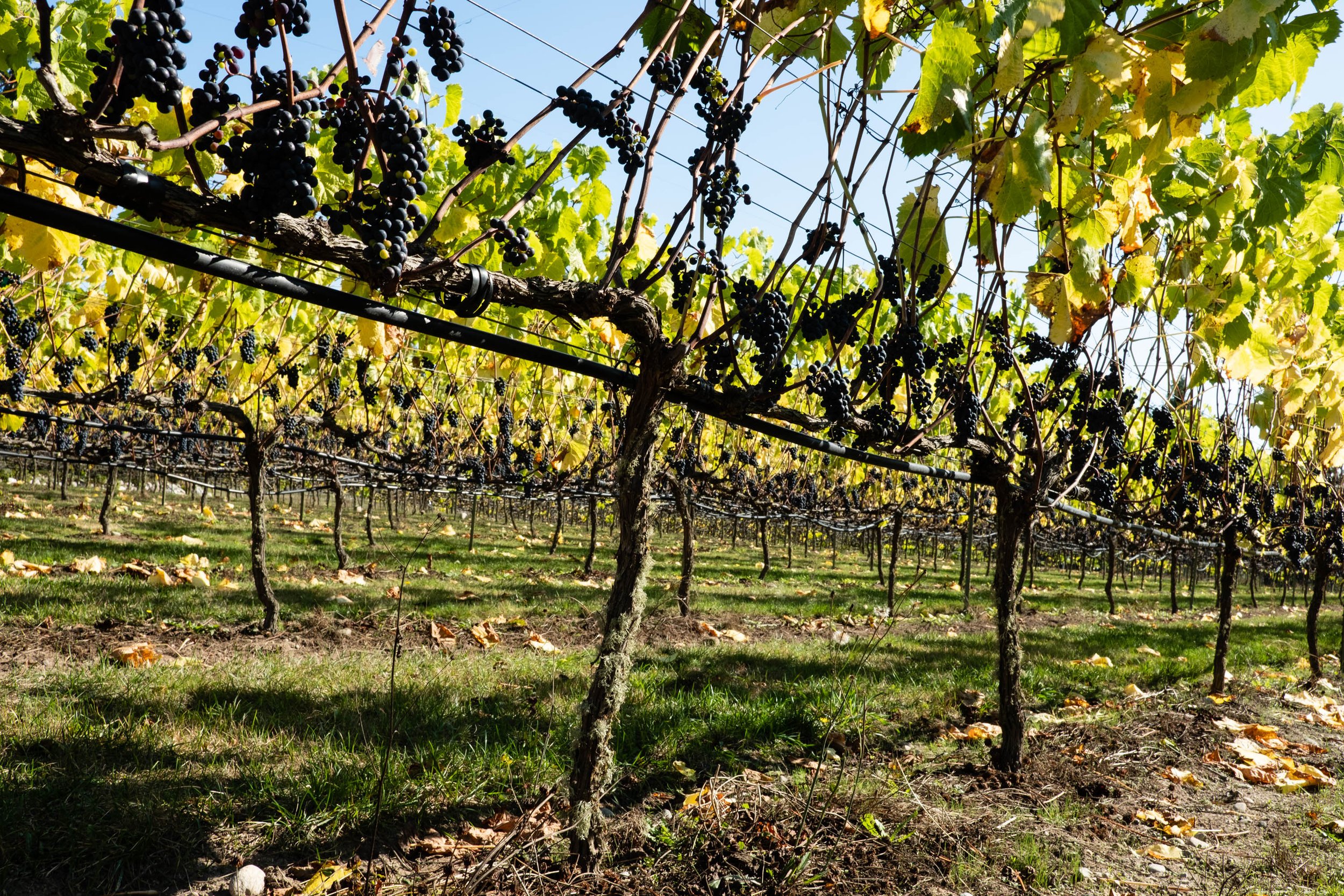
Red Marechal Foch grapes on the vine before harvest at Sailor Vineyard, photo by Andrew Wiese [/caption]
By Andrew Wiese
Andrew has lived in Port Townsend since 2015 after moving from Germany. He has worked as a sommelier, restaurant manager, language teacher, and photographer, and is now focused on raising twins with his partner and selling cider.
“What’s a good local red?” is one of the most frequently asked questions in most of the world’s wine regions, and the Olympic Peninsula is no exception. As most wine buyers aren’t thinking too hard about Washington’s geography or maritime and continental climatic zones, recommending, say, a Walla Walla Merlot or Red Mountain Cabernet usually satisfies both a customer’s taste preferences and their desire for something at least nominally ‘local’.
Depending on the wine seller’s passion and enthusiasm for the region and some education, the conversation might progress down a couple of other pathways. On the one hand, a winery on the Olympic Peninsula might be recommended, even though the grapes are almost exclusively also grown in eastern Washington and trucked further and at greater risk of quality loss. On the other, the Willamette Valley’s climate and location are closer to Jefferson County’s than Walla Walla’s, so a Nicolas Jay Pinot Noir is more ‘local’ than a Leonetti Cabernet, if we ignore state lines.
Niche Peninsula recommendations such as Garanoir and Dornfelder, red grape varieties that can do well in cooler, damper conditions but which are unlikely to ever compete for mainstream attention must be left aside for most customers. One of the few outliers here is Bainbridge Vineyards’ Pinot Noir, made by Betsey Wittick, which has improved year on year since at least the very good 2016 vintage. A properly local, red-fruit driven, silkily textured and decently complex dry Pinot Noir that can be wholeheartedly recommended is a wonderful option to have available.
At the risk of oversimplifying things, the two greatest climatic challenges for Peninsula vineyards are the amount of warmth and sunshine, generally measured in Growing Degree Days, and the timing of rainfall. The line between viable and hopeless is a fine one, and all of the Puget Sound region is borderline, however just the distance between Bainbridge Island and Port Townsend radically alters the prospects for successful red wines, particularly in terms of available warmth above 50 degrees. And for all those who recently lost a weekend’s blueberry picking through rain, you might imagine similar rain ruining the prospects of a good vintage if it comes just before harvest.
Few farmers will have tracked climate change more closely over the last decades than viticulturalists. Winemakers in Germany and Switzerland have seen sugar levels, and therefore the alcohol levels of dry wines, rise consistently over the years, and red grapes planted in regions not considered possible a couple of decades ago. Growers in France are experimenting with Spanish varieties, hoping to stay ahead of hotter summers than their classic varieties can handle. In the US, West Coast growers are dealing with extended periods of heat waves over 102 degrees when vines shut down fruit development and are at risk of excessive stress and sunburn, causing reduced yields.
[caption id align="alignnone" width="3000"]
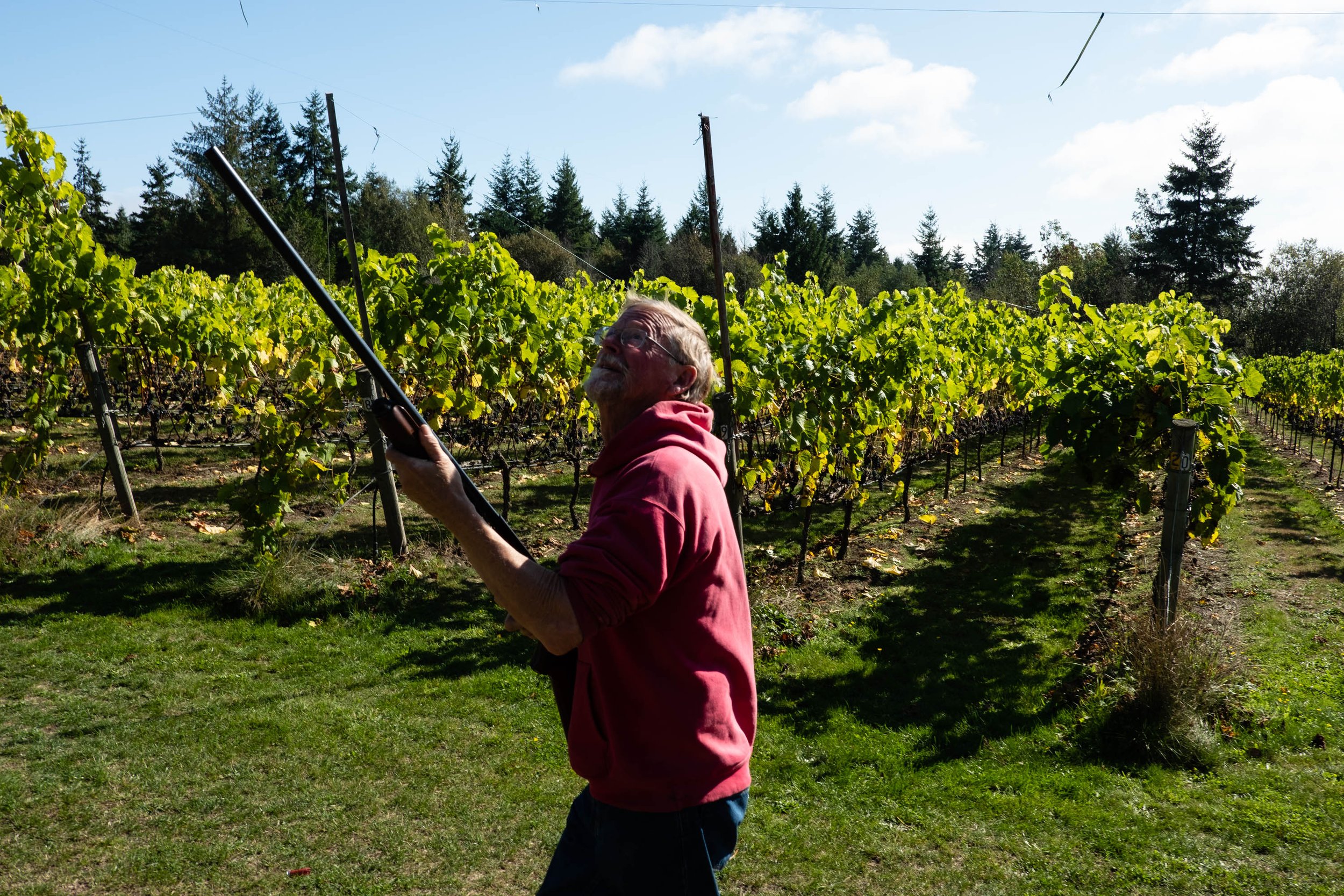
Kit Africa using a shotgun loaded with fertilizer to scare away birds from vines at Sailor Vineyard. Photo by Andrew Wiese. [/caption]
What, then, might this mean for Jefferson County wines? Kit and Claire Africa at Sailor Vineyard grow and make the closest wine to the full-bodied dry red many are hoping for when they ask for something local. Certainly a niche variety, Marechal Foch is a red-fleshed grape that produces a fruity, relatively robust wine that can be rather rustically simple. However, Kit and Claire have gotten to know their vines and worked with the fruit long enough to make very enjoyable wines that pair very well with foods year-round and have a particular claim to accompanying traditional Thanksgiving and Christmas dishes well.
It will be quite some time before Syrah and Merlot are seriously planted in Jefferson County, and the bottles produced in thirty years are guaranteed to be very different to what we see now. he prospect of drier, warmer weather doesn’t necessarily promise better growing conditions, as there’s at least one other impact that affects the amount of sunlight reaching the vines: smoke. As Ben Thomas, winemaker at Port Townsend Vineyards, says, ‘we should theoretically benefit from warmer weather, but for the fires’.
Links to recommended bottles:
Bainbridge Vineyards Estate Pinot Noir
Sailor Vineyard Estate Marechal Foch
Port Townsend Vineyards Estate Madeleine Angevine (White!)
Other than directly from the wineries, The Wine Seller and the Chimacum Corner Farmstand are also great sources for these wines