The Shape Of An Idea - Inside Karen Lené Rudd’s Artists Sanctuary
Arts reporting by Carolyn Lewis
Arriving at Karen Lené Rudd’s studio feels like entering a creative enclave nestled in the woods. After a tour of her home, which is filled with art she has collected over the years, we went out to her studio, which has recently expanded to a two-level space, complete with a cozy seating area and lots of room for creativity. A large worktable covered in sketches, pens, paints and other tools sits by a large window, and natural light floods the room. A collection of objects hints at future projects; it is a space designed for thought as much as making.
While we took a tour through her studio, Rudd spoke about the fact that she considers herself a conceptual artist, where the ideas behind her work are the most important part. She enjoys working on a large scale, creating installations and exhibitions that transform entire spaces. Paper, in particular, is a favorite sculptural medium—whether she is sewing jeans out of kraft paper from the Port Townsend Paper Company or constructing giant tree stumps from reclaimed corrugated cardboard.
[caption id align="alignnone" width="2587"]
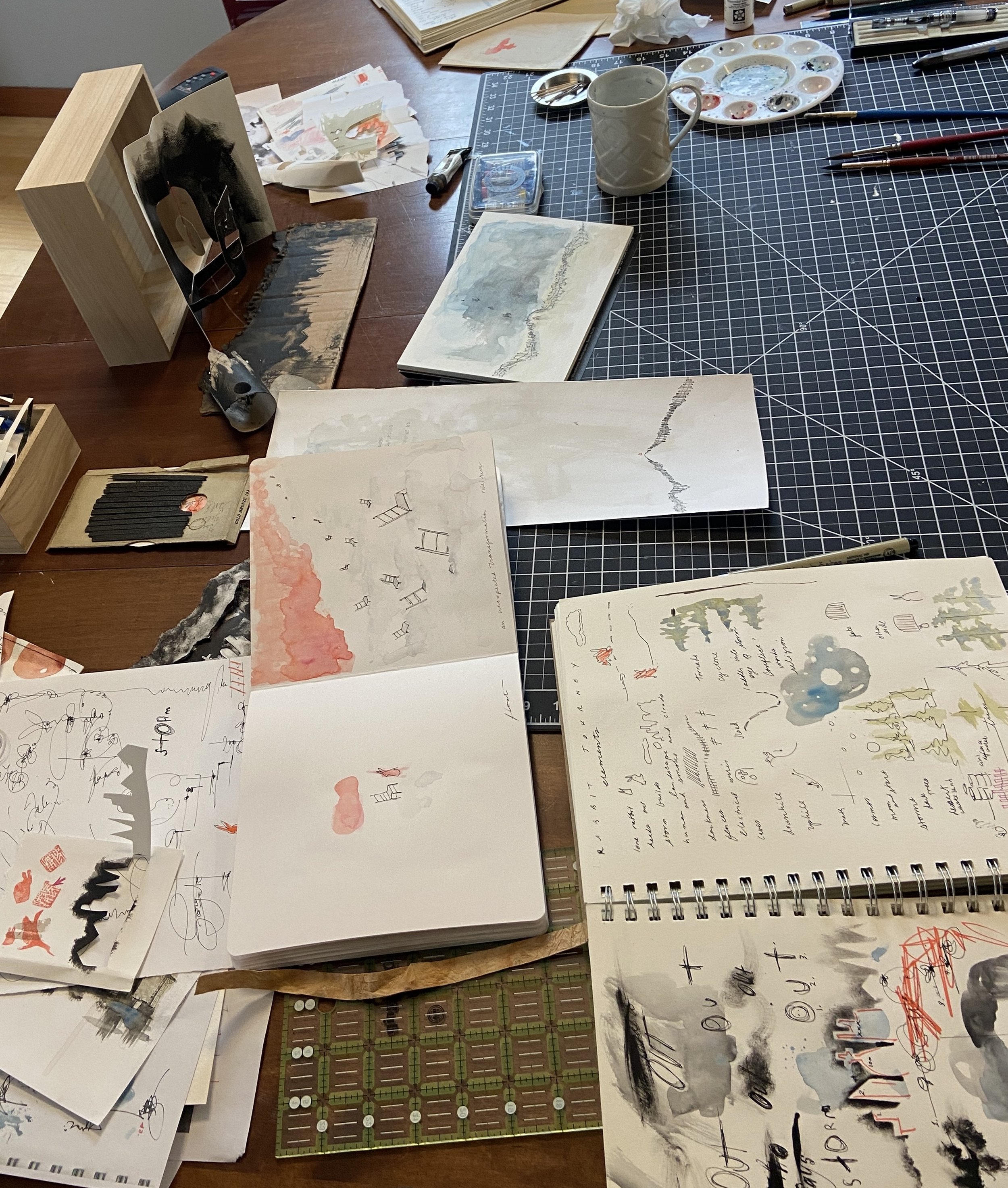
Where the ideas start to take form. Photo by Carolyn Lewis [/caption]
Rather than being inspired by visuals, she told me she is drawn to ideas, emotions, and abstract concepts. Her work explores history, philosophy, science, and the intricate relationships between people, nature, and the universe. With a constant stream of ideas, the challenge is deciding which ones to bring to life. She says she focuses on the projects that she just can’t stop thinking about. Most of her ideas come to her fully formed. While they may evolve slightly in execution, the core concept remains intact. She begins with maquettes, which are small-scale models or prototypes that are used to visualize and refine ideas and experiments before committing to a final design. Then, she dives into construction.
While she works with a variety of materials, she has a particular fondness for paper as a sculptural medium. Since it is textural, adaptable, and surprisingly versatile, Rudd tells me it can mimic fabric, clay, or plywood while maintaining its own distinct qualities.
Themes in her work have remained consistent over time. We spoke about how she explores fundamental questions: Why are we here? What are we doing? How does it all fit together? What happens next? Her aesthetic also reflects a sense of balance and simplicity—limited color palettes, subdued tones, and moods that evoke nostalgia, wistfulness, or even something a little haunting.
When creating, Rudd “prioritizes artistic integrity over marketability.” If she starts thinking practically, she said, she stops working bravely. Rudd said success, for her, is the ability to physically manifest her thoughts and ideas—making sense of both her internal world and her shared physical one. “It’s challenging, but also deeply gratifying when it comes together,” Rudd said
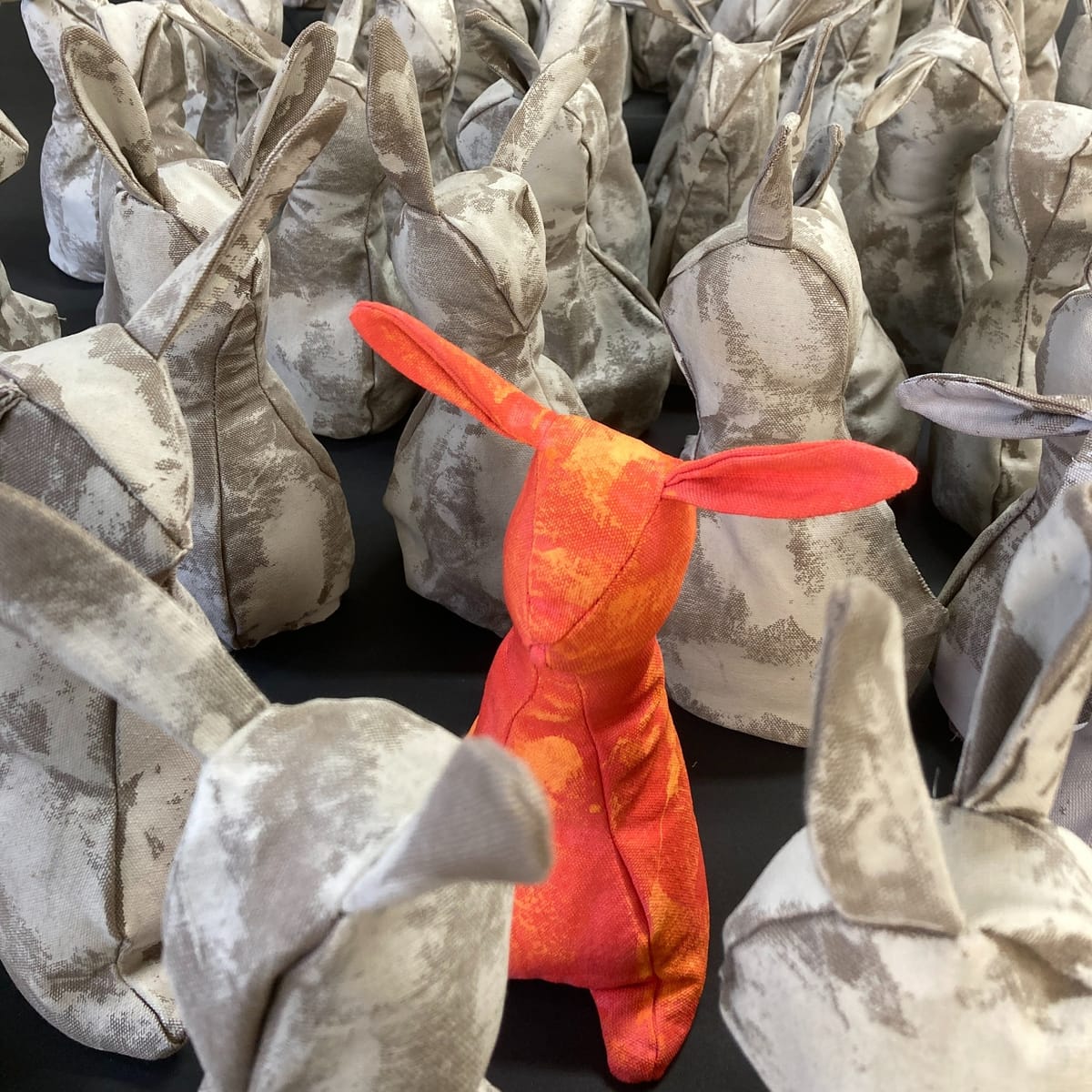
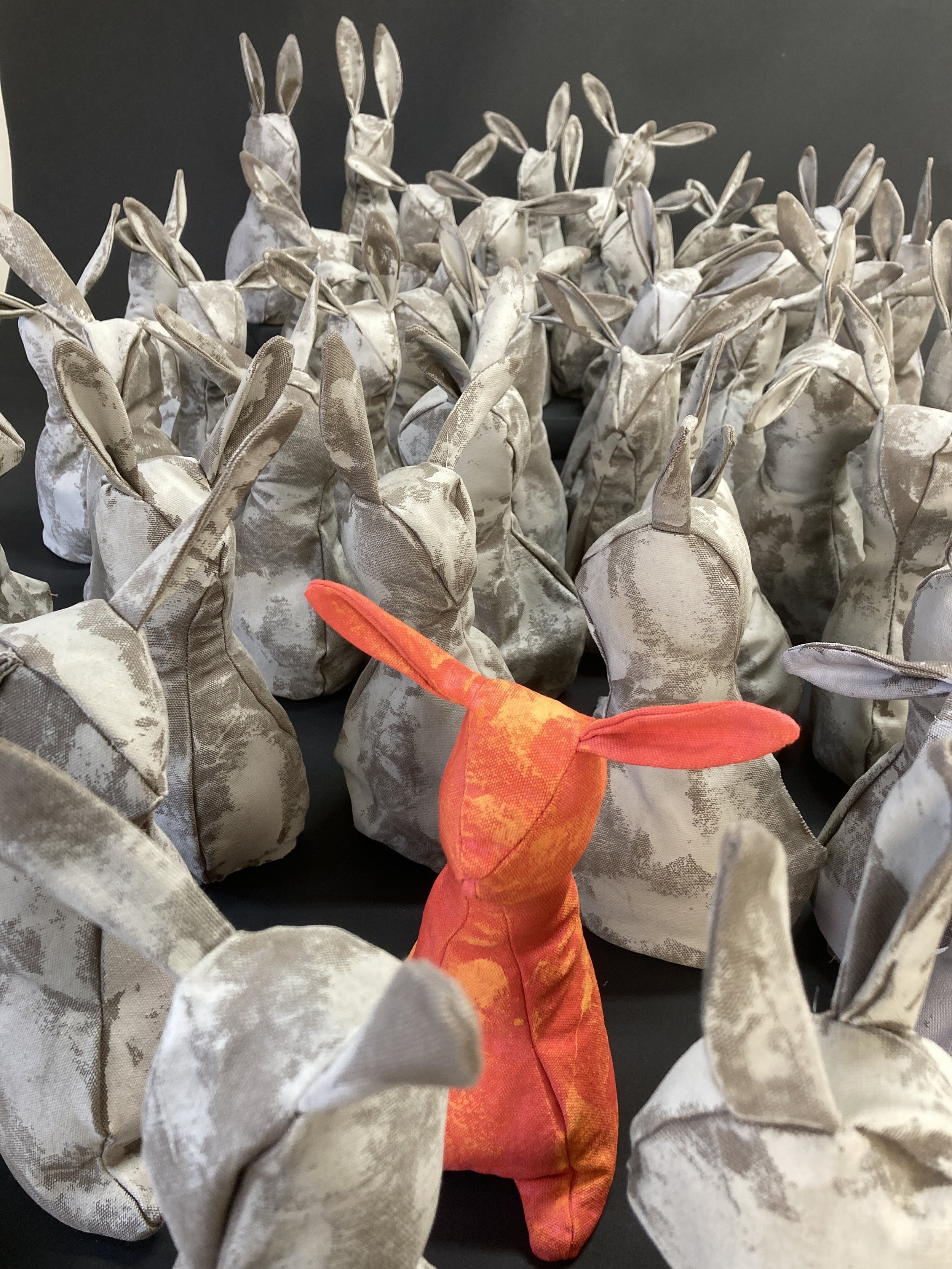
Rudd usually creates with a specific audience in mind: that of her 12-year-old self. She says if her work would have wowed her at that age, she knows she is on the right track. While she aims for accessibility, she also likes to challenge viewers, offering familiar visuals—rabbits, tree stumps, clothing, shoes—before adding a twist that encourages a new perspective.
Her goal, she says, is to delight people—or make them just a little uncomfortable.
Rudd’s work is ever-evolving and deeply rooted in the same core interests. She constantly explores new materials and techniques, pushing herself as a maker, but she said her ideas and aesthetics remain consistent.
Lately, Rudd has been experimenting with working on a smaller scale and creating books, boxes, and works on paper. After years of creating large installations, she says this shift has been refreshing and is excited to see where it leads. She welcomes all kinds of engagement with her work and loves it when viewers laugh, feel uncomfortable, explore, or ask questions. Often, people share personal stories after seeing her work, which she said is incredibly meaningful to her.
Rudd’s artistic journey has been shaped by formal training and self-directed learning. She spent years at Pratt Fine Arts Center in Seattle honing her craft but says her sense of self-expression came through writing and her graduate studies in journalism and science writing.
You will be able to view Rudd’s work at her upcoming show titled “Ever After” at the Aurora Loop Gallery in Port Townsend throughout March. The show opens for Art Walk on March 1.
Carolyn Lewis is a serial entrepreneur, artist, and community builder happily living and volunteering in Port Townsend. Visit her social media group on Facebook at Port Townsend Life and follow her on Instagram @linalewisart