Words Words Words: Bow to The Sun, The Moon & The Stars
[caption id align="alignnone" width="1456"]
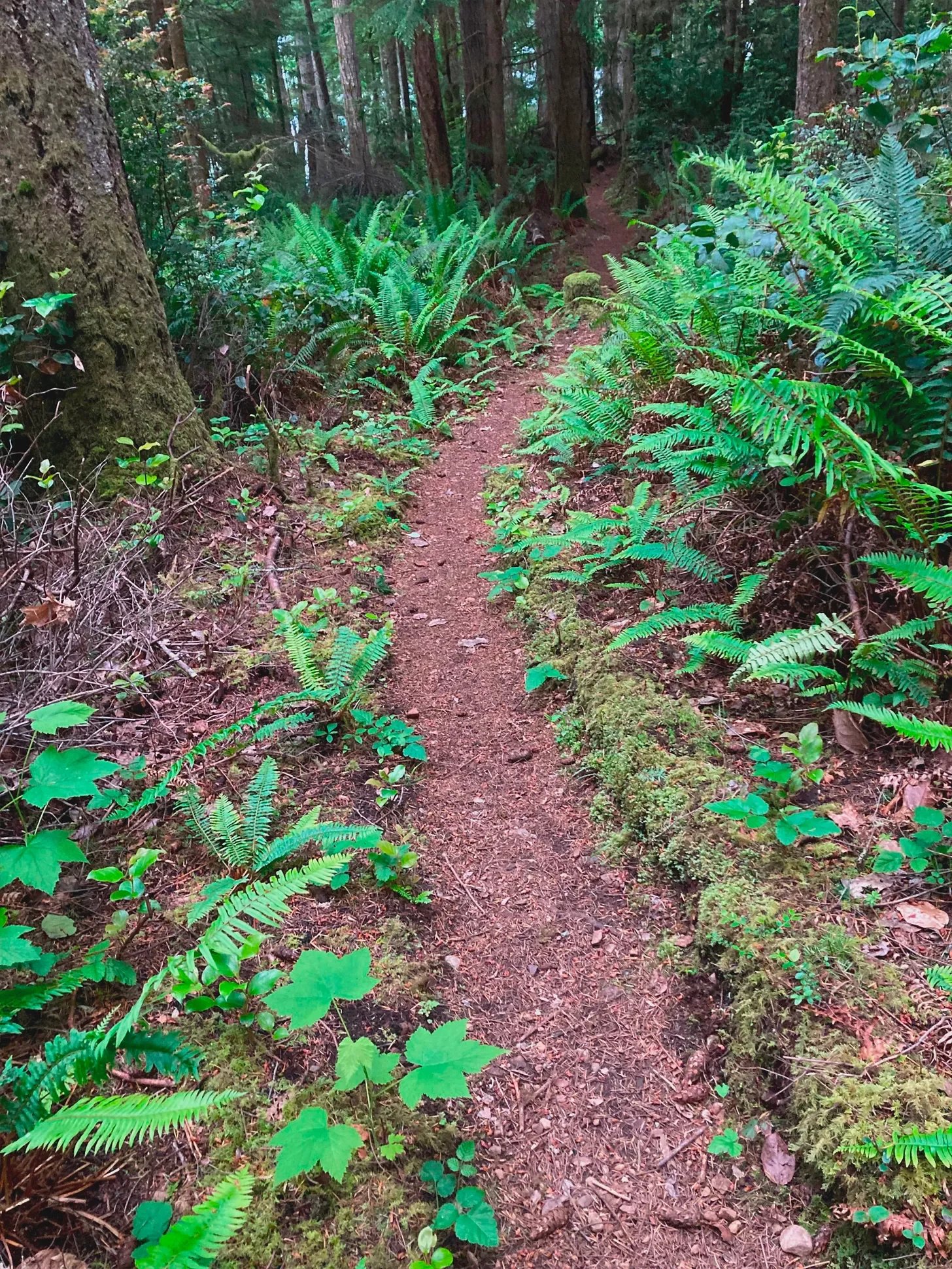
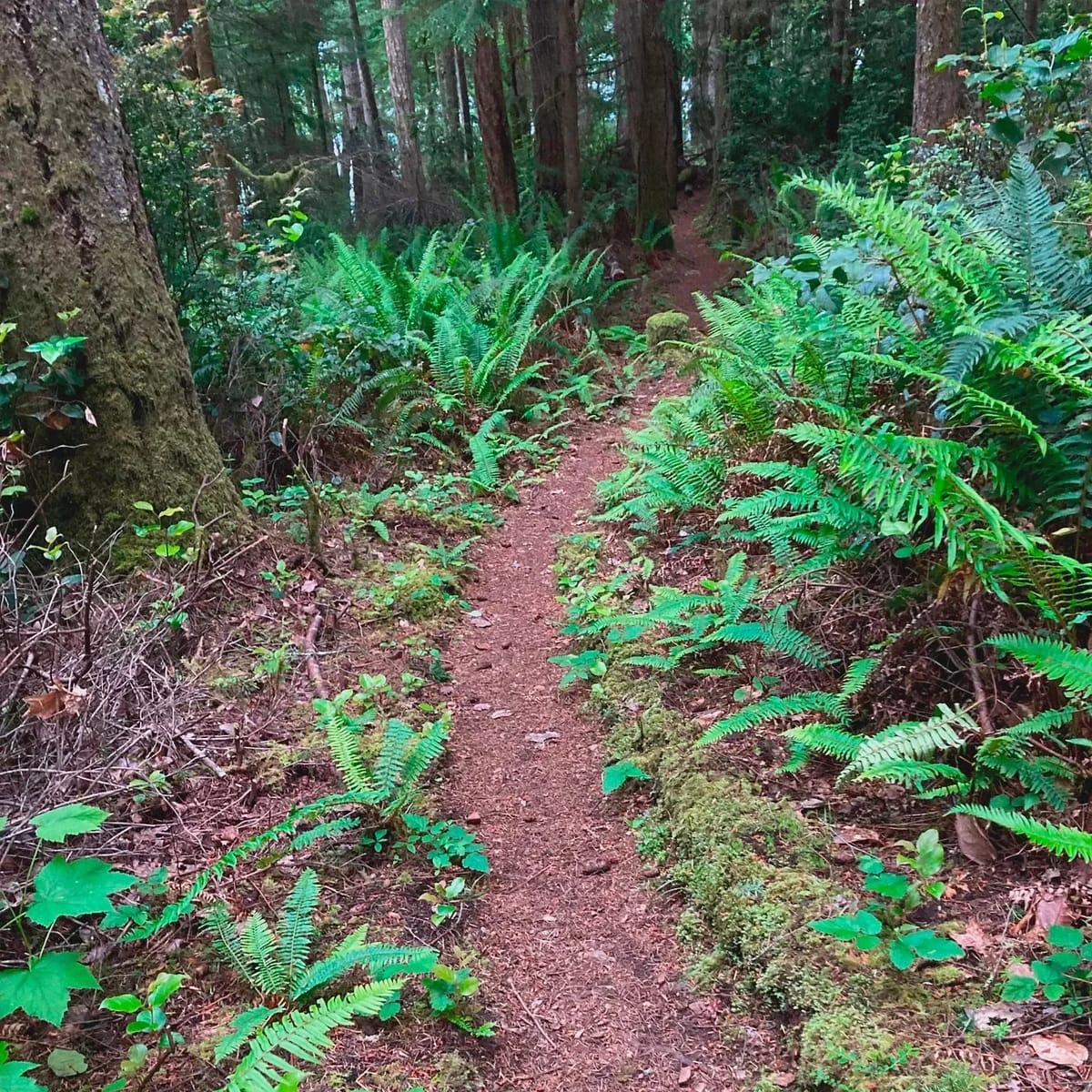
The psychedelic trail into the forest, photo by Mark Rose [/caption]
A column by Mark Rose, originally published in December 2024
Every evening, about an hour before sunset, I set out on a two-mile hike with our golden retriever Hanne. I walk up the hill through broadleaf maples, Douglas Fir, Western redcedar, Western Hemlock, and willows across meadows and wetlands. There are clumps of wild rhododendrons, blackberries, salmon berries, and huckleberries. I’ve seen deer, an elk herd, a bear, rabbits, owls, woodpeckers, and eagles. Once, Hanne ran into the brush and returned with a salmon head. Probably dropped by an eagle. Mostly, we’re alone, bonded. Often, especially this time of the year, it’s raining. The forest is clean and lush. The rain is meditative.
[caption id align="alignnone" width="1456"]
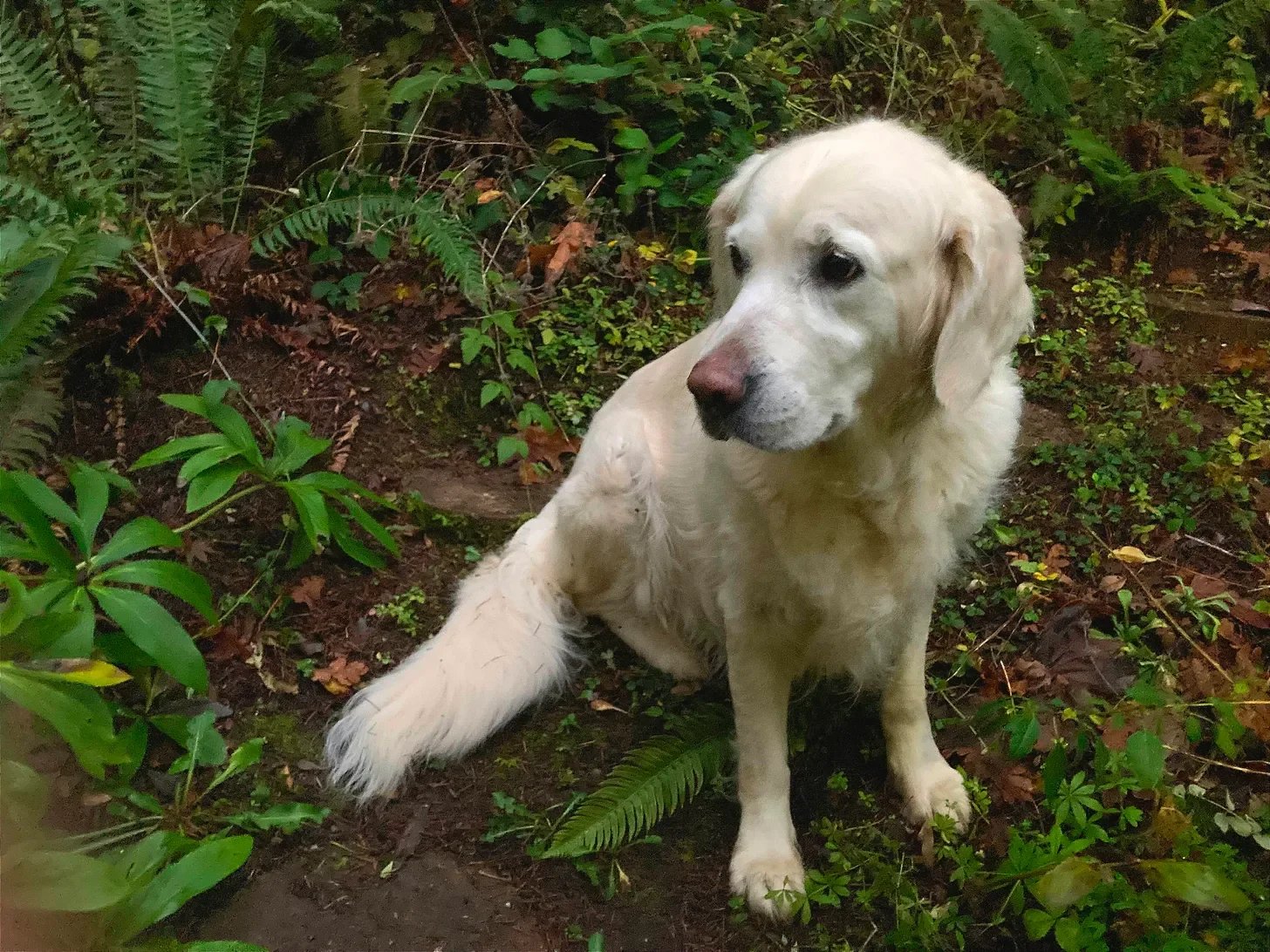
Hanne, photo by Mark Rose [/caption]
Many of our friends are habitat or marine biologists, conservationists, environmental activists, and nature filmmakers. In the twenty-five years I’ve lived on the Olympic Peninsula, I’ve spent countless hours writing letters, attending hearings, and filing and arguing appeals to stop or mitigate logging and development of pristine wilderness. Kirie Pederson was born on this land and has a lifelong history of environmental activism.
Nature needs advocates to survive. We’re visitors to the natural world; hopefully, it will surpass us.
The other day, as we approached the end of our hike. Hanne stopped and looked down the trail as she always does at this point. This time a huge full moon shone through the trees, framed by wisps of clouds. The Beaver Moon. I’m still not used to early sunset. I’m constantly leaving late and getting caught in the fading light between sunset and the last light. I manage to feel my way. My feet know this trail. I don’t think about it.
I was mesmerized by the moon. Hanne was, too. I’ve walked this trail for years and am mostly in an altered state. This time, I had to pay attention. The moon shimmered across the Bay, and darkness was suspended. I didn’t need a headlamp. The moon supplied the light. It helps to have a white dog leading the way. This ecosystem is hearty, healthy, and incredibly delicate. Few places like this are left, and they deserve to be protected.
I’ve spent many days attending to this land, encouraging native species and eliminating invasives. In the last few years, I’ve cut down branches and logs and dragged them to the bluff to build a natural wall. We had a collie that chased a river otter over the bank. She dropped 40 feet into the Bay but somehow survived. Her midnight rescue meant climbing down the cliff, wading to where she was swimming, lowering a kayak, and hauling her to a beach where we could carry her safely, all in the rain and utter darkness. Thankfully, she lived. The natural fence, created from woven branches and duff, is meant as a barrier to prevent another such incident and to encourage growth along the bluff to mitigate erosion.
[caption id align="alignnone" width="1456"]
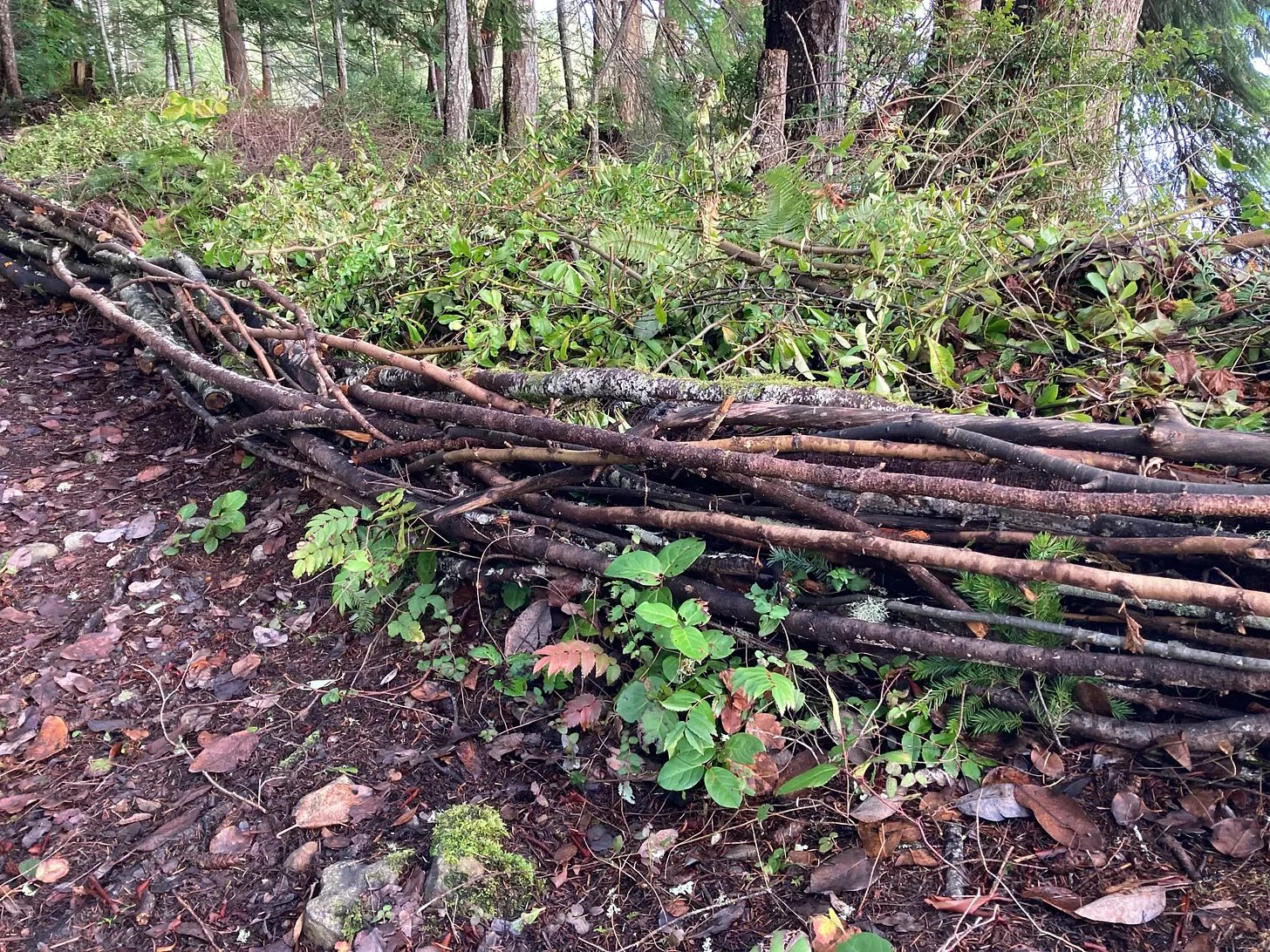
Photo by Mark Rose [/caption]
Cedar branches are naturally curved and good for wrapping around corners. Springy willow branches weave through Douglas Fir and Madrona, giving it a sturdy base. The brush behind the fencing is the foundation for biomass to develop so the brush can grow and strengthen the bank with its roots. All the materials for the wall and the brush came from this property.
With the Beaver Moon dominating the sky and the forest glowing in the moonlight, I thought of all who came before us. A deed says we own this land. We pay taxes. But we will be gone, and the land and shoreline will remain, and our job is to honor the legacy established by the original people for thousands of years. Our property is a continuum along the shoreline for birds and the algal community off our beach. Pacific herring spawns in the eelgrass, which feeds marine life and attracts birds and mammals, and the cycle continues.
As Kirie wrote in BrinnonInfo:
Before the arrival of Russian, English, Spanish, and American explorers in search of fur, around 10,000 Native people thrived in the Hood Canal region. They lived in wooden houses along the shorelines and penetrated the forests to hunt or for spiritual quests. The moderate climate and blend of forest, rivers and shoreline produced sufficient salmon and other fish, shellfish, berries, roots, seals, birds, and sea and forest game to support numerous thriving communities. Individual groups were differentiated by language and by kinship. Wealth and rank were earned through strength, courage, and generosity.
When Indians were assigned to tribes in 1855, nations were labeled as Makah, Hoh, Jamestown S'Klallam, Suquamish, Port Gamble S’Klallam, Quileute, Quinault, Squaxin, Skokomish, and Elwha Klallam. Until banned by government agents in the late 1800s, potlatches or trading feasts celebrated rites of passage: a boy or girl earning a spiritual name or selection of a new chief. Thousands of guests often attended, arriving on foot or, more often, by canoe.
In order to maintain wealth and status, wealthy families were obligated by their deep spiritual beliefs to distribute their wealth among the poor.
I felt good, ready for Kirie’s and my nightly reading ritual. We do not use screens after sundown. I was between books. I had finished Solito by Javier Zamora and was ready to start The Women by Kristin Hannah. Since then, I have read two incredible books by Isabel Wilkerson: The Warmth of Other Suns and Caste. They should be required reading. Together, these four books are our history that is being ignored and erased. They’re also gripping and story-driven bestsellers you can get lost in—a rare combination.
In between books, I sometimes read The New Yorker or nature magazines that come with our membership in the Sierra Club, National Wildlife Federation, and Nature Conservancy. The tone in environmental magazines was upbeat. Biden-Harris took more than 300 official actions to protect the environment. Biden recently became the only president to visit the Amazon Rainforest. Harris introduced the Environmental Justice for All Act as a senator and launched the first environmental justice unit when she was D.A. We had a team in the White House that understood the importance of the natural world and attempted to reverse the damage Trump did the last time.
All that is gone.
Trump will pull out of the Paris Climate Accord, gut the EPA of scientists and objective thinkers, and replace them with cronies and lobbyists as he did before. It’s drill, baby, drill, frack frack frack, log the trees. It’s not about neglect. It’s the willful destruction of the planet.
Trump doesn’t recognize the natural world. We see a beach. He sees hotels. We see a meadow. He sees a golf course. To him and his cronies, the natural world must be exploited for quick monetary gain. The natural world is about nuance, interconnectedness, and long-term benefit. That does not compute in Trump world.
I know that the next issues of these magazines will be full of dire warnings and pleas for help and action. We have gone from a spirit of cooperation and understanding to a full-on battle. We have an impact locally with preservation and restoration efforts in Dabob Bay and Tarboo. Kirie and I work with local organizations, primarily Northwest Watershed Institute (NWI) and North Olympic Salmon Coalition. NWI works with landowners, government agencies, and the Navy to protect habitat in and surrounding Dabob Bay. In a small way, we make a difference.
In this unfolding horror show with too many outrages to follow, the natural world is a victim without a voice or recourse—except for us.
Words Words Words is a column that contains memoir, observations, poetry, reviews, drama on the page and the stage. It is republished here with the permission of Mark Rose. You can subscribe to his writing here.