Beyond the Black Brute: How Platonic Touch is Healing America’s Undertouched Black Men
In an era of male loneliness epidemics, a documentary project is asking men to do something radical: hold each other.
It started with a single question.
Nearly ten years ago, Aaron Johnson, founder of the Chronically UnderTouched (CUT) Project, Holistic Resistance and Grief to Action, was mentoring a young Black man in Southern California’s Mojave Desert. After a difficult conflict, Johnson asked him: When was the last time you had three minutes of platonic touch?
The young man couldn’t remember a single instance of non-violent, platonic touch in the past 12 months.
“That put into perspective how absent his life was from touch,” Johnson recalls.
That moment became the seed of the Chronically Undertouched Project. This decade-long journey has since grown into two documentary films, a funded activist training program and an emerging movement to help black men reclaim vulnerability, intimacy, and healing.
The silence around touch
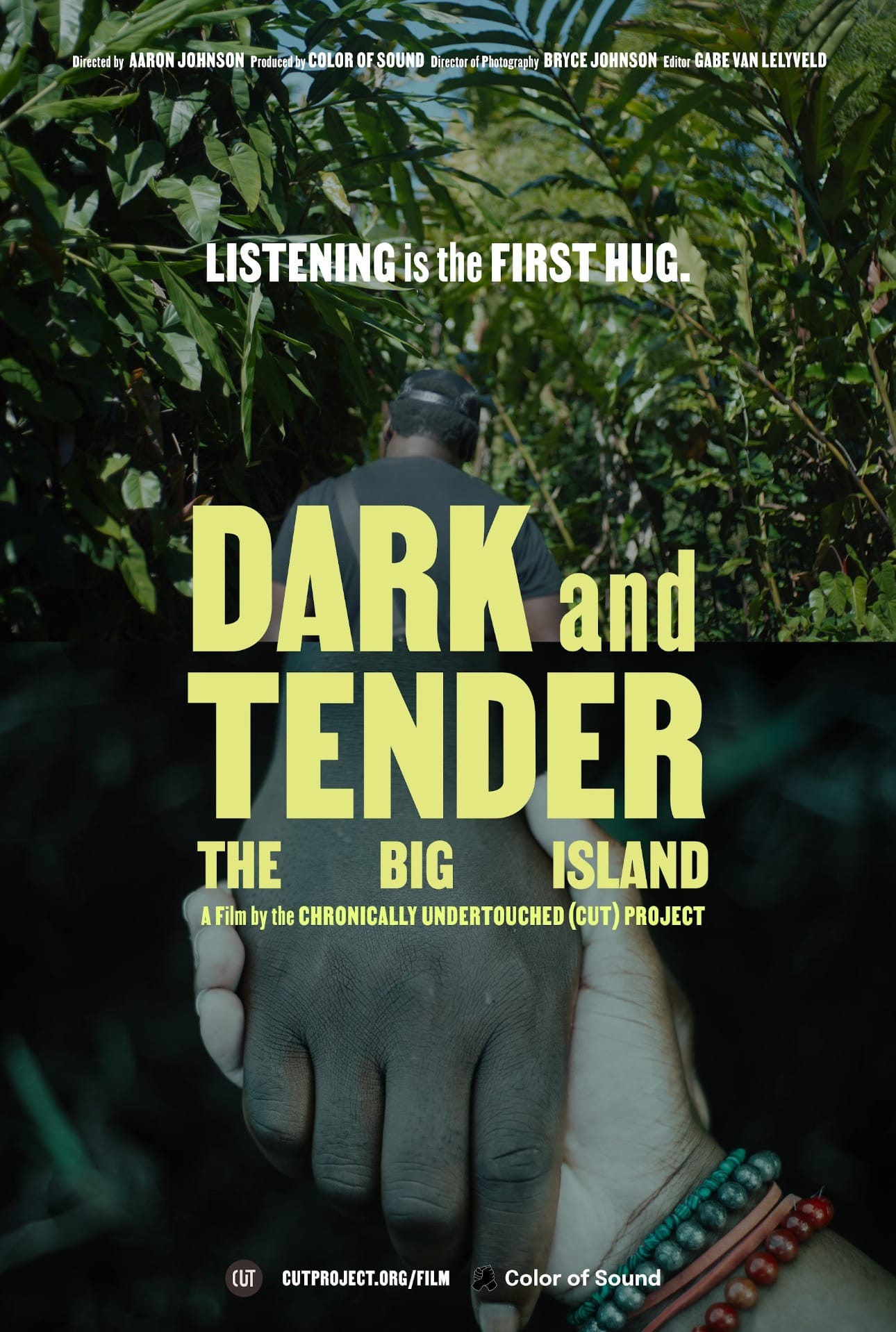
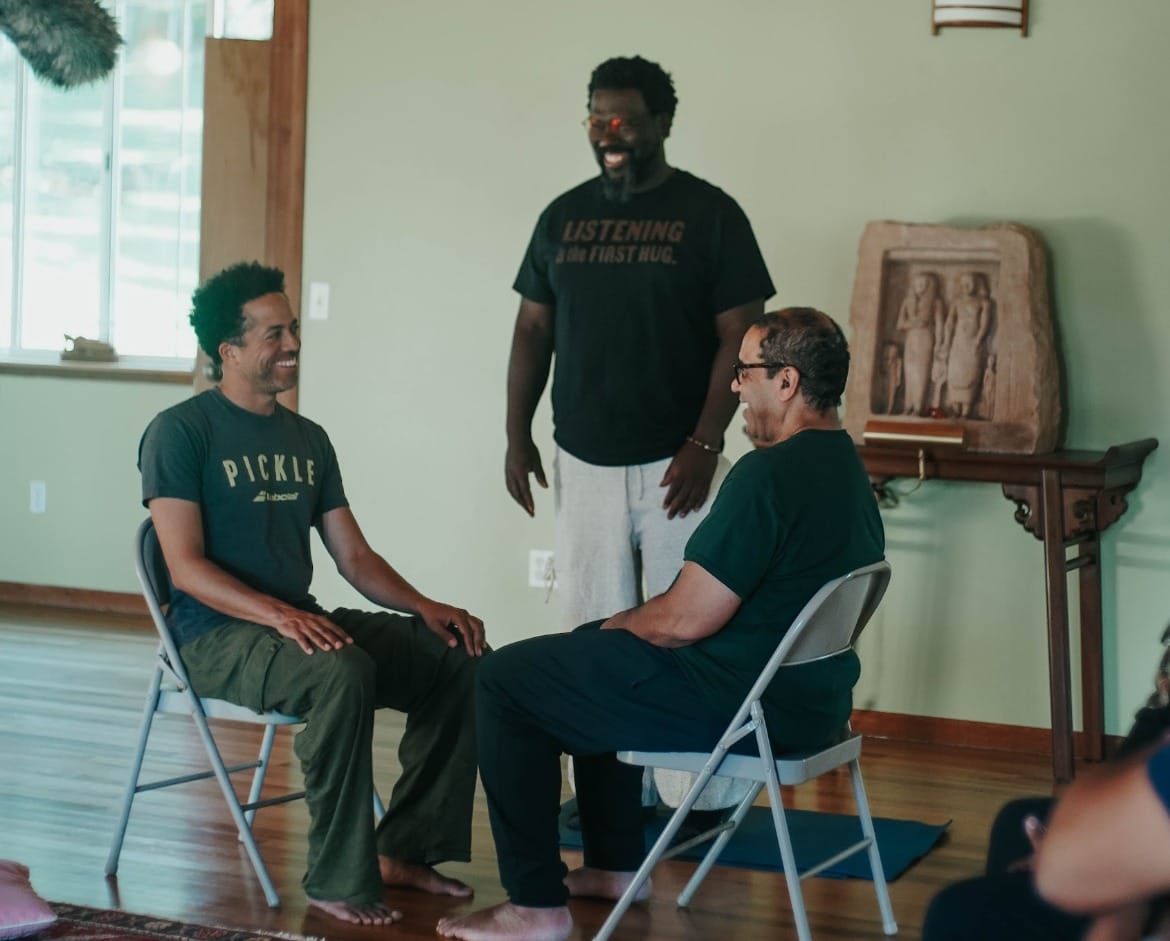
The first film, set on Washington’s Whidbey Island, introduced audiences to the project’s core diagnosis: many men, particularly black men, are living in a state of profound touch deprivation. The second film, The Big Island (released this year), goes deeper. Shot over eight days on Hawaii’s volcanic landscape, it shows something rarely captured on camera: Black men actively learning how to reach for each other.
“In the first film, we show the end result, the tuck-in, the intimacy,” Johnson explains. “But we don’t talk about how we get there. The second film answers those key questions.”
Getting there has never been simple. When Johnson first began this work, he couldn’t find a single image of black men holding each other in a platonic embrace to include in a public talk.
“The ones that did do it said, ‘Don’t photograph me doing this. God, no. Don’t put me in front of thousands of people,” he says. The fear of exposure, of being seen as weak or vulnerable, ran deep.
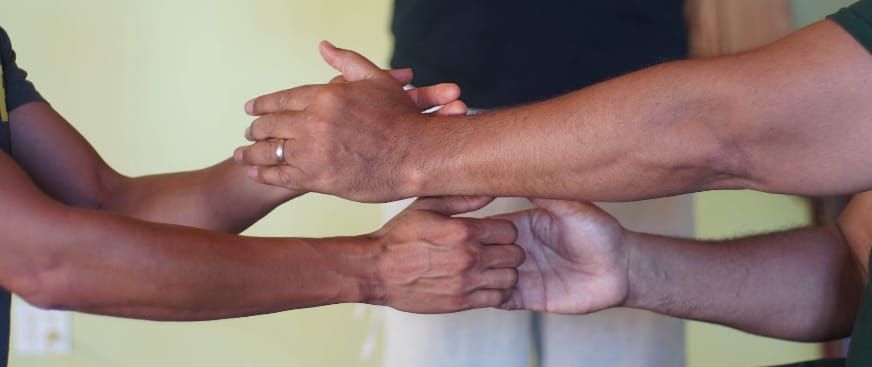
Ben Wilson, CEO and Founder of Color of Sound and Producer of the Dark and Tender series, joined Johnson in developing the project, points to a familiar culprit: internalized homophobia. “That comes up especially when men are endeavoring into platonic touch,” he says. But he is quick to clarify that touch itself is almost a metaphor. “You don’t have to touch each other to be part of the workshops. We start with hands being close, near but not touching, as a way to gradually get into it.”
The ‘black brute’ and American fear
Both men are candid about the larger cultural force their work must contend with: what they call the “black brute” archetype.
The “black brute” is a stereotype with a history. If Black men could not be legally owned, they had to be socially controlled. The narrative was simple: Black men are inherently violent, sexually dangerous, and incapable of tenderness. Therefore, any violence enacted upon them—lynching, police brutality, economic strangulation—was justified.
That was 150 years ago. The name has faded. The archetype has not.
“We see it every day in the NFL, in UFC, in aggression,” Johnson says. “We might not call it the black brute, but the attributes are clearly there. America is holding onto that image deeply.”
That archetype, he argues, makes healing work for black men uniquely difficult. While the broader conversation about male loneliness and mental health has gained traction in recent years, Johnson believes the specific experience of African-heritage men remains largely unaddressed.
Wilson draws an analogy to medical research. “Medical research used to be done exclusively on white males. The benefits rebounded mostly to white males. Women and black men? The medications don’t have the same efficacy because the research was tailored specifically for white men.”
The same is true, he says, for mental health services.
What touch deprivation costs
The stakes, Johnson insists, are higher than loneliness.
“You can be sober. You can have no major addictions. You can be financially well, observed from the surface as doing fine,” he says. “But the average male nervous system in America is somewhere on the extreme level of being chronically undertouched.”
That state, he argues, sets men up to be more likely to develop addictions, to break consent, to violate others, to manipulate using whatever power they have. “Those things are way more likely to happen if you’re on the spectrum of chronic undertouch.”
The fact that more cases haven’t emerged, he says, is almost surprising. “It can get worse, and it will get worse as we don’t address this issue.”
Rest as resistance
The Big Island is a deeply moving film. Shot over eight days in Hawaii, it is deliberately paced, immersive, and warm. The landscape of an active volcano region, ocean cliffs, and rainforests becomes a character in its own right.
“One of the big parts of a comprehensive touch plan is to build and heal the intimate relationship with the earth,” Johnson says. “On the Big Island, the earth is in your face. The ground is literally moving under your feet.”
The longer retreat allowed something the Whidbey Island shoot (just three days) could not: genuine rest.
Wilson emphasizes this point. “Black men in general don’t experience a lot of relaxation and rest. Getting to go to an island where it’s warm, having the time and space to really settle in—that was really important.”
The film also features Aliko, a trans man who lives in the local area. His presence, Wilson says, offered a unique lens on masculinity. “It was particularly interesting to see how a trans man sees masculinity and experiences transition. But at the same time, Aliko’s experiences were a lot like mine. There was a commonality."
Beyond the films: The Touch Activist Program
The project is no longer just about documentaries. With a two-year, $200,000 grant from the Kataly Foundation, Johnson and Wilson launched a Touch Activist Program that trains black men to facilitate their own workshops, build local practices, and actually earn a living doing this work.
The first cohort has already graduated. Participants are now leading sessions in Southern California, Colorado, and Michigan. A third film, either a 90-minute feature or a docuseries, is planned for next year to go deeper into the characters, the trauma story, and the evolution of the practice.
“Our goal is to get more black men facilitating their own workshops without me being the core facilitator,” Johnson says. “That’s the next chapter.”
A question of timing
Has the culture caught up with them?
Johnson is cautiously optimistic. “The broader conversation about men’s mental health is getting louder, more specific, more invested.” But he still sees a reluctance to acknowledge the deeper challenges facing black men of the global majority.
And yet, something is shifting. The films are now being used as educational tools. Younger generations, Wilson notes, aren’t looking for a two-hour film in isolation. “They’re looking for events, for ways to engage, create community, and heal. The shorter films become part of an event that can be really impactful.”
For now, Johnson returns to that original question, the one he asked a young man a decade ago. It remains, for him, the heart of the matter.
“If touch becomes safe, we address the trauma story attached to so many other parts of our being. It nourishes our relationships, both romantic and platonic. It nourishes our ability around rage, grief.”
How to watch and support
Dark and Tender: The Big Island will screen on May 3 at the Seattle Black Film Festival. Both films are also available for on-demand viewing and community screenings.
To watch: Visit https://kinema.com/watch-now?projectTitle=dark+and+tender
To host a screening or sponsor the film tour: Contact Ben Wilson at ben@colorofsound.org
To learn more about the Chronically UnderTouched Project and the Touch Activist Program: Visit www.cutproject.org