Brinnon Begins to Imagine Change
The town comes together to confront big challenges.


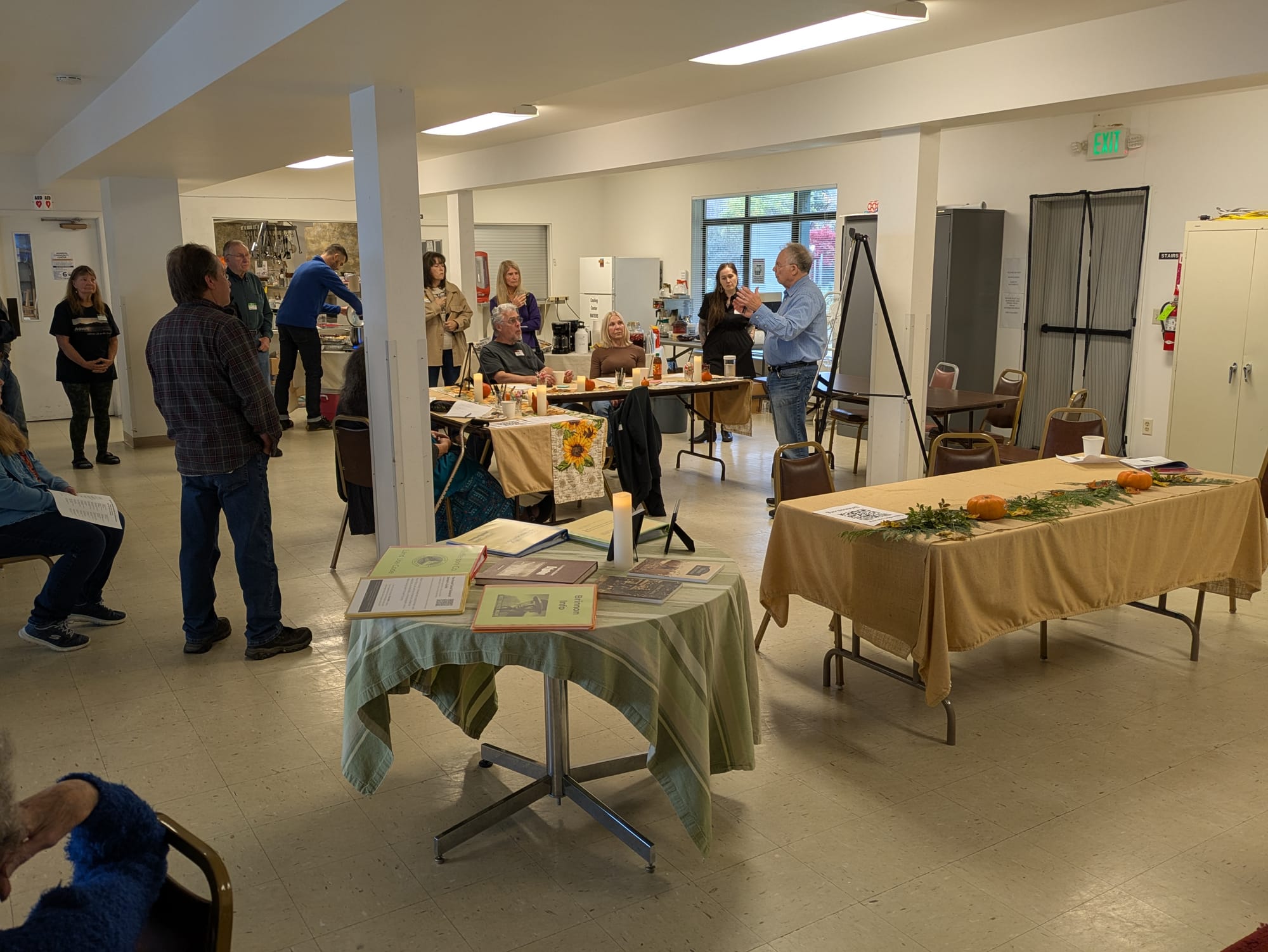
JEFFERSON COUNTY, WA — Approximately 70 Brinnon residents, motivated by frustration, concern and disappointment over ongoing external factors that pose profound challenges to the town, gathered on November 7 at the Brinnon Community Center to share ideas about how to chart a more proactive approach to shaping the town’s future.
The event, dubbed the Imaginarium by a group of eight Brinnon residents who formed in April and have met 15 times, is intended to kick off a process that the group hopes will bring input from as many residents as possible. Group members were motivated to come together, in part, over frustration with a lack of follow-up by the Jefferson County leadership, and the town itself, on the 1982 Brinnon Community Development Plan and the 2002 Brinnon Subarea Plan.
“These plans are largely aspirational,” said Brinnon resident Mark Rose, a group member.
The group’s answer is what Rose called an experiment. Its members spent 15 weeks meeting weekly to read the plan word for word. They operate without former rules and make decisions by consensus. They’re working with the Chamber of Commerce and the South County Task Force, and they hope other communities in the county will take note and perhaps pursue similar actions. Rose said the county needs the community to be the catalyst.
“No one’s coming to save us,” Rose said.
The challenges
Brinnon’s location on the Hood Canal, with views of the Cascades, is both a blessing and a curse. Most of the 66-acre Rural Village Center (RVC), the commercial flats along the Dosewallips River, sits within the 100-year floodplain, which restricts new construction.
The South County Task Force is spurring conversations around the possibility of moving facilities like the community center, fire station, school, library, post office and the Brinnon general store out of the floodplain.
“We’re not even at step one on that,” said Rose. He said that scientists need to further study the area and submit their findings in order to provide the town with the necessary intelligence upon which to base a decision.
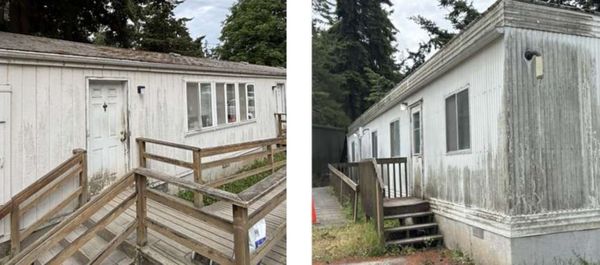
The community center building cannot be meaningfully renovated because of its location, and Rose said there may be asbestos on the upper floor. The fire station also sits in the floodplain, raising an uncomfortable question: if the river floods, where do emergency services operate from?
Substantial population growth is expected to produce adverse and unwanted effects on the area's ecology, infrastructure and traffic, Rose told the gathering in a short presentation. These effects will come primarily from the long-debated Black Point Resort, a Pleasant Harbor project first proposed in 2006.
The Resort has received the go-ahead from the county to install infrastructure and log 50 acres, Rose said.
“But I’ve seen very little planning for its impact,” Rose said. “What will that do to Brinnon?”
One attendee, who spoke on the condition of anonymity and whose family has lived in the Brinnon area for well over a century, was more pointed in their comments about the resort planning process. “What do they think the consequences will be on the highway and the school with all these people coming in? Hello!”
The town’s age demographic, like many communities on the Olympic Peninsula, poses another challenge to its economic vitality. “A large percentage of our elderly residents will not be here in 10 to 20 years,” said an attendee.
Opportunities
The core group is not focused only on constraints. Rose noted that a rural overlay district running from Mount Walker South toward the Mason County line offers what he called the most liberal zoning in East Jefferson County for starting and growing a business. A 16-acre strip near the flats also allows small-scale recreation and tourism uses, such as kayaking, and the group has been talking with the county's Department of Community Development (DCD) about extending that designation across the whole planning area.
The Brinnon area recently received a federal Opportunity Zone 2.0 designation, which offers significant tax breaks to people who reinvest profits in property or businesses in designated areas. It could draw investors to Brinnon, which raises a question the group wants residents to answer: what kinds of businesses does the community want? Rose said that there is intense outside interest in the Brinnon area.
Other priorities include a better way for residents to communicate. Rose suggested to the group that Facebook moves too fast for serious community planning.
”How do we all move together?”
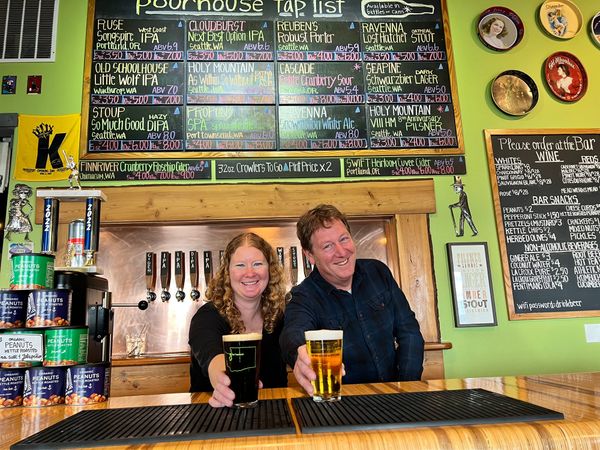
Sara Harvey, a member of the core group, wants Brinnon to be a place where she can successfully run her catering business, help build community and eventually retire.
“We’re only as strong as our community,” she said, adding that the group's work has meant reaching across differences in belief with neighbors who share a love of the place.
She said that the townspeople have been rolling up their sleeves and working hard, citing the South County Task Force and the fire department, “which does a ton of community work, but these efforts have been siloed.”
“Doing nothing to protect our town’s interests, and then also somehow expecting nothing to change, is the riskiest of options in my opinion,” Harvey said.
Harvey, Rose and the core group are gathering information from community members through a survey, and say that the core group is open to anyone who wants to join.
Working with the County
Though the group emphasizes self-reliance, speakers took care not to cast the County as an adversary. Rose said that he is in frequent and productive communication with the County’s DCD director, Jeremy Williammee.
Shellie Yarnell seconded that sentiment to the group that the County is working with, not against the town. Yarnell is a member of the North Hood Canal Chamber of Commerce.
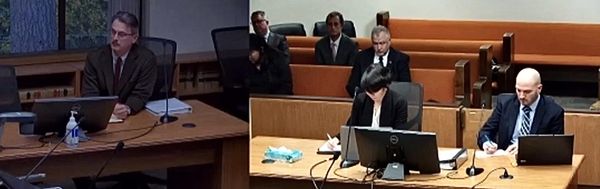
Williammee said in an email to the Beacon that DCD’s “scope and scale of engagement on the future of the RVC, floodplain management and risk, and economic opportunity depends upon resources. DCD’s long-range planning capacity is constrained by budget pressures, but we continue to explore opportunities to bolster our resources to partnerships and supplemental grant funding.”
Williammee noted that “the County has procured state grants that have increased knowledge and understanding of the river characteristics and facilitated support of [various community partners] to engage community members and enter agency stakeholders in a dialogue on options, obstacles and needs.”
The group's position is that the tools, the funding and willing partners already exist. What is missing, it says, is a community that has agreed on what it wants. Rose said that after 24 years, “nothing’s changed” under the plan, and this time residents hope to decide for themselves what happens next.
”It's been a learning experiment as we all learn how to be part of a community, and reach across the aisle to folks that have radically different beliefs. But we all care. We all want to be there,” Harvey said.