Centrum Invites Participants to Feel the Blues in Their Whole Bodies
The new Blues Dance Track teaches moves to everyone, regardless of experience level.

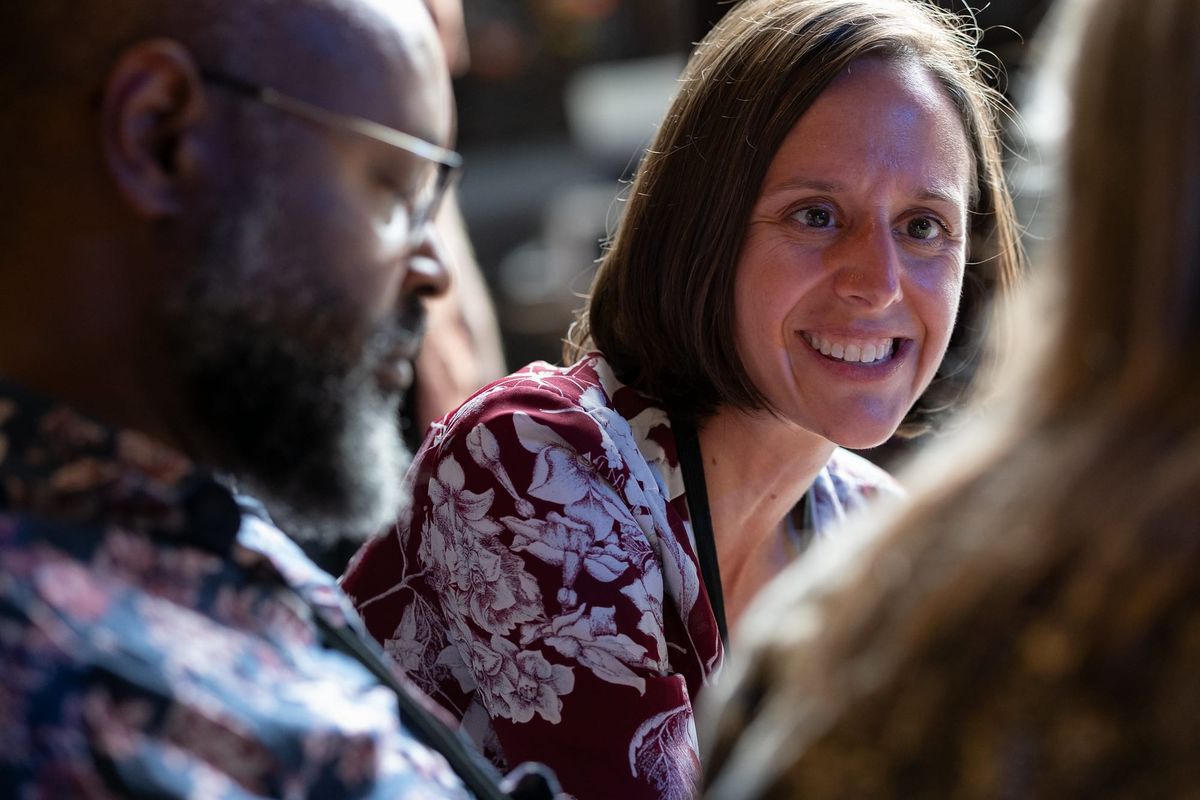
One night at a saloon in St. Paul, Minnesota, two people—a Black man and a woman of Polish descent—found one electric connection on the dance floor.
“Life would never be the same,” recalled Kelsy Lynn Stone, a former ballet dancer.
Her partner that night was Damon Stone, a descendant of jook-joint dancers and music makers. He was also a colleague of Kelsy Lynn’s—and definitely not a friend. Both taught at a dance studio, where he was bringing in more students than she was.
“Damon’s a great teacher; his classes were growing exponentially, while I was struggling,” teaching in a smaller and smaller corner of the place, Kelsy Lynn remembered. She was not a big fan of the guy.
Nevertheless, she kept her mind open just enough to dance with him. Then she found out: Damon is “like butter.” Together, the two glided into that place where they were just having fun with the music—while becoming exquisitely present to each other.
That was late 2010. Damon and Kelsy Lynn Stone have been married about a decade now. This summer, they will return to Port Townsend for their second turn teaching dance in Centrum’s Traditional Blues Workshop, a weeklong immersion in its 33rd year.
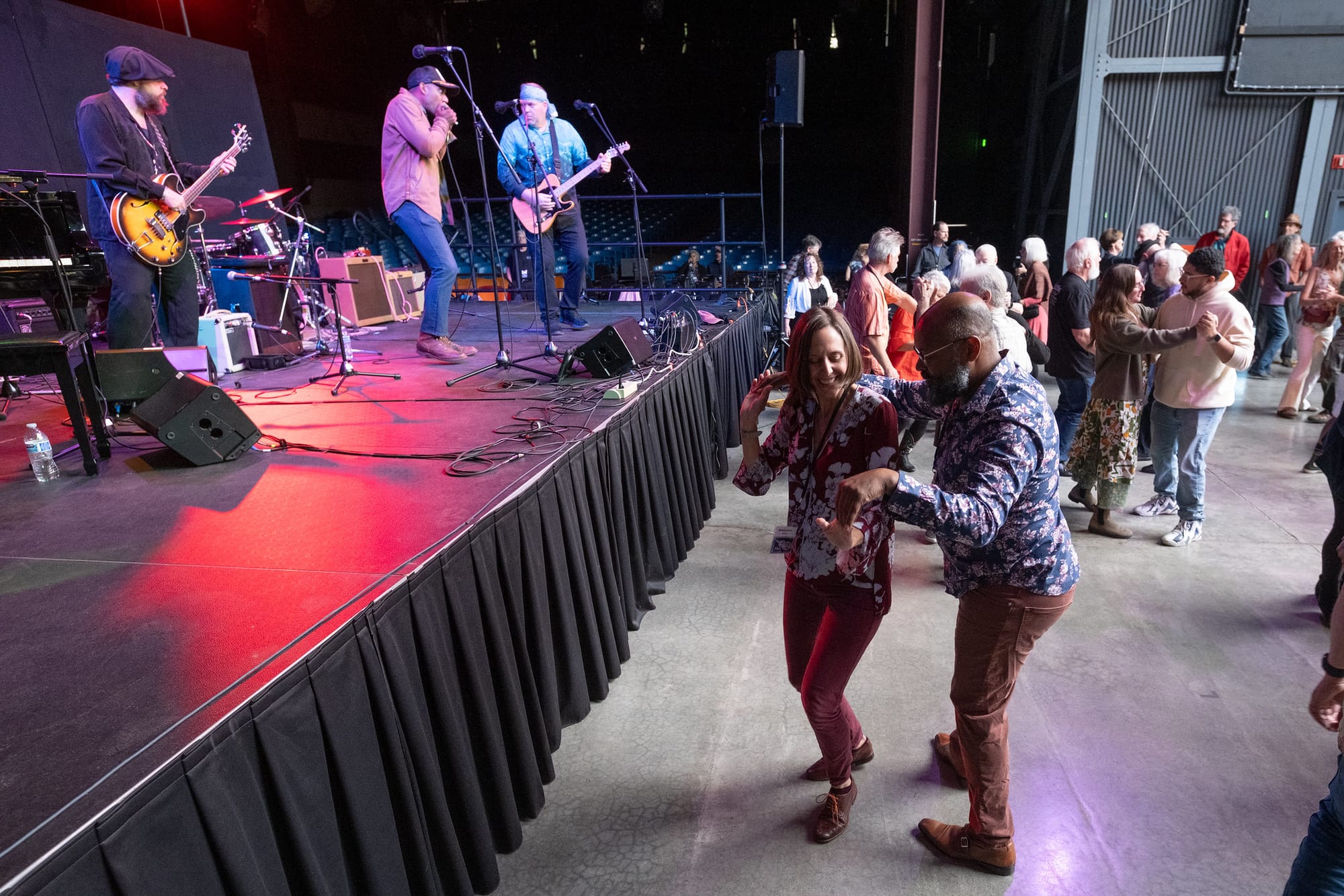
During 2025’s blues week, the pair led several classes; this time, they’re guiding the Blues Dance Track, a whole new package embedded in the workshop at Fort Worden State Park.
Tuesday, July 28 through Friday, July 31, participants will have morning and afternoon classes; they also will have a chance to dance to live music at the public dance Wednesday night, July 29, and during the Blues in the Clubs Friday and Saturday, July 31 and August 1.
The Traditional Blues Workshop’s “faculty presentations,” relatively informal performances peppering the week, will turn into jook-joint-style get-togethers. Faculty members this year include Alvin Youngblood Hart, Andrew Alli, Chaz Leary, Lightnin’ Wells, Eleanor Ellis, Benjamin Hunter, Mark Puryear, Jason Ricci, Corey Harris, Billy Flynn and Mara Kaye. At week’s end, the Blues Dance Track people will have tickets to the Traditional Blues mainstage concert at McCurdy Pavilion.
No partner or previous experience is necessary to take part in the program, and information about the workshop is found at https://centrum.org/program/traditional-blues/. To find the signup page, click the “Register Now” button and keep scrolling down to the Blues Dance Track heading.
This formal track came about when Traditional Blues Workshop artistic director Jontavious Willis and program manager Mary Hilts had a conversation about rhythm. As in: How do we get more of it into our people?
“It’s easy to forget about rhythm when you’re concentrating on learning another new chord,” said Hilts. The Stones, as it turned out, have skills when it comes to bringing people inside rhythmland. Their classes this year will include a session called “Good Time Tonight” about channeling the party vibe and letting the music move the body. They’ll also teach the first known partnered blues dance, “The Slow Drag.”
One thing that struck Hilts about the Stones: their kindness. These are a couple of great dancers with impressive backgrounds. They teach around the globe, from Boston to Durham, N.C., to Seoul, Korea. Yet “they don’t have any inkling of arrogance about them. They just really embody that kindness and welcomingness,” Hilts said.
Damon was born in San Francisco and grew up there and in Oakland, California, where he started dancing at family gatherings before he was old enough for first grade. His maternal grandparents came from Memphis, Tennessee, so a lot of the dances he learned early on are from the hilly region where Tennessee meets Mississippi.
Kelsy Lynn, who is 100 percent Polish, also had grandparents who were devotees of music and dance. Her maternal grandfather and grandmother traveled around teaching Eastern European moves: polkas and mazurkas. Her earliest memory is of her toddler self, dancing with her granddad.
Ballet—the European-born genre that’s about as far from blues dancing as one can get—was Kelsy Lynn’s life early on. She danced with the Moscow Ballet’s U.S. touring company, and then went into teaching, earning graduate degrees in education along the way.
“Teaching is where my heart is,” said Kelsy Lynn. She loves the light-bulb moment when a student steps fully into a technique. And blues dance, with its groundedness and sensuality, has found its way into her soul.
Damon added that learning to dance to the blues is more than memorizing footwork and counting to eight. This tradition asks you to “empty your cup,” as he puts it, and then refill yourself with delicious rhythms. The Blues Dance Track will cover a family of dances to music from the Mississippi Delta, the Piedmont region, and from Chicago. Some West Coast blues might just sneak in too, since that’s where Damon comes from.
“This music is all about the human condition,” he said, “and about freedom and liberation . . . This is real people, moving in a real way, to real music.”
Hilts, for her part, emphasized that anyone, regardless of age or walk of life, can enjoy learning the family of blues dances—especially the way the Stones teach them.
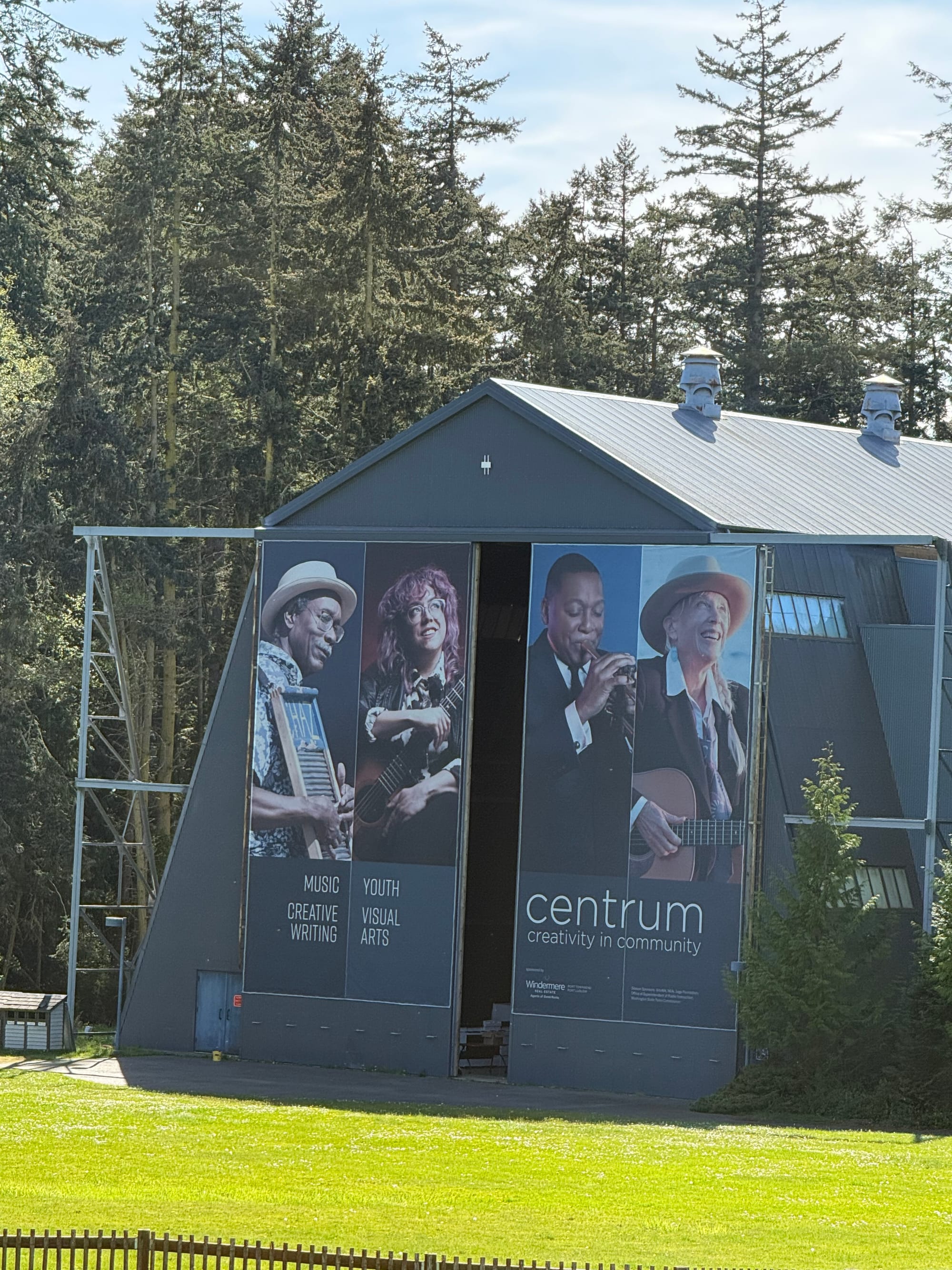
She remembers being reluctant to get out there, even at her own blues workshop. About a dozen years ago, when she was only a couple of years into the job of program manager, Hilts put on a dance at Fort Worden’s USO Hall. The band was playing ragtime. Not a soul had ventured onto the floor.
Musician Mark Rubin walked up to Hilts and held out his hand.
She tried to say no, but Rubin reminded her that this was her job to get the party started. Off they went, and Hilts was swept up into the joy of it all.
“Once I got up, I didn’t want to get back down,” she said.
Damon recalls a conversation he had with New Orleans multi-instrumentalist Sunpie Barnes, a longtime faculty member, at last summer’s Traditional Blues Workshop.
On the night of the public dance outside McCurdy Pavilion, Barnes observed that blues musicians and blues dancers are no different from one another.
“Dancing is just using our body as an instrument,” he said.
“We want to give people the tools to do that,” said Damon.