Developers Pitch Community-Owned Future for Discovery Bay as Neighbors Weigh Conservation Path
Information sessions held on March 30-31 as competing visions for historic golf course property come into focus.

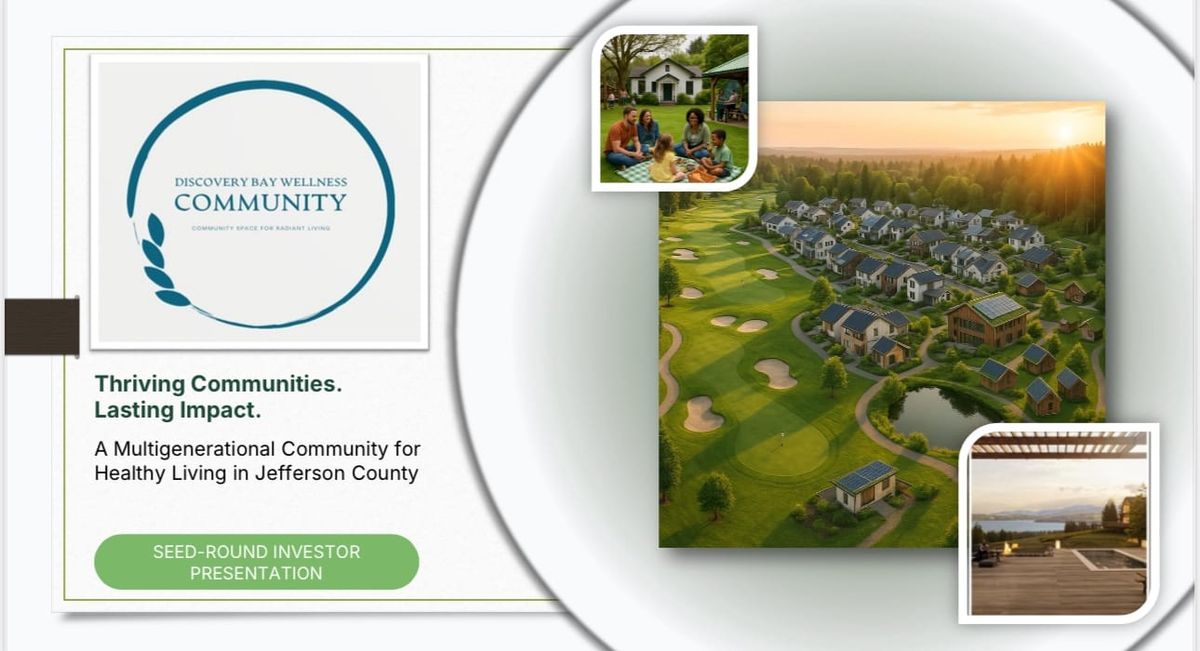
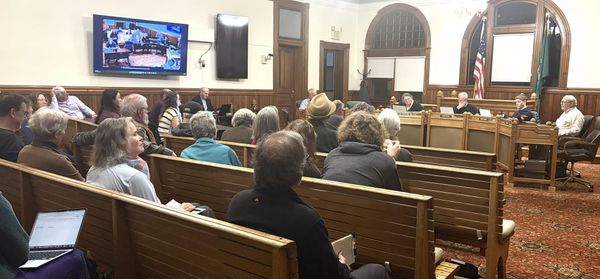
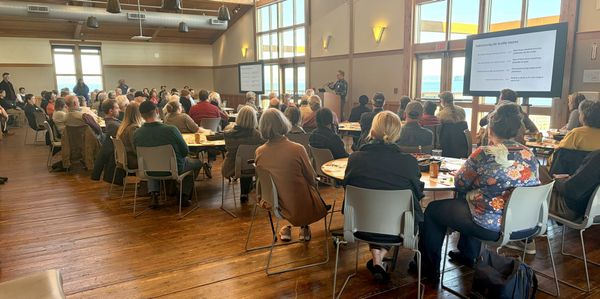
PORT TOWNSEND, WA — The team seeking to transform the historic Discovery Bay Golf Club into a multigenerational wellness community is making its case directly to the public, holding two information sessions in late March as they work to secure funding and meet a critical November deadline.
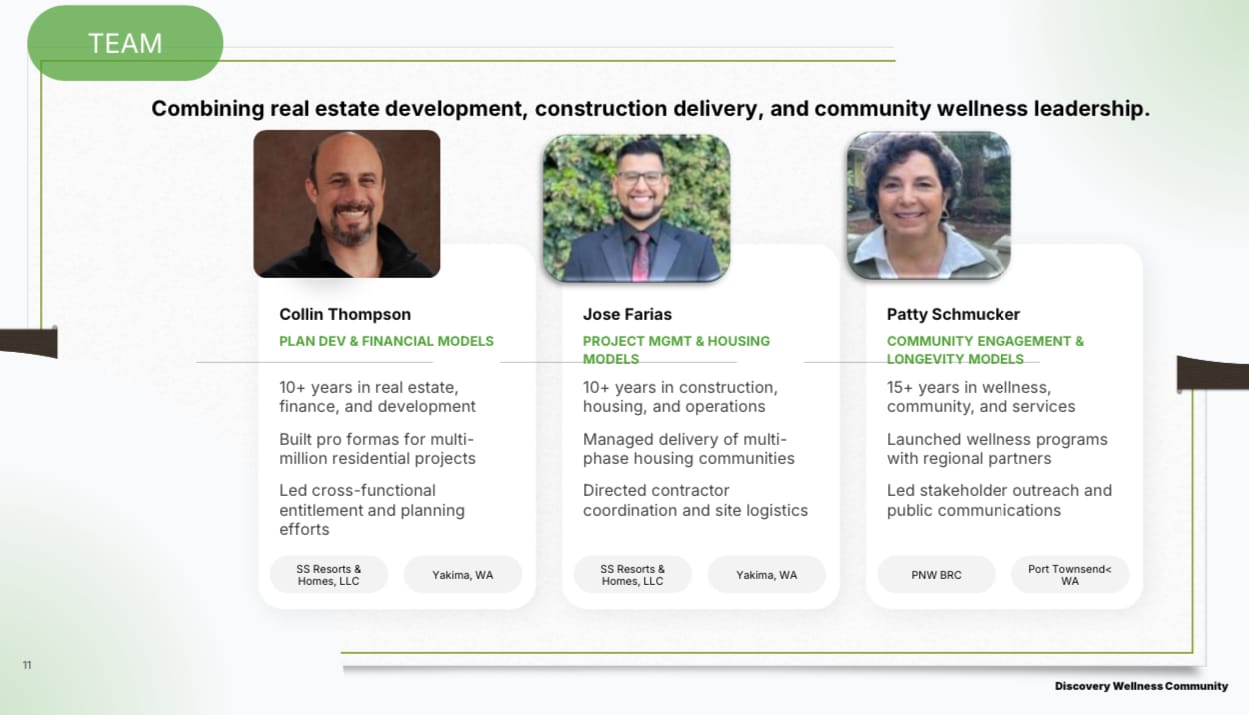
Patty Schmucker, one of three partners in the proposed Discovery Bay Wellness Community, outlined the project's evolution and community-focused vision in a detailed interview. A newly updated investor presentation reveals refined financial projections and a clear emphasis on what the team calls an "intentional community designed as a multigenerational community."
The outreach comes as neighbors pursuing a conservation alternative await word this month on whether the Jefferson Land Trust will formally explore protecting the property's wetlands and forests through conservation easements.
A project shaped by community input
Schmucker, a Discovery Bay homeowner with a background in economic development and wellness, described how the current proposal emerged from conversations with neighbors and potential buyers over the past year.
When the property went on the market, Schmucker approached the broker and asked to be introduced to potential buyers. Her goal was to better understand what the community wanted—and didn't want—before any deal was struck.
"Historically, what's happened is you've been able to find a buyer, and then that buyer evaporates because there's this litigation and so much turmoil involved in this project," she said. "So what if we act more proactively and get in front of it and see if we can really better understand what the community wants or doesn't want?"
That approach led her to Collin Thompson, a Yakima-based developer who has spent the last decade building rural affordable housing and farmworker homes across Washington state through his work with the Office for Rural and Farmworker Housing. A one-hour meeting turned into four hours of envisioning what a Jefferson County-specific project could look like.
"He immediately knew what I was talking about," Schmucker said.
The current proposal
The updated March 18, 2026, investor presentation, titled "A Multigenerational Community for Healthy Living in Jefferson County," lays out a project designed to address what the team identifies as critical unmet needs in the county: housing shortage, limited community spaces, and aging care access for the county's growing 60-plus population.
The proposal includes 42 homes, down from earlier projections of 48. These homes will range from attainable housing options for young families and the local workforce to residences designed for active aging. The project also features a nine-hole golf course, down from the current 18, with preserved open space and trails to enhance community access to nature. Additionally, a Longevity Center will be established, offering clinic, spa, and physical recovery services. Six extended-stay cabins are planned to accommodate wellness guests. Community amenities will include pickleball courts, barbecue pavilions, and various gathering spaces to foster social interaction and recreation.
The financial model seeks $5.1 million for land acquisition; $2.04 million of that will come from investors and $3.06 million from a bank loan. An additional $3.55 million in infrastructure financing and $31.4 million for home construction would be covered by bank loans. Presale deposits of $50,000 per home are projected to place $2.1 million in escrow.
The presentation emphasizes that all investor dollars would be secured and guaranteed, with projected cash from investment returns of 12 to 14 percent, a 100 percent return by year 2, and a 200 percent return by year 12.
The November deadline
Schmucker directly addressed the most significant hurdle facing any development on the property: the Nov. 4, 2026, expiration date of the preliminary permit approval granted to current owner Nicolas Hurtado in 2021.
"Our timeline is built to break ground before the permit expires," she said. "It is a heavy lift, and we are excited by the community support to see a positive outcome."
The updated investor presentation lists "Secured entitlements for 48 lots with ADUs" as a completed past win, referring to the 2021 approval. The project now proposes 42 homes, a reduction from the approved 48, which would likely require modification of the existing permit or a new application.
Schmucker acknowledged the complexity, noting that the 2021 approval came with approximately 104 conditions that emerged from community opposition in previous fights over the property.
"The voices of those neighbors have been incorporated into the plan," she said. "There are about 104 conditions that are part of the permit, which are all a part of what our planning is."
Community ownership model
A key evolution in the project's structure involves who would ultimately own it.
"What if we could make this a project that not only meets the needs of the county, but also is owned by the county, but owned by people who live here?" Schmucker said.
That community ownership model is central to the current pitch. The team is seeking investors through what they describe as a seed-round presentations.
The alternative path
Even as the development team ramps up its public engagement, neighbors pursuing a conservation alternative await word from the Jefferson Land Trust.
Bob Heinith, a longtime community advocate involved in the effort, confirmed that Land Trust staff have indicated they will decide this month whether to formally explore a conservation easement that could permanently protect the property's wetland and forested areas from development.
"I met with the land trust folks, and they are going to make a decision next month about pursuing an examination of the particulars for a possible conservation easement for the wetlands area that is now proposed for a housing development," Heinith said.
The Land Trust would also consider "establishing a wildlife corridor in the forested lands above the upper 9 holes of the golf course that is slated for several clustered housing developments under the approved county permitting process," he added.
The Land Trust's recently completed 2026-2030 Strategic Plan identifies "preventing land conversion" as "the defining challenge of our time" and prioritizes protecting habitat and wildlife corridors, including the Quimper Wildlife Corridor that connects to the Discovery Bay area. Whether the Discovery Bay property ranks among the organization's immediate priorities will become clearer with this month's decision.
Sonny Flores, a concerned neighbor involved with the conservation process, has conversed with the developers. When speaking of Schmucker, he said, “She does seem to have genuine concern in keeping the community in mind with this project and others that she is involved with.”
What comes next
Schmucker framed the community's choice in stark terms. The current owner, who is 85 years old and living in Chile, has "deal fatigue" and wants to sell, she said.
"If it goes up for auction, then anybody can buy it and do whatever they want with it," Schmucker said. "And the most lucrative opportunity would be for someone to buy it at the distressed price that it's now on the market for, and they will buy it and sell the individual lots."
That scenario, she argued, would result in 40 multi-million-dollar homes with no coordination, no net-zero design, no community amenities, and none of the conditions the neighbors fought for in 2021.
"If we can't raise the funds and make that happen, the alternative is the owner has already attempted to sell, and this is the third time he's attempting to sell it," she said. "We have the opportunity to craft it to serve our community."
The Discovery Bay Golf Club has anchored this corner of the Olympic Peninsula since 1925. Its second century now hangs in the balance.