Finnriver Stays True to its “Absurd” Mission Through Bumpy Times
Jefferson County’s favorite tipple strives to provide interconnectedness and joy, but the business side is more complicated.

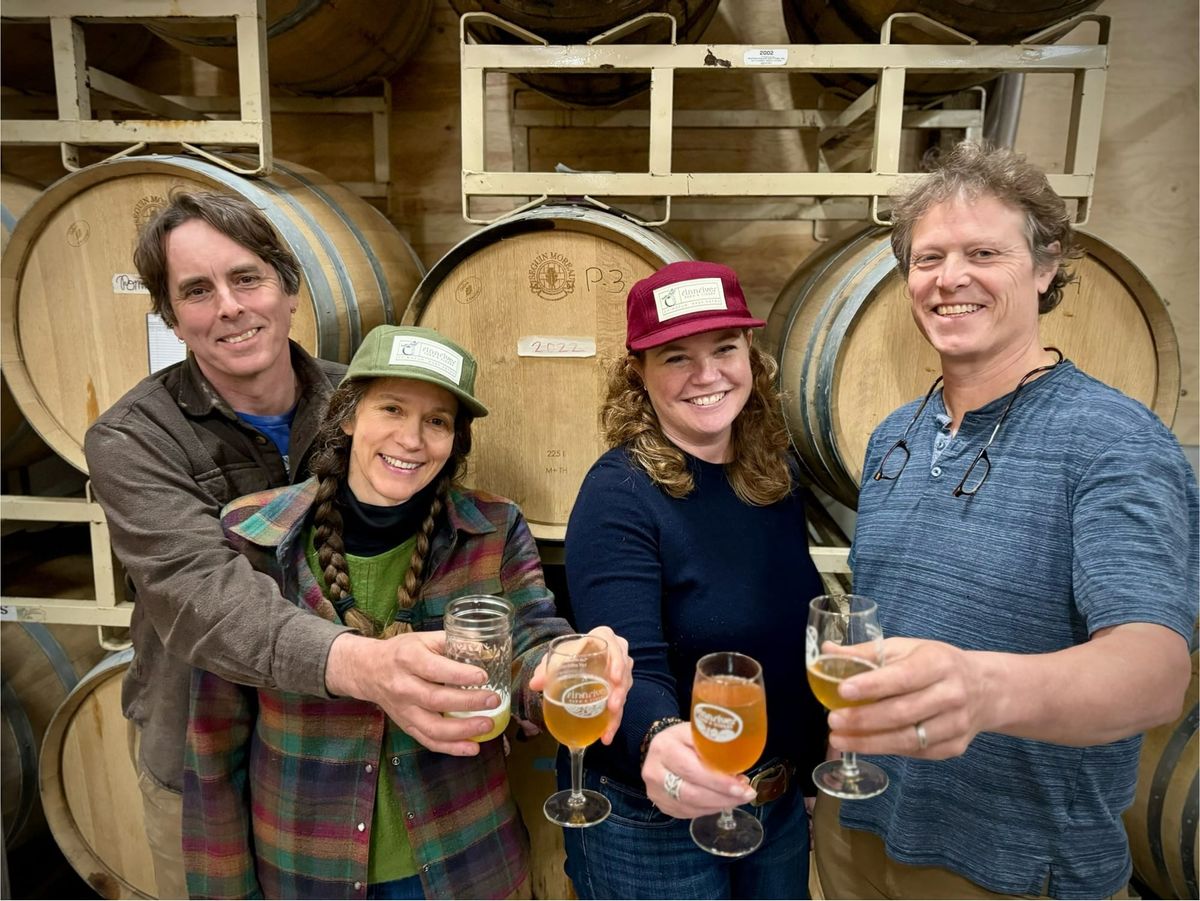
Finnriver Cidery has seldom lacked for visitors on a sunny weekend, but the pandemic dealt it a severe body blow from which it is still righting itself. The Chimacum-based farm and cidery is now well into its turnaround, according to CEO Amanda Oborne, and remains committed to doing business the hard, ethical way.
Founded in 2010, Finnriver bottled its first cider on the 33-acre home farm of co-founders Crystie and Keith Kisler, in a small, out-of-the-way tasting room. The business grew not just as a beverage brand, but as a community hub, pairing cider with local food, live music and conversations about land, agriculture, and resilience.
“It was such a bold, creative vision,” Crystie said. “It required multiple miracles, including local financing and that farm becoming available at the (Chimacum) corner.”
By 2019, those efforts had culminated in what current CEO Amanda Oborne calls the “pinnacle” of Finnriver's first phase.
The pandemic gut punch, and a serendipitous relationship
Then came the pandemic. “The pandemic gut punched everybody,” Crystie said. Public health restrictions, political tensions over masking and vaccination checks at the gate, and a collapse in on-site traffic hit the business hard.
“It became clear that new energy and new leadership in the form of Amanda was needed,” Crystie said. “Solidify the business model while holding the mission true.”
At that time, Oborne lived in Portland, Oregon, and was starting to think about her next career phase after stints in food systems and venture capital. She had gotten to know and befriend founders Crystie, Keith and Eric Jorgensen during frequent trips to the Olympic Peninsula and Finnriver.
During one of those trips in late 2023, Crystie confided to Amanda that COVID had taken a toll on the business.
“Things kind of unraveled, and by late 2023 I don’t think the community really understood how on the brink Finnriver was,” Oborne said.
That conversation continued and eventually led to Oborne joining the company in early 2024 as its first chief executive officer.
The turnaround
Vowing to stay committed to the values from which Finnriver sprouted, the Kislers, Jorgensen, and Oborne rolled up their sleeves. The rebuilding effort towards sustainable profitability necessitated a turnaround effort that Crystie believes should take five years. The cidery is about halfway through that turnaround, Oborne said.
The 50-acre former dairy farm off Center road is now Finnriver’s main orchard and tasting room. What was once trampled, degraded pasture is now a regeneratively restored mosaic of orchards, gardens and partner farms.
The surrounding fields host Finnriver’s own organic orchard, two flower farms, a field for Chimacum Valley Grainery, and plantings stewarded by groups like the Organic Seed Alliance and Friends of the Trees Botanicals.
A conservation easement with the Jefferson Land Trust now protects the property in perpetuity for agricultural use. “All the land is certified organic,” Oborne said.
Finnriver is a certified B-corporation, requiring it to meet high standards of social and environmental performance, accountability, and transparency. “This is the most expensive way to run the business,” Oborne said.
Locally grown . . . for here and afar
If weekends at Finnriver feel like festivals, that’s partly because they are. Since the move to the current site, the cidery has leaned into an events-driven model: live music, seasonal celebrations, and the now-iconic “Interdependence Day,” co-created with the Chimacum Corner Farmstand.
Held a week or two after the Fourth of July, Interdependence Day includes a pancake breakfast at the Chimacum Grange, activities and music at the farm, and a ceremonial “Declaration of Interdependence” that affirms how local businesses and residents rely on one another. “Basically, everybody in Chimacum participates in some way,” Oborne said.
Behind the bar and beyond the farm, Finnriver’s ciders are reaching farther than ever. All of the production—fermentation, tank storage, bottling, kegging and now canning—takes place in a single barn on the property, from which finished product is either rolled up the hill to the tasting room or trucked out to distributors. Washington remains the company’s largest market by far, with strong placements in Seattle and across the state, supplemented by growing distribution in Oregon, Northern California, Idaho, Montana and Colorado.
“What I like about the sales through distribution is that it is dollars from outside the county coming in to support jobs and economic development inside the county,” Oborne said.
A 1,200‑member cider club, with most members picking up quarterly selections at the farm, and some receiving shipments as far away as the East Coast, adds another layer of connection. Finnriver ciders have even appeared at Washington’s inaugural ball as a showcase of the state’s agricultural craft.
If all this sounds like a rousing success story, Crystie is quick to emphasize the tension beneath it.
“People see a packed parking lot and say to me, ‘you must be killing it,’ but every visit helps,” Crystie said. “It's sort of absurd in some ways from a business point of view, but from a rural vitality and economic revitalization and organic agriculture and all these other ways, it made sense.”
Adding to the financial challenges are uncontrollable outside forces. The current spike in oil prices figure to raise that tension, and drive up transportation costs for both distribution and deliveries. Tariffs on aluminum have complicated Finnriver’s move into cans, and supply-chain snarls have made it difficult at times to source key ingredients like organic black currant, a cornerstone of several flagship ciders.
Oborne notes that the affordability crisis and housing shortage on the Olympic Peninsula weigh on employees, as Finnriver strives to offer health insurance and improve wages in recognition of the fact as she put it, that most staff are there as much for the mission as for the paycheck.
Speaking to the many challenges, Oborne expressed strong confidence in the quality of Finnriver’s team, its product line, and its mission and way of doing business that is embraced by the community. “It's all going in the right direction, as long as the world doesn't fall apart, the fires stay away and the community keeps showing up.”