Jefferson County Nears 10-Year Comp Plan Review
Big changes for housing, climate and Urban Growth Areas.

JEFFERSON COUNTY, WA — With major new mandates from the Washington State Legislature regarding climate resilience and housing density, county officials are urging residents to pay attention now, rather than later.
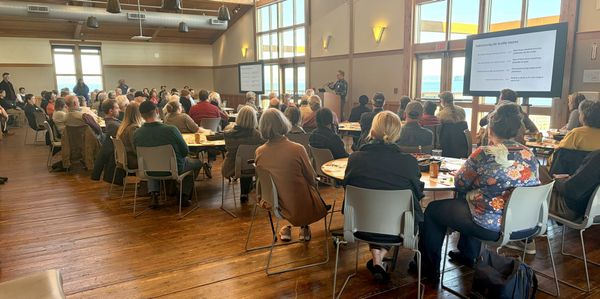
After nearly two years of intensive work consisting of 28 Planning Commission meetings, a county-wide road show, and multiple housing charrettes, Jefferson County is entering the final public comment phase of its mandated 10-year Comprehensive Plan update.
Here is what you need to know about the proposed amendments, the listening session and how to make your voice heard.
Comp plan update includes more than routine changes
According to Jefferson County Associate Planner Joel Peterson, who serves as the project manager for the comp plan, and Jeremy Williamee, the new Department of Community Development Director, this update is much larger than the routine 10-year periodic review staff originally anticipated due to new state laws and mandates.
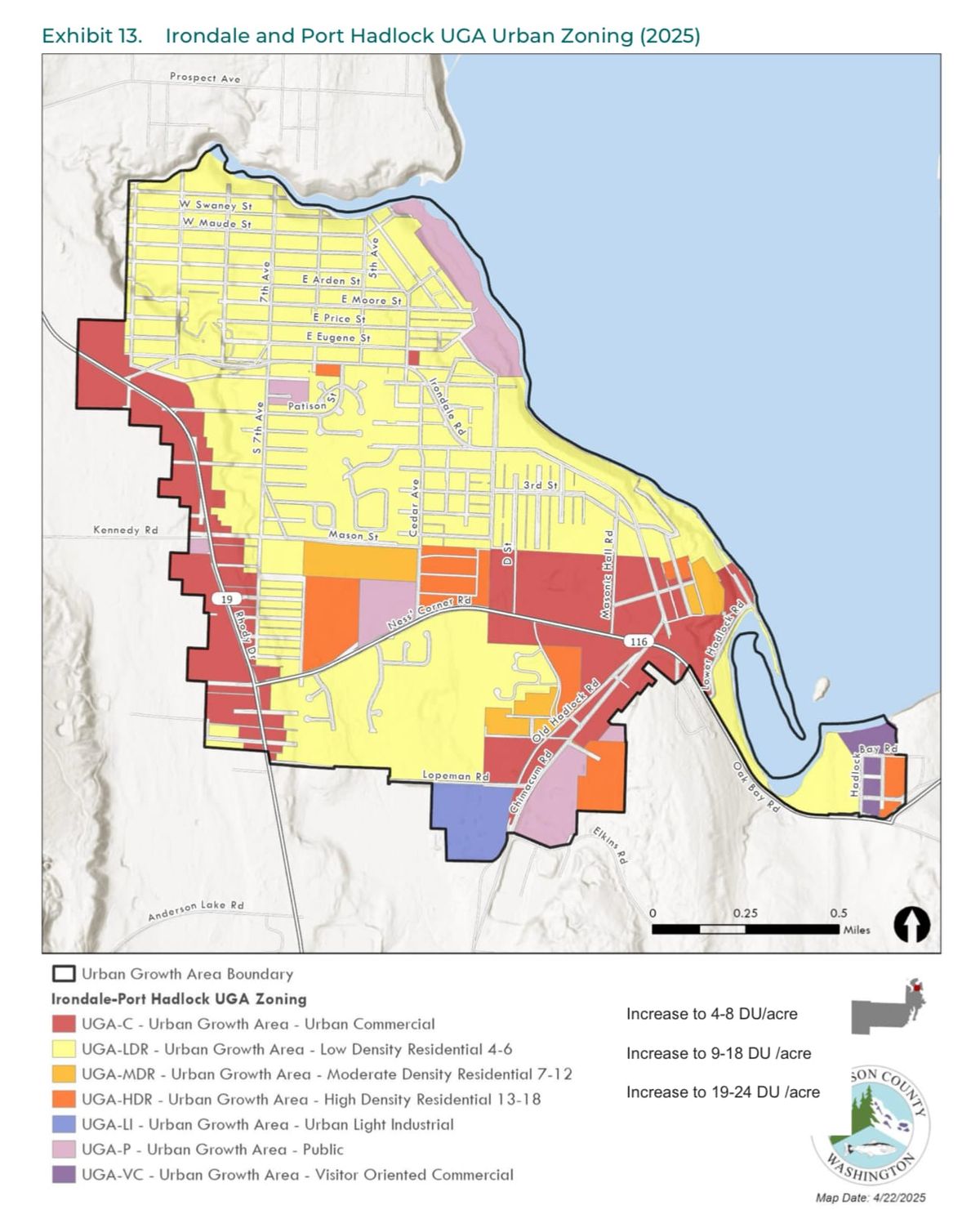
The most significant changes to Jefferson County's comprehensive plan involve a major expansion of housing types and density, driven by new state laws aimed at increasing affordability and choice. To implement these changes, the plan revises the county’s Unified Development Code to explicitly allow a wider variety of housing in the Urban Growth Area (UGA) surrounding Port Hadlock and Irondale.
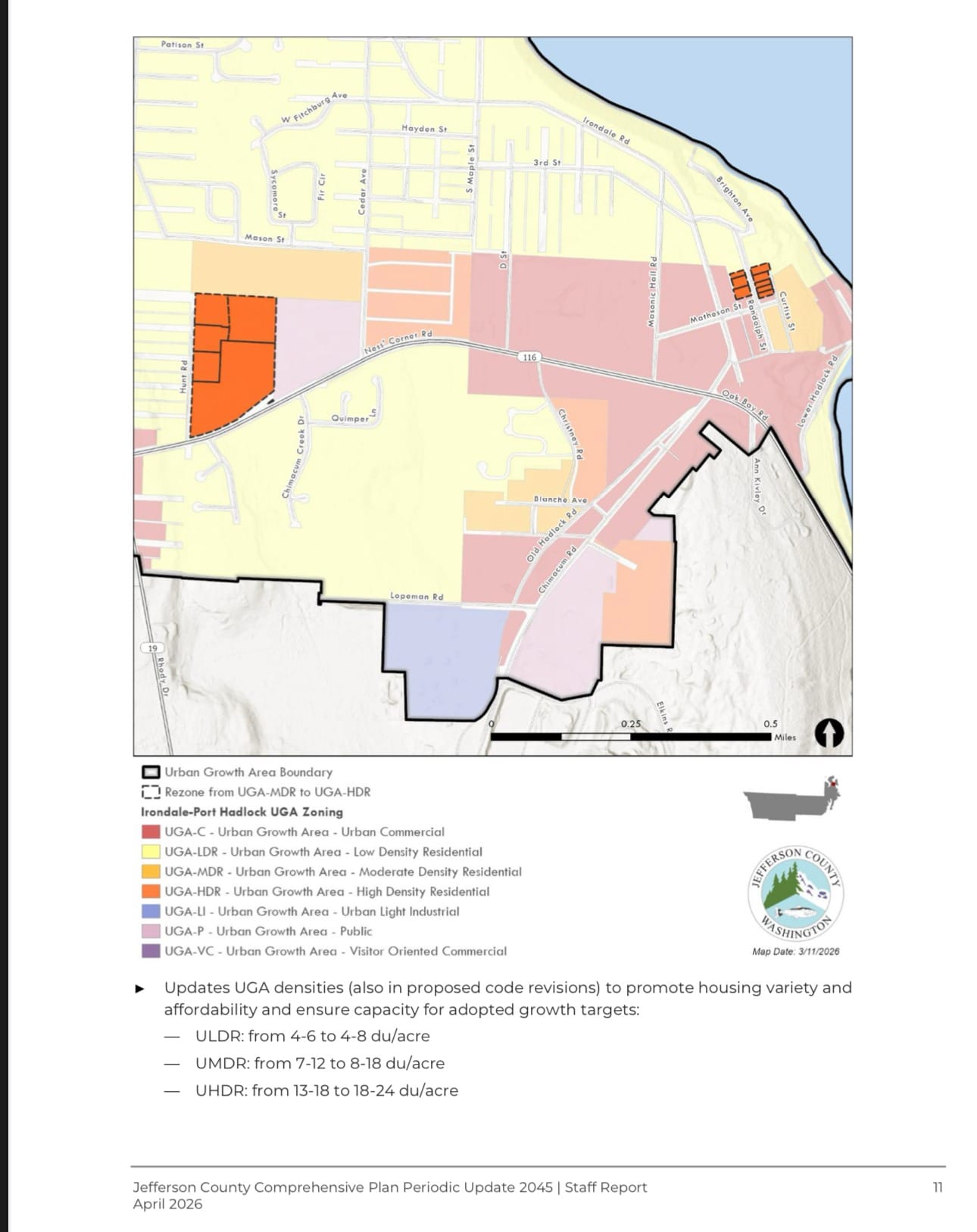
This includes permitting up to two accessory dwelling units per lot, allowing “middle housing” such as duplexes, triplexes, townhomes, and cottage housing in what were once predominantly single-family zones, and enabling co-living housing in higher-density areas. Density maximums have been increased across all urban residential zones, with the high-density category rising from 18 to 24 units per acre.
Implementation also involves targeted rezones from medium-to-high-density residential areas near the commercial core as seen below, along with revised development standards such as reduced setbacks from property lines.
To address equity, the county has added new policies and an appendix that analyzes displacement of and the impact on historically marginalized people. The code will also explicitly allow emergency shelters and permanent supportive housing in commercial zones once passed.
Another major update is the creation of a new, mandatory climate element that focuses on building resilience to climate impacts, rather than reducing greenhouse gas emissions. This element is implemented through a series of sector-specific goals and policies integrated into county decision-making. For example, policies for water resources and ecosystems direct the county to protect water supplies, restore shorelines and enhance carbon sequestration in forests. Emergency management policies require preparing for increased risks from wildfires and sea-level rise.
Implementation will be coordinated with the county’s Climate Action Committee, and the plan will draw on a new vulnerability assessment to guide capital investments and land-use decisions. Other climate-related updates are woven throughout the plan, such as new policies in the transportation element that establish multimodal level-of-service standards for walking and biking.
To carry all these changes forward, the county is using a combination of regulatory updates, new technical analyses and ongoing coordination with partners. The housing element’s implementation relies on the new Land Capacity & Housing Technical Appendix to identify barriers and track progress, as well as partnerships with housing authorities and service providers to develop income-restricted and supportive housing.
The capital facilities and utilities element has been updated to align infrastructure levels of service, including the new wastewater treatment plant in Port Hadlock, which is critical to enabling higher-density urban growth.
Finally, the county is raising State Environmental Policy Act exemption thresholds for minor housing construction in the UGA, allowing up to 30 single-family or 60 multifamily units to proceed with less cumbersome environmental review. Together, these regulatory and policy tools are designed to ensure that the plan’s vision for more diverse, affordable, and climate-resilient communities can be realized by 2045.
Williamee addressed the inevitable tension between preserving rural character and introducing new density, stating, "By focusing [density] there, it also lets us continue to protect and preserve all of those more rural natural areas of the county."
Peterson reminded residents that this plan operates on a 20-year horizon. The county is planning for a population increase of roughly 5,900 people over the next two decades. "The work is never done," Peterson said. "We are always implementing. We need a comprehensive plan to help guide us through the reality of how many people we have, how many residences we need, and what the infrastructure costs are."
The public comment window
Residents are encouraged to read the full staff report. Attending the hearing either in person at 63 Four Corners Road or online is another valuable way to participate. For those who cannot attend or prefer to provide detailed feedback, submitting written comments is often the most effective method.
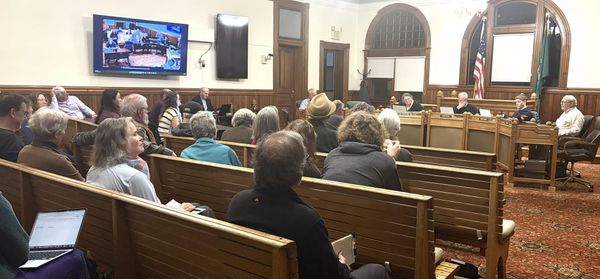
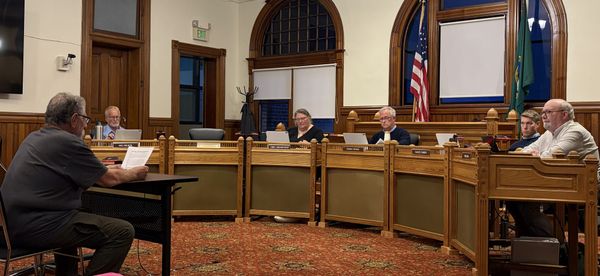
On May 13, The Jefferson County Planning Commission will hold a public hearing to take oral and written comments on the proposed amendments to the Comprehensive Plan and Unified Development Code (UDC). The hearing is scheduled for Wednesday, May 13, 2026, at 5:30 PM. It will take place in person at the Jefferson County Transit Authority Administration Office, located at 63 Four Corners Road in Port Townsend. Remote access is also available via the link, using Meeting ID 959 9899 4925 and Passcode 306246.
Residents do not need to speak at the hearing to participate. The DCD is accepting written comments starting April 15 through the close of business on Friday, May 15, 2026. Comments can be submitted via email to 2025compplan@co.jefferson.wa.us or by mail to Department of Community Development - CP 2025 Comments, 621 Sheridan Street, Port Townsend, WA 98368. It is important to note that any written comments submitted after May 15 will still be forwarded to the Board of County Commissioners (BoCC) for consideration, but may not be reviewed by the Planning Commission before the BoCC finalizes its recommendation.
Jefferson County’s Planning Commission will hold its deliberation and make a recommendation on May 27. On June 8, the Board of County Commissioners will conduct a morning workshop on the Comprehensive Plan at 9:30 AM, and the notice of public hearing will also be distributed on this date. The Board of County Commissioners will hold a hearing on the Comprehensive Plan on June 22 at 10:30 AM. The tentative date for the Board of County Commissioners’ final action on the Comprehensive Plan is July 6. Remote access is also available via the link, using Meeting ID 959 9899 4925 and Passcode 306246.