Marriage License Fee Increase to Go to Victim Advocacy Fund
Cuts to domestic violence support funds necessitate new programs.

Washington State marriage license fees increased by $100 statewide when House Bill 1498 came into effect in July last year, raising the amount newlyweds paid from $44 to $144 in Jefferson County. The fees go into the Domestic Violence (DV) Co-responder Account, a new program designed to fund a trained DV co-responder to accompany police when they respond to DV related crimes. The fund is administered by the Office of Crime Victims Advocacy.
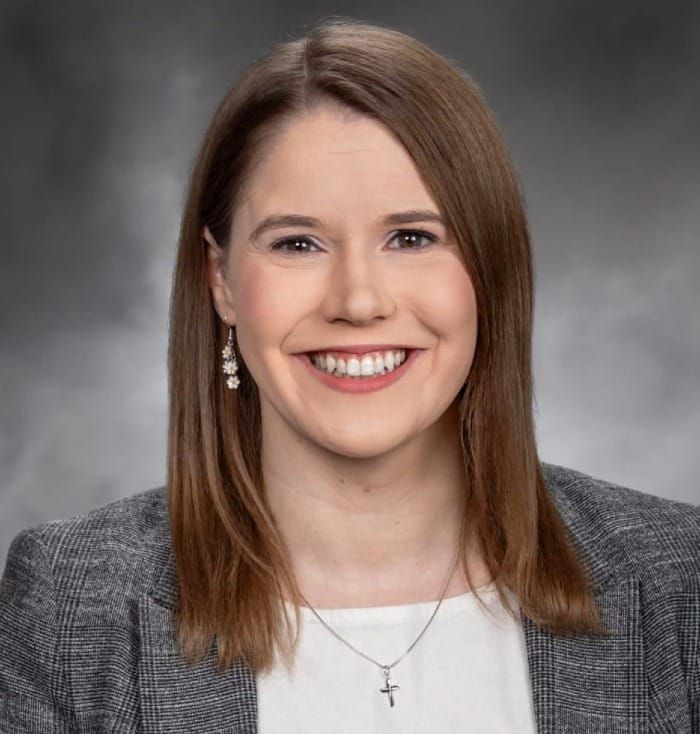
House Bill 1498’s main sponsor, Representative Lauren Davis, said there is a huge difference in victim engagement with a human showing up in the moment of crisis. “Co-responders give victims their autonomy back. They can’t leave [abusive situations] without essentials like housing, jobs, transportation, school, and support systems.”
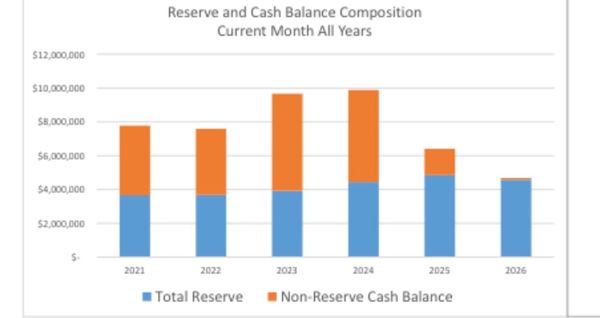
Because the DV Co-responder Account is a new program, there has been a delay in the money’s availability for the grants that will be used to train co-responders and administer the program. With an average of 41,000 couples getting married in Washington state per year, that should provide a yearly average budget of $4.1 million for DV co-responders. As of February 2026, the account has $2.2 million.
Davis dismissed concerns that this $100 fee increase is a regressive tax on couples with lower incomes, emphasizing that the legislative intent is focused on improving safety services for victims of domestic violence and that the fee has minimal impact on couples as a onetime fee.
Though not everyone agrees with how the funds are being collected, the importance of the fund is undeniable; with state funding cuts for victim services, lack of treatment for perpetrators, and the need for ongoing solutions, the co-responder program will fund related but outside efforts in its first year of operation.
The inspiration for the DV Co-responder Account came in part because HB 1169 made crime victim penalty assessments—fees used to pay for victim advocacy in the prosecutor’s office–discretionary, limiting the role of victim advocates in the office dramatically.
At the time HB 1169 passed, the fund for victim advocates contained $8 million per year. The state promised to make up for this loss, but in the past three years there have been no deposits from the state. In the most recent legislative session, the state elected to fund only 20% of what they initially said they would fund.
“It is unacceptable in my opinion, for the state to break a promise of that magnitude. Some of our most vulnerable community members are victims of crime,” Davis said.
Those advocacy positions supported DV victims, as well as victims of homelessness, families in crisis, and sexual assault victims. $4 million from the new DV Co-responder Account was given as a one time deposit to victim advocates work in Prosecutors Offices.
“It's still a 50% cut of what the state promised. But I feel like we have a responsibility to prevent layoffs among victim advocates whose positions are on the chopping block because the state did not keep its promise,” Davis said.
In the State of Washington, general victim services agencies take a percentage of their funding from the federal fund called Victims of Crime Act (VOCA). Since 2018, VOCA has seen a 70% decrease in funding, resulting in a victims services crisis.
The plummet comes from federal enforcement favoring non-prosecution agreements over high-dollar fines for white-collar crime, leading to a decline in deposits to the Crime Victims Fund (CVF). The Beacon reported on some of the effects of the VOCA funding crash on local advocacy agency, Dove House, along with other federal grant conflicts they are facing.
Washington State budget writers have decided to take $1 million out of the DV Co-response account for a one time payment to VOCA. “A very noble purpose, obviously. But in my opinion, that should have come out of the general fund. But I also understand the reality that we don't really have a lot of general funds around right now,” Davis said.
The gaps for ending violence in the home spread even wider. Traditional treatment for perpetrators of domestic violence, called Domestic Violence Intervention Treatment (DVIT), was shown to be unsuccessful in 2014, and overtime judges stopped ordering DVIT. No other research or solutions were offered.
Half of all crimes in Washington are DV crimes. Two thirds of all mass shootings are perpetrated by people with a DV history. One in five child homicides, one in four homicides and attempted homicides across all victim types are DV perpetrators. The number one predictor for if a person is likely to commit a violent crime is if they already have a history of being a DV assailant.
“It is irresponsible of the state, in the interest of public safety, to not pay attention to this population, because they're responsible for an outsized portion of crime,” Davis said.
Two programs, one at Boston University and another at Harvard, had funding secured by representative Davis for DVIT research for Washington state. The trials were highly successful in rehabilitating DV perpetrators, revealing impressive outcomes very different from the ones seen with traditional DVIT. But in 2025, both research studies were only partway through when governor Ferguson vetoed 30 or more studies state wide, rescinding the funding in last year's budget to continue DVIT research.
In an effort to finish the research, $750,000 from the new DV Co-responder account has been allocated to those two programs to further their work.
The allocations from the Co-responder fund don’t end there. New house bill 1427 allows approved peer support organizations the ability to bill insurance in the state of Washington. The DV Co-responder Account gave a one time payment of $50,000 for the creation of training programs to train peer support advocates.
Davis explained the inspiration behind the bill: “In the fall of 2024, through training at Domestic Violence Service Snohomish County, which is the agency that serves my district, it occurred to me who was in the room for the training itself. The vast majority of people that were in my training class, and the vast majority of the staff at this agency and every DV agency I've ever encountered, they're all domestic violence survivors, so they have that same lived experience as the people. So we would call that a peer.”
By crediting advocates as peers and giving them the appropriate training, insurance billing could save the state $15-$18 million in victim advocacy costs.
That leaves $2.2 million in the DV Co-responder Account for 2026-2027. Davis is confident that's still more than enough to get the DV Co-responder program started.
“Even though this is hacking the account down pretty substantially on a one time basis, $2.2 million is not nothing. It's very much enough to get things going and to start the program and to implement it in some communities. And then come the next biennium, they'll be able to obviously grow the cohort substantially,” Davis said.