Mollusk Invasion Leads to Impromptu Cookout
When hundreds of chewy sea creatures washed up on North Beach, locals responded by firing up the BBQ
PORT TOWNSEND- “Indigenous coastal peoples harvested these intertidal species as a food source, and I can tell you they’re pretty good for eating if you add enough salt,” said John “Bubba Gumboot” Wiggins. Wiggins was excited about the March 9 storms that washed up hundreds of Gumboot Chiton mollusks, the largest of the chiton species, growing to 14 inches long and up to 4 pounds, called “gumboot” for their resemblance to the bottom of a rubber boot.
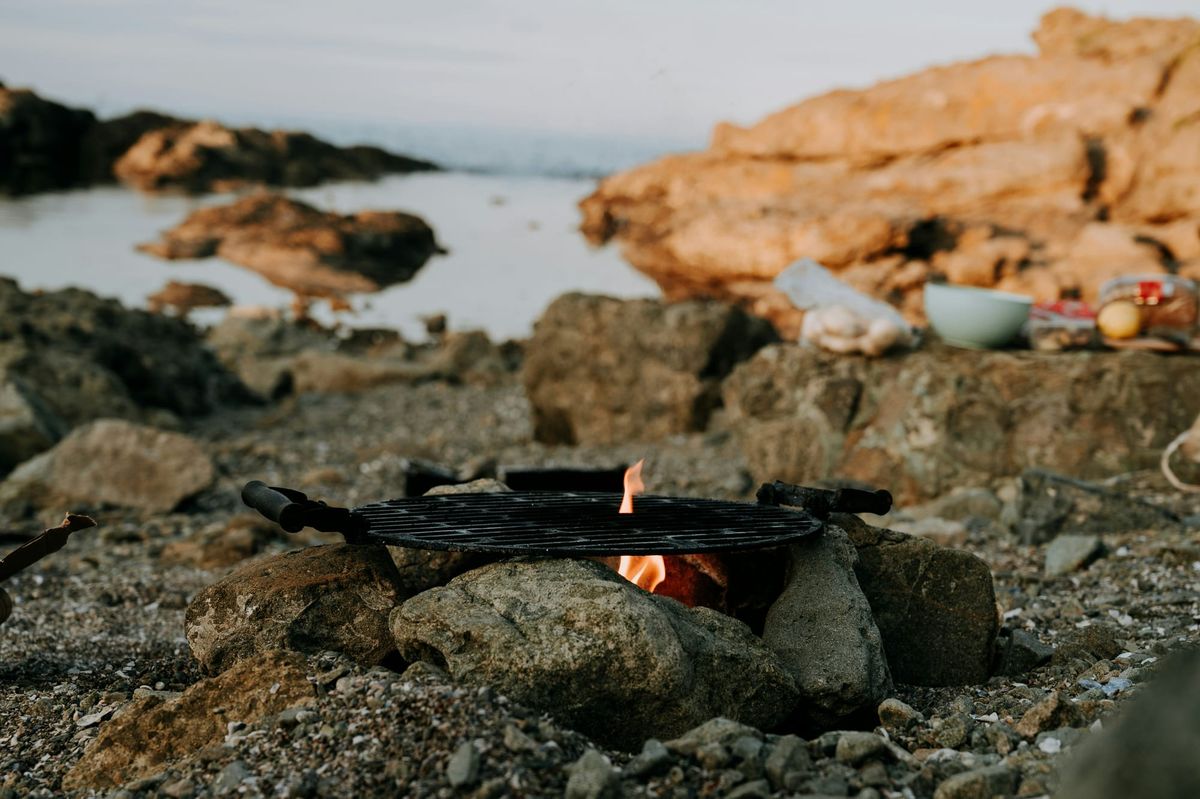
After a widely spread Facebook post called people to North Beach, hundreds rushed to harvest the chiton before they went bad. A four-day cookout ensued.
“You gotta prepare these guys by boiling for roughly six minutes to soften, followed by removing the tough skin and eight calcified shell plates,” Wiggins said. There were gumboot soups, rice porridge, sautée stations, and “meatloaf” competitions– after the colloquial name, the "wandering meatloaf”. People also thinly sliced them and served them raw with lemon, and you could take home a jar of pickled gumboot.
Kids preferred the mollusk sliced thin because of the chewy texture. Teri Dactyl won the raw competition on the second day of the cookout, eating 4.5 gumboots. For four days, families came to the beach to harvest, cook and sing about these algae-eating creatures. No rain or wind could deter them.
Between Pacific Tides, a 1939 Pacific ecology book, describes the culinary experience of the gumboot, "After one experiment the writers decided to reserve the animals for times of famine; one tough, paper-thin steak was all that could be obtained from a large cryptochiton, and it radiated such a penetrating fishy odor that it was discarded before it reached the frying pan."
But the people of Jefferson County have a special appetite for the animal and didn’t let a grand opportunity go to waste.
This article was published April 1, and will resume being completely farce by noon