Port Townsend Schools Face Budget Cuts
How State Shortfalls and Federal Cuts Are Reaching Port Townsend Classrooms.

PORT TOWNSEND, WA — On April 10th, Port Townsend School District Superintendent Linda Rosenbury sent a letter to families that opened with the district’s cherished CARES values: Compassion, Accountability, Responsibility, Equity, and Students First. The letter then delivered a difficult dose of accountability. The district is facing a cascade of budget cuts driven by reduced state funding for high-poverty programs, the expiration of federal grants, and the growing weight of unfunded mandates from Washington State.
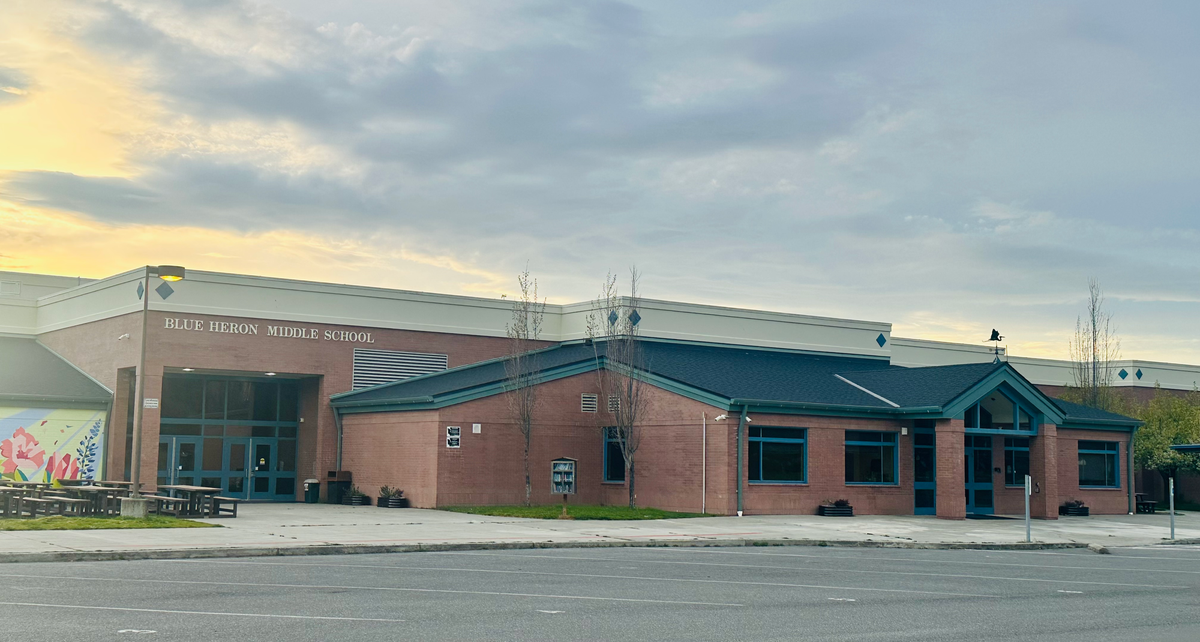
While the district notes that careful planning and healthy enrollment have kept it in a “good place overall,” the reductions for the 2026-27 school year will be tangible. The most significant hit comes from a $180,000 reduction in State Learning Assistance Program (LAP) funding, which is tied directly to lower rates of families completing the Free and Reduced Lunch form. As a result, intervention staff who provide targeted academic and behavioral support will be eliminated at
Blue Heron Middle School and concentrated at Salish Coast Elementary. Additionally, the district will discontinue the February Intersession program, an alternative childcare option during the week-long break, due to declining family interest.
Other state cuts target specific programs. A $140,000 reduction in Transition to Kindergarten (TK) funding means the district will continue to offer two classes, but one will now have to be funded through local levy dollars rather than state support. A $90,000 cut to Outdoor Learning, which historically paid for overnight environmental education trips, means fourth-grade families are now being asked to cover those costs through fundraising or tuition.
On the federal side, the district has lost a $70,000 National Oceanic and Atmospheric Administration (NOAA) grant for place-based learning, a gap which has since been partially filled by private donors, and a $10,000 Title IV grant for student support. To absorb the Title IV cut, the garden teaching program at Salish Coast Elementary will be folded into the library program to ensure students still learn from a certificated educator.
Recent bond cannot fill gaps
Though just two months ago voters passed Proposition No. 1, a bond to renovate Port Townsend High School and OCEAN K-12 School, the superintendent’s email notes that Washington State law prohibits using bond funding for daily operating costs. The $99.25 million approved by voters is legally restricted to physical construction, such as seismic upgrades and safety improvements, and cannot be used to restore a teaching position or save an outdoor education trip.
Unfunded mandates
At the heart of the district’s struggle is a concept that rarely makes headlines but bleeds budgets dry: unfunded mandates. The Washington State School Directors’ Association is currently tracking over 100 education-related bills, at least 20 of which impose requirements on school districts without providing the funds to implement them. These range from specific new safety protocols to complex reporting requirements. One example currently in the legislature is House Bill 2160, which would make substitute teachers eligible for benefits after 630 hours of work but provides no state funding to cover those benefits, leaving districts to pay the bill.
The most chronic unfunded mandate, however, is special education. Washington State has a legal obligation to serve students with disabilities, but it reimburses districts for only a fraction of the actual cost. Port Townsend, like every district in the state, must pull money from its general fund to cover the difference. This practice directly reduces dollars available for classroom teachers and programs.
State Superintendent Chris Reykdal has warned that the Legislature is not intending to fully fund K-12 education this cycle, noting that the share of the state budget dedicated to schools has dropped from 51.6% in 2019 to just 42.4% in the current proposal. Reykdal has cautioned that Washington is “headed in the direction” of another major school-funding lawsuit, reminiscent of the landmark McCleary decision. In 2012, the Washington state Supreme Court ruled in the McCleary v. State of Washington case that the state was not providing adequate funding for education and ordered the state to provide ample state funding rather than relying on local school levies.
What is not in the letter: How federal disruptions are affecting the state budget
A pattern of federal disruption has become familiar to state budget writers. Last July, more than three months after Congress approved the fiscal 2025 federal budget, the Trump administration declined to release nearly $7 billion in formula funding that lawmakers had specifically allocated for K-12 schools. The administration reversed course only after legal challenges and bipartisan pushback forced a freeze of its own. Then, last May, the administration proposed eliminating more than 40 separate grant programs for education, including nearly all programs serving K-12 schools. Congress rejected those cuts. Now, the administration is proposing to zero out the same programs again.
The most recent development came on February 3rd, 2026, when Congress passed and President Trump signed a budget bill continuing all K-12 education funding for Fiscal Year 2026 at levels that are flat or nearly flat compared to the previous year. On its face, this sounds like stability. But flat funding, a nominal amount that is based off of the prior year's budget, is not stable when costs are rising. Insurance, utilities, health care, and salaries do not hold steady, and neither does the number of students with complex needs. When the federal government freezes funding while inflation marches forward, school districts experience that gap as a cut.
Community action needed
For all the frustration in superintendent Rosenbury’s letter, it ended with a call to action for families. The single most impactful step, the district emphasizes, is completing the Free and Reduced Lunch form every year, regardless of whether a family needs meal assistance. The data from that single form directly unlocks the $180,000 in LAP funding.
“While we are navigating a widening gap between what the state provides and what our students need, I want to be clear that PT Schools remain on solid footing. These are the kind of surgical, minor adjustments responsible districts must make to stay ahead of rising costs. We are going to get through this by staying true to our CARES values and being proactive now so that we can protect the student experience long-term,” Superintendent Rosenbury told the Beacon.
The district also directs families to waschoolfunding.org to learn more about the 101 unfunded mandates. It encourages attendance at School Board meetings and participation on the Finance Committee, where budget priorities are actually set.