Port Townsend Council Weighs Raw Water Rates, Shops Plan and 2027 Legislative Priorities
Council leans toward flat water rates, scaled-back public works facility and an expanded legislative wish list.

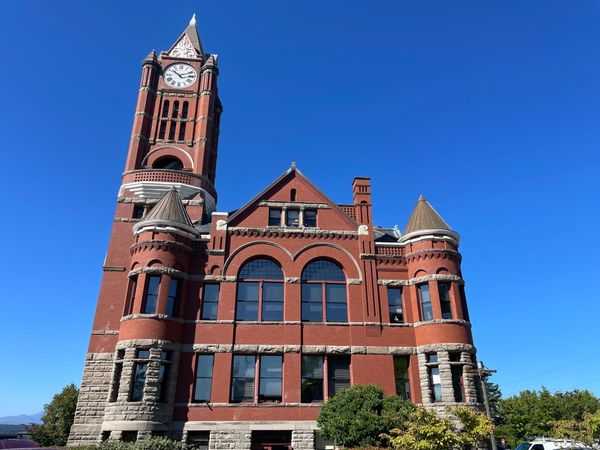
PORT TOWNSEND, WA — The City Council used its November 9 workshop meeting to work through three substantial policy areas: the five-year update to Olympic Gravity Water System (OGWS) raw water rates, a schematic design update for a new public works facility and an early framework for the City’s 2027 state legislative agenda.
Raw water rates
The water rate discussion dominated the evening, with Interim City Manager Steve King presenting two options shaped by the 2021 water supply agreement with the Port Townsend Paper Company (PTPC).
Staff recommended Option A, which holds the current rate of $1.24 per 1,000 gallons flat through 2030 before small increases begin in 2031. Option B, requested by the mill, would cut the rate to $1.10 next year and then escalate annually at a fixed 3.5 percent inflation rate.
King framed the choice less as a cost difference and more as a question of reserve philosophy. The OGWS operates as a “sinking fund,” saving cash for capital projects rather than issuing debt. This is because the system’s revenue is overwhelmingly dependent on a single industrial customer: the PTPC. The 2025 fund ended with roughly $12.9 million in reserves, but a minimum balance of $2 million is considered essential for emergency repairs. Under Option B, that cushion would be drawn down much faster, leaving little room for the kind of unexpected failure that occurred just last week at the Big Quilcene diversion.
Councilmembers leaned strongly toward Option A. Deputy Mayor Owen Rowe compared Option B to cutting a corner too close in a race car, while Councilmember Libby Wennstrom emphasized predictability amid aging pipeline infrastructure. Councilmember David Faber noted that even under Option A, rates do not keep pace with inflation, meaning the utility is slowly losing ground.
King also confirmed that staff would incorporate the mill’s request for a two-year check-in on actual project spending versus projections into the adopting resolution, though such language cannot bind future Councils.
Maintenance shops
The facilities discussion marked a significant scaling-back of earlier ambitions. What began as a roughly $40 million concept for a consolidated Municipal Service Center, has been value-engineered into a phased schematic design with a first-phase cost range of $17 million to $26 million.
The new facility would be built on city-owned land near the water treatment plant at the end of Rainier Street, using an existing concrete pad from a former reservoir for bulk storage and avoiding expensive retaining walls by grading slopes back instead.
King acknowledged the site’s proximity to the Hamilton Heights neighborhood and noted that buffering, vegetation and the use of pull-through bays to avoid backup alarms would reduce noise and dust impacts. King said the existing Beech Street shops are undersized, prone to flooding, and poorly suited to a residential area. As Mayor Amy Howard wrote in her October message to the community, the crews who fix water lines, catch up on street repairs, maintain parks and keep the fleet running are doing that work "out of buildings that should have been retired years ago or that are inappropriate for the purpose."
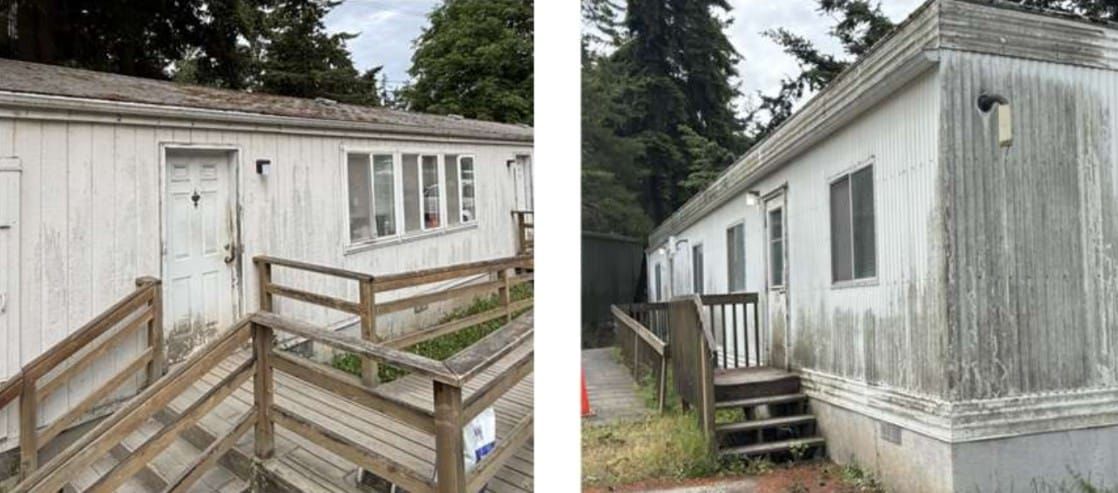
The Beech Street parcel, in use since before 1973, hosts crews in aging portable units long past their useful life, while Parks Maintenance operates out of an old Water Barn at Harrison and Garfield streets—a converted water reservoir with no heat, where a staff member once put a foot straight through a rotten floorboard. Staff has described sloping floors, rodent infestations and inadequate heating, with no real locker rooms, break areas or meeting space.
Mayor Howard called the buildings "a money pit" and noted that facilities operations and maintenance costs already run close to $1.8 million a year citywide, with a significant share tied directly to these structures. Councilmembers agreed that the incremental approach, tied into future water and sewer rate models and potentially funded in part through grant opportunities, was the responsible path. Councilmember Neil Nelson was blunt about the old facility: "Just level the damn thing, be done with it." Both Council and staff have expressed plans to add the old facility properties to the surplus for future affordable housing developments.
Legal wish list
The legislative agenda portion was more open-ended. Mayor Howard and Deputy Mayor Rowe presented a draft list of priorities that included support for a Western Washington University branch campus on the peninsula; Public Records Act reform; Growth Management Act clarification around limited funding versus mandated planning requirements; and full funding of the Public Works Trust Fund. Rowe also introduced a draft bill from Leavenworth Mayor Carl Florea proposing a state-authorized fee on second homes and short-term rentals that are not primary residences, aimed at easing housing pressure in tourism-dependent communities.
Councilmembers voiced support for including the second-home fee concept as an item to explore, alongside explicit backing for the city of Port Townsend’s interest in a local four-year degree option. City Attorney Austin Watkins raised a potential tort reform item: a proposed legal change to limit the amount a plaintiff can sue entities for and be awarded.
The Council aims to adopt a final legislative agenda at its first meeting in December, ahead of a planned kickoff gathering with regional legislators. The meeting concluded with an executive session regarding potential litigation. No action was taken.