The Trash Task Force: Ten Years of Grit, Gratitude and Green Hope
With a growing volunteer base, expansion leads to the creation of new chapters.
JEFFERSON COUNTY, WA — On a rainy New Year's Day a decade ago, Stephanie Moran did something most people wouldn't dream of. While others nursed their hangovers indoors, she grabbed a pair of gloves and started cleaning up downtown streets and beaches after the celebrations.
Three friends joined her. Together, they hauled away three truckloads of trash.
"That's when I knew we needed help, and something had to change," Moran recalls.
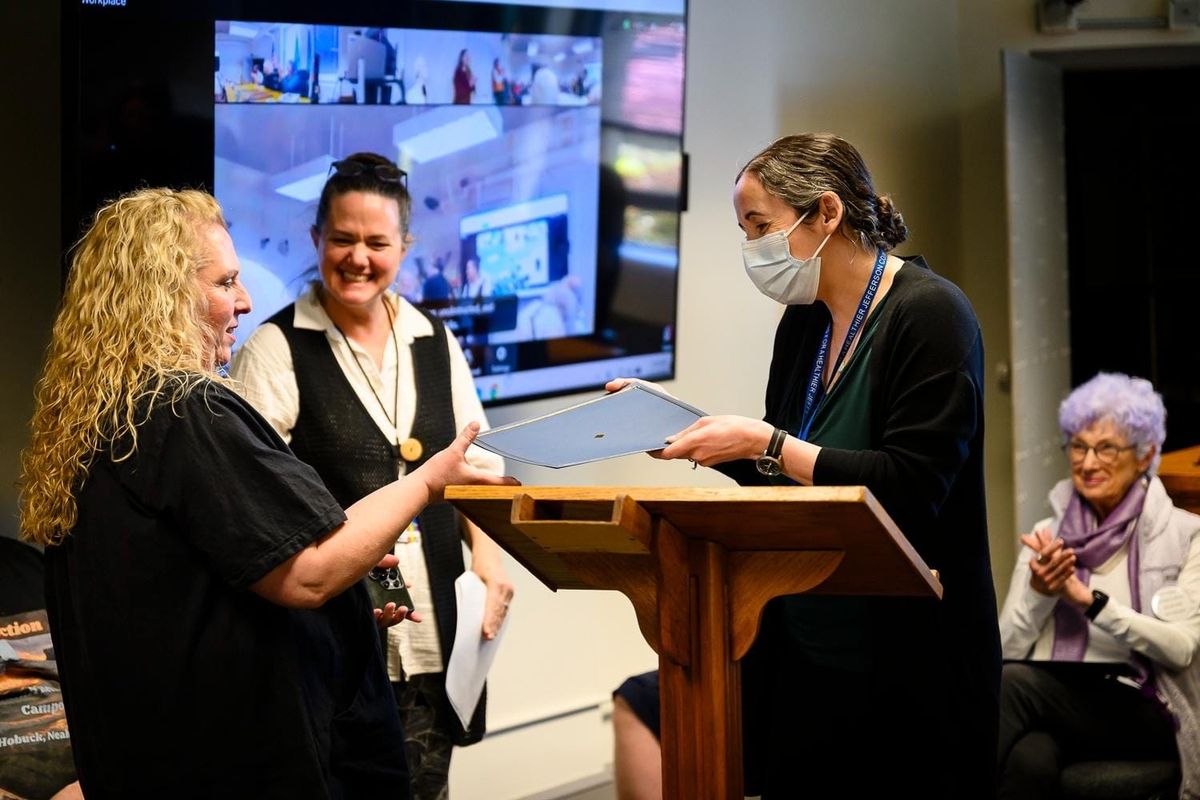
That impulsive act of care became the Jefferson County Trash Task Force—a volunteer army that has since pulled over 80,000 pounds of litter from local roadsides, dumpsites and abandoned campsites. And on February 16, 2026, the group received the Public Health Hero Award from the Jefferson County Health Department.
"We are truly humbled," Moran said of the ceremony. "This award is a testament to the past 10 years of hard work and dedication of our volunteers."
More than just picking up trash
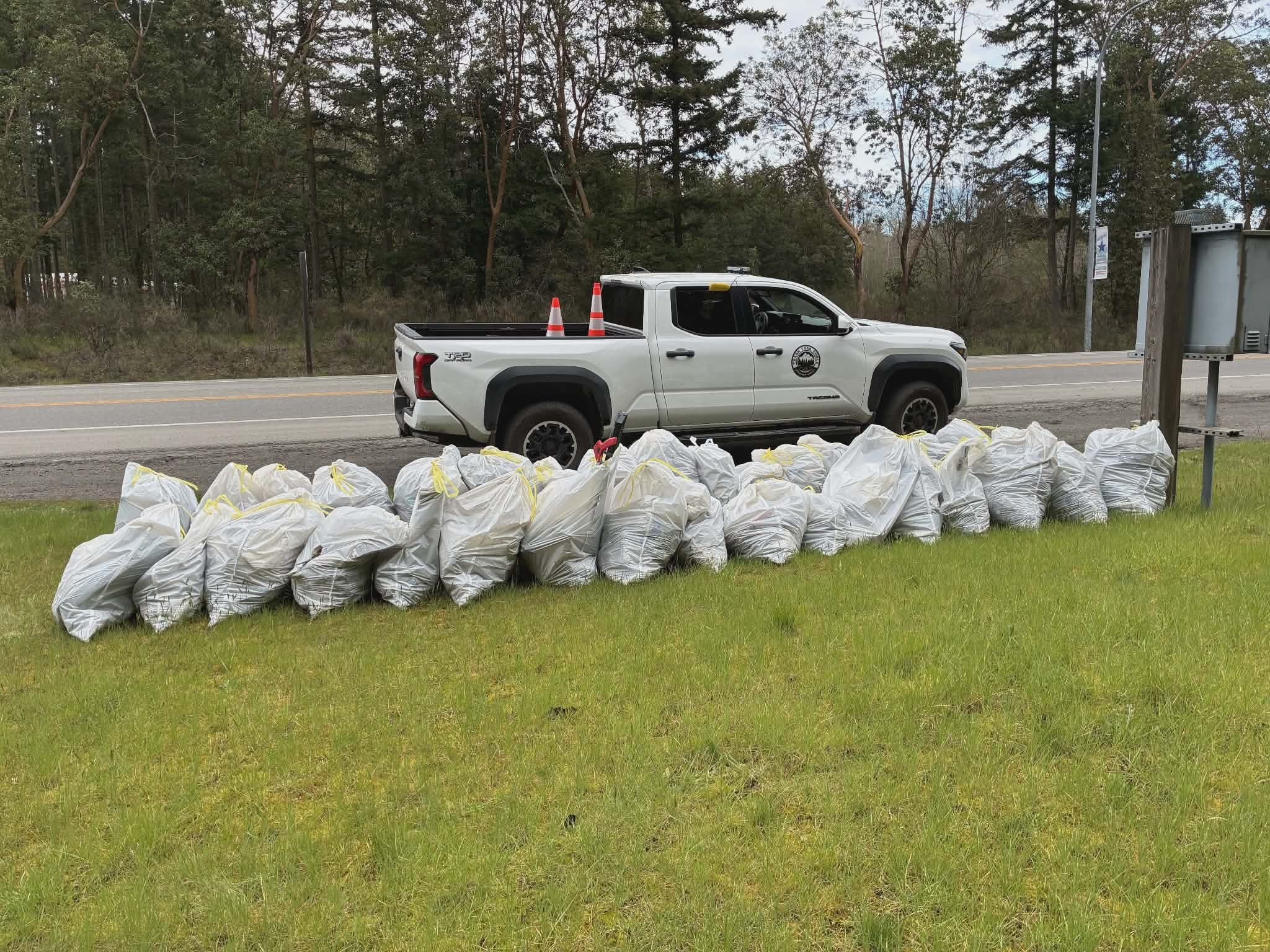
The Trash Task Force has grown from a handful of friends into a structured operation with 182 volunteers on its roster, 75 of whom became active in 2025 alone. That year, they logged 883 volunteer hours, not including planning, transportation, or approvals, and removed 422 bags of trash from 73 miles of roads.
The numbers dipped on paper from the previous year because the group adopted six sections of state highway where officials count bags, not pounds. But Moran is quick to clarify: "The amount of trash from 2024 to 2025 increased significantly."
They have also tackled 16 dumpsites and five abandoned campsites, plus countless free piles gone wrong and unsecured loads that spill across roadways.
"Free piles have benefits, but we also see the negatives," Moran says. "And unsecured loads? Unacceptable. Period."
A typical clean-up day
A Task Force cleanup day begins long before volunteers arrive.
By 8 a.m., Moran is loading her truck with signs, cones, and a numbering system to assign road sections. By 10 a.m., she is at the meetup spot, pairing newcomers with volunteer veterans before she takes her own section.
Around 4 p.m., but often later, she collects the signs, and hauls the bags back to the city maintenance yard, sometimes driving 50+ miles, before collapsing at home.
"It doesn't sound like much, twice a month," she admits. "But it's a long day."
Moran says although the days are long, it seems nature approves of their work. Volunteers regularly notice a strange phenomenon: rain stops at 10 a.m. and holds off until noon, just long enough to clean. "Mother Nature hits a hole," Moran laughs. "Then the wind starts howling at 12:15. It's like a stamp of approval."
The hidden benefits
Moran wants people to understand that litter pickup isn't just about aesthetics.
Moran cites research that shows the ripple effects of picking up one piece of litter. Litter picking benefits include aesthetic appeal enhancement, promoting health and safety, encouraging social responsibility and community building.
"It's exercise. Forming friendships. Mental wellbeing. A sense of community pride," she says. "Wildlife protection, pollution reduction, ecosystem preservation, carbon savings and preventing illegal dumping."
“It’s a great group to work with.” Atilla Mitrovich, a long-time video volunteer said, “You may not think so, picking up trash, but it’s so much fun.”
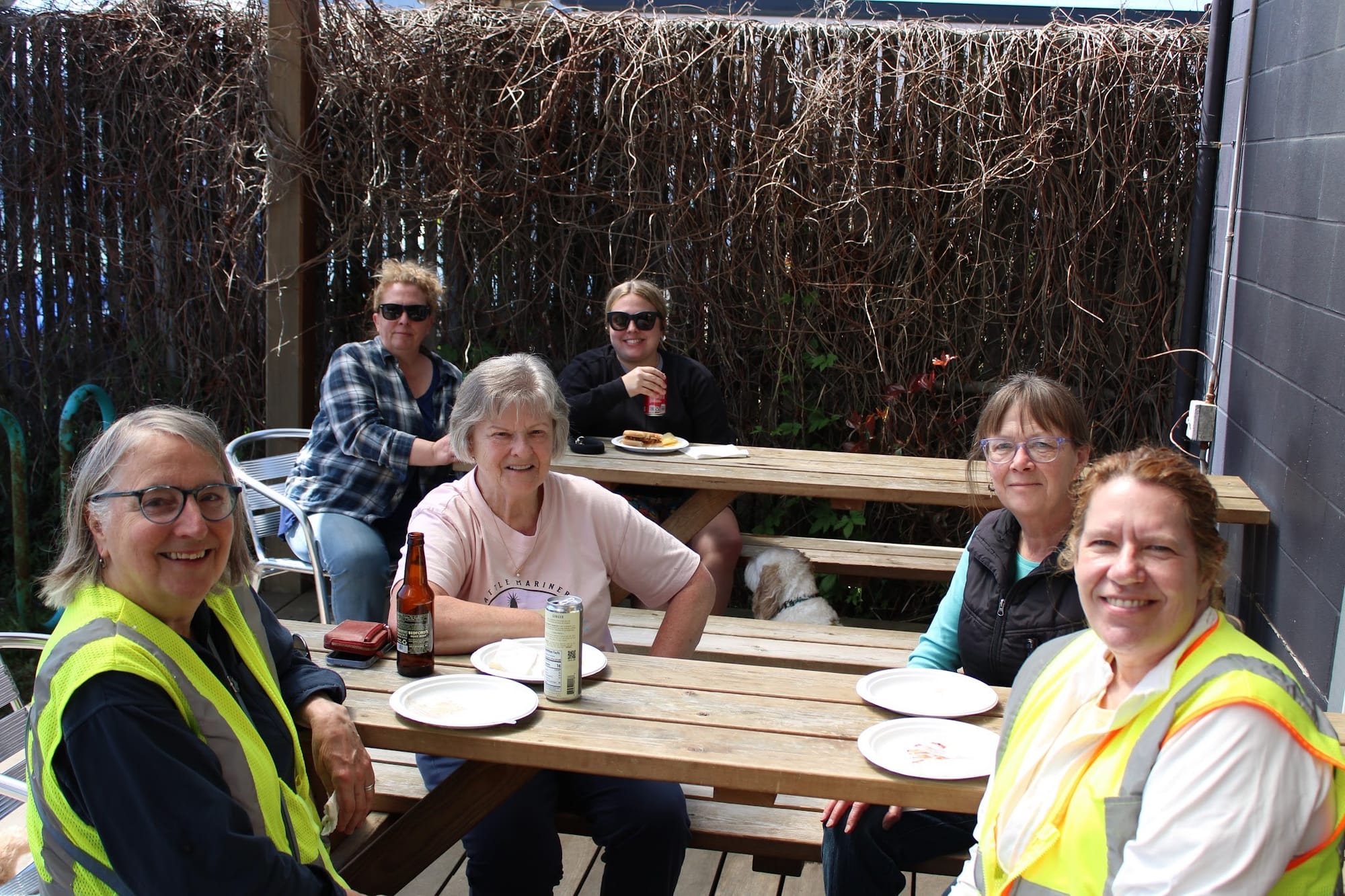
The group often celebrates the fourth Sunday of the month by having lunch and drinks after a litter pick-up. On Sunday, April 26, the crew met at the Pourhouse to enjoy food donated from Mo-Chili BBQ.
Expanding the mission
The Trash Task Force recently became a nonprofit under the fiscal sponsorship of Discover Your Northwest, allowing it to accept donations. Waste Connections sponsors a 30-yard dumpster inside city limits for their use, and Moran hopes to add a second in the southern part of the county.
Washington State Department of Transportation supplies bags. The city and county provide vests and support. The Jefferson County court system can now direct community service hours to the Task Force.
With the momentum building and the volunteer base growing, something unexpected but exciting happened. In early February 2026, an individual named Brad Camp reached out from Kitsap County. "Love what you're doing," he said. "Can we start a Kitsap chapter?"
The answer was an immediate yes. The Kitsap Trash Task Force launched in February 2026, just days later after contacting Moran, and is already hauling out thousands of pounds.
Port Ludlow now has it’s own sub chapter of volunteers led by Geoff Lang.
"Would love to spread the Trash Task Force throughout Washington," Moran says. "Every county having their own chapter."
How you can help
Moran is seeking a few key additions to the team. She needs an organizer for a sub-chapter in the Brinnon or Quilcene region to help monitor illegal dumpsites and organize cleanups. Additionally, she is looking for someone to act as a "hostess" by picking up and setting out food after cleanups.
The group also needs more vests and graspers, as these supplies wear out quickly, and they hope to obtain two new signs. To accommodate students and others who cannot participate on Sundays, Moran is launching Saturday cleanups starting in May, 2026.
"You don't have to come every time," Moran emphasizes. "Even once a year. Even an hour or two a month. Every volunteer hour matters. It all adds up."
Students can earn service hours and local groups (Rotary, Kiwanis, Scouts) often join once a year. Individuals can simply show up, no gear required.
"Since we began our journey," Moran said, "our goal has been clear: to bring attention to the environmental impact of litter, plastics and forever chemicals especially, and to inspire like-minded individuals to join us."
After a decade, 80,000 pounds of trash, a public health award and new Kitsap county and Port Ludlow chapters, that message is finally spreading as fast as the litter they fight.
To find out more, email trashtaskforce20@gmail.com
Correction: An earlier version of this story had an incorrect weight amount of trash collected over the 10-year period. A new sub chapter has been established in Port Ludlow, by Geoff Lang.