What Carolyn Pours: 2020 Skinner Mourvèdre
Hard to say, but easy to love
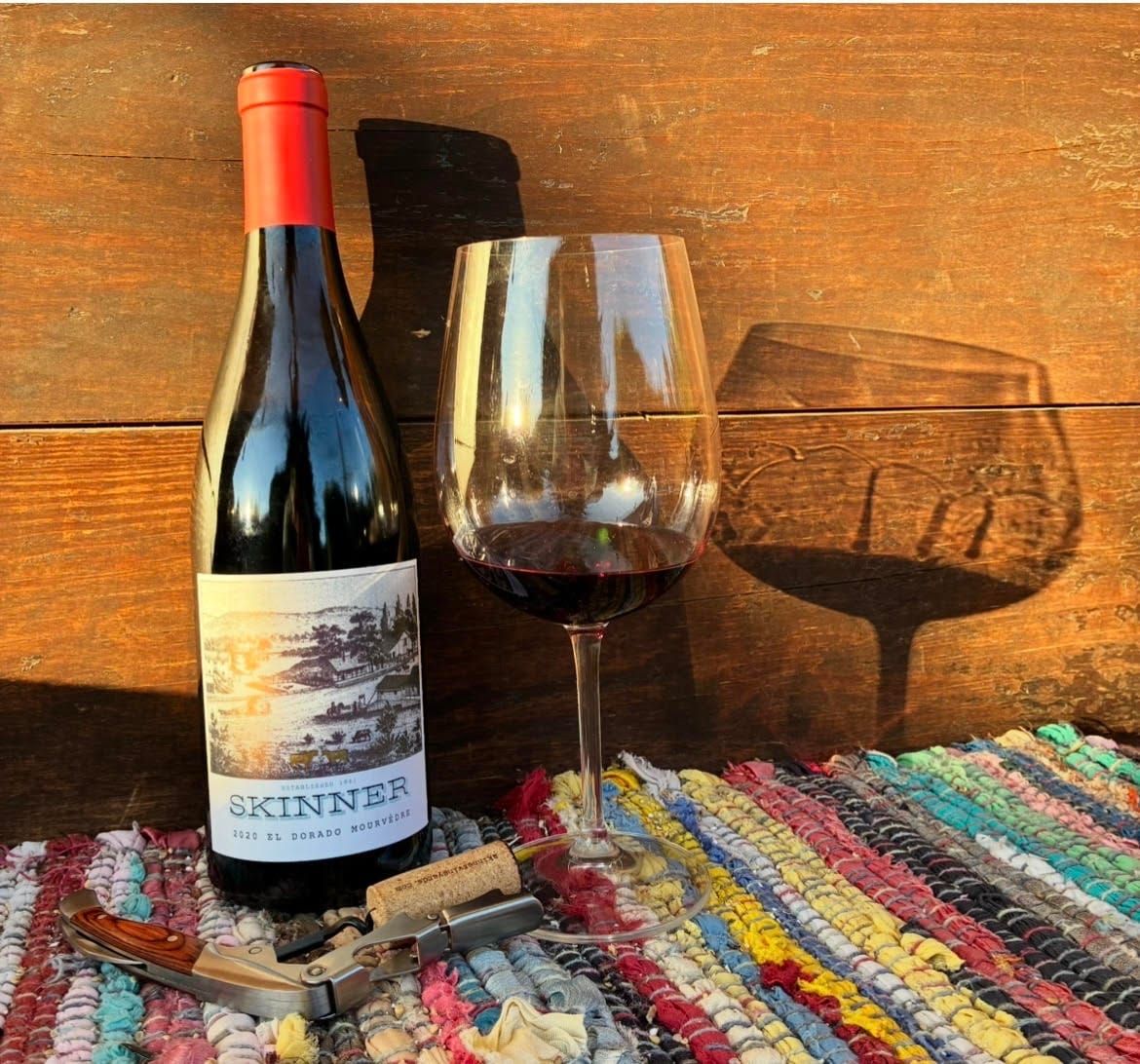
I always enjoy discovering wines made from grapes that don't get much attention. Cabernet sauvignon and pinot noir seem to get all the publicity, while mourvèdre is less well known and sometimes a bit intimidating.
I recently opened a bottle of the 2020 Mourvèdre from Skinner Vineyards in California's Sierra Foothills, and I really liked it!
Mourvèdre (pronounced moor-VED-ruh) originated in Spain, where it's known as monastrell. It eventually found its way to southern France, particularly Provence and the Rhône Valley, where it became an important part of many red blends. If you've enjoyed a GSM blend (grenache, syrah, mourvèdre), you've already met this grape, even if you didn't know it. This variety is not really a household name, but it’s now grown fairly widely in California. There is an old wine-growing expression that says mourvèdre needs its face in the sun and its feet in the water, which refers to the fact that the vines love warmth as well as sufficient moisture.
Because mourvèdre loves sunshine, the warm days and cooler nights of California's El Dorado region provide an excellent environment for growing it. Often overlooked, this same region is one of California's most intriguing. Vineyards climb to elevations of 1,200 to 3,000 feet, and the region’s varied soils, combined with the elevation, make it particularly well suited to Rhône varietals. There remains an old-school welcoming spirit to this area that harkens back to the Gold Rush days, and which has been lost in many of the better-known wine-producing regions.
This mourvèdre has an appealing combination of dark fruit and savory character. The blackberry and ripe plum flavors jumped out at me first, followed by hints of spice and an earthy quality that gives the wine its distinct personality.
What I especially liked was its balance. Aged for about 10 months in French oak barrels, there's plenty of fruit, but it doesn't overwhelm the palate. The texture is smooth and silky, with delicate tannins and enough freshness to keep things lively.
It's the kind of wine I enjoy discovering: interesting without being too complicated, flavorful without being overpowering and easy to enjoy with or without food. That said, mourvèdre is actually also a terrific food wine. I'd pair this one with roast chicken, grilled lamb, mushroom risotto or a good selection of strong aged cheeses. It also pairs especially well with dishes with lots of garlic, rosemary and thyme.
I was able to buy this wine using the Last Bottle App for around $18, and it typically retails upwards of $45. I am sorry that I did not buy a few more bottles while I had the chance. It has character, good balance and enough complexity to make it memorable. I would definitely recommend it to anyone interested in venturing beyond the usual California reds.
After all, one of the great pleasures of wine is discovering something a little different. And mourvèdre is certainly worth getting to know. Cheers.
Note from the Editor: Why aren’t the varietals capitalized, you ask? The Beacon follows the Associated Press Stylebook, which doesn't capitalize wines named after varietals. Wines named after specific geographical regions or places are capitalized, however. The New York Times follows this rule as well.