A Science Lesson that Gets to the Heart of the Matter
Local elementary students, engaged in a state-of-the-art learning experience

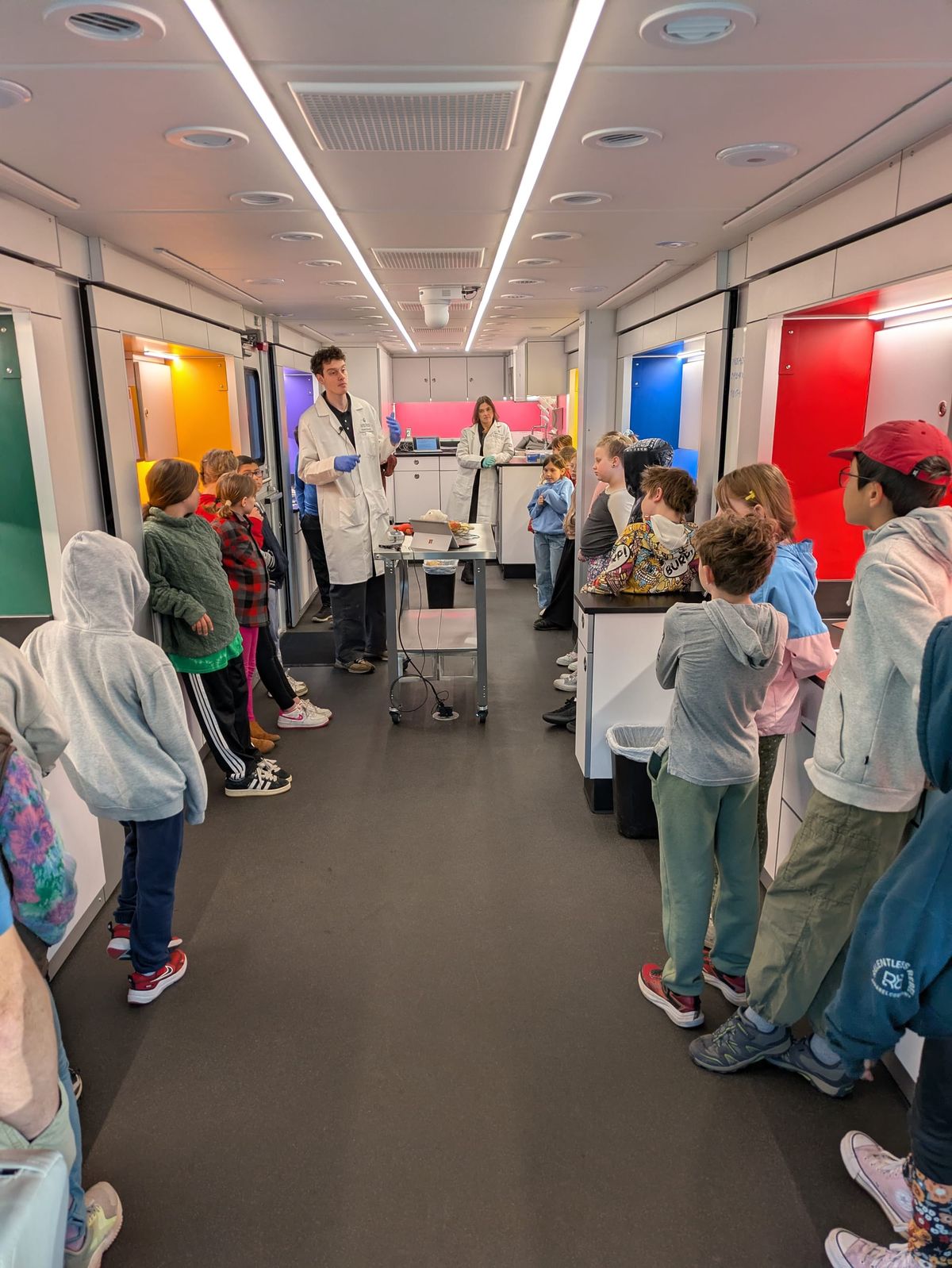
PORT TOWNSEND, WA — Salish Coast Elementary School fourth- and fifth-graders received a science lesson last week in a state-of-the-art mobile science lab that got them pumped up and grossed out.
The Science Inspiration Lab that came to town brings science lessons for 4th to 8th graders throughout Washington, taught by scientists from Seattle Children’s Research Institute. The Institute says the lab is the most advanced mobile lab of its kind in the country.
The lab, custom-built in 2025, includes multiple sinks and six slide-out bench bays, creating a feel that is much less like a mobile unit and more like, well, a laboratory. The Inspiration Lab joins the Institute’s Adventure Science mobile lab that launched in 2009. The two labs travel to under-resourced schools across Washington state, providing innovative, hands-on science curriculum, said Program Manager Billy Roden.
“We’re bringing them a scientific experience that they might not have available in their community or at their school,” Roden told The Beacon.
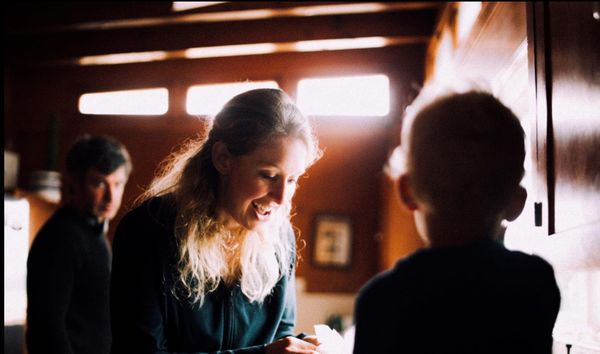
At least one element of the scientific experience that Salish Coast students, as well as Chimacum Elementary students, got last week was likely a first-time experience for all. Classes were separated into groups of three students, each of which was given a sheep‘s heart to hold and examine and pass amongst themselves for a few minutes.
“It’s cool, but it feels gross, like steak,” said fourth-grader Grace Kirk. “ I don’t want to hold it again.”
Classmate Ellie Long said, “ I never saw a heart,” as she handed the organ to Jack Davidson, who said, “It smells.”
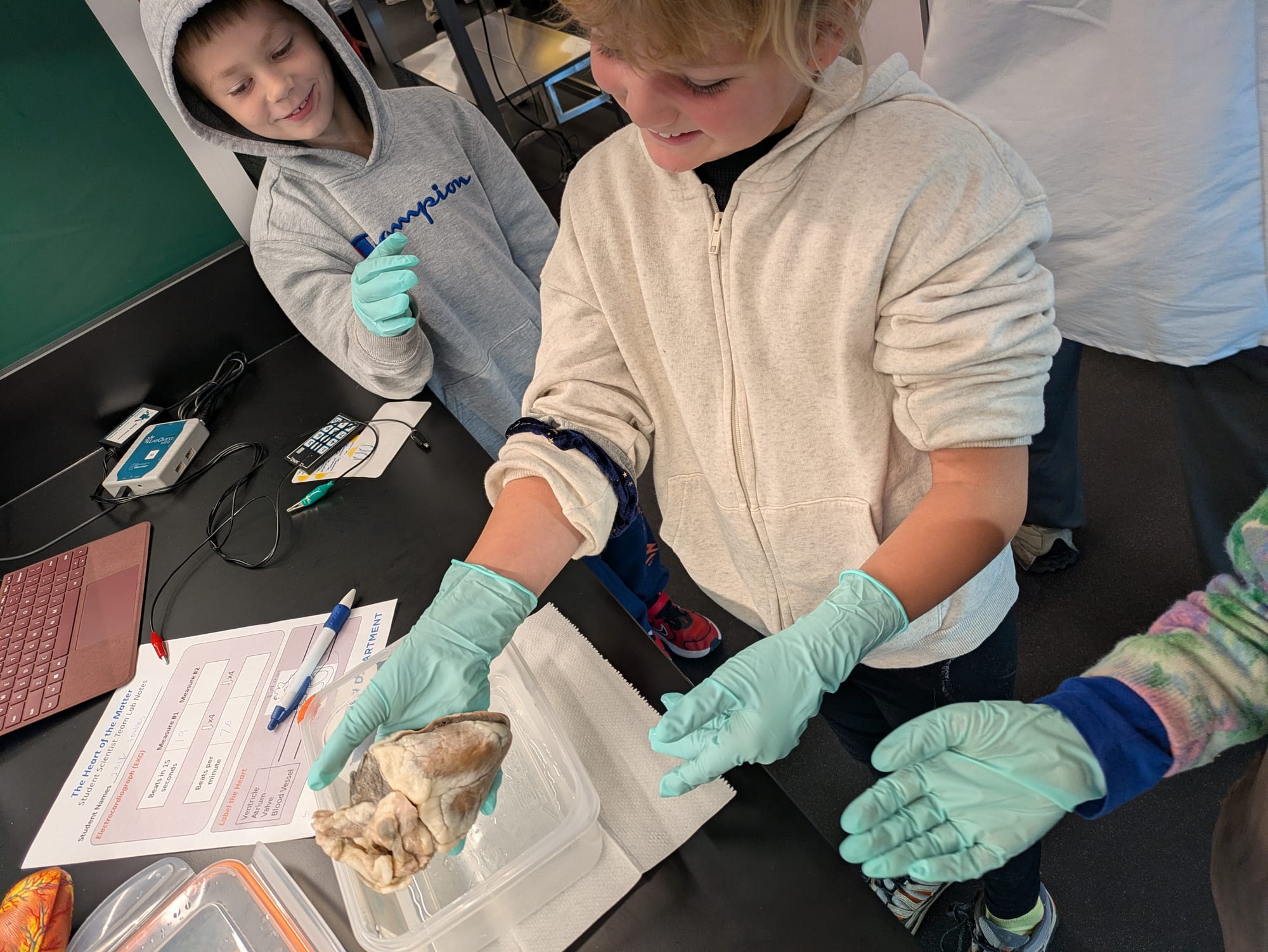
The hour-long lesson was on the body’s circulatory system, part of the Institute’s curriculum, which includes classes titled Vital Signs, Exploring Brain Functions, Nutrition and Chemistry, DNA Isolation and Exploring the Blood Components and Typing.
Each class that participates takes on a module with three components: The hands-on experiments and activities conducted aboard the mobile lab are the second of those components. Pre-visit and post-visit activities are taught by the classroom teacher.
“These activities and ideas supplement our current classwork,” said fourth-grade teacher David McMillen.
The modules incorporate the principles of inquiry-based learning; components of the scientific method; and science process skills such as observation, measurement, prediction and experimentation.
The Inspiration Lab visits roughly 80 to 90 schools per year across Washington. The Institute receives many more applications than they are able to accommodate each year in a single school.
”We’re trying to inspire the next generation of scientists and healthcare professionals,” Roden said. “We want to make sure that kids of all ages see that this is accessible to them, like anyone can be a scientist. Anyone can be a doctor, so we’re trying to approach it in a very friendly way and trying to inspire.”