AHPT Challenge Derails Habitat for Humanity and OlyCAP Homes, City Seeks Court Order
New legal filings detail devastating impacts on affordable housing, critical sewer projects and permitting.

PORT TOWNSEND, WA — The City of Port Townsend has asked a Thurston County Superior Court judge to stay (pause) the state Growth Management Hearings Board (GMHB) decision that has thrown the city's zoning code into limbo, warning that the ruling is already delaying affordable housing projects, confusing developers and jeopardizing millions of dollars in state grants.
The motion, filed Oct. 23 and set for a hearing Nov. 6 before Judge Egeler, is the latest update in the legal fight initiated by Affordable Hometown Port Townsend (AHPT) and the four individual residents who successfully challenged Ordinance 3361 — the city's 10-year update to its Comprehensive Plan (Comp Plan) and development regulations.
The ruling at issue
The GMHB issued its Final Decision and Order (FDO) on Aug. 19, 2026, in Case No. 26-2-0017. The board found the City's adoption of the Comp Plan noncompliant with the Growth Management Act largely on public participation grounds, specifically targeting a last-minute "6-plex amendment" that the City Council added to the R-II zone density table without reopening a Planning Commission public hearing.
According to City Attorney Austin Watkins, the board's invalidity order went further than its own findings, invalidating "all increases in density to the R-II zone and related amendments, presumably located within Title 17 PTMC (Port Townsend Municipal Code)." The City argues that language is dangerously vague, noting that the board's substantial-interference findings addressed only the 6-plex amendment — yet the invalidation appears to sweep in a wide range of other changes, including setbacks, lot sizes, building heights, parking minimums and lot coverage.
"Reasonable readings of the FDO's invalidity determination range from a maximum of 8 units per 40,000 SF to 32 units per 40,000 SF," Planning and Community Development Director Emma Bolin wrote in a declaration supporting the motion. "The City cannot determine with confidence which limit governs a given application."
Real-world fallout
Bolin's declaration catalogs a growing list of projects affected by the uncertainty:
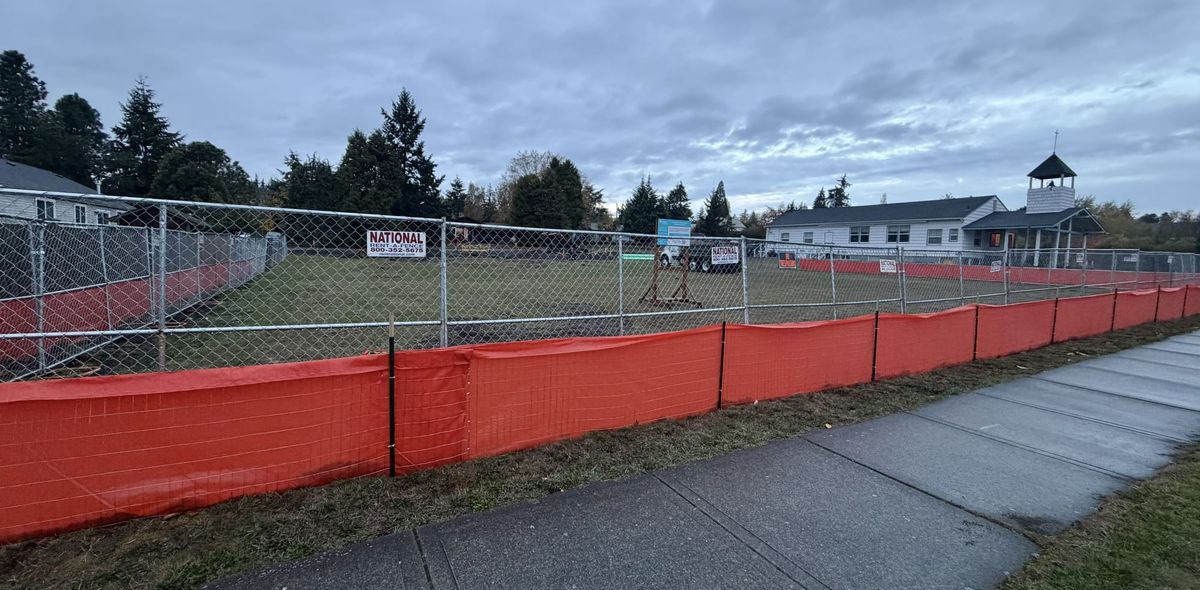
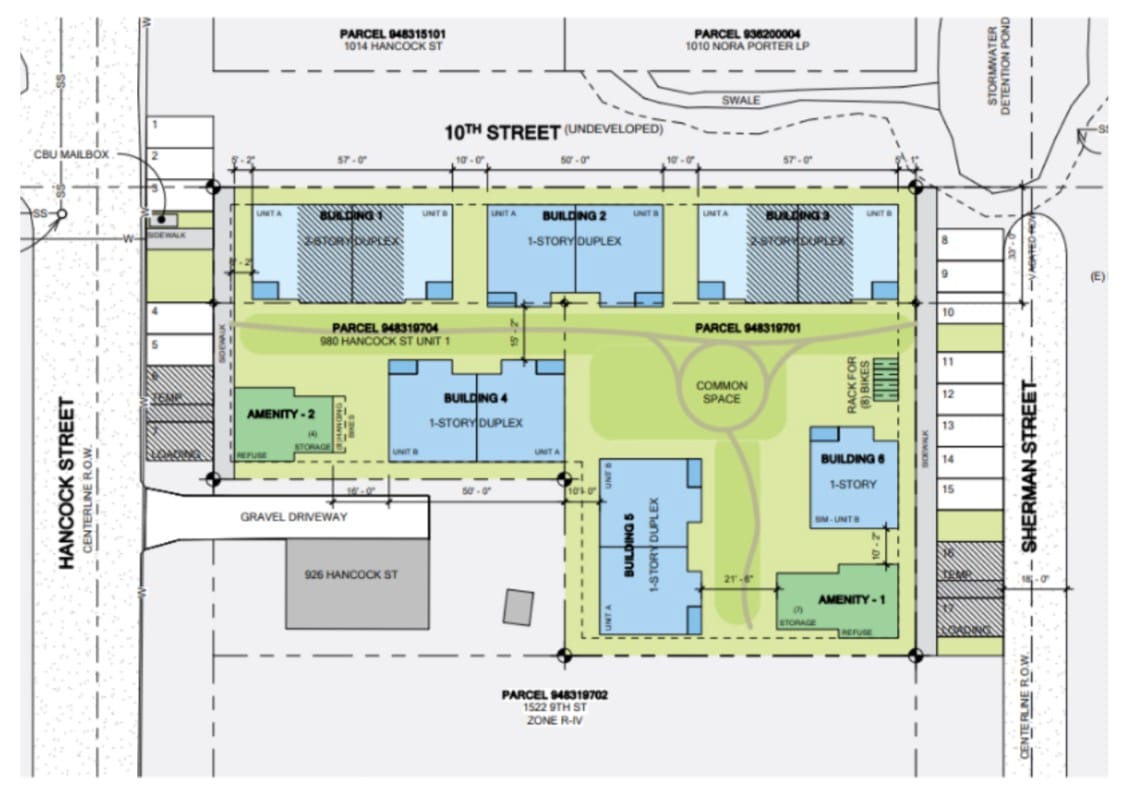
Habitat for Humanity of East Jefferson County has paused its planned 11-unit Carter Commons project at 10th and Hancock Street, and its director warned the organization "may cease planning, and that means building in Port Townsend for a period of time." This is due to the uncertainty of the broad scope of invalidity that may affect more than just R-II zoning, as Habitat’s Director of Housing Bob Collins said he feels “it’s wise NOT to start design development on any R3 or R4 property we have, as we would potentially be suboptimizing the number of homes.”
Olympic Community Action Programs (OlyCAP) has halted predevelopment work on replacing the aging eight-unit Haines Street Cottages with multifamily units. They would have provided permanently affordable rental apartments. OlyCAP’s Housing Project Manager, Peggy Webster, said, “The Comprehensive Plan proposal of 32 or 48 units per 40,000 Sq. Ft. makes the project financially feasible. Funding can be sought for this size of a project… Those activities have stopped given the uncertainty over zoning.”
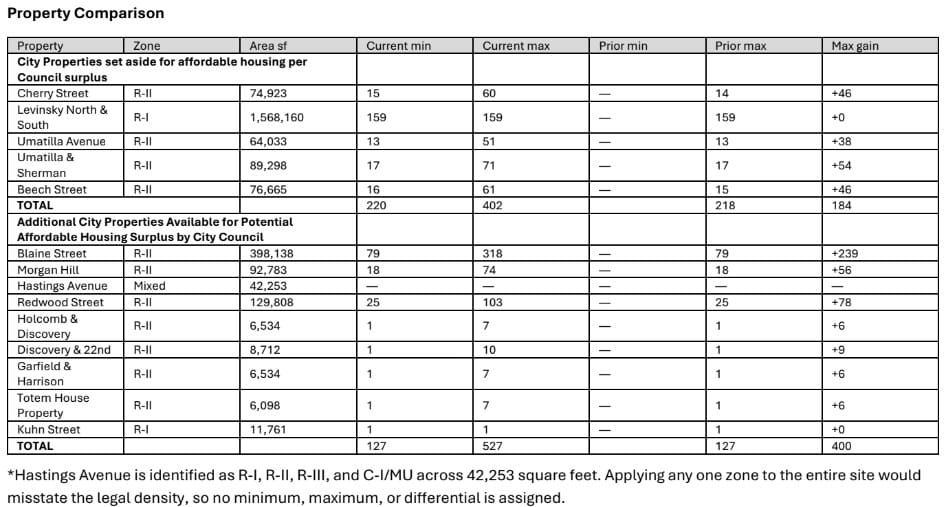
City analysis suggests the ruling could eliminate up to 184 affordable housing units on city-owned surplus property, with potentially another 400 units lost if additional property is designated.
Permit applicants, code enforcement cases and even a proposed cohousing project have been left without clear answers on which rules apply. The Falling Waters project, started by Ann Raab of Green Pods, will be an environmentally friendly continuing care facility for seniors. However, the current concept could be viewed as a multifamily development with five individual kitchens, which is not allowed with the current FDO and moratorium.
Bolin's declaration also notes that permit applications, such as relocating a shed or rebuilding an existing deck, have been affected by the uncertainty around current zoning rules. Because of recent changes to state law encouraging greater density to support housing, many of the city's R-II zoning rules prior to the Dec. 2025 Comp Plan adoption are no longer valid, leaving permit applicants in a "limbo" state and the City Planning Department unable to process some applications.
Interim City Manager Steve King warned that the ruling also cuts off the city's access to state funding tied to GMA compliance, including Public Works Board loans and the Centennial Clean Water Fund. Two pending applications — $250,000 for the Monroe Lift Station and $2.1 million for the Holcomb Sewer Replacement — have been short-listed but are now "under review for possible revocation." Over the past five years, the City has averaged over $10 million a year in state grants that are now at risk.
To date, no permit applications have been filed for market-rate or luxury multifamily developments.
The City's legal argument
The City contends it has satisfied the two-part requirement for a stay: the petition for judicial review presents debatable issues, and a stay is necessary to preserve the fruits of an appeal.
It points to what it calls a novel and unsettled question of first impression: how to interpret ESSHB 1220, the 2021 housing legislation. The City notes that the GMHB reached a different outcome just 16 days before its ruling here, upholding a nearly identical land capacity analysis in William Turner and Ian Munce v. City of Anacortes — developed by the same consultant under the same Department of Commerce guidance. Anacortes has recently faced 11 separate appeals, all initiated by a resident named Ian Munce, and Anacortes has prevailed in most of those cases. Munce is a former city attorney and planning director for the City of Anacortes — much like how AHPT’s president and one of the Port Townsend Comp Plan appeal petitioners, resident John Watts, is a former city attorney for Port Townsend.
The City of Port Townsend also argues the board exceeded its authority under RCW 36.70A.302 by invalidating parts of the ordinance without the required findings of fact, and that a determination "presumably" located somewhere in the code fails the statute's requirement to specify "the particular part or parts" invalidated.
Absent a granted stay, the City says it must complete all of the remedial work ordered by the GHMB by Feb. 15, 2027 — an effort estimated at over $1 million in staff time and consultant costs, requiring roughly six months to redo what originally took 18 months of public process. If the judicial review later determines that some or all of that Comp Plan remand work is not needed, the already completed work, and its associated costs, would have already been spent. A favorable judicial review finding could save city taxpayers substantial money.
What the City has already done
In the meantime, the City Council adopted Ordinance 3369 on Aug. 24, imposing a one-year moratorium on permits exceeding 32 units per 40,000 square feet (5-6 units per lot) in the R-II zone — effectively pausing the 6-plex amendment while litigation proceeds. The City characterizes the moratorium as a voluntary, conservative interim measure that protects AHPT's interests while the court reviews the ruling's broader scope.
On Sept. 29, the City requested an amicus brief from the Washington Department of Commerce, stating that the GMHB’s recent decision “leaves local agencies in a challenging position of balancing community goals and legislating solutions beneficial to the community as a whole, while appellants wield considerable power and devalue a community-wide public process through the GMHB.”
The City withdrew its earlier stay motion before the GMHB on Sept. 30 in favor of seeking relief in Superior Court. AHPT requested the GMHB to deny the City’s earlier stay request unless the parties agreed to negotiate AHPT’s conditions — conditions that many community members felt would give AHPT control over zoning changes rather than a true public process. The City did not agree to those terms. That discussion and details can be read here.
AHPT press release pushback
AHPT pushed back in a press release sent on Monday, Oct. 26. AHPT frames the City's petition for judicial review as the true source of delay, accusing Port Townsend officials of appealing the decision and "hold[ing] affordable housing builders hostage in an effort to win back the non-compliant December 15, 2025, Comp Plan amendment." The group said it is "saddened and frustrated" by the City's decision to seek relief in Thurston County Superior Court rather than negotiate. The group insists "there remains a path forward to negotiate a stay between the parties," but contends the City "will not move off of its singular devotion to its flawed plan until a stay is denied by the superior court."
The statement directly counters the City's filing that the GMHB ruling has created uncertainty for housing developers. AHPT argues that Port Townsend is "wasting hundreds of thousands of dollars on staff time and expensive lawyers that could go to affordable housing while adding costly uncertainty to the vital plans of esteemed affordable housing providers funded by the greater Port Townsend community." The press release urges people to contribute to its legal fund, as it now appears it will have to defend its position in Superior Court.
What's next
The hearing is scheduled for 9 a.m. Nov. 6 at the Thurston County Superior Court in Olympia. If granted, the stay would suspend the FDO's compliance deadline until the judicial review concludes, restoring permitting certainty for housing providers and grant eligibility in the interim.