Affordable Hometown Port Townsend’s Appeal Hearing on the City of Port Townsend’s Comprehensive Plan
GMHB hearing held July 7, 2026; Board decision expected August 19, 2026.

PORT TOWNSEND, WA — A challenge to the City of Port Townsend’s December 2025 adoption of its 20-year Comprehensive Plan is now in the hands of the State Growth Management Hearings Board. The appeal was filed by the newly formed nonprofit Affordable Hometown Port Townsend (AHPT).
AHPT’s appeal case was heard before the Western Washington Growth Management Hearings Board (GMHB) on July 7, 2026. The parties now await a final decision, expected on August 19, 2026, which will determine whether the city must revisit portions of its Comprehensive Plan—a decision that could have significant implications for a community grappling with a severe housing shortage.
Understanding the Growth Management Hearings Board
The GMHB is a quasi-judicial body that adjudicates disputes over whether locally adopted planning and development regulations comply with the state’s Growth Management Act (GMA). Cases are heard by a three-member regional panel, which must include at least one member admitted to practice law in Washington and one person who has served as a city or county elected official.
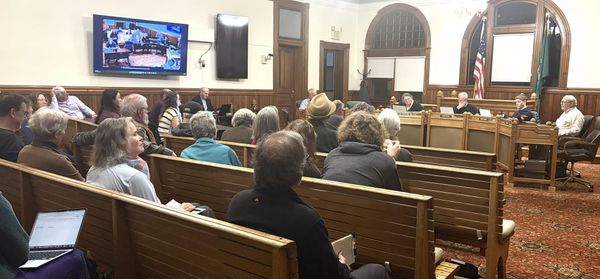
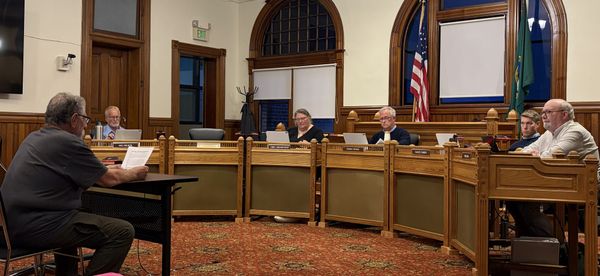
During the July 7 hearing, Board Chair Rick Eichstaedt, Member Alex Sidles and Presiding Officer James J. McNamara heard arguments from both AHPT and the City. While the appeals process unfolds, the zoning changes and increases in residential density approved by the City Council as part of the Comprehensive Plan remain in effect.
The petitioners' arguments
AHPT, a nonprofit formed for this appeal by city residents Todd McGuire, Mary McCurdy, John Capps and John Watts, raised several concerns about aspects of the City’s comprehensive plan. The group, which describes its mission as supporting affordable housing "while minimizing negative impacts on existing Port Townsend neighborhoods," argued that the plan fails to meet the GMA's requirements in several key areas.
Land capacity and adequate provisions
One of the petitioners’ central arguments is that the city did not adequately demonstrate sufficient land capacity for housing across all income levels, particularly the lowest-income households. The petitioners contend the city's analysis improperly combined income bands, which they say "conceals the reality" that capacity identified for a broader low-income group might not be available to the very-low- and extremely-low-income residents who need it most.
The group argues that this approach ignores the distinct needs of households earning between 0-30% and 30-50% of Area Median Income (AMI). Citing the GMHB’s recent decision in Futurewise v. Mercer Island (2025), the petitioners contend that cities must evaluate housing capacity for different income bands on a disaggregated basis—moderate-, low-, very low-, and extremely low-income households separately—rather than combining bands in their analysis.
During the July 7 hearing, the petitioners' attorney, Bryan Telegin, emphasized that the city identified a specific unmet need of 314 units of non-permanent supportive housing for very-low-income households (0-30% AMI), yet failed to demonstrate how the adopted zoning changes would actually close that gap. "The City merely aggregated the total number of units allowable in each zone," Telegin argued, "regardless of which income levels will likely benefit from new housing units."
Displacement risk and anti-displacement policies
The petitioners contended the city has not adequately identified areas at higher risk of displacement or established policies that meaningfully address the potential for loss of affordable housing. Todd McGuire, another petitioner, noted the group's concern that a supply-side approach alone could backfire: "We have a lot of examples of how gentrification really ruins desirable locations. We have not seen a presentation from the council about how their supply-and-demand approach to just increased density at all costs actually contributes."
The sixplex exception and public participation
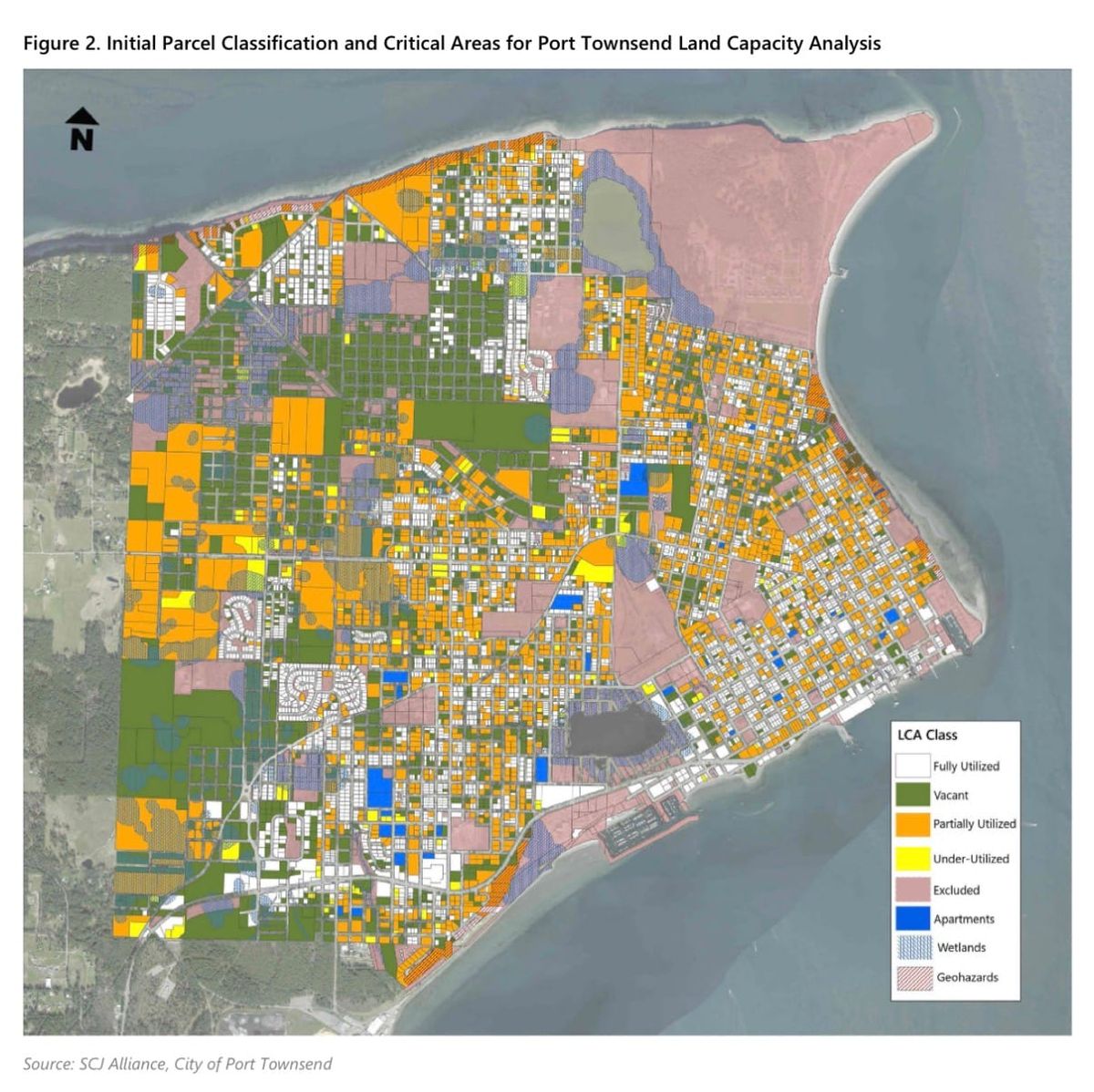
The group's appeal also challenged the city's public process, particularly what AHPT characterized as a “late-stage introduction” allowing sixplexes in the R-II zone—the city's largest residential zoning type, covering the vast majority of Port Townsend's developable land.
The petitioners argued the city failed to provide "early, continuous and meaningful" public engagement by introducing significant zoning changes without adequate review. The Planning Commission had recommended a maximum density of 32 units per 40,000 square feet—equivalent to up to four units on a typical city lot. The City Council ultimately adopted an exception allowing up to six units per 5,000-square-foot lot on smaller “infill” parcels (10,000 square feet or less).
The City's Defense
The City of Port Townsend mounted a vigorous defense of its comprehensive plan, arguing that it is a balanced, legally compliant response to the community's extreme housing shortage. The city was represented at the July 7 hearing by City Attorney Austin Watkins.
Public process
City officials emphasized that the adopted comprehensive plan was the result of the most extensive public outreach in Port Townsend's history, which included more than 60 meetings, workshops and events held over two years. They argued that the record demonstrates robust public participation and noted that the sixplex concept was discussed in Planning Commission meetings as early as July 2025, six months before the final vote in December.
The City maintains that requiring all changes proposed by the Council to return to the Planning Commission would create an endless and unworkable process. "Such an outcome is not only inconsistent with the GMA," the city argued in its prehearing brief, "but it would eliminate the City Council's primary role of policy making, resulting in an endless loop of the Council referring amendments back to the Planning Commission, an unelected advisory board."
Addressing the housing crisis
The city's defense rests on the urgent need for more housing. Port Townsend faces a severe supply-demand imbalance. Between 2016 and 2022, median home prices more than doubled, reaching $669,000—the highest on the Olympic Peninsula. Total available rental units have declined to their lowest level since the City began keeping records, and rental prices have ballooned, with a vacancy rate below 1%. Over 48% of renter-occupied households were cost-burdened in 2020.
City staff laid out the stark math: Port Townsend needs to build an average of 70 affordable units per year to meet projected demand, but has historically built just 13. The city argues that its plan, which includes an intentional upzone for middle housing, is a necessary step to create the conditions to build additional housing. Public Works Director Steve King put it bluntly: the city faces a "deficit of investment of $17 million a year" to build the 85 units needed, a sum the city cannot cover alone.
The City's 2023 White Paper on Infill and Attainable Housing laid out the toolbox: zoning reform, expanding the Multifamily Tax Exemption (MFTE) program, exploring a fee-in-lieu system and creating a Housing Incentive Fund. "Zoning reform that transitions a minimum lot size model to a maximum lot size coupled with a prohibition against building across lot lines is imperative to successfully achieve housing attainability goals," the White Paper stated.
During an interview with the Beacon, King described the economic realities: "Nobody's going to build a sixplex unless there's a subsidy for affordable housing. Not even the market will pay for a sixplex on a 5,000 square-foot lot." He noted that market rents would need to reach $4,000-$5,000 per month to make such development economically feasible without subsidy.
The City argued that its approach follows State Department of Commerce guidance and that, unlike Mercer Island which concentrated affordable housing initiatives in a small portion of the city while leaving most of the city zoned for single-family homes, Port Townsend enacted citywide zoning changes. Also unlike Mercer Island, Port Townsend expressly acknowledged its funding gap—$170 million over 20 years for the 0-80% AMI band—rather than hiding it. The Growth Management Hearings Board's recently issued decisions which objected to Mercer Island and Kitsap County’s comprehensive plans, but those plans were distinctly different from Port Townsend's approach.
The "20 times more growth" framing
Petitioners argued that the R-II upzone could theoretically accommodate capacity for 49,935 new residents—roughly 20 times the state-mandated growth target. The city has pushed back on this framing as misleading, noting that six units per lot has been allowed since 2023, but that not a single such project had been built so far. In the six months since the comprehensive plan was adopted, the development boom the petitioners claimed would result in existing homes being demolished to build luxury condos has not materialized. So far, no projects have even applied to build a six-plex.
The July 7 hearing: Key moments
During the hearing, the GMHB pressed both parties on their key arguments. Several moments stood out:
On the sixplex exception: Board Chair Rick Eichstaedt noted that the city’s previous changes (Ordinance 3306) already allowed conversions of an existing home to a fourplex plus two ADUs—effectively six units per lot. He asked the petitioners why they were challenging the new rules, when the existing code already allowed six units.
On inclusionary zoning: Board Member Alex Sidles noted that inclusionary zoning programs—regulations requiring that a certain percentage of a project’s units be designated as affordable for lower-income residents—have had mixed results in other jurisdictions, including Mercer Island. He went on to ask whether such a program would be feasible given the typically small scale of development projects in Port Townsend. This appeared to be in response to the petitioners' argument that the city should have adopted inclusionary zoning mandates.
On the Planning Commission's role: The petitioners claimed that the process was "last-minute" when questions turned to public process. The city argued that the sixplex concept had been discussed before the Planning Commission in both July and September 2025—even though the Planning Commission ultimately recommended a lower density, those discussions were part of the public process.
On land capacity: The Board pressed both parties about whether the city had adequately disaggregated income bands in its analysis. The petitioners maintained that the city's "in-house" disaggregation analysis was never shared with the public or the Council. The City maintained it had followed Commerce guidance and that its analysis properly accounted for all income bands.
On capital facilities and infrastructure: In response to petitioners' arguments that the city's Capital Facilities Plan was inadequate, Board members noted that the city had adopted a Transportation Level of Service (LOS) standard of "F" for urban arterial streets—a standard that Commerce guidance explicitly endorses as a valid local choice.
AHPT's press release: A tale of two narratives
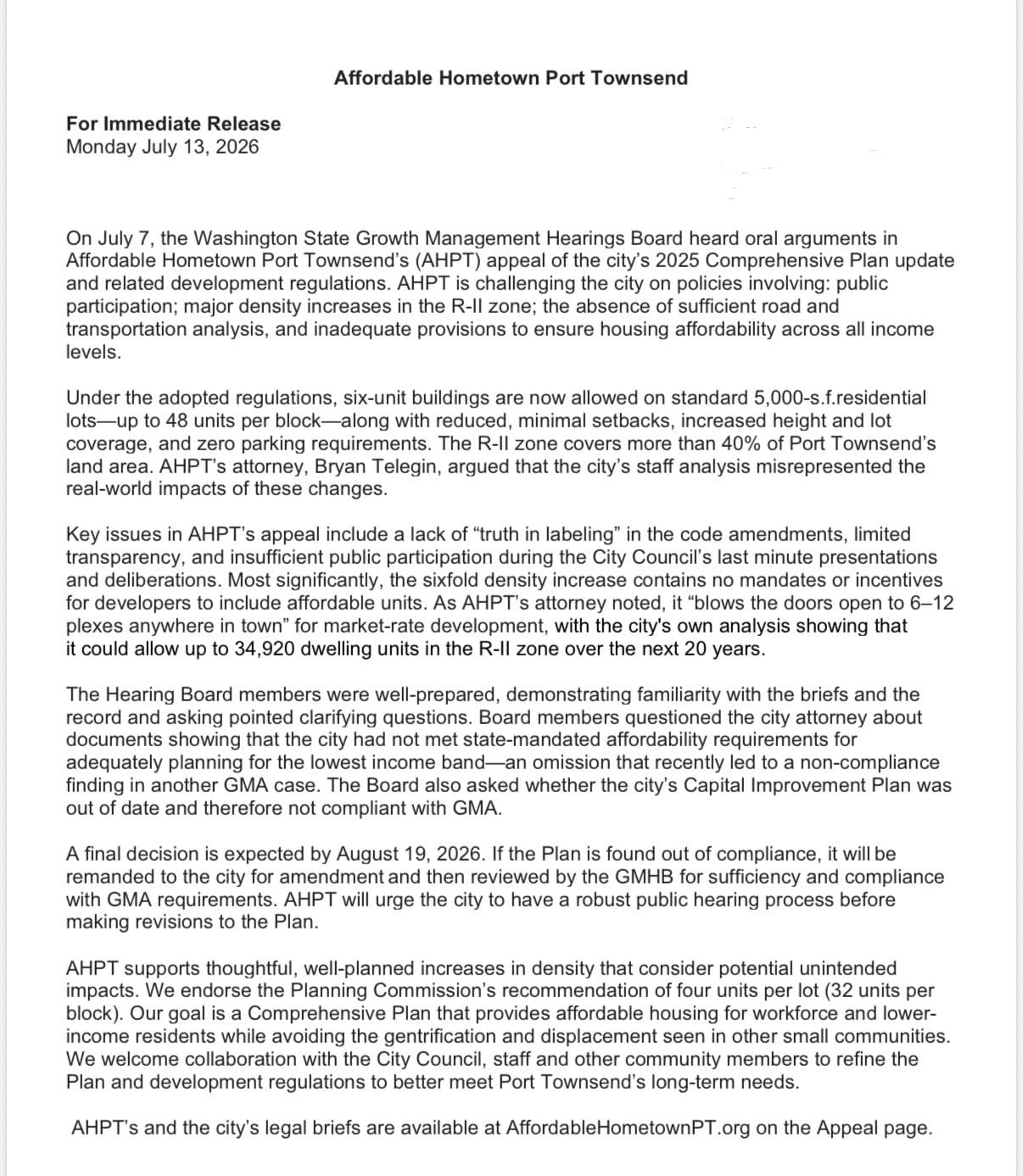
AHPT’s July 13 press release frames the Growth Management Hearings Board hearing as a validation of their appeal, emphasizing that board members "asked pointed clarifying questions" about the city's affordability analysis and Capital Improvement Plan. The group highlighted their attorney Bryan Telegin's argument that the sixplex exception "blows the doors open to 6-12 plexes anywhere in town" with "no mandates or incentives for developers to include affordable units."
What the press release omits is how the hearing actually unfolded.
Board Chair Eichstaedt directly questioned AHPT's challenge, noting the city's existing code already allowed six units through conversions. Telegin conceded that the 32-unit density limit—which AHTP supports—underwent "a full and robust public participation program," a statement that undermines his client’s claims of an inadequate process. Board Member Sidles acknowledged Port Townsend had "done a much better job with subsidy analysis than Mercer Island did."
Sidles further noted that the city's subsidy methodology—assuming a full subsidy for all zero-to-80% AMI units—could overstate the funding gap, directly undercutting AHPT's affordability arguments. In other words, if a unit costs $307,000 to construct, the city assumes the full $307,000 would need to come from public funds, regardless of whether the future tenant earns 10% AMI (extremely low-income) or 79% AMI (just below the threshold). A household at 79% AMI can likely contribute something toward rent, reducing the subsidy needed, whereas a household at 10% AMI cannot. The group claimed that the city failed to demonstrate how it would pay for these affordable units, thus an overstated assumption of the funding gap could make the city’s plan more achievable.
AHPT, which was formed solely to challenge this plan, continues to frame its appeal as housing advocacy—yet this appeal is the only affordable housing effort the group seems to be undertaking so far.
The City, by contrast, is already a direct market participant in affordable housing through Evans Vista and has proposed concrete solutions. The hearing transcript reveals that the petitioners are struggling to justify why an exception—already permitted in a different form—warrants invalidating an entire comprehensive plan.