Curtain Rises on Flagler Theater Renovation

by Kathie Meyer
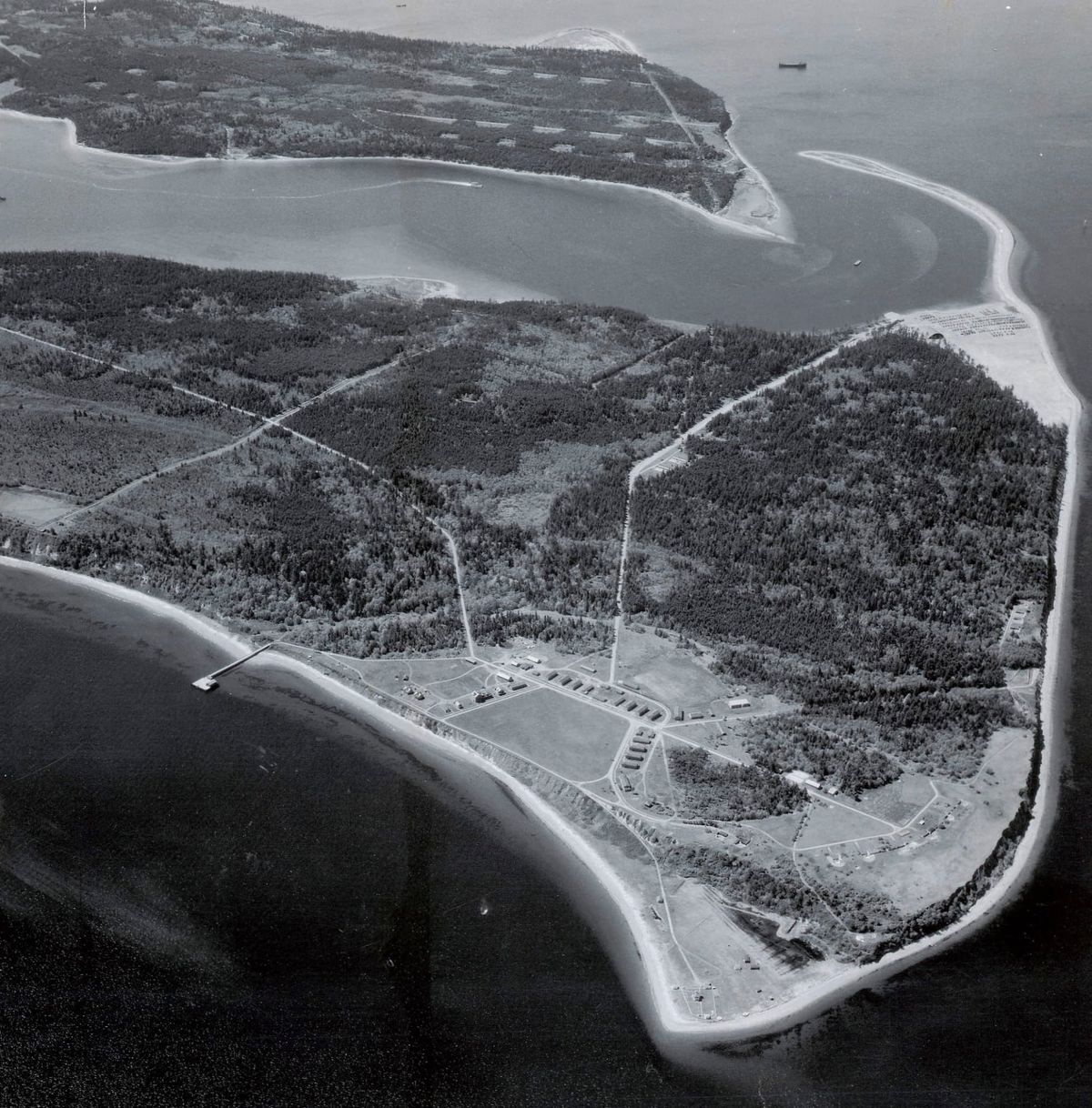
MARROWSTONE- Fort Flagler State Park – a 1,451 acre piece of Marrowstone Island that guarantees spell-binding natural drama for wildlife enthusiasts – is now home to drama of the thespian kind too.
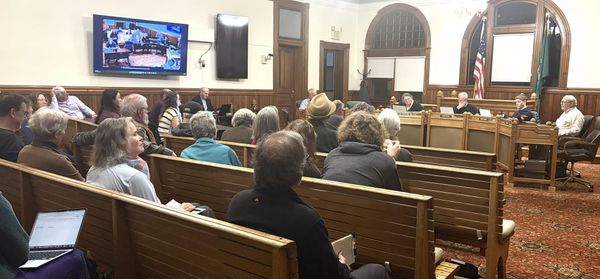
Last Sunday, March 29, Washington State Parks and Friends of Fort Flagler (FoFF) proudly presented a 100-percent rehabbed theater space complete with state-of-the-art lighting and sound system. The tickets to Sunday’s free event were scooped up quickly. A portion of the program included a 30-minute, one-act play written by award-winning playwright Judith Glass Collins, a Marrowstone resident, titled The Turkey Farmer’s Daughter.
“The place was packed. The play was really well received,” said Ginger McNew, also an islander. “Probably most people who were there lived on the island.”
The play’s story is set at the theater and on Marrowstone Island during the WWII years. August Maberry played Joe, the young Army private in love with Fiona Kelly’s character, Alberta. Lee Does played her father, Jakob; and Lee Does played Norm, the MP Corporal. The play was written exclusively for the event.
Glass Collins, who also directed the play, cast the four roles using actors with Marrowstone ties. Winstead is her neighbor. Maberry’s father was once a park ranger for Fort Flagler State Park; August used the park as his playground. Does lives on the island as does Kelly’s father, Glass Collins said.
McNew acted as costume designer for the play and included the WWII helmet her late husband, well-known local actor Lawrie Driscoll’s father wore. FoFF board member Claire Jackson agreed to be stage manager for the show. Tracy Geipel of the Ludlow Village Players was in charge of lighting, and Vigo Anderson made use of the sound system for the first official time. Marty Ayres acted as AV Consultant.
“It was really fun,” Glass Collins said. “Now I’m thinking it would be fun to do more stuff there. Maybe some staged readings, so we’ll see.”
Temporary Buildings
Of course, Fort Flagler did not start out as a cultural destination. Flagler (named for Civil War Brigadier General Daniel Webster Flagler) was activated in 1899 and served as Harbor Defense of Puget Sound headquarters until 1904 when Fort Worden assumed that role. In 1918, when World War I came to an end, Flagler was deactivated, and its guns and mortars were removed.
Flagler was already in decline in 1936, and many buildings were torn down because of dry rot, but as America’s military mobilized to join World War II, the fort once again became germane to the nation’s security.
Temporary buildings went up from 1940-41, including the theater which was built for training purposes, not a dance hall since most of the social activities for service people took place at Fort Worden or in downtown Port Townsend. When the United States officially joined WWII, having a good time became secondary to fighting fascism; after the war, the buildings were used to train engineers and amphibious units.
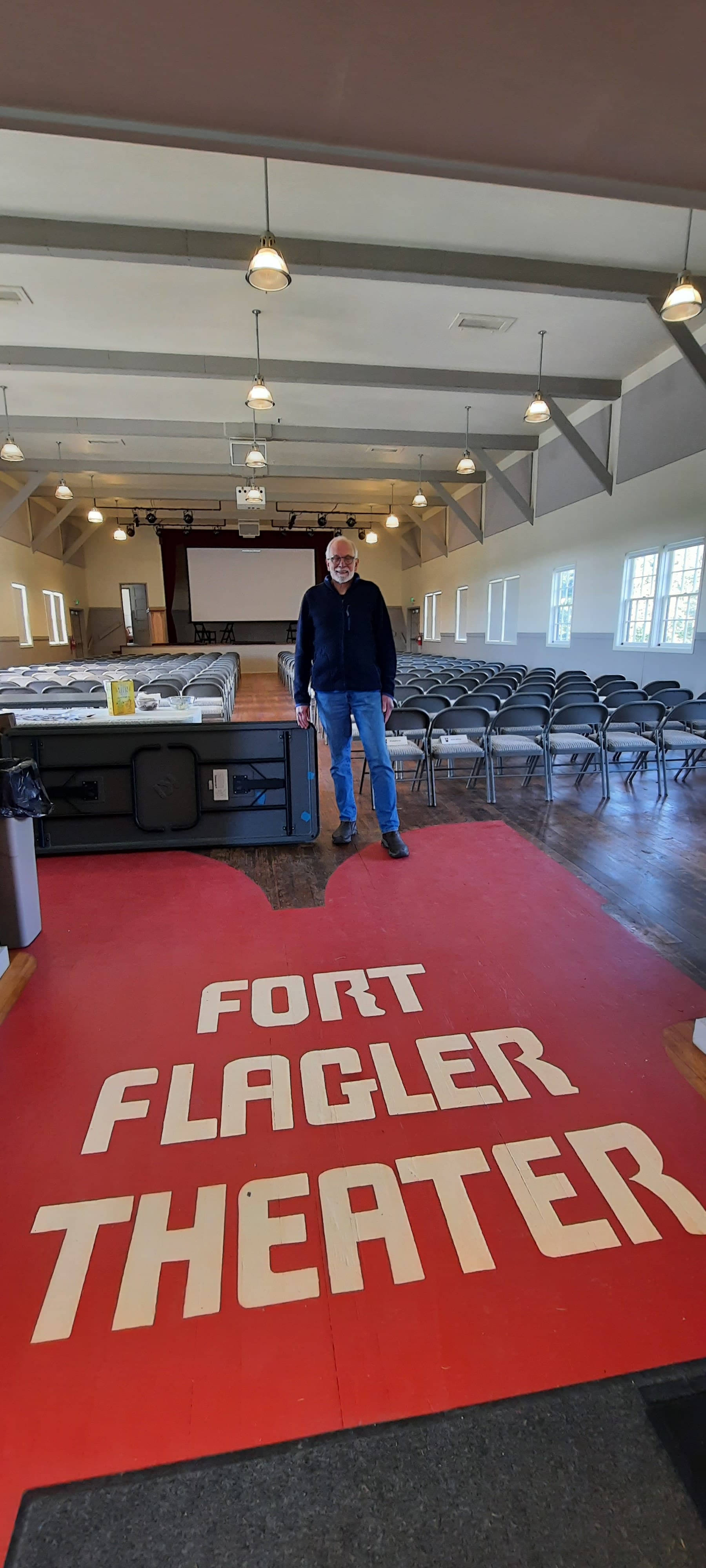
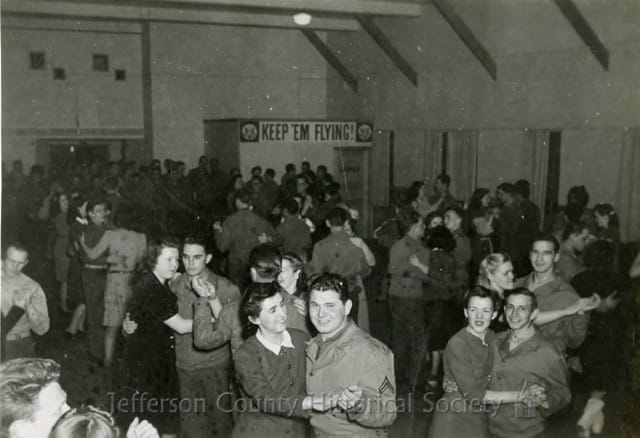
It was, however, deemed the Fort Flagler Theater as evidenced by the restored signage painted on the theater’s floor at the entrance. At least one dance was held there based on a photograph, so we know it wasn’t all business all of the time.
Today, the stage is set for a variety of types of events that could be held at Fort Flagler Theater. Loud wedding receptions would certainly not bother the neighbors. Monthly movie nights for islanders and campers alike are already being highly considered. The setting also seems perfect for a quiet, thought-provoking literary reading with nothing to disturb it but birdsong.
“Wait ‘til the subwoofer kicks in,” said Mark Secord, the immediate past president of FoFF, in a sneak peak of the renovation. A second later, the unmistakable beat of Madonna’s Vogue is crystal clear, loud but not deafening. He said he thought the FoFF got a lot of value for the money they worked hard to raise.
It was clear Secord was looking forward to the upcoming celebration, and a lot of effort was put into it to make it fun.
Enormous Effort
The effort it took to get from the start in 2019 to finish today was enormous. The first phase involved getting the Washington State Parks Commission on board. Next, FoFF set about getting key members of the Washington State legislature excited about the project.
“Of course, we were blessed with having our wonderful Representative Steve Tharinger as chair of the House Capital Budget Committee,” said Secord. “So he was in a position to really make things happen.”
Tharinger moved the $196K needed for initial planning and permitting higher on the list of priorities, and the curtain began to rise on the possibilities for the decrepit, weather-beaten little theater. That part was funded in 2021. Once the plan and costs were all figured out, the FoFF and Washington State Parks kept the ball rolling and received almost $1.4 million for the actual renovation in 2024. Of course, all along the way, Marrowstone and other Jefferson County residents pitched in, literally from floor to ceiling.
“It was always a partnership,” Secord said. State Parks would renovate the exterior envelope while the FoFF would take care of the interior. “And that partnership has worked very, very well,” he said.
State parks ripped off all of the siding and three layers of roofing and began anew. They updated the plumbing and electrical. The old heating plant was removed, and two ADA bathrooms were installed instead. Previously, the theater didn’t have any bathrooms at all.
As for the FoFF, they took care of placing acoustic panels near the ceiling. When it came time to install lighting, they turned to local lighting expert Niles Starkey of Port Townsend. Starkey recommended WWII-period holophane lighting, which required approval from the Historic Preservation Committee. The biggest expense was the sound system, but the intrepid FoFF raised $140,000 to make the entire dream come true.
FoFF is 170+ members strong, Secord said, and many attended the theater reopening. They are not all island residents, he noted. They come from all over the county.
“We have a lot of people that love this park. I always say Flagler has twice the area of Fort Worden and probably a third of the people. So it’s got a different flavor to it,” Secord said.
The art deco-style lectern was made by FoFF member Greg Kammer. Every detail was attended to, including two furnished green rooms behind the stage as well as a small kitchen in the front.
To get to the theater, go past the parade grounds and flagpole, and look for the only freshly painted building on the left. To inquire about renting the theater, check in with the park office.
McNew called the original state of the building a pile of rubble. “It’s amazing that it stood that long. And now it’s beautiful,” she said.