How a Public Records Request Exposed Port Townsend Families to Harassment
An in-depth look at the PRA loophole, one man’s campaign and why your family’s data isn’t as protected as you think.

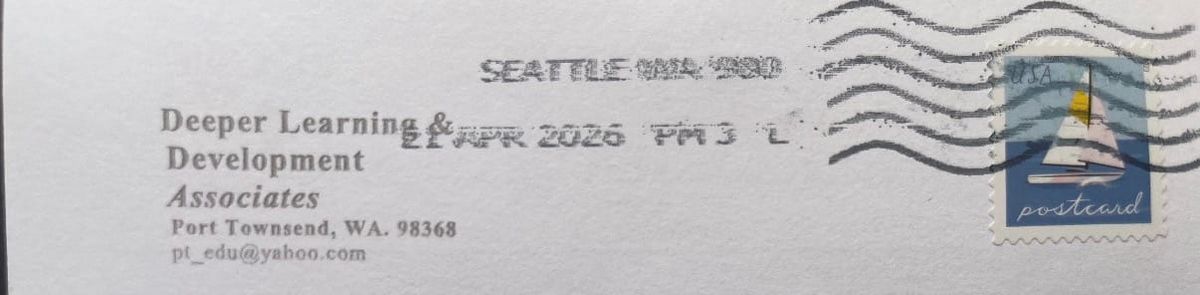
PORT TOWNSEND, WA — In April of 2026, a local man named Timothy S. Hawley used mailing addresses obtained from the Port Townsend School District to send cards containing anti-vaccination rhetoric and transphobic messaging to families across the district. Recipients widely reported on social media feeling targeted and violated by the mailers.
Superintendent Linda Rosenbury sent a letter to families on May 19, 2026, explaining what happened and how to protect your data moving forward. But the letter left many parents with the same question: How was this legal?
The short answer is that Washington’s Public Records Act (PRA), a law designed to make government transparent, has a gap regarding “directory information” such as student addresses. The longer answer involves a failed school board campaign, a self-described education consultant and a growing movement to reform a law that has increasingly been weaponized against schools.
Who is Timothy Hawley?
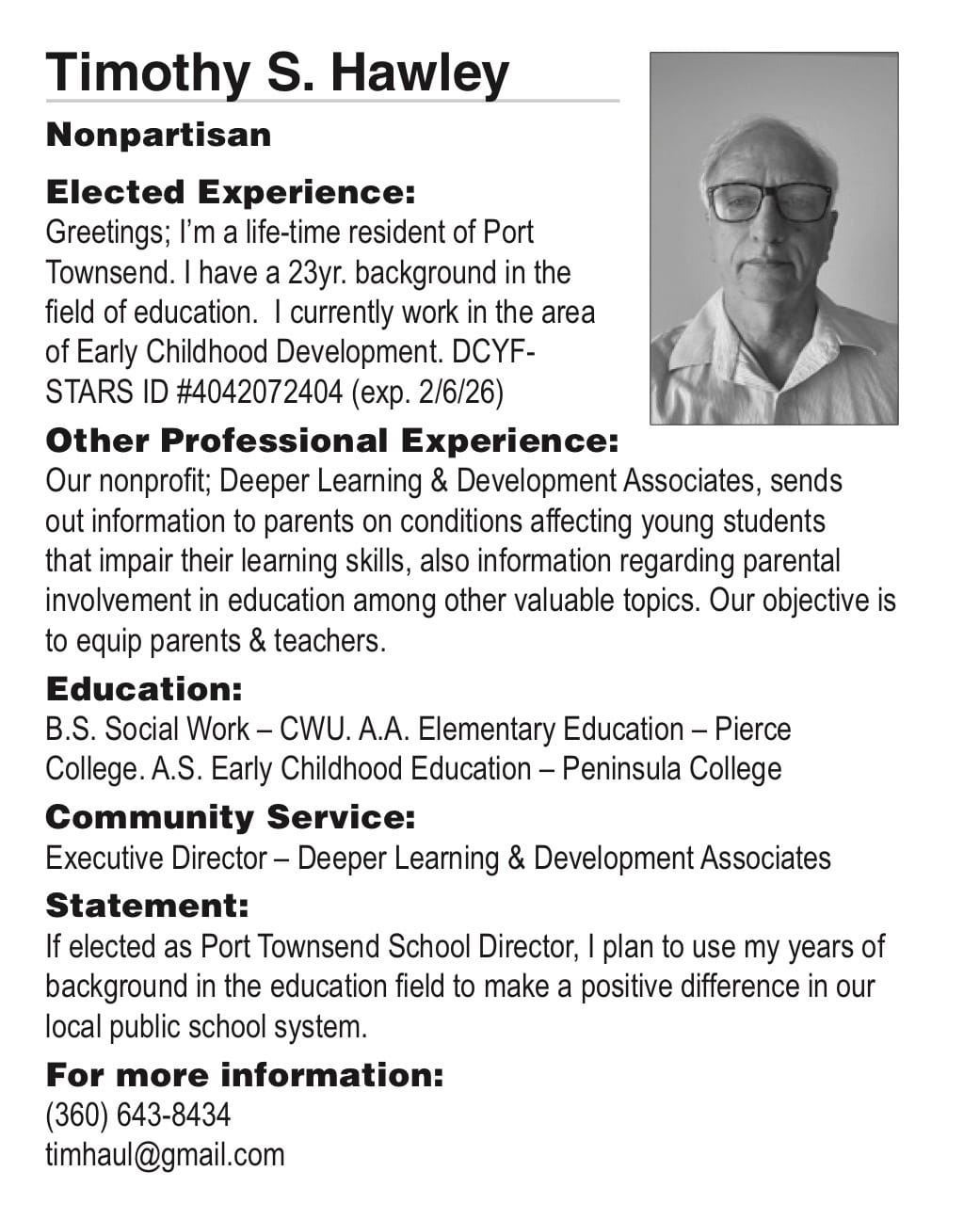
Hawley is a longtime resident of Port Townsend. In the 2025 election cycle, he ran for the Port Townsend School District No. 50 Board of Directors as an at-large candidate.
His voters’ pamphlet statement painted a picture of an education professional:
“I’m a lifetime resident of Port Townsend. I have a 23yr. background in the field of education. I currently work in the area of Early Childhood Development. DCYF-STARS ID #4042072404 (exp. 2/6/26)”
Hawley’s 2025 campaign for the school board was unsuccessful.
Hawley runs a nonprofit called Deeper Learning & Development Associates, which he described as an organization that “sends out information to parents on conditions affecting young students that impair their learning skills, also information regarding parental involvement in education, among other valuable topics.”
Hawley did not respond to requests for comment from the Beacon.
What is the Public Records Act?
Washington’s Public Records Act (RCW 42.56) was enacted in 1972 as part of Initiative 276. Its purpose is straightforward: to make the government transparent. The law requires all state and local government agencies to make public records available for inspection and copying unless a specific statutory exemption applies.
The PRA is written with a strong presumption in favor of disclosure. The law explicitly states that exemptions must be interpreted narrowly to effectuate the general policy favoring openness.
For many parents, that’s a problem when the “public record” in question is your child’s home address.
The directory information exception
School districts maintain a wide range of records about students—academic files, disciplinary records, health information, and contact details. Under the PRA and the Family Educational Rights and Privacy Act (FERPA), much of this information is protected.
But not all of it.
“Directory information”—typically defined as a student’s name, address, phone number, and similar basic contact details—has historically been treated as less sensitive. The reasoning goes that this is the kind of information you might find in a school directory or yearbook.
Under Washington law, school districts are legally required to release directory information to anyone who requests it, unless a parent has explicitly opted out.
This is the loophole Hawley exploited.
What Hawley did and why the district had to comply
At some point in early 2026, Timothy Hawley submitted a public records request to the Port Townsend School District. He asked for the mailing addresses of district families. The Beacon is waiting for records of any other requests Hawley may have made.
Under the PRA, the district had two options:
1. Release the addresses (for families who had not opted out)
2. Deny the request and face a potential lawsuit
The district chose option one, not because officials wanted to, but because the law gave them no choice.
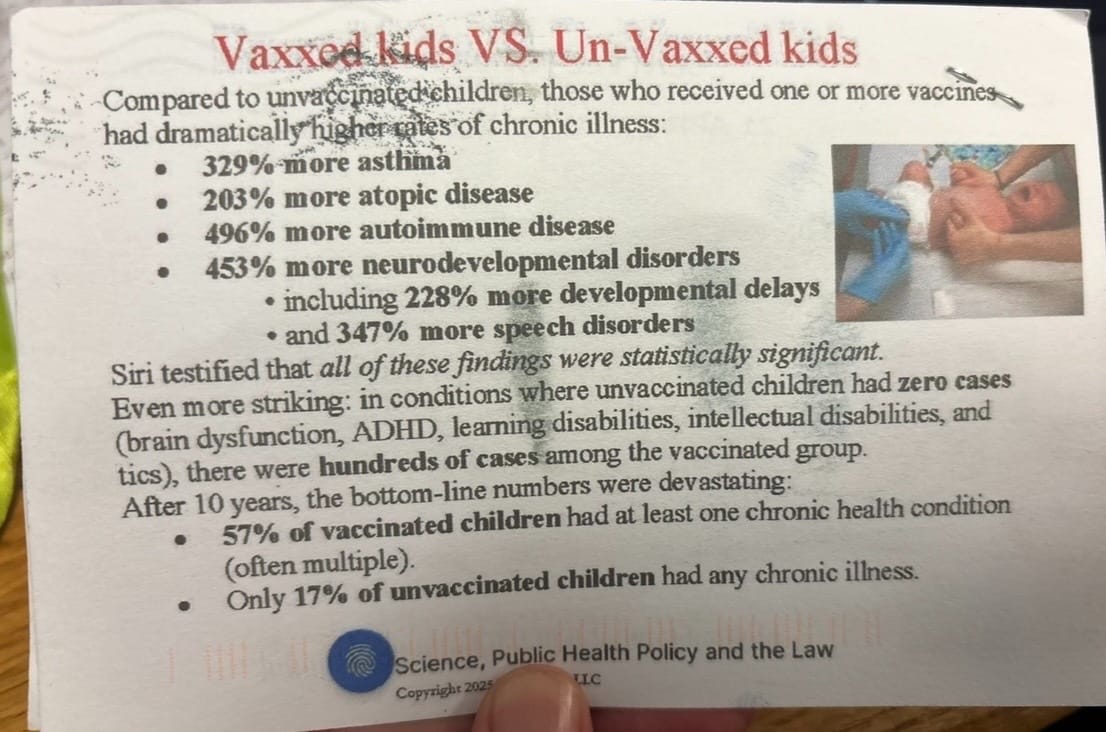
Once Hawley had the addresses, he sent cards to families. According to Superintendent Rosenbury’s letter, the mailings contained “factually inaccurate information” about vaccines and gender identity.
The nature of the messaging on the cards—anti-vaccine and transphobic—aligns with a broader national movement of activists using public records laws to target schools over health and diversity policies.
The mailers
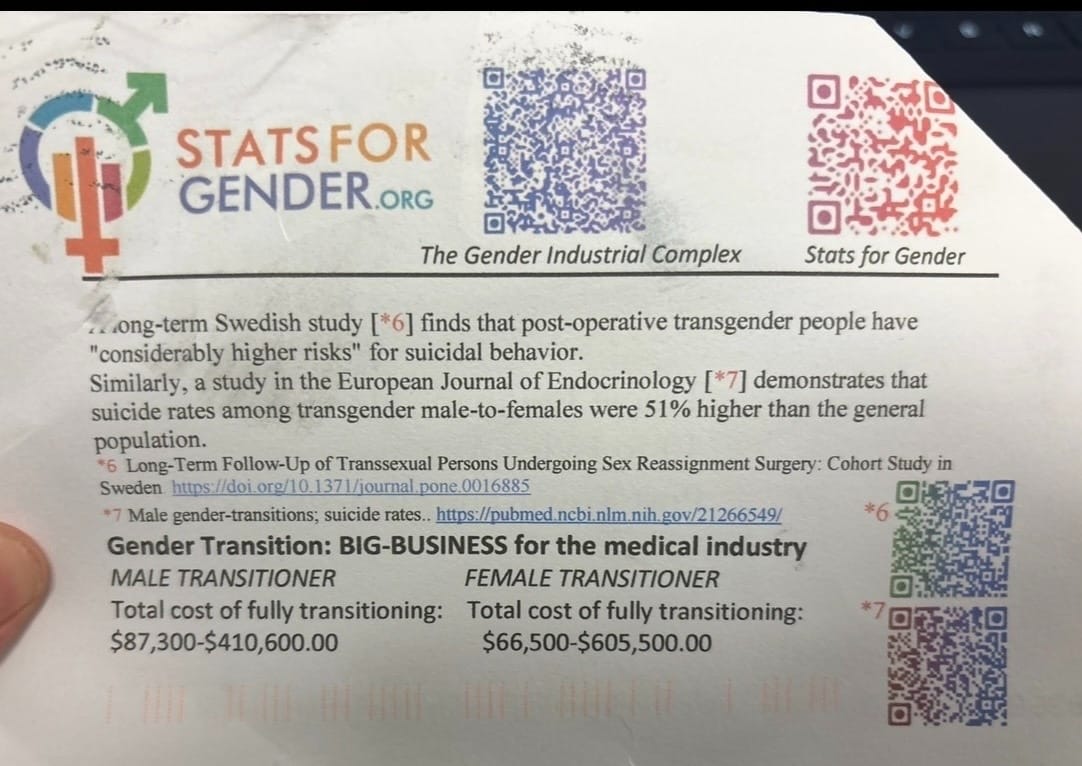
Parents discovered two separate cards in their mailbox from Hawley; One included anti-vaccination misinformation, the other included misinformation about gender care. The anti-vaccination card quoted an online blog called Science, Public Health Policy and the Law. When Robert F. Kennedy produced what he described as results from a study about anti-vaccination during his confirmation hearing as US Secretary of Health and Human Resources, he was referencing this blog.
The latter card included QR codes and a website operated by a group called Genspect, which has been formally designated as a hate group by the Southern Poverty Law Center. The card failed to mention the contributing factors to elevated suicide rates among trans-women. According to the Centre for Suicide Prevention, “This is not because of their gender identity but because of the unique stressors they face, including stress from being part of a minority group and stigma. All of these experiences and stressors can increase suicide risk.”
A pattern of abuse
Hawley is not the first person to weaponize the PRA against a school district. A South Whidbey man, Eric Hood, had made a “career” out of targeting schools, hospitals, counties and cities with public records requests, forcing districts to spend thousands of staff hours responding to demands for emails, calendars, and internal communications. Hood is reported to have won $1 million in PRA lawsuits this way in 2021. He currently has an active PRA lawsuit against the city of Langley.
The same dynamic is at play here. The PRA doesn’t require requesters to have a legitimate purpose. They don’t have to be journalists, researchers or even district residents. Jefferson County and the City of Port Townsend are facing the same misuse of the PRA. Anyone can ask for almost anything—and agencies are required to respond within a certain timeframe.
Linda Rosenbury’s letter to families
On May 19, 2026, Superintendent Rosenbury sent a letter to Port Townsend families explaining the situation. The full text reads:
“Dear Families,
It has come to our attention that a community member has used our students’ mailing addresses, obtained through a public records request, to distribute mailings containing factually inaccurate information. We are writing to you to explain the context of this mailing and the steps we are taking to protect your family’s data.
The Public Records Act was designed to ensure government transparency and hold public agencies accountable. Under this act, directory information (such as names and mailing addresses) is considered public information that school districts are legally required to release to any requester unless a parent has explicitly opted out.
You have the legal right to withhold this information from the public, and we encourage you to follow the steps below to ensure your data remains protected.

Here are other steps you can take:
Advocate for Reform: Reach out to your state lawmakers to advocate for reform of the Public Records Act. Currently, responding to these requests requires significant taxpayer resources and staff time, pulling us from our core job of serving students.
Consult Trusted Sources: For factual information regarding school or public health policies, we recommend consulting neutral sources such as the Washington State Department of Health.
Please don’t hesitate to reach out if you have any questions or suggestions.
In partnership,
Linda”
The letter is notable for what it does not say. Rosenbury does not apologize—because the district did nothing wrong. She does not promise to change the policy—because the district cannot unilaterally change state law. Instead, she does what she is legally allowed to do: she tells parents how to opt out and urges them to demand legislative reform.
How to protect your family’s data
Fortunately, it isn’t difficult for Port Townsend, Chimacum and Quilcene families to opt out of directory information release. Superintendent Rosenbury’s letter provides clear instructions:
1. Sign in to your Skyward account
2. Click on “Back-To-School Verification For 2026-27”
3. Look for the section regarding the release of student information
4. Do not check the box—leaving it blank ensures your data is not released
If you have already checked the box in previous years, you can go back and change your selection. Opt-outs are typically processed annually during the back-to-school verification period.
When you opt out, the district is legally prohibited from releasing your child’s name and address in response to a public records request for directory information. The district can still contact you—opt-out only affects third-party requests, not school communications.
2026 reform efforts
The Washington Legislature is aware of the potential problems the current law allows. In 2026, HB 2637 was introduced with the title “Safeguarding personal information entrusted to agencies that is of no legitimate concern to the public.” The bill aims further to restrict public agencies' access to personal information.
But as of this writing, the bill remains in committee. And even if it passes, it will have to navigate the same tension that has always defined the PRA: transparency vs. privacy.
The PRA serves a vital function. Without it, the government would be less accountable, corruption would be harder to expose and citizens would have fewer tools to hold officials responsible.
But the PRA was never intended to give activists a mailing list for misinformation campaigns, and it was never intended to force school districts to choose between following the law and protecting families.
Why we are reporting this story
Numerous families in our community received these alarming cards. Community members expressed feeling targeted and violated when they received these cards in the mail. After discovering how Hawley gained access to homes of local children, the Beacon investigated the issue.
Where did we get our information from
Port Townsend School District, Municipal Research and Services Center of Washington, public records and input from local families.