Deadline Looms for Port Townsend Affordable Apartments
As the federal program phases out, low-income housing units may become market-rate units.

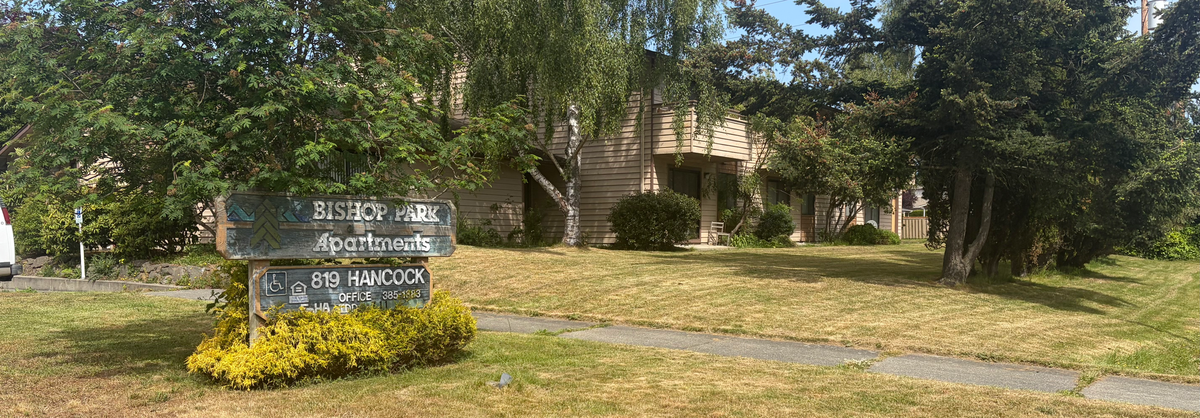
PORT TOWNSEND, WA — Residents of two low-income apartment complexes in Port Townsend received letters on April 20, 2026, notifying them that their properties are being offered for sale, a move that could lead to the loss of affordable housing as a key federal program winds down.
The notices, sent to tenants of Norwest Village and Bishop Park, state that the properties’ owner has requested to pay off a United States Department of Agriculture (USDA) loan. This triggers a mandatory 180-day period during which the properties must be advertised for sale to a non-profit or a Public Housing Authority willing to keep rents affordable.
However, if no qualified buyer is found, the owner will be allowed to pay the loan in full and convert the apartments to market-rate housing in mid-October, 2026, “without use restrictions.” This scenario is becoming increasingly common as the USDA Section 515 program—the primary federal resource for rural rental housing since 1963—is being phased out, a process PBS NewsHour recently reported on.
A program’s end
For decades, the Section 515 program provided below-market loans to developers in exchange for keeping rents affordable for very low and low-income residents, typically capped at 30% of a tenant’s income. Nationally, the program has supported over 533,000 affordable rental homes, according to data from the National Low Income Housing Coalition.
However, the USDA stopped issuing new Section 515 loans in 2011. According to a recent study published in Housing Policy Debate, as these loans mature, owners are no longer legally bound to keep rents low. By 2050, researchers estimate there will be no Section 515 housing left unless the program is replaced.
The situation in Port Townsend appears to be a local example of this national trend. Tenants are now facing the dual uncertainty of potential displacement and the difficulty of finding comparable affordable options in a competitive rural market. Real estate listings for the two properties—Norwest Village at 1921 Sherman St and Bishop Park at 819 Hancock St—confirm they are being marketed for sale. However, neither listing specifies affordability requirements beyond the USDA notice period.The properties are listed at $6,400,000 for both properties.
Attempts to get answers stalled
Residents say attempts to get clarity have been met with silence. The letters advise tenants to contact USDA Finance & Loan Analyst Julie Hanieski via email for questions, but residents report receiving no replies.
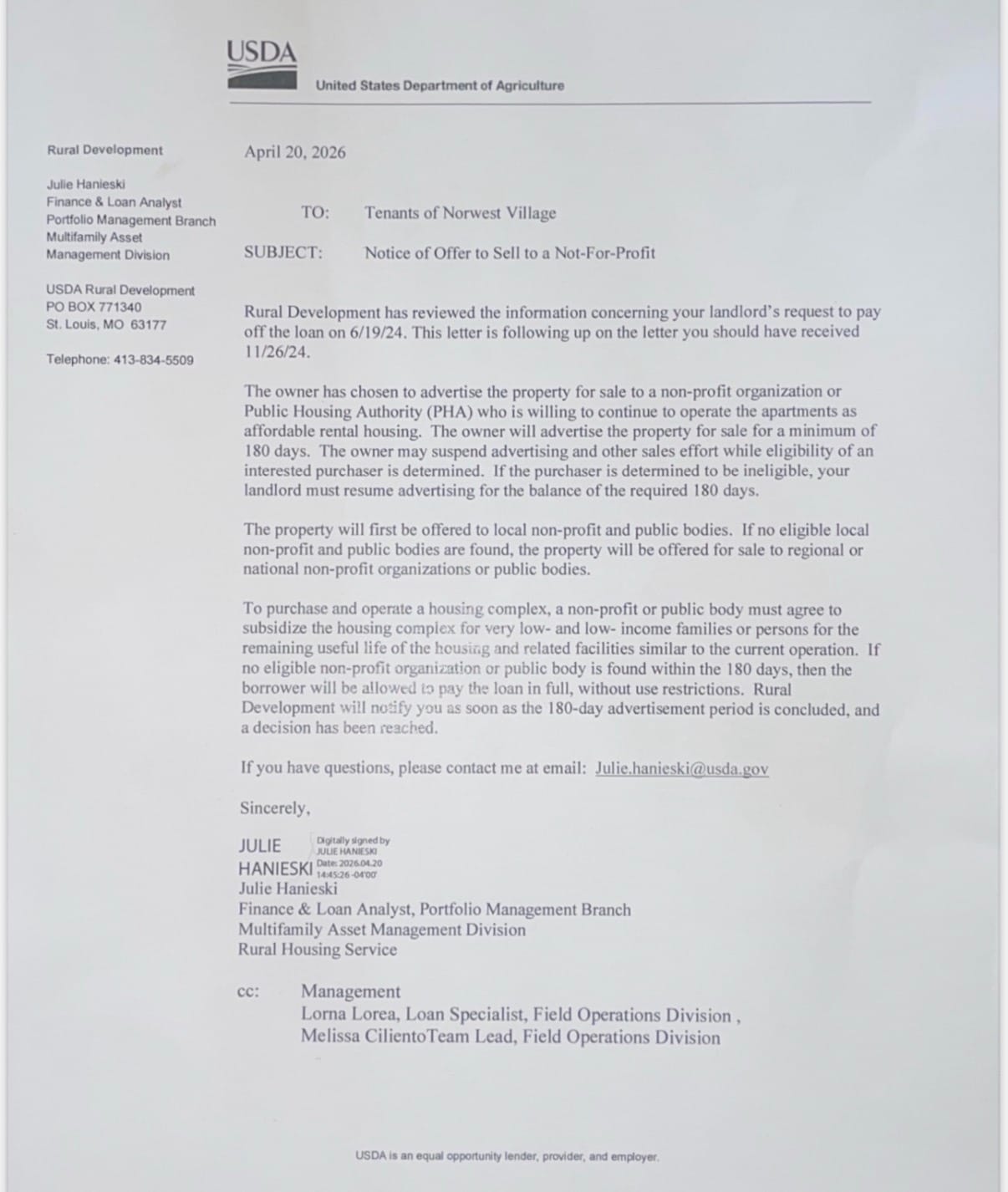
When the Beacon contacted Hanieski about the Bishop Park and Norwest Village properties and the phase-out of the Section 515 program, the agency declined to answer directly.
Instead, a USDA spokesperson responded on Hanieski’s behalf, writing that the department “does not own, operate or manage properties” and directed all questions to the property manager, Cascade Management. The response did not address the program’s phase-out, nor did it explain what safeguards—if any—exist for tenants if no non-profit buyer steps forward within the 180-day window.
The Beacon approached Cascade Management, Inc. for comment
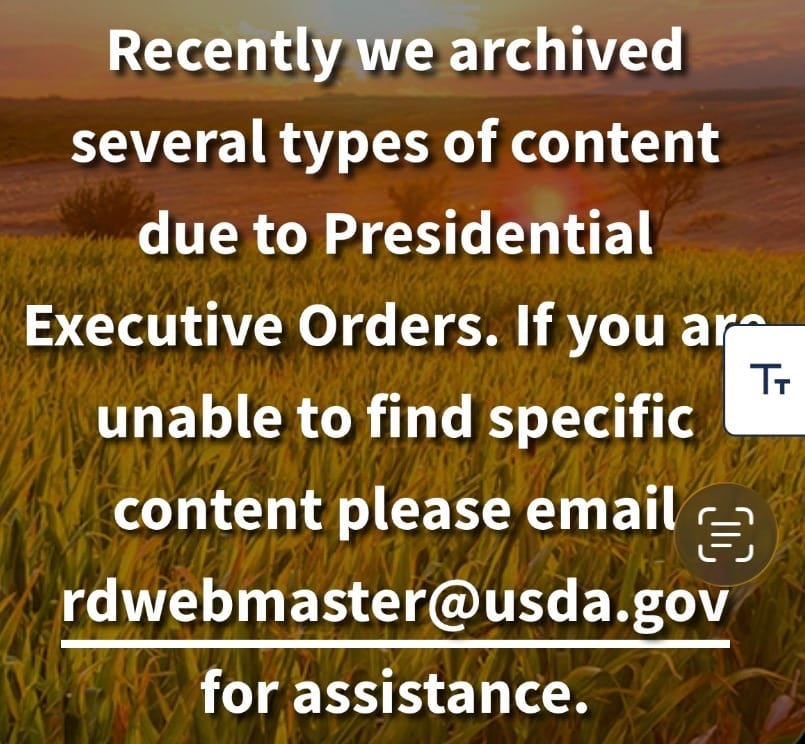
Furthermore, attempts to find information about the program’s future on the USDA’s official website lead to a dead end. When trying to access specific content about the 515 program ending, users are met with a notice stating, “Recently, we archived several types of content due to Presidential Executive Orders.” The lack of transparency has frustrated tenants and housing advocates alike.
The executive order that directly impacts multifamily housing is Executive Order 14151, Ending Radical and Government DEI Programs and Preferencing. The USDA states, “USDA Rural Development will not consider previous Administration DEIA-based 'key priorities' and discretionary points while scoring applications submitted under the following programs: Multifamily Housing Preservation and Revitalization Program and the Multifamily Housing Technical Assistance Grant Program.” DEIA stands for diversity, equality, inclusion and accessibility. Accessibility, for example, includes provisions required for senior housing under the Americans with Disabilities Act (ADA).
A gaping hole in the safety net
With the Section 515 program being phased out and no direct replacement funded, housing advocates warn of a coming crisis. Some members of Congress have taken notice. In a press release from the office of Representative Jim Costa (D-CA), lawmakers have demanded that the USDA reverse harmful changes to rural housing programs. However, the bipartisan Rural Housing Service Reform Act, which would modernize these programs, remains under consideration as of early 2026.
The National Low Income Housing Coalition notes that the average Section 515 resident pays roughly $325 per month—far below the national average market rate of $800-$1,100 for modest rural homes. Port Townsend’s averages are much higher, however.
If the Norwest Village and Bishop Park properties are sold to for-profit entities or converted to market rate, the loss of these specific subsidized units would further strain the already tight housing market in Port Townsend. The two properties have 60 apartments combined, housing primarily low-income senior citizens and families. When estimated by unit bedroom sizes, this could potentially displace as many as 100 Port Townsend residents.