Welcome to the Beacon’s Official 2026 Primary Voters’ Guide
An in-depth analysis of local candidates, propositions and measures



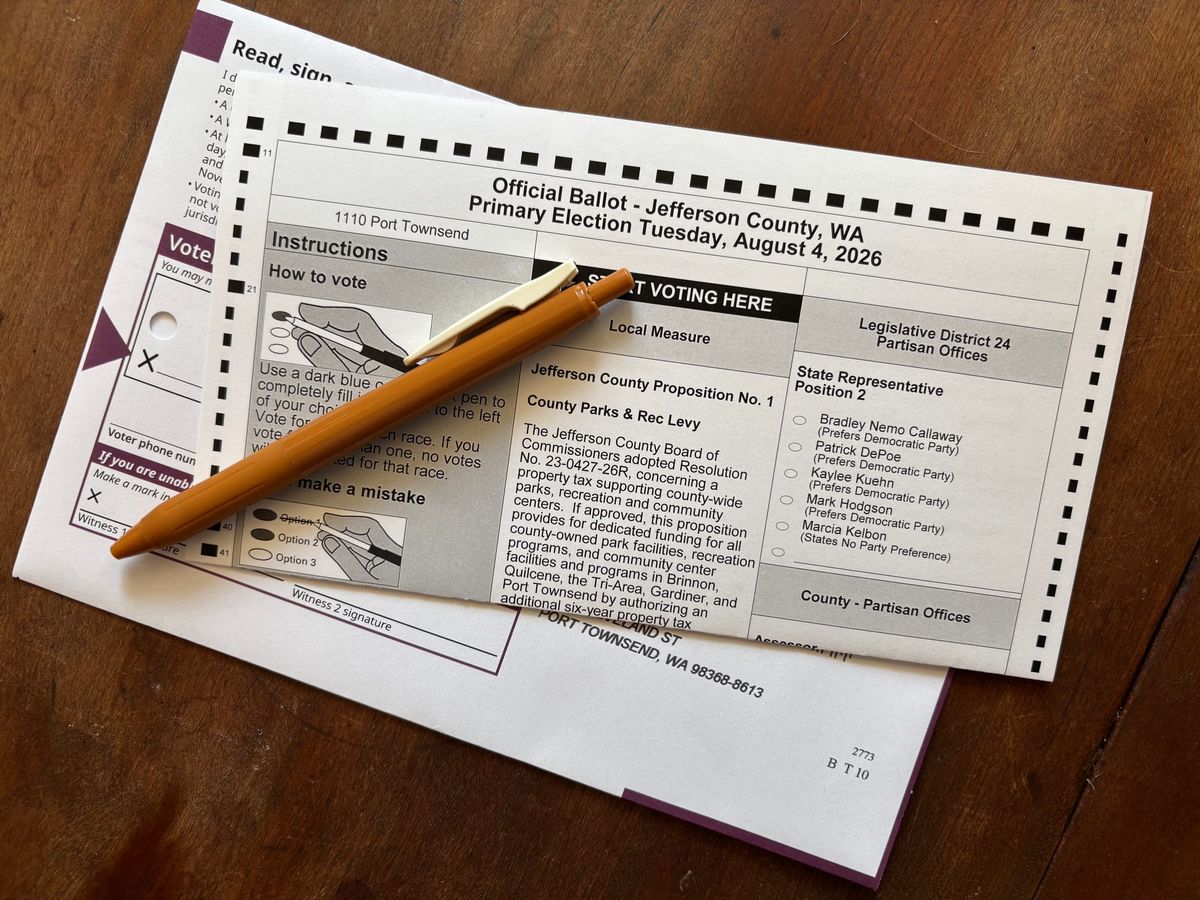
This is the first time we’ve created a voter’s guide from our own material, and it’s been an interesting experience. We started by taking your feedback on the issues you care about, and putting them to candidates running for local office. What you’ll find here are deep insights into how candidates approach the environment, housing and government transparency.
We chose to focus our time on local races, initiatives and measures. We’ll expand our coverage to include all the races on your November ballot. On the day of the election, we'll be reporting live on local results, with help covering national races from our friends at the AP.
You won't find any endorsements here; as a nonprofit, we've worked hard to fairly represent each candidates point of view, not the opinions of our editor or reporters.
For full transparency, we worked from a guide developed by Trusting News, but each of our reporters approached that guide slightly differently, which you’ll see reflected in the reporting below.
Initiatives
Jefferson County Proposition No. 1 County Parks & Rec Levy
Prepared by Rachael Nutting
This proposition is a six-year (2027-2032) levy lid lift that asks voters to approve a dedicated property tax to fund Jefferson County’s parks, recreation, community centers, 4-H Youth Development Program and Fairgrounds. These are "non-mandated" services, meaning the county is not legally required to provide them and has no dedicated funding source.
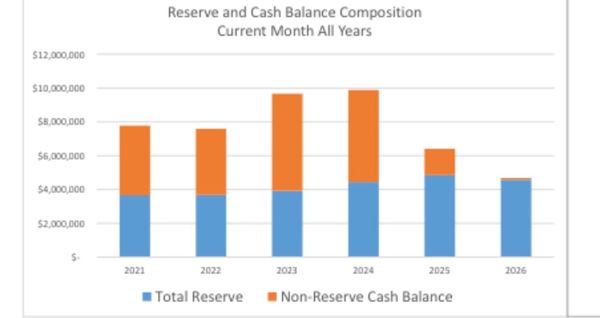
Context: The county faces a significant budget challenge. General Fund revenue has fallen short, partly due to a state law (Initiative 747) that caps annual property tax increases at 1%, which has not kept up with rising costs. To keep these popular services running through 2026, the county is using reserves and approving deficit spending from the General Fund. This measure asks voters to create a stable funding source to prevent major service cuts starting in 2027.
What happens if I vote “yes”
Additional Tax: A new property tax of $0.21 per $1,000 of assessed value will be collected for six years. For a $500,000 home, this costs about $8.75 per month. (Seniors, veterans and disabled persons may qualify for an exemption.)
Funding: Creates a dedicated revenue stream, expected to raise over $2.1 million annually for 2027 and approximately $13.3 million over six years.
Money will be allocated to support:
Jefferson County Parks and Recreation (73.63%): 23 parks, 19 miles of trails and recreation programs.
Community Centers (15.06%): Six community centers from Brinnon to Port Townsend.
WSU Extension 4-H (6.17%): Youth development programs.
Fairgrounds (5.14%): County Fairgrounds Operations.
Budget Relief: Frees up General Fund dollars to alleviate the overall deficit.
What happens if I vote “no”
No Tax Increase: Property taxes will not increase for this specific purpose.
Service Cuts & Closures: Without this new funding, parks, recreation, community centers, 4-H and Fairgrounds face immediate budget cuts and potential closures beginning in January 2027.
Alternative Funding: The county would need to find other revenue sources or make deeper cuts to other services to maintain funding for these programs, as the General Fund is already projected to have a deficit. Shellie Yarnell, the appointed member of the "Against" committee, argues that the county should focus on economic development to increase its tax base rather than relying on a levy lid lift.
Who has endorsed/spoken out against the prop/measure.
Supporting: Official "For" Committee consists of Devon Buckham and Nat Jacob.
"All In for Jefferson County Parks and Recreation Levy" Campaign: The group working to pass the measure.
Opposition: Official "Against" Committee consists of Shellie Yarnell. Her argument centers on the idea that the county should have managed its finances better and focused on economic development rather than raising taxes.
For more information on how candidates for County Commissioner District 3 see Prop 1, see that race below.
Legislative District 24 Partisan Offices
Washington State District 24 Position One Representative
Prepared by Scott France
Washington uses a top-two primary system in which all candidates are listed on the same ballot. The top two vote-getters, regardless of their partisan affiliations, advance to the general election. Consequently, it is possible that two candidates belonging to the same political party could win in a top-two primary and face off in the general election.
District 24 is one of the largest districts in the state, consisting of two House seats and one Senate seat. District 24's position one representative is Democrat Adam Bernbaum in his first term.
Adam Bernbaum
As Bernbaum’s first term winds down, he says that he emphasizes pragmatic policymaking, rural economic development, and hands-on legislative experience.
Bernbaum points to his background as a legislative assistant and policy analyst in criminal justice and behavioral health as key preparation for the office. He frames his approach as process-oriented and evidence-driven, stressing the importance of understanding how legislation actually moves—through stakeholder engagement, budget negotiations, and coalition-building. He also highlights a skepticism of surface-level policy arguments, saying his work has reinforced the need to “dig deep” to avoid inadvertently advancing special interests.
Noting the ideological differences between certain communities in this large district that includes Clallam, Grays Harbor and Jefferson counties, Bernbaum said that he thinks of his work not so much with such differences in mind, but rather through a lens of challenges and opportunities.
”What are the economic opportunities or the assets that each county has?” Bernbaum said. “What are the differences in desires for conservation? What are the types of aesthetic or cultural considerations that people seem to have?”
Bernbaum considers affordable housing to be one of the top priorities for the state. “I’m working to ensure we're having a very honest conversation about the building code. And about which parts of the code are efficient and are delivering meaningful value in terms of the energy efficiency of homes, and which parts are adding a lot of cost but not adding a whole lot of energy efficiency.
He cosponsored a bill to reduce barriers to building middle housing in unincorporated areas. Now law, it allows counties to permit middle housing of up to four units in limited areas of more intensive rural development (LAMIRDS) using septic systems instead of sewers.
Another bill Bernbaum co-sponsored allows children who turn three after August 31 of the school year to enroll in the Early Childhood Education and Assistance Program (ECEAP), provided there is available space and funding.
As a self-described policy nerd, Bernbaum works to understand each bill, and assess whether or not it benefits his district and its citizens, as well as the state. So he has been disillusioned in observing during his first term was that many legislators did not read or understand the bills on which they voted.
Endorsements
Planned Parenthood Alliance Advocates, the State Building and Construction Trades Council, the Washington State Labor Council, and many other unions, organizations and institutions.
Donors
Donors who contributed $2,400 include Hospitals for Healthy Future PAC, IUPAT Political Action Together Legislative Education Committee, the Jackson Legacy Fund, the Jamestown S'Kallam Tribe, The Boeing Company PAC, The Confederated Tribes of the Colville Reservation, USAA, and the Washington State Auto Dealers PAC.
He also received notable donations of $1,200 from Rayonier, Weyerhaeuser, Phillips 66 Company, and T-Mobile.
Ted Bowen
Ted Bowen is running as an independent and is not accepting donations to his campaign. His candidacy website states, “If you would like to help, I encourage you to support your local church or community outreach.”
Bowen has spent much of the past two years doing ministry on the streets all over Washington state and the 24th District.
“I’ve had hundreds of conversations about how we get you off the streets and hearing also about their traumas,” Bowen said. I have officiated multiple funerals due to fentanyl overdose, and people I have met in the streets have passed away, one day here, the next day gone. When you're officiating funerals and look at the person, kids in the front row, and hurting family members, it gets you fired up to fight for a solution.”
Homelessness and drug problems are Bowen’s top priorities. “I want to increase funding for our first responders and courts,” Bowen said
“I believe making possession of fentanyl a felony with a chance to lose that felony through drug court or mental health courts, depending on assessments and compliance with wrap-around services, is the way forward.”
Bowen’s placement of his faith as a prominent element of his campaign and potentially his approach to lawmaking, has attracted attention. “Any criticism I have been getting is about my openness about my faith and their concerns of mixing faith/religion and politics, which is usually assumptions or accusatory,” Bowen said.
Endorsements
None listed
Donors
None accepted
Aiden Hamilton
Aiden Hamilton, running as a Republican, is notable in this race for his age. He’s 18. Hamilton believes that his experience living through two years of the pandemic as a student gives him a unique perspective that other legislators don’t have.
“If elected, I'd be the first and the only legislator who could say that they know what it's like to lose two years of my education to a pandemic,” Hamilton said.
“The key priorities that I hold are education, taxation, and housing affordability.”
Hamilton believes “that housing regulations that don’t give a good bank for their buck,” ought to be rescinded to pave the way for more affordable housing, primarily, single-family homes.
“Families want single-family homes with a house in a yard and a picket fence, not a triplex around other families,” Hamilton said.
On taxation, Hamilton said, “I do not want to cut current levels of spending, but I want to slow down our spending so the economy can catch up.”
He says that Democrats want higher taxes in order to pay for programs that people don’t want to cut. Hamilton disagrees with this approach, and wants to curb spending.
“We need to recognize that there is a point where we are now asking too much of the people in so much as, you know, a tax burden. And so the average person, they're hurting a lot.”
Endorsements
Clallam County Republican Party, retired Clallam County Commissioner Jim McEntire, retired School Board Director Shona Davis, retired Clallam County Charter Review Commissioner Cathy Walde and retired Republican Jefferson County Chairwoman Jodi Wilki.
Donors
Hamilton’s top three donors are Mary Edam Jennie of Port Angeles ($1,800), Robert Smith of Port Angeles ($600) and Thomas McCurdy of Port Angeles ($600).
Eric Pratt
Eric Pratt is running as a Republican. He said that he is seeking to serve for his kids. Pratt grew up in Port Townsend, but fears that his children won’t be able to afford to live here as adults. Pratt manages sports team field installations around the country.
“A lot of people I’ve talked to in Clallam and Grays Harbor counties also have that same sense of doubt that their families will be able to thrive in the future,” Pratt said.
On housing, Pratt points out that permit processing times across the counties are too long. “While that may be a county issue, I think the state needs to come up with some better ways to support local builders and their ability to keep costs low, and keep permitting costs low,” he said.
Pratt said that Washington state’s adoption of the Growth Management Act (GMA) in 1990, designed to curb urban sprawl, preserve natural resource lands, and protect environmentally critical areas, should be reviewed.
“We’ve got new technologies on board, understanding the sensitive areas, understanding how land is used, how better to use the land. I think we can do better with the GMA in today's world,” he said.
Pratt believes that the timber industry in the region remains a viable, economic force, while acknowledging that “clear cutting has huge environmental impacts. There's still a market for those similar products. I don't know if we can do better there, but maintaining the technological understanding of what we do, what the impacts are I guess, would be important.”
A focus of Pratt’s concern about affordability for families is that “the state not levy additional taxes until we can rein in budget problems.”
Endorsements
None listed
Donors
Pratt’s top three donors are Jefferson County Republican Central Party ($1,200), Ron Micjan of Brinnon ($535.29) and Dave Morris of Port Ludlow ($535.29)
Washington State District 24 Position Two Representative
Prepared by Nhatt Nichols
Washington uses a top-two primary system in which all candidates are listed on the same ballot. The top two vote-getters, regardless of their partisan affiliations, advance to the general election. Consequently, it is possible that two candidates belonging to the same political party could win in a top-two primary and face off in the general election.
District 24 is one of the largest districts in the state, consisting of two House seats and one Senate seat. The district 24 position two representative was Democrat Steve Tharinger, who is not seeking reelection.
Bradley Nemo Callaway
What is the candidate's educational and professional background?
Bradley Nemo Callaway is the outreach lead and co-chair for Indivisible Port Angeles and a member of the North Olympic Democratic Socialists of America (DSA), where they are also the representative to the the Washington State Socialist and Office Committee, a DSA body that gives recommendations for what the legislature is doing at the state level.
Callaway is also a graduate of Port Townsend High School, Peninsula College, and is a former Eagle Scout. They are also a soccer coach and referee.
Do you believe climate change and environmental protection are immediate priorities? What specific county-level action would you take to protect open spaces, water quality, and air?
Environmental protection is one of my biggest passions. One of my favorite fun facts is that I have hiked every single mile of trail in the Olympic National Park.
When I look at the environmental situation here in Washington State, we have a pretty fragile ecosystem. We rely on snowpack that falls at 31 degrees. So if it doesn't go to 31 degrees, we don't get our snowpack. We get rain, we get flooding, and we don't get snow, so we don't get water in August and September, and while there's not much we can do like in the global scale of things, what we can do as a State is to focus on doing our part for the environment.
I think that our state can not only reach net zero carbon; I think we can do negative carbon and sell excess carbon credits on the market. We can grow our old growth forests for carbon capture.
We had a great project over in Port Angeles pretty recently where they were doing carbon capture work in the bay making the water more basic, so it would pull the acidic CO2 out of the atmosphere and into the water. It was quite effective, and then you know they finished up their experiment, and I don't think they're operating right now. Experiments like that, and then the research and development that goes along with it is just something we need to invest in as a state, and that can provide not just our own part of bringing down our own carbon emissions as a state.
In addition to that, being environmentally clean, reducing air and sound pollution, getting people out of cars and into buses and onto their bicycles and feet will reduce all of the other health hazards.
The thing I always say about pollution is that even if you don't care about climate change, even if you think, oh, we're just one state, we can't solve the worldwide climate change problem, the local effects of being environmentally friendly are worth it on their own, even if we can't fix the climate, because we have that increase in local health outcomes. We can have that better air; we have those healthier populations.
Do you agree we're in a housing crisis? Please describe a specific, actionable policy you support.
We have a local organization called the Peninsula Housing Authority. It is a government-operated organization, and it exists to build and help subsidize housing needs for people that don't have what they need in terms of income to buy their own housing.
One of the things DSA is looking at is to create a state-level authority that will be in charge of things like the Peninsula Housing Authority and will help establish them in other counties, making sure that housing production is prioritized. It could even be the developer that works with the contractors to build housing. That way you are looking for the housing that an area needs and not the housing that is profitable for the area.
I would rather the state just directly build, own and operate them, or the state can build them and then sell them at cost price to a tenants' association or to a homeowners association.
We want nonprofit housing construction and ownership that is funded by the state directly and ensures that everyone that needs a house can have a house without trying to play nice with the developers and the profit margins.
What are your opinions about government transparency? How are you going to keep the public informed and people aware of the work that you're doing?
Yeah. So this is actually something that came out of our first couple sessions of the Socialists in Office Committee (SIOC) is that we keep an internal spreadsheet for every time we do a bill analysis, and they say, "Hey, I looked at this bill. Here's the bill number. Here is my analysis of why the bill is good or bad. Here's my recommendation for a vote yes or no,” right? And that's a system that I fully intend to steal entirely, and I will maintain it'll be a Google spreadsheet so everyone can just see it so it's on the internet, and I will list every bill that I'm going to be voting on, whether or not I'm going to be voting yes or no, the analysis of why, and then I'll also be putting in the organizational recommendations that I've recieved.
So if the DSA says yes, I'll say “DSA yes.” Maybe Indivisible says no. Maybe the trade union wants it, maybe the city council wants it, so I can say these are the people pushing for it, these are the people pushing against it. This is how I intend to vote, and this is why I intend to vote, and we can have that all readily accessible.
There is an organization called Count Us Too that is working on deaggregating government service data. Right now, if you go somewhere like the library, they will have government service data that says, "Hey, we served 10,000 people last week,” but it just says we served 10,000 people, you can’t look deeper into those statistics because it’s all aggregated data.
You could say, "Hey, 99% of the population we served were white women over 50. So, what are we doing to help for literacy for people that aren't white women over 50?” What do we need to target to get this literature to these other communities?” I have no idea what the library service is like. That's just an example, but the idea is to deaggregate this data so that we can look around and say, "Oh, we have service gaps in these places, because when the service data doesn't mesh with the overall demographics of the area, these are underserved populations.”
Endorsements
North Olympic, Wash., Democratic Socialists of America (DSA)
Donors
No donors
Patrick DePoe
What is the candidate's educational and professional background?
Patrick DePoe is a former commercial fisherman, union member, healthcare worker and wildfire first responder. In his role on Makah Tribal Council as Vice Chairman, DePoe co-chaired the Natural Resources Subcommittee of the Bureau of Indian Affairs Tribal-Interior Budget Council, represented the Makah Tribe on the Pacific Fishery Management Council, served as Treasurer for the Northwest Indian Fish Commission, served on the Low-carbon Energy Siting Study Advisory Board, co-chaired Washington State’s Environmental Justice Council and chaired the Natural Resources Subcommittee or the National Congress of American Indians.
DePoe currently serves as the Executive Director of the Association of Washington Tribes and he was previously an executive team leader for the Washington State Department of Natural Resources.
He earned his bachelor's degree from the University of Washington in 2005.
Do you believe climate change and environmental protection are immediate priorities? What specific county-level action would you take to protect open spaces, water quality, and air?
I am a Washington Conservation Action Board member, and one of the largest environmental organizations in Washington State. I was the treasurer of the Northwest Indian Fish Commission. I was the chairman of the Natural Resources Committee for the National Congress of American Indians. I was appointed by Insley to his Clean Energy Advisory Council. I was the founding chair of the Environmental Justice Council, the Washington State Environmental Justice Council, also appointed by Insley.
When it comes to environmental protections, where I'm from in Neah Bay the cultural relation and salmon recovery means so much to me in a sense that it's not just important for us right now, but it's important for us to protect for our future generations. It's important for what really makes this Olympic Peninsula so beautiful.
I can continue working with environmental organizations. I can continue outreach if stronger environmental protections are needed, be there for those conversations, be there to help champion those issues. I can work with our local folks that are doing this work and make sure that I'm up to date and understand those partnerships for us to be able to make changes that need to be made.
At the Department of Natural Resources, I was the director of Tribal affairs. I worked closely with our tribal nations in that role, for the protections that they were looking for. When I was at the Northwest Indian Fish Commission as treasurer of the executive board, we did a lot of work in salmon recovery, a lot of work around hypoxic events (PSP). When it comes to our shellfish, I can work directly with NOAH on improving some of their consultation framework. This is all based on making sure that we're doing the necessary things right now, so we're protecting those resources for our future generations.
Do you agree we're in a housing crisis? Please describe a specific, actionable policy you support.
I would say that my experience in permitting is very important to this conversation. My understanding from working with our county commissioners, our city council members, is that infill that needs to take place. Our understanding is that these permits can sometimes take 18 months just to get construction started. These are things that we can work on streamlining to get new construction started.
Also, it’s important to understand the other issues that are at play. For example, you have a levee project in Grays Harbor to help with flooding. If we fix this issue, flood insurance goes down. Now it's more appealing for developers to actually build in this area, and we can actually get more houses up here. It's about understanding some of the community trust that goes through commerce, and how that funds affordable housing.
It's really those partnerships in the legislature. I think folks that have already been working on these issues, having those conversations with some of our local electeds on infill housing. Let's talk to commissioners about what houses are empty right now. How do we get people into those houses? Let's look at new development sites. Let's look at the permitting that we have to go through in the legislature to see if we can speed this process up to get more houses built.
What are your opinions about government transparency? How are you going to keep the public informed and people aware of the work that you're doing?
When I'm talking about that from a personal perspective, it's being present. It's having conversations and building relationships with the communities. Having regular scheduled town halls, regular scheduled options and appointments for people to sit down and have coffee with me.
You prioritize your district by understanding your district. You understand your district by having regular meetings with your district, regular meetings with electors in your district, regular meetings with your community in your district, and then you make sure that any decision that you have is transparent.
Those can be reports, those can be conversations, those can be informal meetings. But, if we're talking about legislation, then let's work on legislation that makes sure everybody knows how decisions are made. Let's work on making information easier to access, where you don't have to go through these long programs just to be able to understand how these votes happen. I say that because I've been involved in state government with FOIA requests, and I can see how some of those can be cumbersome.
Endorsements
Washington Attorney General Nick Brown, Congresswoman for the 6th Congressional District Emily Randall, American Federation of Teachers, Washington Conservation Action and many others, including several labor unions.
Donors
DePoe’s top donors, who have given $2,400 each, are the Jamestown S’klallam Tribe, Tulalip Tribes of Washington, Wa'atch, INC, Stillaguamish Tribe of Indians, Snoqualmie Tribe, Linda Cornfield of Seattle, David Cornfield of Seattle, Quileute Tribal Trust Fund, Electrical Workers 46 PAC, Jonathan Kauffman of Seattle, Kalispel Tribal Economic Authority, Mary Kauffman of Seattle, WA Indian Gaming Association / Campaign for Tribal Self-Reliance, and the Yakama Nation.
Kaylee Kuehn
What is the candidate's educational and professional background?
Kaylee Kuehn grew up in Sequim, where both of her parents spent their careers teaching at Sequim High School. She earned her bachelor's degree in Liberal Arts with academic focuses in politics and social psychology at The Evergreen State College where she also did a legislative internship. While earning her master's degree in Secondary Education from Grand Canyon University, she returned to the legislature as an aide in the State Senate where she helped constituents navigate state government, tracked legislation, and worked with policy stakeholders, labor organizations and community advocates.
Kuehn taught math, history and government, and was a girls wrestling coach and Speech and Debate advisor.
She now works independently in communications, as an advocate for the Association of Western Pulp and Paper Workers union, and she works with the nonprofit The Building Bridges Project to help teach civility and civic engagement to teens. Kuehn is passionate about protecting workers' rights, promoting civic engagement, and modeling respectful dialogue for young people.
How will you use your role in government to help protect the environment?
The Olympic Peninsula has always been home for me. I grew up going to Lake Crescent on summer break, hiking Storm King with friends, and going crabbing at Cline Spit with my grandpa. I care deeply about protecting the place that my daughter will also grow up calling home. My generation has inherited a climate crisis that we didn't create, and I'm worried about what we'll leave behind for her generation if we don't act now.
We have a responsibility to protect our forests, rivers, shorelines, wildlife, and water while reducing the pollution that's driving climate change. One of the most inspiring examples of what's possible is the Elwha River. Once the dams were removed, we watched salmon return, native plants recover, and an entire ecosystem begin to heal. This is a powerful reminder that when we make the right choices, nature has an incredible ability to recover! I want Washington to continue making meaningful investments in protecting our environment, but I also want to make sure that efforts like the Climate Commitment Act are having real results. We need to ensure the CCA dollars are being used for their intended purposes: reducing greenhouse gas emissions, investing in clean energy and transportation, supporting climate resilience, and other efforts that protect our environment and address climate change.
If elected, I will work diligently to ensure we are budgeting well and utilizing our tax dollars for projects that wield results. Washington State has the third highest gas tax in the country, but we also rank third in environmental health. We can continue being a leader on environmental policy to protect our communities, our economy, and the future we're leaving to the next generation.
How will you use your role in government to provide solutions for our housing crisis?
I have knocked on thousands of doors in Jefferson County alone, and housing is by far the issue I hear about most. We need more workforce housing, and that includes both affordable housing and the missing middle.
My husband and I rent an ADU from my family because of the lack of affordable housing. Too many nurses, teachers, retail workers, and young families are being priced out or forced to commute long distances just to get to work. I also know this isn't as simple as saying, "build more housing." People care deeply about the character of the community, and I do too. We need to be thoughtful about where and how we grow. But we also can't ignore the fact that our communities only work if the people who keep them running can actually afford to live there.
To me, housing is connected to everything else. If elected, I would join Representative Bernbaum in the permit reform legislation he's been building. The permitting process is cumbersome, duplicative, and expensive. Streamlining this process is a real step the legislature can take to address the housing crisis. I would also continue the important work Representative Steve Tharinger has done securing state funding for water and sewer infrastructure, like the investments in Port Hadlock, because communities can't build the housing they need without the infrastructure to support it.
There isn't one perfect solution to housing, and I don't pretend to have all the answers. What I can promise is that I'll listen, bring people together, and work with local leaders to find balanced solutions that actually work.
How will you use your role in government to ensure the public has access to information?
Working in the State Senate gave me a perspective that most people don't get. I saw firsthand that the legislature isn't some distant institution. It's made up of real people making difficult decisions that affect people across our state.
I also had the privilege of witnessing legislators who led with integrity, compassion, and a genuine commitment to serving the people they represented. That experience showed me what good leadership looks like, and it gave me confidence that I can bring that same approach to this role. In many ways, I think being an effective legislator is a lot like being an educator.
You have to do your homework, dig into the facts, analyze information from many different perspectives, disseminate information to folks, and make thoughtful decisions even when there isn't an easy answer. Most importantly, you have to listen. As a teacher, I listened to my students and their families because the best decisions came from understanding what they needed. As your state representative, I'll bring that same mindset: I'll do the work, I'll listen before I speak, and I'll always remember that every vote I take affects real people back home.
Endorsements
WA State Superintendent of Public Instruction Chris Reykdal, Jefferson County Commissioner Heidi Eisenhouer, Port Townsend Mayor Amy Howard, plus other organizations, individuals and associations.
Donors
Kuen’s top donors, who have given $2,400 each, are the Future Democrats PAC, Cyndy Bratz of Port Townsend and Assistant Attorney General in the Washington State Office of the Attorney General Matt Kuehn.
Mark Hodgson
What is the candidate's educational and professional background?
Mark Hodgson served in the U.S. Navy from 1998 to 2005. He graduated from Port Angeles High School and attended Peninsula College. His career experience includes working as a law enforcement officer in Port Angeles.
He currently sits on the Port Angeles City Council, and was a supporter of accepting the governor's grant, which will add four more law enforcement officers to the city of Port Angeles over the next year.
Do you believe climate change and environmental protection are immediate priorities? What specific county-level action would you take to protect open spaces, water quality, and air?
We moved out here in 1990. My dad moved us out here for a slower pace of life. My dad wanted to get closer to family, but closer to the environment as well. He was a copy machine repairman. My mom was a homemaker. She ran our house and helped volunteer as a coach in the community. Between a slower pace of life and wanting to get in touch with the environment more, we made that move, and it was something that my dad was always really proud of. He would take his fishing pole to work, especially on days where he would get a call to fix a copy machine in Forks, and then he could hit up the rivers along the way.
I think that it's extremely incumbent upon elected officials to recognize the reality and the effects of climate change. Now, I certainly have gone all over the district in this campaign and in my personal time, and we see firsthand the effects of climate change right now, whether that's in water shortages, a lack of snowpack, or the increasing record temperatures that we have.
I'll point to the Climate Commitment Act as the one of the most recent examples of what legislatures can do. Fortunately, I am in a place of financial privilege in that I'm middle class, and I was able to remodel my house, get rid of baseboards, and put in a heat pump. What that means is that we have AC in the summer, something that was never on the table or thought of when I was growing up, and with these increased temperatures, what we're seeing is increased discomfort among our residents. And the Climate Commitment Act helps with outfitting homes with heat pumps to have long-lasting climate resiliency for individuals. It's a big deal, and I think it needs to be said over and over again that environmental issues are paramount.
One thing that I think is unique about rural environments, and I've lived here since 1990. I left for my military enlistment, and after that, I got hired with a law enforcement agency and returned to the peninsula. Something that I've noticed is that whatever issue the nation or the state is facing, rural districts are often hit harder, feel those issues much more granularly than larger populations areas; and that's true with environmental issues. That's true with pandemics like COVID, and that's true with economic instability or housing.
I think that the Climate Connection Act is a good start. It can certainly be fine tuned as we move forward, but balancing our timber harvest with protecting our environment and protecting our watersheds, as well as leaving enough forest to adequately capture carbon. I think that's going to be the big one of the big things that we're looking at. Timber sales are extremely important to rural districts and the education system, but houses aren't getting built out of anything new anytime soon.
We need to continue to prioritize sustainable forestry, and serve in a position where we can be a leader to the country in how to sustainably manage our forests, while still being true to our environmental values.
Do you agree we're in a housing crisis? Please describe a specific, actionable policy you support.
I'm past president for Clallam County Habitat for Humanity, and I've advocated in Clallam County and at the federal level with our congressional delegation policies that will help make housing more affordable.
We need to recognize that we're in a housing deficit right now, and you know the crisis is big when you've got a bipartisan group of lawmakers that are both sounding the alarm, so I think that what we have to do is prioritize legislation that incentivizes more houses getting built, reduces barriers to those houses getting built, and look at some of our legislation that makes it cost prohibitive to make the “starter home” right now, which is essentially non-existent.
I think we can look at some of those regulations and make them incentives rather than bright line rules, so that we could bring that cost down. Representative Bernbaum worked with legislation to help with permitting reform. I know it is high on the governor's priority list to continue to do so. Every time something is held up in permitting, rules change. So I think a stability within what building codes are being operated under is important. But also, while things get caught up in permitting, especially in this economic environment, the prices for goods, services, and transportation go up. So, that predictability and streamlining in permitting is a big deal.
I mentioned my heat pump earlier, and I'm grateful for that. And I can tell you, my mom, who lives with me, is also grateful for that. But baseboards kept us warm, and we can't say that we need more housing while making it cost prohibitive to do so, but we can say we need more housing and incentivize environmental benefits rather than add undue costs to housing.
What are your opinions about government transparency? How are you going to keep the public informed and people aware of the work that you're doing?
Show up, and listen. Be available. I know that there has been some legislation considered to limit what's publicly disclosable from legislators, and I know that our senator Mike Chapman opposes that legislation. As do I. I think the big thing is that being a citizen legislator means that you live, are integrated, work, play, raise your family in the same legislative environment that you expect everybody else to thrive from.
It's important that while you hold the title of representative or or state senator, that you are constantly making yourself available to hear from your constituents that both agree with you and disagree with you because that's that's the whole job.
Endorsements
Governor Bob Ferguson, Clallam County Commissioner Mike French, Clallam County Commissioner Mark Ozias, Jefferson County Sheriff Andy Pernsteiner, and other organizations, politicians, unions and individuals
Donors
Chris Noble from Port Angeles donated $1,200 and the Washington State Democratic Central Committee donated $800. The rest of his donations were $500 or under, or in-kind donations.
Marcia Kelbon
What is the candidate's educational and professional background?
Marcia Kelbon went to grad school at the University of Washington, then went to work for the Navy in a civilian capacity as an engineer. She returned to UW to go to law school and became a patent attorney.
Kelbon worked for a biotech startup for 19 years as their general counsel.
Though Kelbon has run for office in the past as a Republican, she said that becoming an independent wasn’t a huge change as she grew up as a Democrat and her first political action was writing a check to Hillary Clinton.
While running as a Republican, she heard frustration over the national divide and that divisiveness, which inspired her to step away from party politics and focus on state and local issues, to see if it’s possible to bridge some of that gap.
Do you believe climate change and environmental protection are immediate priorities? What specific county-level action would you take to protect open spaces, water quality, and air?
I'm all about practicality and effectiveness, as opposed to things that sound great but don't necessarily do what they're intended to do or hoping to do.
We have an electrical grid that is incredibly overloaded, and we desperately need to find some additional energy sources that are clean. It has to be a progress. It's right now we're sort of accelerating things with the Climate Commitment Act, and according to Department of Ecology data, I don't know that we've been tremendously successful in reducing carbon with that.
I think what we need to do is accelerate the development of alternate energy sources. One of them that I am kind of reluctantly excited about, and I don't know that it makes sense for us right here on the peninsula, is small modular nuclear reactors. And when I say reluctant, I grew up in Pennsylvania, and Three Mile Island looms in my head as to the risks of nuclear. I am told that these smaller modular things are much safer, where if all the controls fail, they shut themselves down. If you had an area that was seismically appropriate, that could be a solution.
I'm looking at geothermal. I'm looking at tidal. I think those are all things that we need to be pursuing, because we had such a clean energy source here with hydro for most of the industrialized years in Washington, but obviously we've done some terrible things with our rivers, and we're trying to reverse that. So it's given us a need to bring up other energy sources.
AI data centers are kind of a prime, I don't know if I'd call them a violator because they're just there yet, but they’re going to be. I want to regulate AI data centers. Right now, I look at AI data centers as drawing a lot of power, heating the local area, using an awful lot of water and causing a lot of noise pollution. So, I'm not a fan of AI data centers. I know AI is here. I know it's coming. I know it needs to be regulated. That sort of gets to be another aspect of the environment: what are we adapting to new technologies that might make things worse, and how do we rein those in?
I'll hit one other area, which is timber. There needs to be a balancing act on the peninsula. I don't want to do anything that impacts our old growth, and near old growth. I don't want to do anything that impacts, you know, truly roadless wilderness that is not developed. Those are all important to protect.
I note the wildfire risks of some of our forests that have not been well managed. The Bear Gulch fire, for instance, the carbon that was released from that fire. By my computation, using the figures I can find online, that fire released about 10 times as much carbon as we saved under the Climate Commitment Act. So that tells me we still have to manage some of the stuff because it's that balance: protection, economy, and management for wildfire. I think those are all important.
Do you agree we're in a housing crisis? Please describe a specific, actionable policy you support.
It's not a one-dimensional solution. Part of it is regulation, and I think the Growth Management Act needs tweaking. It's done a tremendous job of maintaining open space, particularly in Jefferson County, which I think with our implementation here is more thorough than Clallam, and of course it wasn't really implemented at all in Grays Harbor.
But the flip side is we have some suburban sprawl that's that's resulted because we have a five-acre minimum lot size, therefore you have larger chunks that have been busted up into five acres, perhaps even more so than if you enabled people at certain locations to have you know quarter acre or half acre lots, and when I say that those certain locations for me are the local area of more intense rural development. That is our historic village centers and our historic crossroads. Working from the south up north, it's Brennan, Quilcene, Chimicum and Irondale to the extent that’s not in the Hadlock urban growth area.
If we could have smaller lots there, including multi housing units on those lots, you have much less costly builds to do there. I'd like to permit that. I also want to take a look at some of the energy codes, and again, there's a balance here, right? So the most recent Energy Code, we've built a couple of off-grid solar-powered houses, and the difference in cost from a build that we did in 2019 versus one we did for our daughter in 2024 was pretty significant, and some of that was just because costs went up post COVID, including timber. But the energy, the most recent energy codes added, I think somewhere's around $3-5,000, a build.
Some efficiencies are great, but it has a lot of costs. So where's the balance there? We need to regulate and also take a look at some of these. There are statutes that require if you put more than 50% of the value in a building, you need to bring everything up to code, and some of that is code that really matters, like safety code. But some of it is, you know, floodplain elevation, electrical EV charging stations, for instance, septic and whatnot, and it's not it's not a matter of like does your current septic work? Is it safe? Is it working? Or is it just that it's out of the code?
So you have people that end up not able to convert some older units into multifamily housing. There was an example of that in Quilcene because that investment would be outside of their reach. You have homes and buildings that are left to degrade as opposed to being kept up because of those requirements. There's stuff that needs to be looked at for sensibility, to make sure you're not worsening a housing crisis without meaningful results out of it.
The other side of the housing equation is earnings. We don't have much in the way of living wage jobs here, and if you're in an area with a mean income of $60,000, how does that position you to buy anything? How does that position you to even cover rent? We need living wage job growth, and that's kind of where I see my expertise from having helped so many businesses start.
I want to work on amending that Growth Management Act, so we can get those smaller lots and the ability to to build multifamily housing, and also to have more businesses there than might otherwise be allowed, which is part of the job growth. That's one piece I want to do.
The other piece is a different tack on trying to solve our homelessness, more specifically the addiction and mental health aspects of that crisis. That isn't the sole driver of homelessness, but it seems to be a majority driver. There are economic factors, there are life factors, there's domestic violence. There's a lot of other things that feed into that, but from what I've observed and read for a majority of individuals that are completely unsheltered, as opposed to the homeless that are couch surfing, it's addiction and mental illness. How do we actually address that? And I think there are better ways to do it. And I want to work on that. That's one of the things that I think bipartisan people can get behind and get it done.
What are your opinions about government transparency? How are you going to keep the public informed and people aware of the work that you're doing?
I don't support the legislative privilege that some legislators have asserted. You are the people's employee, and that privilege shouldn't exist at all. Anything you do in a public capacity should be fair game. That's the biggest piece.
I wrote a column every two weeks for a year and a half in the Leader, and kind of laid it out where I'm at on things. Career politicians are not necessarily always the most forthcoming, and I don't have any desire to be a career politician. I totally support transparency: the way things work, who funds them, what their conflicts are.
Endorsements
None listed
Donors
Kelbon’s top donors are $2,400 each from Darbury Novoselic and Krist Novoselic, and $1,500 from the Cascade Party of Washington
County - Partisan Offices
County Commissioner, District No. 3
Prepared by Rachael Nutting
The Jefferson County, Washington District 3 County Commissioner is an elected, full-time official who manages the county budget, makes policies and oversees public services. District 3 includes Port Ludlow, Chimacum, Quilcene, Brinnon and the west end of the county. These candidates will only be listed for District 3 voters on their ballots; the finalists will be on the county-wide ballot in November.
Christopher Hannon
What is the candidate's educational and professional background?
Hannon earned a degree in philosophy with a focus on ethics. He said that philosophy teaches critical thinking skills and how to approach complex issues from multiple angles, while ethics guided my interest in serving my community. He has been in community service work for 15 years—10 years in education as a preschool teacher and administering literacy grants through the YMCA for low-income families. For the last five years, he has worked in housing through OlyCAP, focusing first on youth homelessness and now managing both youth and adult programs.
Hannon has extensive experience managing large budgets, writing grant proposals, and navigating complex grant requirements.
He has not held office before.
Do you believe climate change and environmental protection are immediate priorities? What specific county-level action would you take to protect open spaces, water quality, and air?
This is a very high priority—not only to preserve the natural beauty I fell in love with, but also because challenges are coming. Eastern Washington is building more data centers drawing more power and water from our resources. Climate change will also increase migration to temperate areas like ours—we need to plan for that.
In the immediate term, while addressing housing, we must ensure we're not causing unforeseen environmental damage. We need to expand in appropriate places through infill rather than sprawl. Building intentionally to preserve what we have.
Do you agree we're in a housing crisis? Please describe a specific, actionable policy you support.
Yes. I agree with most principles in the city and county comprehensive plans. But there are oversights—neither plan really addresses our relationship with landlords.
In a small rural area without large developers, we need positive relationships with local landlords and incentive programs. Other counties have landlord incentive programs that don't cost much—like an insurance policy where the county maintains a fund to make landlords whole if tenants damage units or are truant. In exchange, landlords waive application fees and reduce income requirements (currently typically 3x rent, which is difficult for working-class people). This builds trust and makes housing available across income bands.
How do you balance new housing development with protecting our natural environment and rural character?
We need to focus on infill development rather than sprawl. I don't know anyone I've met who favors sprawl—we're all on the same page there. With the Port Hadlock sewer now complete, we should take advantage of that infrastructure. But we also need to revisit zoning restrictions that are cumbersome for developers, particularly rules about how close units can be to each other. We can't keep the same restrictions if we want infill to work.
Do you support making non-confidential county records easily accessible online? What is your stance on the Public Records Act?
I'm very supportive of transparency. My only concern is capacity issues. The county admin staff are overwhelmed with public records requests, which pulls them away from other duties. The county is in debt, we've let staff go, and I've heard rumblings it may be necessary again. That's reality—public access to information may be slowed due to capacity limitations.
If we could create an automated website where records get uploaded and pay people to maintain it, that would be ideal. But I'm not sure of the feasibility or specific rules around that.
How will you ensure your decisions are free from undue influence, and will you recuse yourself from votes where you have a financial or personal conflict?
Absolutely, I would recuse myself. I'm not a wealthy person—I don't own property or businesses—so conflicts of interest would be rare. My campaign is grassroots, predominantly small local donations. I'm not tied to any political party and I'm not even a dues-paying member of the Jefferson County Democrats. I don't have interest groups with leverage over me.
This year, there is only one county-wide proposition on the ballot, Proposition 1: Levy Lid Lift for Parks & Rec. Do you support this measure?
Yes, I support it. The amount we need to spend on parks and rec is far less than we'd spend on the consequences if we don't. It's a preventative measure—not just my opinion, law enforcement has told me the same: if kids have nowhere to go, they'll cause trouble. That's just what kids do when they're growing up with nothing to do.
Endorsements
Hannon does not have any endorsements
Donors
Hannon’s top donors are Colleen Friend of Los Angeles ($790), Richard Burns of Port Ludlow ($500), James Eustace of Bellflower, CA ($500), Daniel Endres of Littletown, PA ($500) and James Hannon of Santa Ynez, CA ($500).
Jean Ball
What is the candidate's educational and professional background?
Ball is a business owner with over twenty years of experience. She doesn’t have a university degree, and she said that she doesn’t think one would be helpful in this role.
She also said that she is the only candidate who has decades of community service experience.
Ball is a plumber specializing in irrigation who owns her business. She has experience in managing both her own budgets and other people's money and assets. Though she said that she hasn’t personally managed a $30 million budget, she has served on numerous boards and committees with significant budgets, assets, and fiduciary responsibilities.
Ball has served on the Critical Areas Review Task Force, the Northwest Watershed Institute board, focusing on salmon habitat restoration at the Dabob Bay Natural Area, and currently serves on a state public lands organization focused on trust land transfer—swapping out "dead assets" for high-value production timber land to benefit schools, libraries, fire departments and roads.
Ball has served as a precinct committee officer for 10 years.
Do you believe climate change and environmental protection are immediate priorities? What specific county-level action would you take to protect open spaces, water quality and air?
Critical. This isn't partisan; protecting the environment benefits all of us and future generations. Yes, a county commissioner has an important role in providing protections. I firmly support open spaces, public lands access and deliberate planning for the legacy we leave future generations.
We need to be deliberate in how we support these things and plan for the future. It's about providing opportunities for future generations to enjoy the quality of life we've had.
Do you agree we are in a housing crisis? Please describe a specific, actionable policy you support to address housing.
Oh, hell yeah. But "affordable housing" is a surface-level issue. We need to address infrastructure—sewer, water, electricity. All our infrastructure systems are fragile. We have snowpack decline, power supply issues, road maintenance problems, and sewer management shortages. Where will we get workers to build houses? Where will they live? Where will their children go to school? You cannot tease a single thread from the fiber without unraveling the whole fabric.
Land use code reform. Every day I hear from people who can't navigate the land use process—they don't understand timelines or costs. They jump through one hoop and realize the goalpost is further down the field. This is a regulatory failure. We need clear communication about expectations and a path forward. The solution is infrastructure provision plus efficiency in land-use codes.
How do you balance new housing with protecting our rural character?
Rural character isn’t an accident. It’s the result of thoughtful planning and good decisions. Jefferson County’s rural character is one of our greatest assets. If we lose that, we can’t get it back. The answer isn’t to stop growth. It’s to guide it to strengthen our communities instead of changing them beyond recognition. Growth should happen where infrastructure already exists or can be provided efficiently, not by sprawling into our farms, forests, and environmentally sensitive areas.
We should also be honest about the kind of housing we are talking about. Young families, working people, seniors, teachers, firefighters, and healthcare workers should be able to live here. That means encouraging the right housing in the right places while preserving the open spaces and rural communities that make Jefferson County special.
Do you support making non-confidential county records easily accessible online? What is your stance on the Public Records Act?
Yes. We own the records. They should be easily accessible and shouldn't take weeks to procure. They should be searchable online. The county website is burdensome; even after recent revamping, it hasn't improved enough. People need access to their government to find information and engage. Freedom of information is how people hold elected officials accountable.
How will you ensure decisions are free from undue influence, and will you recuse yourself from conflicts?
Of course. I don't get paid for my volunteer work; I get nothing but the satisfaction of helping people. I can't see any financial conflict. If there's a perceived bias, recusal is the best solution.
This year, there is only one county-wide proposition on the ballot, Proposition 1: Levy Lid Lift for Parks & Rec. Do you support this measure?
This one frustrates me. It seemed rushed, "hair on fire,” without giving voters time for a real conversation about alternatives. We should have considered liquidating underutilized county assets before asking taxpayers for more.
The county owns 320+ parcels. Some are underutilized. I've identified parcels that could be sold to developers—generating sale revenue, real estate excise taxes, property taxes, and permit fees while providing housing. That's a better way to fund these needs.
The county website says they'll go for approval again in six years, not that they'll look for alternatives; they're institutionalizing this tax.
Endorsements
Commissioner of Public Lands Dave Upthegrove, Senator Mike Chapman, Washington Education Association, Washington Conservation Action, Retired Sheriff Joe Nole & Current Sheriff Andy Pernsteiner, National Women's Political Caucus
Donors
Ball’s top donors are Tom Thiersch of Port Townsend($2,400), Ronald Winger of Port Townsend ($1,299.99), Karen Winger of Port Townsend ($1,200), Jill Holbert of Brinnon ($1,200), John Holbert of Brinnon ($1,200) and the Washington Education Association Political Action Committee ($1,200).
Anji Scalf
What is your educational and professional background, and how has it prepared you for the duties of a County Commissioner?
Anji Scalf is a third-generation Jefferson County resident with an undergraduate degree in environmental science. She has completed numerous post-graduate programs in business administration, organizational development, and diversity, equity, and inclusion.
She currently works with Washington State University coordinating the 4-H program. Scalf believes that her experience as a state employee managing a county budget and personnel is a strong parallel to county governance.
She also worked for the City of Port Townsend for over a decade (starting at age 14 as a lifeguard), led the Sequim-Dungeness Valley Chamber of Commerce through the pandemic, and worked with small businesses and tourism across the peninsula.
Scalf has managed small and medium-sized budgets—up to half a million dollars. Though she hasn't managed a program over $1 million yet, Scarf says that she has been meticulous throughout her career.
Scalf is running because she believes she is the right person to help the county with financial planning, due to her experience with nonprofit bookkeeping, government grants, and spending public dollars transparently.
She has held office as a precinct committee officer in Clallam County for the Democratic Party.
Do you believe climate change and environmental protection are immediate priorities for this office? If elected, what specific county-level action would you take to protect our open spaces, water quality, and air?
Yes. We're experiencing the vanguard of climate change—we just changed our hardiness zones, we're seeing hotter summers, more dramatic weather events, fires, rivers reclaiming land, and tides buffeting downtown Port Townsend.
We're not at a place where we can stop it—we can only respond. That requires infrastructure and emergency planning.
The county is already weaving climate resilience into every layer of government, and I'd continue and deepen that work. There are many state and federal funding opportunities around climate resilience.
My biggest concern is food insecurity—what happens when we're cut off from supply chains? Where will we get protein? We'll have veggies, but I'm concerned about protein sources. Great minds are working on this in our county, and I want to amplify that work and put it center-stage.
Do you agree that we are in a housing crisis? Please describe a specific, actionable policy you support to address it.
Yes—I've experienced it myself. When I moved home, there were six homes for sale, and only one was near my price point. I now spend 42% of my income on housing, which is beyond affordable, but I feel lucky to be secure. Even today, all three of our spouses work remotely or commute out of county—a common experience here. I want to advocate for families working hard to raise their kids here because this is a good place to raise children.
It's a two-pronged issue:
1. Supply: We need about 4,000 more homes for projected population growth, but we only build 200 homes per year. I'd support DCD to streamline permitting—like Port Angeles, where you can walk in and leave with a simple permit the same day, especially for ADUs and infill.
(Note: My father was director of community development when I was growing up. Our county has the largest ADUs possible in Washington—1,200 square feet—because they tried something innovative with the GMA.)
2. Access: 16% of our homes are vacant—many are vacation homes. That means we could house every unhoused person in our county. That's not right. We have great minds working on innovative solutions, and I'd support them.
I believe poverty is a policy choice, and I'm not pro that policy choice.
How do you balance the need for new housing development with the need to protect our natural environment and rural character?
I was born around the time the GMA was enacted. We have the map, we have comp plans—we've had multiple. The comp plan is a roadmap, and we need to use it.
During a grad school internship at DCD (not when my father was director—when David Goldsmith was), my job was to identify what pieces were in action, completed, or not started. I was surprised how many things we hadn't taken action on. These are documents our whole county has communicated around—public hearings, approved. Let's actually use our comp plan.
Do you support making non-confidential county records easily accessible online? What's your stance on the Public Records Act?
Yes. I'm the Facebook generation, I was in college when Facebook started, so I've lived my entire adult life with everything being known.
But transparency should go beyond just making records available—it should create understanding. At WSU Extension, we produce an annual impact report showing what we spent, outcomes, and what needs work. I'd like to see that across every county department so the public can see the value of what they're paying for.
Public records can be crippling. I've spent much of my career reminding folks that everything in email or text is public record. It's best that we have it, but we need to make it reasonable. I don't like that local governments doing their best to comply get hit with fees, fines, and lawsuits, then pay settlements with more public money. That ain't right.
I'd like to see more social contract—public servants doing their best, but not abusing that power either.
How will you ensure decisions are free from undue influence, and will you recuse yourself from conflicts?
Yes. This is tricky because every action I take has financial and familial connections—I know every action influences my community. You have to compartmentalize.
I have extensive experience with nonprofit boards using public dollars, including recusing myself from not only conflicts, but anything that could be perceived as a conflict.
The commissioner's job is to be influenced—to be out in the community, listening to trusted advisors and experts. It's an art, and I've done it well for a while. I have a strong network I rely on and will continue deepening.
This year, there is only one county-wide proposition on the ballot, Proposition 1: Levy Lid Lift for Parks & Rec. Do you support this measure?
I need to be careful—there could be a perceived conflict of interest. I'm the 4-H coordinator, and this proposition funds 4-H. I also serve on the fairgrounds board of directors, and this supports the county's operating agreement with that organization.
With that out of the way, I'm still a citizen allowed to have an opinion—I'm just not actively campaigning for it.
Yes, I support Prop 1.
I did the math for myself—for my home, it will be about $4.50 per month. Parks alone are worth that, let alone our community centers where people shelter from extreme weather, and our fairgrounds where people come together and hold onto our heritage.
Over six years, assuming property value doesn't increase (it will), my total would be about $450.
I get why it's hard. I'm stunned the senior exemption is going up to $67,000—if you're a senior making under that, you can be exempt from these property taxes. They took that into consideration when writing it. I don't even make $67,000—that's an incredible number.
Endorsements
District 3 County Commissioner Greg Brotherton, Former District 3 Jefferson County Commissioner John Austin, Port of Port Townsend Commissioner District 2 Carol Hasse and former Jefferson County Auditor Rose Ann Carroll.
Donors
Scalf’s top donors at $1,200 each are Alexander Morgan of Port Townsend (President of the Progressive Turnout Project), Albert Scalf of Port Townsend, Cheri Scalf of Port Townsend, Juli Scalf of Port Townsend, Lindsay Scalf of Port Townsend and Benjamin Rogge of Port Townsend.
Stephen T Nieman
What is your educational and professional background, and how has it prepared you for the specific duties of a County Commissioner?
Stephen T Nieman went directly from high school into the working world; his primary responsibility has been to his family and to work.
He has been doing project management since the mid-90s, first as a startup principal employee for a company that grew to about 140 employees. He still manages that company’s office in Hawaii.
After moving to Jefferson County, he started a company to help his brother manage his construction business in Sammamish and Bellevue. He has experience in creating his own project management platform to understand how to get jobs out and track them effectively.
He has not held office previously.
Do you believe climate change and environmental protection are immediate priorities for this office? If elected, what specific county-level action would you take to protect our open spaces, water quality and air?
When you're talking about climate change, we're walking on an earth with a record of climate change back into infinity. It's ridiculous to say climate change is not a reality—it is. To the extent that we are accelerating it, I can't imagine dumping coal fumes into the air.
The part that bothers me is the lack of balance—almost a cult-like adherence to this idea to the exclusion of working-class people. We can get so idealistic that we move away from the good and compel people to compromise. The “apocalypse is imminent” feels manipulated to me. We can find reasonable solutions that don't shut down the working man's ability to make money and grow.
The overall idea of conservation—any reasonable adult would want that.
Do you agree that we are in a housing crisis? Please describe a specific, actionable policy you support to address it.
Absolutely. I've put together a series of policy proposals to deal with this.
The concern I have is that when I look through the various housing initiatives in Port Townsend and Jefferson County, they're very heavy on bureaucratic oversight. I think the view of government should be more structured for the individual, not growing its own bureaucracy.
Housing is not really the issue. The real issue is that we've doubled down on the Critical Areas Ordinance. While we're shutting down private farms and industries, suddenly we're amenable to putting housing in the Aaron Sims area. We need to be helping people who own land be successful.
We can put people in houses, but it doesn't mean they can pay for them. We really have to encourage outside manufacturing. My Joint Jefferson County Share Equity Home proposal—on my website—would get people between $60-80,000 into a home for $2,000 a month. Not a big home. Then we can create the manufacturing jobs for those homes here.
The working class is living in their grandparents' basements, just on the edge of falling through the cracks. They're not going to own homes. Even carpenters—maybe the owner of the construction company can pull profit, but the average labor carpenter is not getting enough to build a family.
I don't think you create hope through dependency. You create hope through independence. People need to know they're free to act in their own best self-interest.
How do you balance the need for new housing development with the need to protect our natural environment and rural character?
We focus on very key locations, keeping everything rural, and providing mobility hubs between them. We're creating an environment that's business-friendly while maintaining its rural look with distinctive Northwest features.
Our graduates need to see opportunities here. We can change the spirit from defensiveness and closure to openness.
Do you support making all non-confidential county records easily accessible online? What is your stance on the state Public Records Act?
I think you absolutely should be able to access any public record. This is a big problem—we need citizens to be empowered to hold government responsible. We can't do that if we've got a lawyer up every time we want to get information.
How will you ensure that your decisions are free from undue influence, and will you recuse yourself from votes where you have a financial or personal conflict?
I can't foresee that I would have a conflict presently, but I most certainly would recuse myself. I would not put any restrictions on access to board meetings, committee meetings, or any decisions we're making.
This year, there is only one county-wide proposition on the ballot, Proposition 1: Levy Lid Lift for Parks & Rec. Do you support this measure?
I've read it. I went through the budget all the way back to 2020, downloaded them all, and looked at them. Here's the bottom line: we did this to ourselves. Do you really want to underfund everything? I don't like underfunding anything. You underfund something, you get the product you pay for.
I don't like the fact that we're in this situation. But I don't think we're going to get out of it by sticking our feet in the mud. What we have to do is create an economic engine sufficient to overcome the problems we've created. I looked at where the income is coming in and ran a spreadsheet. I don't see where we're getting out of this anytime soon. This looks like we've got levies coming at us into infinity.
Do I support it? No. But do I think we have to pay it? Yeah. It's like a change order—do I appreciate it? No. Do I have to pay? I do. It’s like there's a gun to my head.
Endorsements
None
Donors
Nieman has received $500 from the Jefferson County Republican Central Committee
Prosecuting Attorney
Prepared by Angela Downs
In Washington State, the Prosecutor represents the state and provides legal counsel to county government.
James Kennedy– running unopposed
What is your education, professional experience, and previous political positions?
James Kennedy has a BA in History from Ithaca College and JD from Seattle University School of Law. He has been the Prosecuting Attorney for Jefferson County since 2019.
Do you believe climate change and environmental protection are immediate priorities for this office?
The Prosecuting Attorney's Office (PAO) prosecutes crimes against our natural resources, except for crimes that occur in the national forest and national park, which are handled in federal court. We also prosecute animal poaching and overfishing cases.
Do you agree that we are in a housing crisis? Please describe a specific, actionable policy you support to address it.
The PAO advises the County Department of Community Development, which grants housing permits. Additionally, the PAO has been heavily involved with the Port Hadlock sewer project, which will increase housing density in the Port Hadlock Urban Growth Area.
Do you support making all non-confidential county records easily accessible online? What is your stance on the state Public Records Act?
The PAO advises the County and its departments on Public Records Act (PRA) and the Open Public Meetings Act (OPMA) compliance.
Policies and initiatives:
Developing a Child Advocacy Center and a Multi-Disciplinary Team to staff and handle cases involving child abuse has been a priority of mine, coupled with trauma informed prosecution practices. I am proud to say that Jefferson County now has a functional Child Advocacy Center and a Multi-Disciplinary Team. The team has improved immensely in its functionality and I anticipate that it will only get better as time goes on. Our next major goal is getting our Child Advocacy Center accredited within the next few years.
The PAO also completed the Sewer Ordinance for the County which was a critical component to getting the Port Hadlock Sewer installed and operational. In 2022 the legislature passed a law allowing for Extreme Risk Protection Orders, which is Washington's version of what are known as Red Flag laws. Since then we have developed procedures with local law enforcement to obtain these orders against individuals who present sufficient danger such that they should not own or possess firearms. We have also worked with Discovery Behavioral Health and Jefferson Healthcare to streamline how cases involving the Involuntary Treatment Act are handled.”
Voting Records
The role of prosecutor isn’t a voting position
Major donors
Kennedy has no reported donors
Sheriff
Prepared by Angela Downs
The Sheriff’s responsibilities are to patrol areas outside municipal city limits, delivery of civil papers, execution of court orders, incarceration of offenders and supervision of parole/probation clients, organizing search and rescue operations and preparing for and coordinating responses to man-made and natural disasters.
Andy Pernsteiner– running unopposed
What is the candidate's education, professional experience, and previous political positions?
After the Marines, Pernsteiner joined the Sheriff's Office. He has been with the Sheriff's Office for the past 28 years, and in a leadership role within the Sheriff's Office for the past 20 years. He was appointed as Undersheriff in 2019 and was appointed as Sheriff last spring and elected in November.
How does the role of Sheriff relate to concerns about protecting the environment and our housing crisis?
“Sheriff's do not have the ability to create laws regarding housing or environment, but we can assist by serving eviction notices, respond to homelessness related issues, work closely with behavioral health providers and crisis response teams and respond to calls that affect the quality of life in Jefferson County. I regularly attend meetings regarding homelessness, I'm on the board at Discovery Behavioral Health and I am a member of the Behavioral Health Court.
Regarding the environment, The Sheriff can choose how we enforce laws and ensure that littering, timber theft, and environmental crimes are investigated fully and enforced. We support emergency response to floods, hazardous material spills, and other environmental disasters.
How does the role of Sheriff relate to concerns about transparency in government?
The Sheriff's Office implemented the use of Body Cameras in 2022. JCSO processed 772 public records requests in 2025. I believe that transparency is crucial in law enforcement, the public should trust who enforces their laws and protects them. The Sheriff is the steward of public funds and as such we are accountable to how and where we choose to spend our budget.”
Pernsteiner states that he believes that education is the best way to protect the community from fraud and scams. “JCSO has partnered with a local bank to put on fraud awareness community outreach meetings in Jefferson County. I have a great partnership with local banks and community organizations to host these events.”
In closing Pernsteiner said, “I have only been the Sheriff since Sheriff Nole retired in January of 2025, but JCSO attained WASPC Accreditation in May of 2025. Accreditation means that we follow industry best practices and standards. The best accomplishment is leading a team of professionals who care for their community and working for a community that respects and supports their Sheriff's Office.”
Voting Records
Pernsteiner voted in opposition of SB5974, to set stricter statewide eligibility standards and oversight for sheriffs, police chiefs, and town marshals, and in support of SB5067, to lower the legal Blood Alcohol Concentration limit for driving under the influence from 0.08% to 0.05% .
Major donors
Pernsteiner only has one campaign donor. Kevyn Eckstrom from Albany, IL gave $350. The rest of the campaign expenditures are self-financed.
Local Measures
Quilcene Fire Rescue (Jefferson County Fire Protection District No. 2) Proposition No. 1 Property Tax Levy for Fire Protection and Emergency Medical Services
This proposition is a "levy lid lift" — a request to restore the district's property tax rate to a level previously approved by voters in 2015.
Due to a state law that caps annual property tax increases at 1% regardless of rising property values, the district’s current levy rate has dropped to approximately $0.75 per $1,000 of assessed value. The maximum rate allowed by state law is $1.50.
Context: The district is a special purpose district funded primarily by property taxes—about 57% of its 2026 budget comes from this source. Timber revenue that once supported operations became unsustainable by the late 1980s. Voters approved lid lifts in 1988 and 2014, but the levy rate has since fallen, forcing the district to operate with less revenue while costs and call volumes rise. A similar proposal was considered in 2013 but was rescinded after community members asked to try again the following year.
What happens if I vote “Yes”
Tax Increase: The regular fire levy rate would be restored to $1.25 per $1,000 of assessed value in 2026 (for collection in 2027), the same rate voters approved in 2015.
Service Funding: This restores the district's tax base, allowing it to maintain effective firefighter staffing, equipment, facilities and emergency medical services. It would also support volunteer firefighter programs.
No New Tax: This is not a new tax; it restores an expiring rate to a voter-approved level. The future levy base is set at the 2026 amount.
What happens if I vote “No”
No Tax Increase: The levy rate remains at approximately $0.75 per $1,000 of assessed value.
Service Reductions: Without the restored funding, the district would be unable to maintain current service levels, staffing and equipment. This could affect firefighter safety and emergency response capacity.
Who has endorsed/spoken out against the prop/measure.
Support: The measure itself is put forward by the Quilcene Fire Rescue Board of Commissioners, who have determined it necessary to maintain effective services and firefighter safety. Individual Fire Commissioner Marcia Kelbon has also expressed support for a levy lift.
Opposition: There is no recorded organized opposition.
Brinnon Fire Department (Jefferson County Fire Protection District No. 4) Proposition No. 1 Regular Property Tax Levy Lid Lift
This proposition asks voters to approve a "levy lid lift" to restore the district's regular property tax levy rate to the maximum allowed by law.
Currently, due to a state law that caps annual tax revenue increases at 1%, the district's effective levy rate has dropped below its voter-approved maximum. This measure would authorize the district to set its regular property tax levy at $1.50 per $1,000 of assessed value in 2026 for collection in 2027. This rate is the statutory maximum for fire districts.
Context: The district relies heavily on property taxes and is facing rising costs. The fire chief noted that inflation pushed their funding proposal up by a year. Like other fire districts across Washington, Brinnon has sought voter support for levies before. In 2015, voters approved making a 50-cent EMS levy permanent (requiring 60% support), and in 2009, voters passed the initial EMS levy. However, a proposed $1.25 lid lift in 2014 failed with 59.6% support (less than the required supermajority at the time).
What happens if I vote “Yes”
Tax Increase: The current combined tax rate (approx. $0.93 for fire + $0.36 for EMS) would increase to $1.50 per $1,000 for general fire services, plus the existing permanent EMS levy. The owner of a $500,000 home would pay roughly $1,000 in total fire taxes.
Service Funding: The funds would support general maintenance and operations of the fire department, including maintaining staffing, equipment and facilities. This is intended to help maintain current 24/7 emergency response capabilities.
Long-Term Base: The 2026 levy amount would become the base for future 1% annual increases, providing a more stable funding trajectory.
What happens if I vote “No”
No Rate Increase: The levy rate remains at its current, lower level, and funding is constrained by the 1% annual growth cap.
Potential Service Reductions: While not an immediate cut, the district would likely face budget constraints that could impact service levels and its ability to keep up with rising costs and equipment needs. The fire chief has stated this measure is necessary to maintain an effective level of service.
Who has endorsed or spoken out against the prop/measure?
The Brinnon Fire Department Board of Commissioners placed this measure on the ballot, indicating official support for its passage. Additionally, the fire chief has publicly stated that the measure is necessary to maintain effective services and combat the impacts of inflation.
Support: Community supporters argue the measure is needed to protect emergency response capacity. In past elections, the community has shown strong support for fire levies.
Opposition: There is no formal organized opposition to this specific measure from local officials or committees.
Brinnon Fire Department (Jefferson County Fire Protection District No. 4) Proposition No. 2 Emergency Medical Services Levy Lid Lift
This proposition asks voters to authorize a levy lid lift to restore the district’s voter-approved emergency medical services levy rate to the statutory maximum.
Due to state law (RCW 84.55.010) that caps annual property tax revenue increases at 1%, the district's EMS levy rate has dropped from its authorized $0.50 per $1,000 to approximately $0.36 per $1,000. This measure would restore the rate to $0.50 per $1,000 of assessed value for collection in 2027.
Context & Accountability: EMS levies are strictly regulated. By law, all proceeds must be used exclusively for emergency medical care, including personnel costs, training, equipment, supplies, vehicles and structures needed for EMS services. The 2026 levy amount, if passed, becomes the base for future annual increases.
What happens if I vote “Yes”
Tax Increase: The EMS rate increases from $0.36 to $0.50 per $1,000. For a $500,000 home, this adds about $70 per year specifically for EMS.
Service Funding: Secures 24/7 emergency medical response and ambulance transport capacity. The district would not need to pursue layoffs or service reductions.
Long-Term Stability: Creates a permanent, dedicated funding base for EMS operations without requiring periodic voter renewals.
What happens if I vote “No”
No Rate Increase: The EMS rate remains at ~$0.36 per $1,000, constrained by the 1% annual growth cap.
Potential Service Cuts: The district warned in 2015 that without EMS levy funding, it would "have to lay off career staff and won't be able to respond to calls or even transport someone to the hospital." 24-hour medical aid response would not be guaranteed.
Ongoing Budget Pressure: The district would need to find other revenue sources or reduce service levels to cover EMS costs.
Who has endorsed or spoken out against the prop/measure?
Supporting: Brinnon Fire Department Board of Commissioners placed this measure on the ballot, signaling official support.
Fire Chief Tim Manly has publicly stated the measure is necessary due to inflation and rising costs.
Opposition: No organized opposition has been identified.
Quilcene Cemetery Proposition No. 1 Property Tax Levy for Cemetery Services
This proposition asks voters to authorize a property tax levy to fund the ongoing maintenance and operations of the Quilcene Cemetery (Jefferson County Cemetery District No. 2).
The district is a junior taxing authority, meaning its primary source of income is a property tax levy on parcels within the cemetery district. Currently, the district levies approximately $0.04 per $1,000 of assessed value, generating about $14,000 per year. This measure would adjust or continue that levy rate.
Context: The cemetery district has three elected commissioners, with terms expiring in 2027, 2029 and 2031. Beyond property taxes, the district generates limited revenue from plot sales and other fees, but these are one-time sources. Operating a cemetery requires ongoing costs—maintenance, groundskeeping, utilities and repairs—that must be covered year after year.
What happens if I vote “Yes”
Funding Maintained or Increased: The property tax levy for cemetery services continues at the authorized rate, providing stable funding for the district's operations.
Cemetery Operations Continue: The Quilcene Cemetery would remain maintained and operational, ensuring burial services remain available to the community.
State Oversight Continues: All spending remains subject to Jefferson County Treasurer oversight and State Auditor reporting requirements.
What happens if I vote “No”
No Tax Authorization: The property tax levy may lapse or fail to adjust, reducing the district's primary revenue source from approximately $14,000 annually.
Funding Gap: The district would need to rely more heavily on plot sales and other one-time revenue to cover ongoing maintenance costs, which may not be sustainable.
Potential Service Impacts: Reduced funding could affect the district's ability to maintain grounds, cover utilities, and perform necessary upkeep. Unlike fire or EMS services, cemetery operations are not a life-safety emergency, but deferred maintenance can lead to deterioration over time.
Who has endorsed or spoken out against the prop/measure?
Supporting: The measure is placed on the ballot by the Quilcene Cemetery Board of Commissioners, indicating official support for its passage. The current commissioners are Laurie Neuenschwander, Mary Ann Stamper and Michael Spears.
Opposition: There is no recorded organized opposition to this specific measure.