Public Offers Sparse Testimony as County Wraps up Comp Plan Hearing
The 10-year update to bring significant changes.

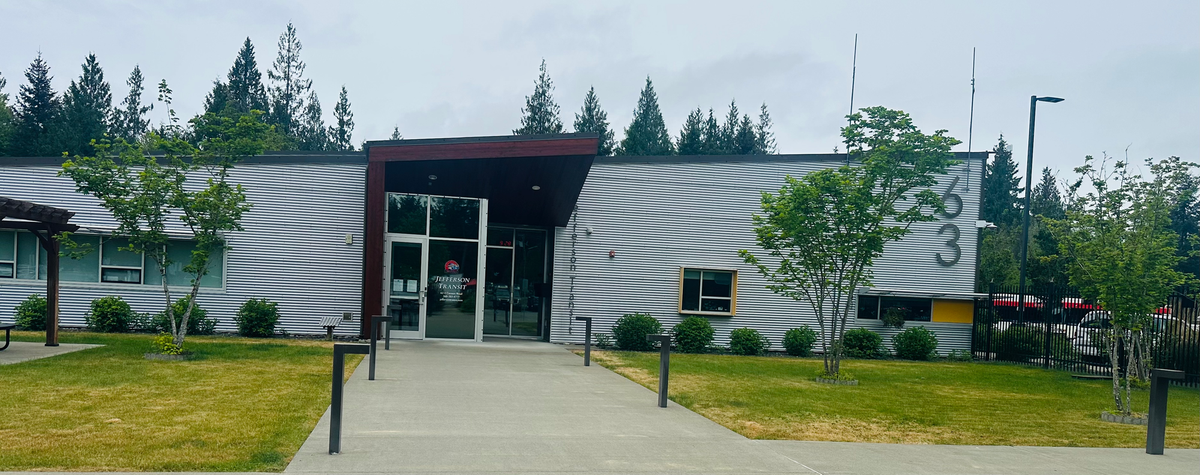
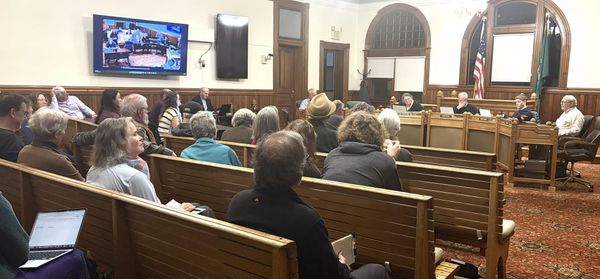
JEFFERSON COUNTY, WA — After nearly 30 months of intensive work, the final public hearing on Jefferson County’s 20-year Comprehensive Plan, which is updated every ten years, opened and closed on May 13 with far more empty chairs than raised hands. It was a turnout that one planning commissioner called disappointing, but understandable.
“The lack of interest is disappointing, but I empathize with them,” said Andrew Schwartz, Planning Commissioner for District 3, who has been engaged in the Growth Management Act (GMA) process for two years. “People just do not know that this matters.”
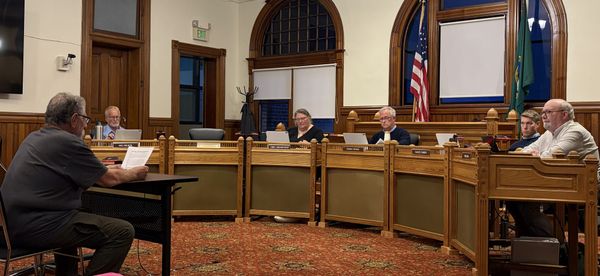
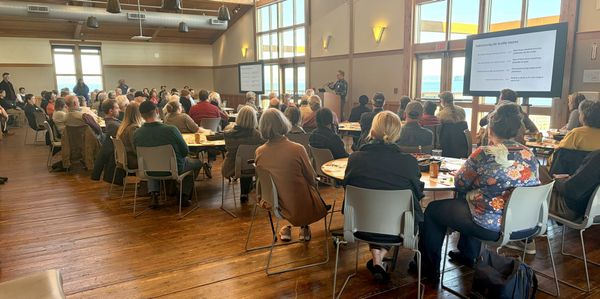
The joint listening session, hosted by the Department of Community Development (DCD) and the Planning Commission, drew a handful of in-person speakers and zero online commentators, a quiet end to a process that officials said consisted of 28 planning meetings, including a county-wide road show and multiple housing workshops.
“We’re planning for 5,900 additional people in Jefferson County by 2045,” Associate Planner Joel Peterson told the small audience during his opening presentation. The 20-year plan, officially titled the 2025-2045 Comprehensive Plan Periodic Review, is required under the state Growth Management Act (GMA). This year, it has been expanded significantly due to new state housing and climate mandates.
Under the proposal, 80% of future growth would be steered to urban areas, primarily the Port Hadlock-Irondale Urban Growth Area (UGA), a shift from the historic 70/30 split. Peterson said the change was driven by the housing crisis and opportunities for more dense development.
“We wanted to provide or plan for more population in our urban areas,” he said.
Major changes on the table
The update affects nearly every chapter of the county’s development playbook, but the most significant revisions center on housing and climate.
To comply with new state laws, the county is proposing several changes. These include allowing up to two accessory dwelling units (ADUs) per lot, permitting “middle housing” such as duplexes, triplexes, townhomes, and cottage housing in areas that were previously zoned only for single-family homes and enabling co-living housing in higher-density zones.
Additionally, the county aims to raise density caps, with a planned increase from 18 to 24 units per acre in high-density residential zones, and to explicitly allow emergency shelters and permanent supportive housing in commercial zones.
A new state-required climate resilience element has also been added, focusing on protecting water supplies, restoring shorelines, preparing for wildfire and sea-level rise risks and enhancing carbon sequestration in forests.
“The work is never done,” Peterson said, echoing comments he made to the Jefferson County Beacon ahead of the hearing. “We need a comprehensive plan to help guide us through the reality of how many people we have, how many residences we need and what the infrastructure costs are.”
A quiet public microphone
The Planning Commission opened the final hearing by reading a formal script, noting that both written and oral testimony would be accepted and that the comment period would remain open through May 15. Comments received after that deadline will still be forwarded to the Board of County Commissioners (BoCC), but may not be reviewed by the Planning Commission before it makes its recommendation.
Despite the low attendance, Schwartz defended the county’s public engagement efforts.
“I feel that the planning commission and the DCD did a reasonable job on community outreach,” he said. “Each community had an outreach opportunity.”
Schwartz also expressed surprise about the low attendance compared to the community involvement with the Port Townsend comp plan update.
What comes next
Despite the sparse turnout, the process remains on track. The Planning Commission will deliberate on May 27 and forward its findings and recommendations to the Board of County Commissioners.
The BoCC will then hold its own public hearing, offering another opportunity for residents to weigh in, with final action tentatively scheduled for early July.
“This is not done,” Schwartz said after the hearing. “But we’re nearing the end.”
Though written comments for the Planning Commission record are closed, any comments submitted via email to 2025compplan@co.jefferson.wa.us will be reviewed by the BoCC before their final decision.
Residents can view the full draft plan and related documents on the county’s project webpage.