Board of County Commissioners Allocates Opioid Settlement Funds to Services for Those Struggling With Addiction
The $200k in funding went to programs run by Public Health and Believe in Recovery.

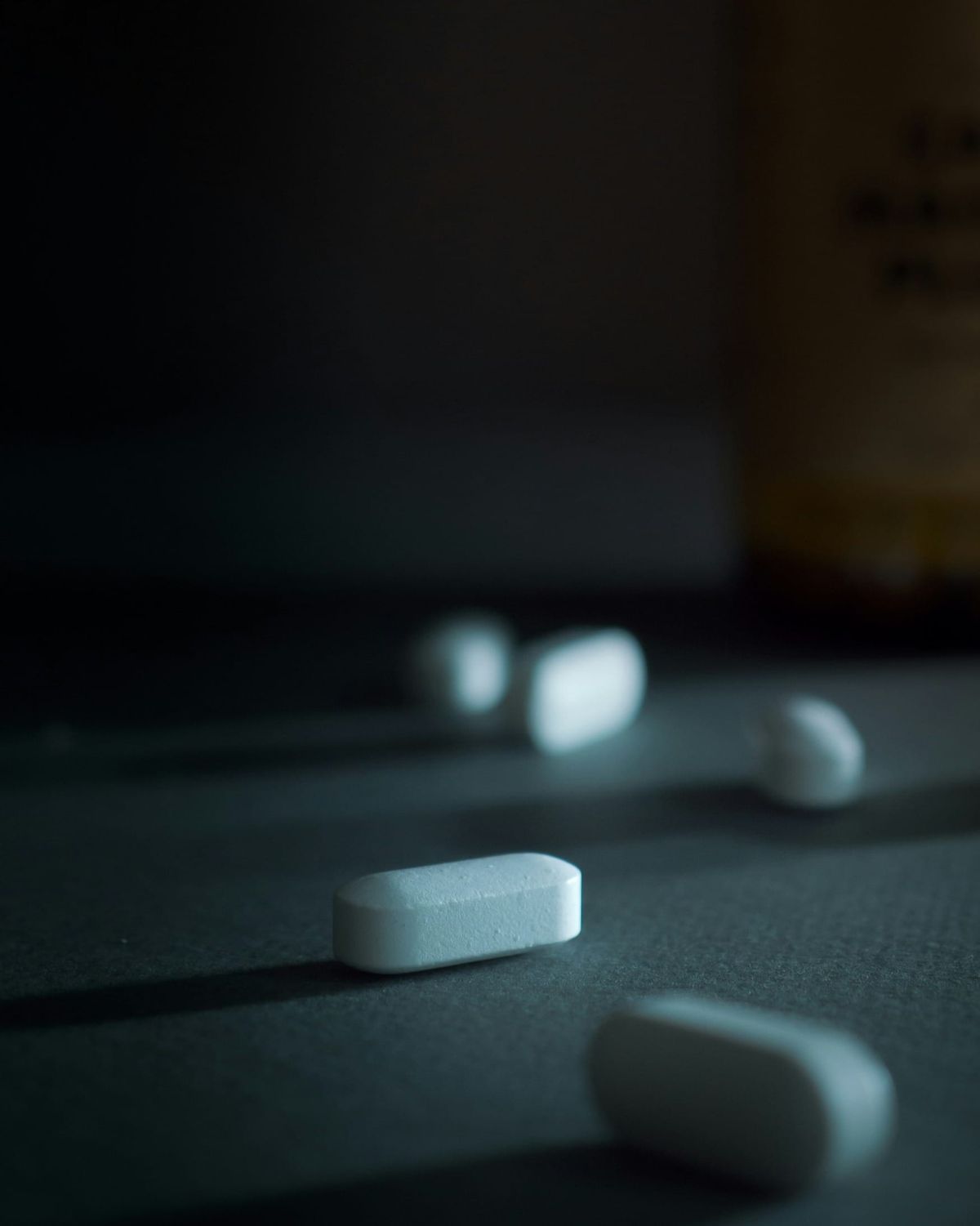
JEFFERSON COUNTY, WA — Over two decades ago, the opioid epidemic began in the United States. The impacts of highly addictive, overly prescribed drugs ricocheted to all corners of the nation, including Jefferson County, fracturing families, risking public health, burdening the economy and straining the social fabric of the community.
Service providers, court systems, health care and law enforcement have all been straining under the weight of this epidemic. Since 2017, state attorneys general have been working to rectify the circumstances through legal action against opioid manufacturers, distributors and pharmacies.
Communities are now feeling the effects of their efforts, with settlement funds finally making it to places which have been deeply harmed. On May 4, the Jefferson County Board of County Commissioners (BoCC) approved the Behavioral Health Advisory Committee's (BHAC) recommendation on how to distribute opioid settlement funds.
History of the settlement battles
In September 2017, Bob Ferguson, acting as Attorney General at the time, sued Purdue Pharma over large-scale marketing campaigns portraying their drugs as a low risk for addiction, against evidence proving otherwise. “Purdue subsequently filed for bankruptcy and pleaded guilty to criminal charges, including defrauding federal health agencies and paying illegal kickbacks to doctors,” Washington State Office of Attorney General wrote in 2021.
Then, in March 2019, Ferguson sued three of the largest opioid distributors: McKesson, Cardinal Health and AmeriSource Bergen, for a range of unlawful conduct, including unlawfully shipping opioids into Washington state.
These cases were in addition to another case, brought by a bipartisan coalition of attorneys general from 47 states against opioid manufacturers and distributors. Ferguson and his office were also active in this case.
The coalition accused Johnson & Johnson, a manufacturer of prescription opioids, and three major pharmaceutical distributors—Amerisource Bergen, Cardinal Health and McKesson of fueling the opioid addiction.
On July 21, 2021, an agreement was reached that the producer and distributors would pay $26 billion in restitution towards abatement, treatment, prevention and harm reduction efforts, and were committed to major changes in their business practice, including improving safety and oversight in the distribution of prescription opioids.
The three distributors will collectively pay up to $21 billion over 18 years, and Johnson & Johnson will pay up to $5 billion over nine years, with up to $3.7 billion paid during the first three years.
Separately, when Ferguson was the Attorney General of Washington State, he launched an investigation into McKinsey, a multinational consulting firm that worked with Purdue Pharma. That led to McKinsey paying $13.5 million to the office of the Washington State Attorney General in 2021; they also were required to enact corporate reforms. Ferguson directed the entire amount to be invested in treatment, prevention and other efforts that address the opioid epidemic in Washington.
Then, in 2022, settlement agreements were announced with three pharmacy chains—CVS, Walgreens, and Walmart—and two additional manufacturers—Allergan and Teva. The greater the number of local government entities participating, the more funds will ultimately be paid out over the next five to 15 years. The majority of all payouts are to be used for treatment of opioid use disorder.
Current state of the settlement battles
On May 1, 2026, the Washington State Office of the Attorney General announced that a $7.4 billion multistate settlement reached with Purdue Pharma, the maker of OxyContin, and its owners, the Sackler family, became legally effective, completing nearly a decade of work by attorneys general coalition across the country.
The settlement will deliver $105.6 million, most within the next three years, split between Washington state and 125 cities and counties. The state will receive 50% of the money, and the rest will be split between local governments. With this settlement, Washington has now secured a total of more than $1.3 billion in opioid settlement funds.
Allocations are based on population and the number of opioid related deaths in a region.
In email correspondence with the Beacon, Mike Faulk, Deputy Communications Director of the Washington State Attorney General’s Office, shared that the overall amount before attorney fees going to Jefferson County from the entirety of the opioid settlements is $2,556,418. This will be paid out over the next five to 18 years.
Faulk calculated the amount for Jefferson County from the Purdue settlement alone to be $233,224.85, paid over 15 years, with a large amount being paid in the first three years.
Allocations and next steps for Jefferson County
The Board of County Commissioners (BoCC) designated the pharmaceuticals and manufacturing settlement funds through a request for funds proposal (RFP) to the Behavioral Health Advisory Committee.
During the budget process last year, the BoCC allocated $150,000 to internal county functions, leaving $200,000 to be distributed through the RFP.
BHAC reviewed 10 applications, and recommended funding four of them to the BoCC on May 4: Believe in Recovery's Law Enforcement Assisted Diversion Program ($57,200) and Transport Program ($14,034); Jefferson County Public Health’s Harm Reduction Program ($122,766), and Jefferson County Public Health's Empowered Teens Coalition ($6,000).
Public comment highlighted a lack of funding for treatment, especially from Discovery Behavioral Health’s CEO Jim Novelli, who asked for $162,342 in the initial grant process for a treatment program which was not selected to receive funds.
County Commissioner and BHAC member, Heather Dudley-Nollette said, “I just want to remind folks I didn't vote for this [BHAC recommendation during the BHAC voting], but I intend to vote for it here [at the BoCC]… I believe they're all very, very worthy applicants for these amounts, and the reason I voted against it was that the argument was compelling to me to try to split the dollars and to try to support some kind of treatment. And I'll just be committed to trying to fold that into the next process.”
Most of the funds were instructed from the state to be used for treatment, but BHAC felt the allocations to diversion programs, transportation, harm reduction, and teen empowerment align with the Washington Memorandum of Understanding (MoU). BHAC does however agree that emphasizing funding for treatment programs such as what Discovery Behavioral Health provides is essential for the next round of the pharmaceuticals and manufacturing RFPs.
Both Apple Martine, who did not vote, and Heather Dudley-Nollette of the BHAC, stated the process will be refined for future RFPs, potentially extending funding cycles to every two years to reduce administrative burden. They also intend to find help in the grant making process next year.
County Commissioner Heidi Eisenhour said, “It's gratifying for me to see the transport program funded, because I remember coming out of the meeting we had at the May 30, [2025] summit that it felt like such a basic thing that wasn't covered. I know it's not the only thing, but I'm just glad that it made it through.”
Opioids and drug use in Jefferson County
Due to the small size of Jefferson County’s population, data for opioid use is more effectively reviewed through a regional perspective, and there has been a regional drop in opioid related deaths since 2023.
Dr. Allison Berry, the Health Officer at both Jefferson and Clallam counties Public Health Departments, emphasized that most people who use these drugs are not homeless. Use is often driven by trauma, and isolation is a major risk factor for death. Having a support system dramatically increases survival and recovery rates.
Dr. Berry also emphasized that the punishment perspective society takes towards drug use has been markedly unsuccessful, expensive, and increases overdose risk after release. A reduction in drug related incarceration should be an important goal in her opinion.
The RFP funding to Believe in Recovery and Jefferson County Public Health programs can support this visionary approach and support pathways to recovery and treatment. Coordinated opioid response between firefighters, paramedics, law enforcement, and Public Health in Jefferson County is getting stronger. The web of providers working together is essential for community recovery.
Another community initiative saving lives is a county-wide network of Naloxone boxes, which makes the rapid-acting, non-addictive, FDA-approved medicine available to people who are willing to help someone in the process of overdosing on opioids.
Apple Martine, Director of Public Health, said that supporting children holistically to develop autonomy is an important preventative approach, along with pro-social activities, interpreting cycles of inter-generational trauma, family communication, and meeting needs.
“It’s more dynamic than the ‘JUST SAY NO’ of the past,” Martine said. Because, as Dr. Berry shared, opioid use is indicated to begin in a person’s 20s, the Empowered Teens Coalition being funded this round is paramount in prevention work and societal change.
Dr. Berry reported that 70% of opioid users wish to stop. Contact with the Harm Reduction team, which is one of the organizations receiving settlement funds, and access to needle exchange increases likelihood that people using opioid will go into recovery services.
Dr. Berry called the network of service providers, “spokes in the support wheel,” which include the REAL (Recovery, Empowerment, Advocacy, Linkage) team with Discovery Behavioral Health, and the LEAD (Law Enforcement Assisted Diversion) team through the court system, another recipient of the first round of settlement funds, both are in-field response teams for de-escalation who can transport individuals to direct treatment, or offer support like food and water during a opioid induced reaction when taken on an empty stomach—often due to poverty.
The Beacon’s Process
Why are we reporting on this:
It is important to keep the community informed on county grant allocations. It can be hard to keep track of all the pieces, especially relatively small funding sources such as the opioid settlement funds that are functioning on complicated timelines.
It is also important to address county drug usage and why the decision of how to use the money do or do not appropriately affect the county's needs.
It is our intention to address social bias and lookout for potential leadership decisions based on bias.
Where did we get our information from:
Our reporter attended Board of County Commissioner meetings, interviewed experts from the Public Health Department, and exchanged emails with the Washington State Attorney General’s Office.
Our approach to covering public health funding:
Whenever there is an opportunity to gain funds for the public good, there is also an opportunity for those funds to not reach the people who need them. We set out to determine how much money Jefferson County would receive, and if those funds would be allocated appropriately.
In our reporting we follow the legal and social history, then speak with people who have first-hand experience of what those funds can do to address misjustice.
Corrections: In the original version of this article, a typo appeared in the Process Box at the bottom. We also clarified Bob Ferguson's role and removed references to meth as it isn't an opioid.