Building Beyond Homes: Habitat for Humanity’s Vision for the Future of Affordable Housing
Groundbreaking ceremony paves the way for 138 mixed-income homes.

JEFFERSON COUNTY, WA — As the national organization celebrates its 50th anniversary, a new neighborhood in Washington state embodies its evolving strategy: creating permanently affordable, mixed-income communities that address the full spectrum of the housing crisis.
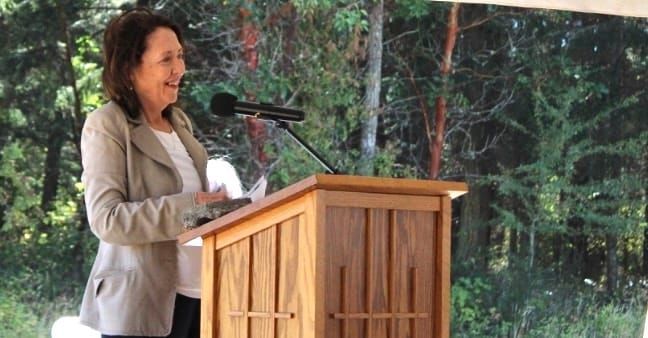
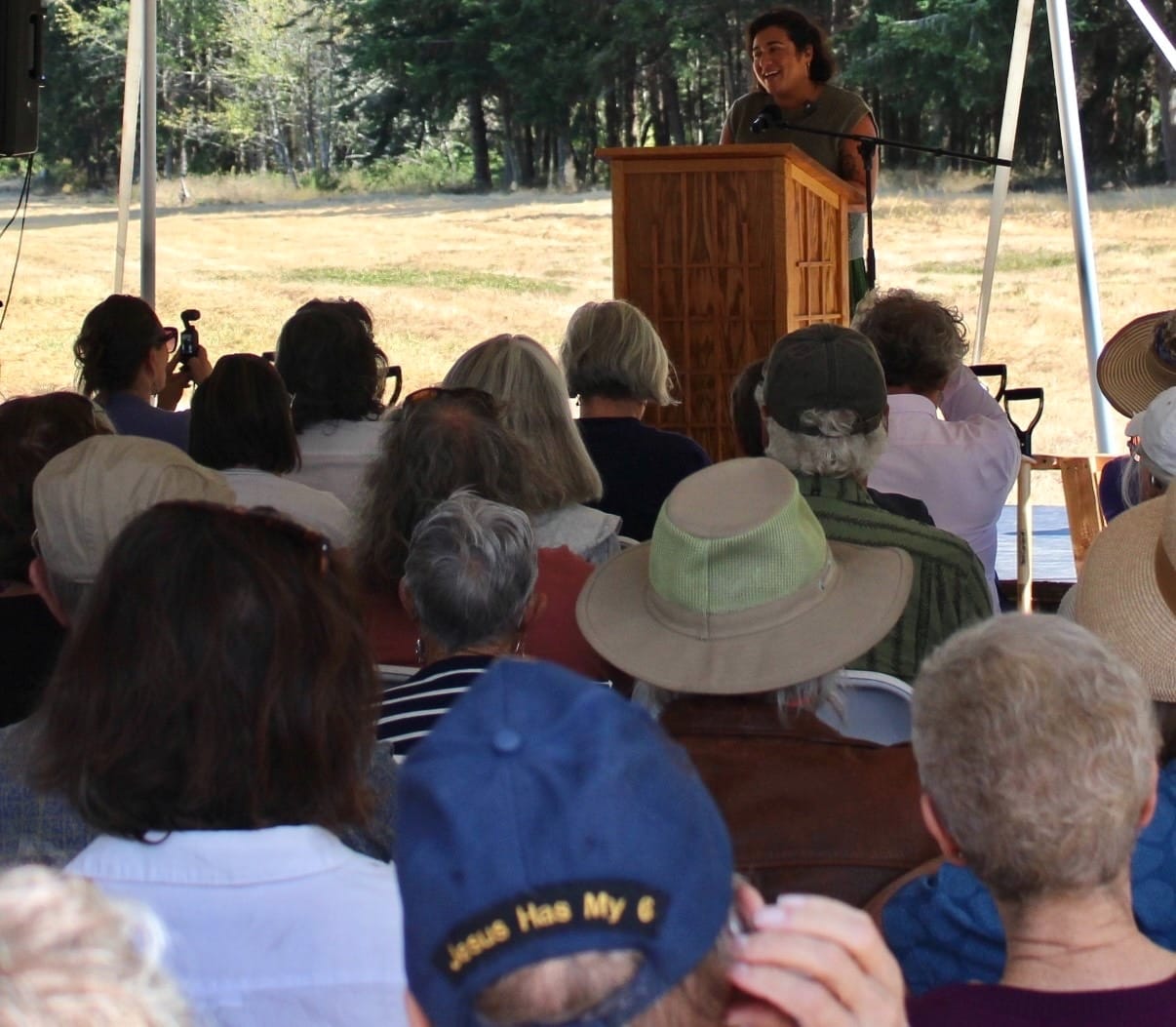
On August 26, 2026, a former airfield in Port Hadlock began its transformation into the Mason Street Neighborhood. This 138-home development represents the largest affordable housing project in East Jefferson County’s history. The groundbreaking ceremony brought together federal, state and local leaders, including U.S. Senator Maria Cantwell and U.S. Representative Emily Randall, alongside Habitat for Humanity International executives who see this project as a model for the organization’s next 50 years.
“We’re at an inflection point,” said Adrienne Goolsby, Senior Vice President for the U.S. and Canada at Habitat for Humanity International, in a Beacon interview the day before the groundbreaking. “What’s going to position us to be best positioned in the next 50 years to make sure that we actually remain viable and relevant to the housing issue?”
A community-driven vision realized
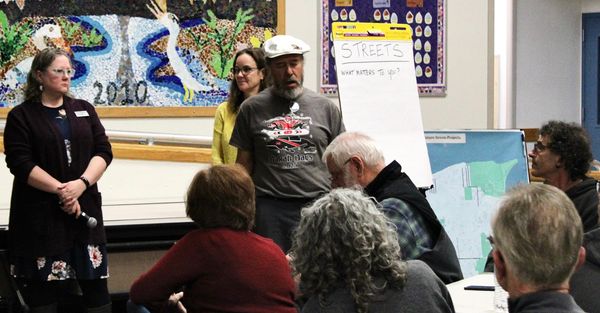
The Mason Street project began with a group of residents who approached Habitat for Humanity of East Jefferson County with an idea. They saw potential in the old airstrip and envisioned a walkable neighborhood where local workers, families and essential personnel could afford to live.
Jamie Maciejewski, Executive Director of Habitat for Humanity of East Jefferson County, described the origins at the groundbreaking ceremony: “Essential workers and first responders were getting waivers to live far away from their jobs. Young families were leaving our community, and school district enrollments were dropping. And while that happened, there were people who had hope and who dreamed.”
The project required unprecedented community investment. In 2022, when Habitat’s board authorized a $1.25 million offer on the property—the largest purchase in the affiliate’s history—local donors, including Jefferson County, committed $4.5 million in just four months to fund the purchase and initial planning.
“Not one person—not the people who became the idea group, not Jamie, not me, not the folks who founded Habitat here 27 years ago—none of us knew that this day is what we were working towards,” said Siobhan Canty, CEO of the Jefferson Community Foundation. “We just knew that we had to step up, get involved and do whatever we could, one step at a time.”
Mixed-income affordability: A new model
What distinguishes the Mason Street Neighborhood is its mixed-income approach; a departure from Habitat’s traditional focus on families earning 30-80% of area median income. The development will include homes for households earning up to 120-150% of area median income, recognizing that housing challenges affect people across a broad income spectrum in Jefferson County. This decision makes housing attainable for middle-class families as well.
Carmen Smith, Vice President of U.S. Affiliate Services for Habitat for Humanity International, emphasized the interconnected nature of housing stability in an interview: “When we’re looking at how housing and the continuum is connected to educational outcomes, when we’re looking at healthier outcomes for families, all of it’s interconnected, and what’s at the center of that is safe, decent, affordable shelter.”
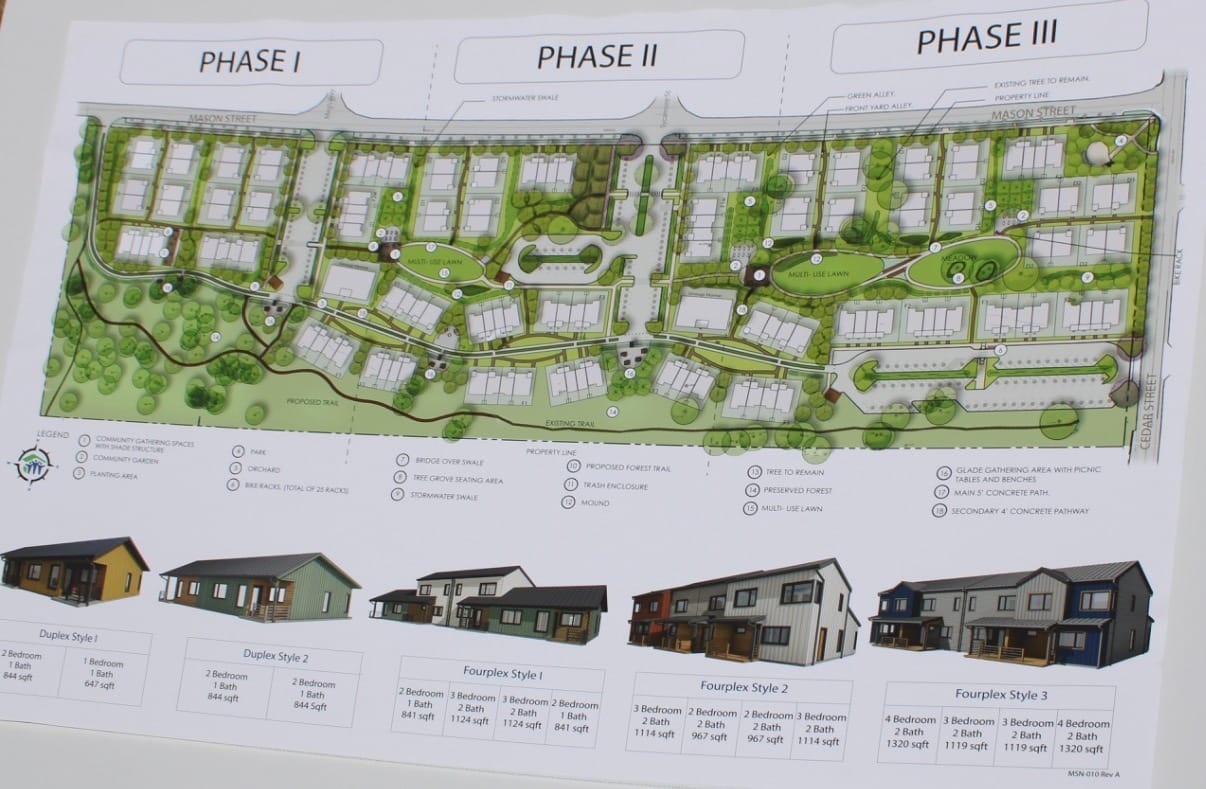
The 138 homes will remain permanently affordable through Habitat’s shared-equity model. Homebuyers purchase their homes while agreeing to resale restrictions that preserve affordability for future buyers, allowing families to build equity while ensuring the neighborhood remains accessible for generations. Olympic Neighbors will operate two of the homes, providing housing for adults with intellectual and developmental disabilities.
Legislative tailwinds
The project’s timing aligns with significant federal housing reform. The bipartisan 21st Century Road to Housing Act, passed in summer 2026, represents the most substantial housing legislation in more than three decades, passing the House 358-32.
Jack Bridges, Vice President of U.S. Office Administration and Operations, saw the legislation as a framework that empowers local communities. “A lot of people don’t understand how to do the work, and they don’t understand how we can band together,” he said. “If you’ve got a playbook and a framework that provides that provision, then I think from a level of advocacy, it provides us to be able to talk about some of the stuff we’re trying to do.”
Senator Maria Cantwell, who secured $3 million in congressional directed spending for the Mason Street project’s sewer infrastructure, affirmed housing as a national priority. “When people talk about infrastructure, we do need to talk about roads and bridges and public sewers. But right next to that should be housing all across the United States of America.”
Representative Emily Randall, who grew up on the Kitsap Peninsula, spoke to what these homes represent: “A safe roof over our head isn’t just a safe roof. It’s the ability to ensure we can get childcare appointments. It’s the ability to ensure you can shower and get ready for work or apply for a job. It’s the ability to ensure that your kids have a stable place to come home to when they go to school and learn.”
The Washington State Department of Commerce projects Jefferson County will need nearly 4,000 new homes by 2044. The Mason Street project, with its $67 million investment and 80 full-time construction jobs during its multi-year build, represents a significant down payment on that need.
Building better, building more
For Goolsby, the Mason Street project exemplifies Habitat’s evolving strategic priorities: building better and building more, transforming housing systems and inspiring action for housing.
“What I would love is that in 10 years, people don’t just think about us as building homes or being builders, but as being more comprehensive in our influence on housing systems, looking at market systems and how we disrupt them and that we are innovators along those lanes,” Goolsby said.
The Mason Street Neighborhood will be built in phases, with the first 32 homes expected to welcome residents in late 2027 or early 2028, and full completion anticipated in 2032. Phase I construction begins in fall 2026, starting with the underground infrastructure that transforms a former airstrip into a community.
Habitat for Humanity of East Jefferson County is accepting applications from potential homebuyers for the Mason Street Neighborhood. Information is available at habitatejc.org/homes.