Dove House Advocacy Services Closes Free Clothing Closet Due to Funding Cuts
While high-level funding cuts force the Dove House team to make hard decisions, they may lead to positive opportunities for services.

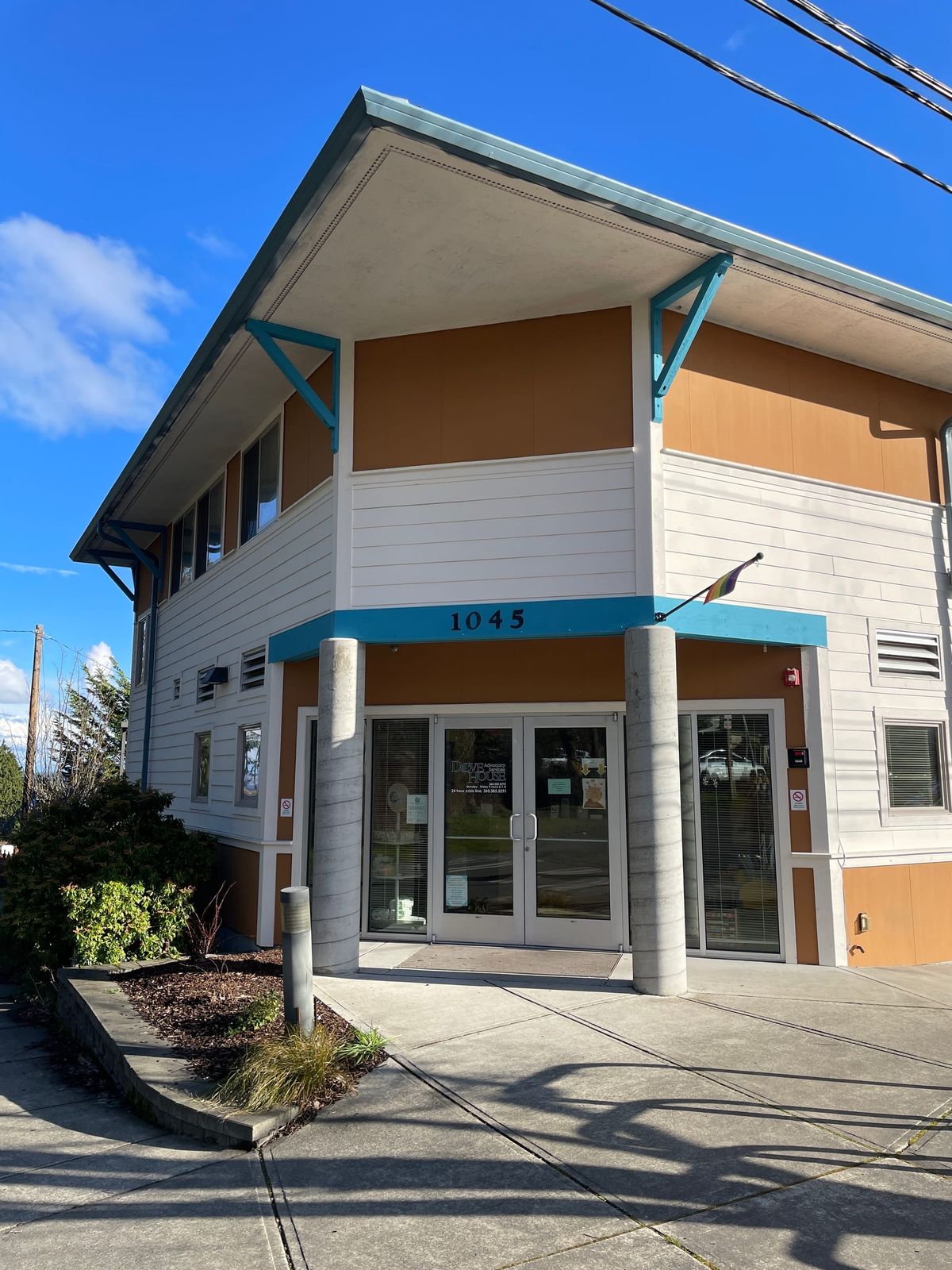
JEFFERSON COUNTY, WA — Funding cuts are being felt all across the nation in all categories of services, but domestic violence and sexual assault services are feeling the cuts in a particularly profound way. After running programs on string-thin budgets in a culture that does not fully recognize the level of need in their communities, these cuts are forcing program closures.
After the Board of County Commissioners did not accept the Dove House application for the first round of Opioid Settlement Funds, and the Washington State Department of Commerce (DoC) released its draft formula for future funds, Dove House Advocacy Center has made the decision to close the Dove House free clothing closet.
“The web of services are all valid. We need to work together to make sure the gaps don’t get bigger,” Director of Dove House, Beulah Kingsolver said. “There are so many ‘we don’t knows’ that it has to be different from what we’ve done in the past. We have to do things better.”
Dove House is preparing to hand in its applications to the Housing Fund Board to ask for funds for the shelter and the Recovery Cafe. The allocations are funded by housing documentation fees when buying or refinancing a home. If there is a stuck market, it deeply impacts funding for these essential services.
In February this year, the Beacon covered some of Dove House's federal grant cuts and funding challenges. Federal funds flow down to Commerce, which then sends the allocations to the State Office of Crime Victims, which houses both federal and state funds. That bucket of money is then dispersed into branches of services, such as the General Crime Center and the Certified Sexual Assault Program, which has historically required accreditations.
Along with the proposed $562,558 to be split across all of the peninsula region’s services this coming year, the Washington State DoC revealed a collapse of a set of accreditation service requirements into a “Community Program” funding category. This means that the previously required service of responding with a victim advocate to domestic violence calls is no longer considered a core responsibility. Instead, one 24/7 crisis line for all of Washington will take the calls without having an in-person response to help victims/survivors with needs for clothing, food and housing.
The Dove House board feels that this service is essential to the mission and values of victim/survivor services and must continue to respond as they have, even without the funding.
The team had to look at what services they offered that were also offered by other community services. The closet was a clear answer.
Kingsolver said it was a decision between continuing to make hospital calls or offering clean clothes. The plan to recover the clothing gap is under construction through communication with partners who also give clothing and those who depend on clothing.
A working draft is to consolidate the closet inventory and only take appointments. Meaning it will not be open to the public but will still support those with the highest needs. A silver lining is that with the closet space open, Dove House can offer the widely successful and desired somatic movement services and yoga in one of the vacant rooms. They will also be saving money on garbage fees for the donations that cannot be accepted.
Other cuts the Dove House has had to make include moving from two Children's Advocates to one, moving the full-time Legal Advocate to part-time, leaving a vacant advocate position and pulling back on preventative work with other programs.
Kingsolver highlighted that if the Big Beautiful Bill goes into effect in January, more cuts are coming. She said that one of her concerns is that other programs may not be able to withstand the cuts and will close down, increasing the pressure of needs on the Dove House when their numbers are already doubling the averages of the past.
The pressure builds with the cost of living and inflation; spending $70,000 on food at the recovery Cafe, regularly giving 70-80 free meals, $25 gift cards for gas are now $50-$70 and $110 grocery cards on top of that. Garbage and recycling are budget lines closely looked at, along with the garden at the cafe—known for its healing opportunity, but unsustainable as a true food source with the cost of water in the city.
She encouraged people to look carefully at the proposed Billionaire's tax when voting this year, as it may be a lifeline to the victim/survivor services programs, and to reach out to legislators to prioritize voice victims/survivor services, because every year the Washington programs face a $20,000,000 cut.
“It is my job to look ahead to changes coming and make decisions to keep us stable,” Kingsolver said. “I am prepared for two more years.”
Kingsolver is focused on balancing staff needs, preparing for the future and keeping true to the core values of the program: maintaining calm, kind, trauma-informed responses and services.
To support the Dove House, you can donate; respond with kindness and give grace when change happens; stock any of the little food pantries; be one of the two needed volunteer cooks at The Recovery Cafe and ask Kingsolver directly if you have any questions.
“Trust that we are doing the best we can,” Kingsolver said. “I have a belief that if everyone does a little, a lot can happen.”