Caswell-Brown Congregate Shelter Marks New Chapter Amidst Urgent Community Need
The groundbreaking ceremony takes place one week after a forest encampment fire.

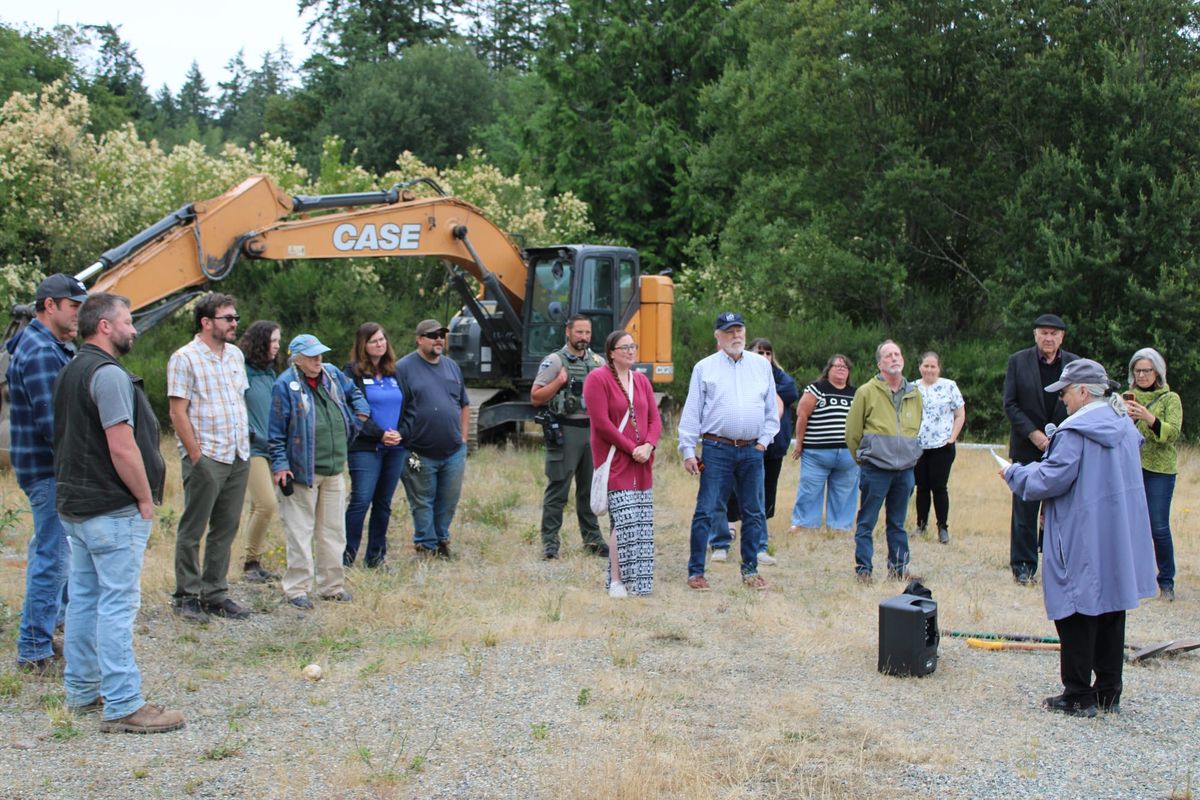
PORT TOWNSEND, WA — The long-awaited Caswell-Brown 31-bed congregate shelter officially transitioned from a planning phase to construction with a groundbreaking ceremony on July 1. It marked a significant milestone for Jefferson County’s efforts to address homelessness.
The event, held at the Caswell-Brown site, signaled broad community support for the project. Attending were Olympic Community Action Programs (Olycap) staff, Jefferson County commissioners and staff, representatives from the Sheriff’s Department, Shold Excavating, Bayside Housing, the Warming Center and Port Townsend City Council.
After nearly six years of planning, collaboration and perseverance, the project is finally moving into its next major phase, according to Olycap officials.
The groundbreaking ceremony
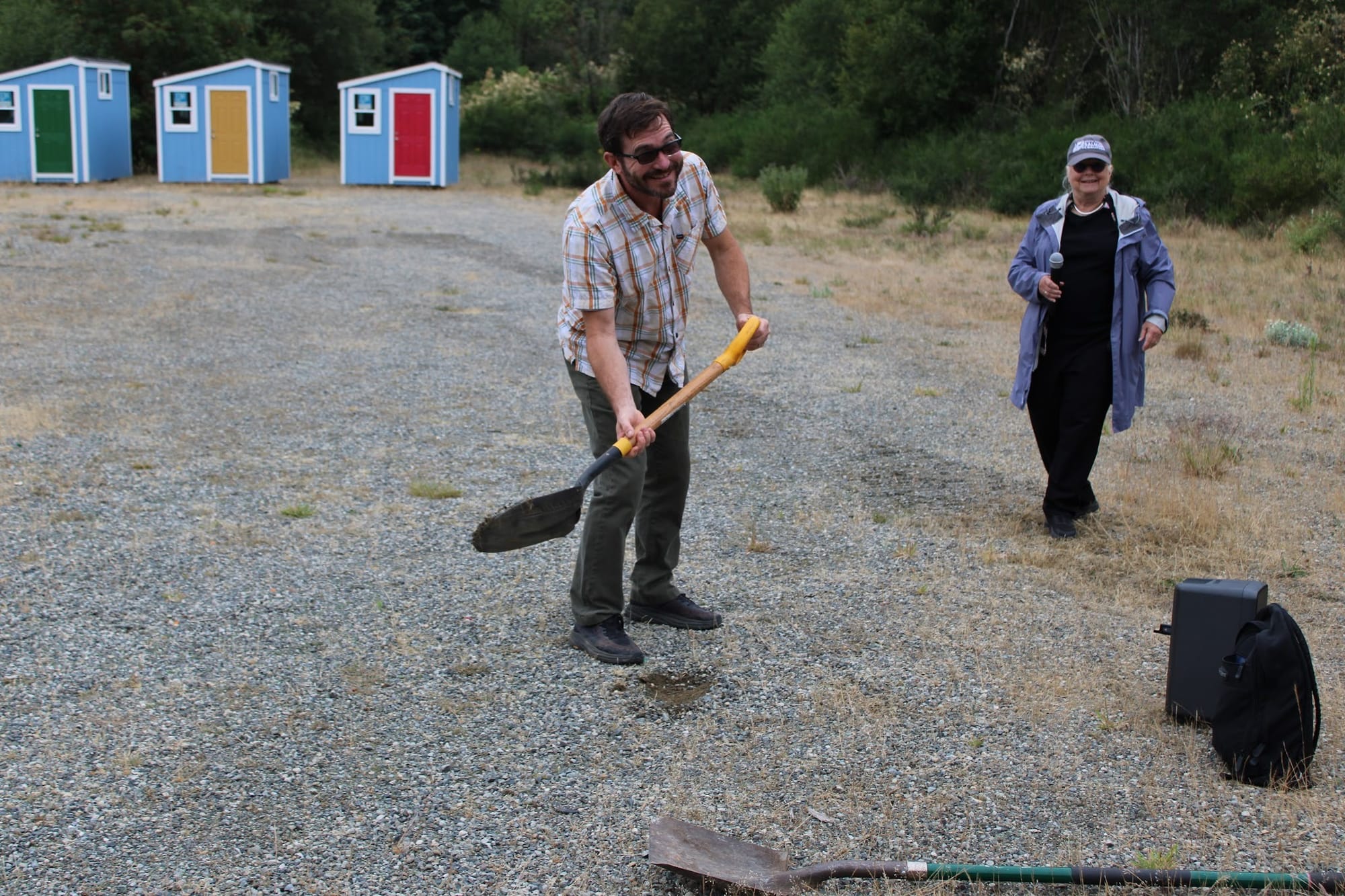
Peggy Webster, Olycap Housing project manager, noted that the ceremony marked the transition from planning to construction. This journey began before she was hired, about six years ago, with a touch of humor: "We thought the golden shovel thing was weird, so we have shovels we actually use, so it's from our maintenance guys."
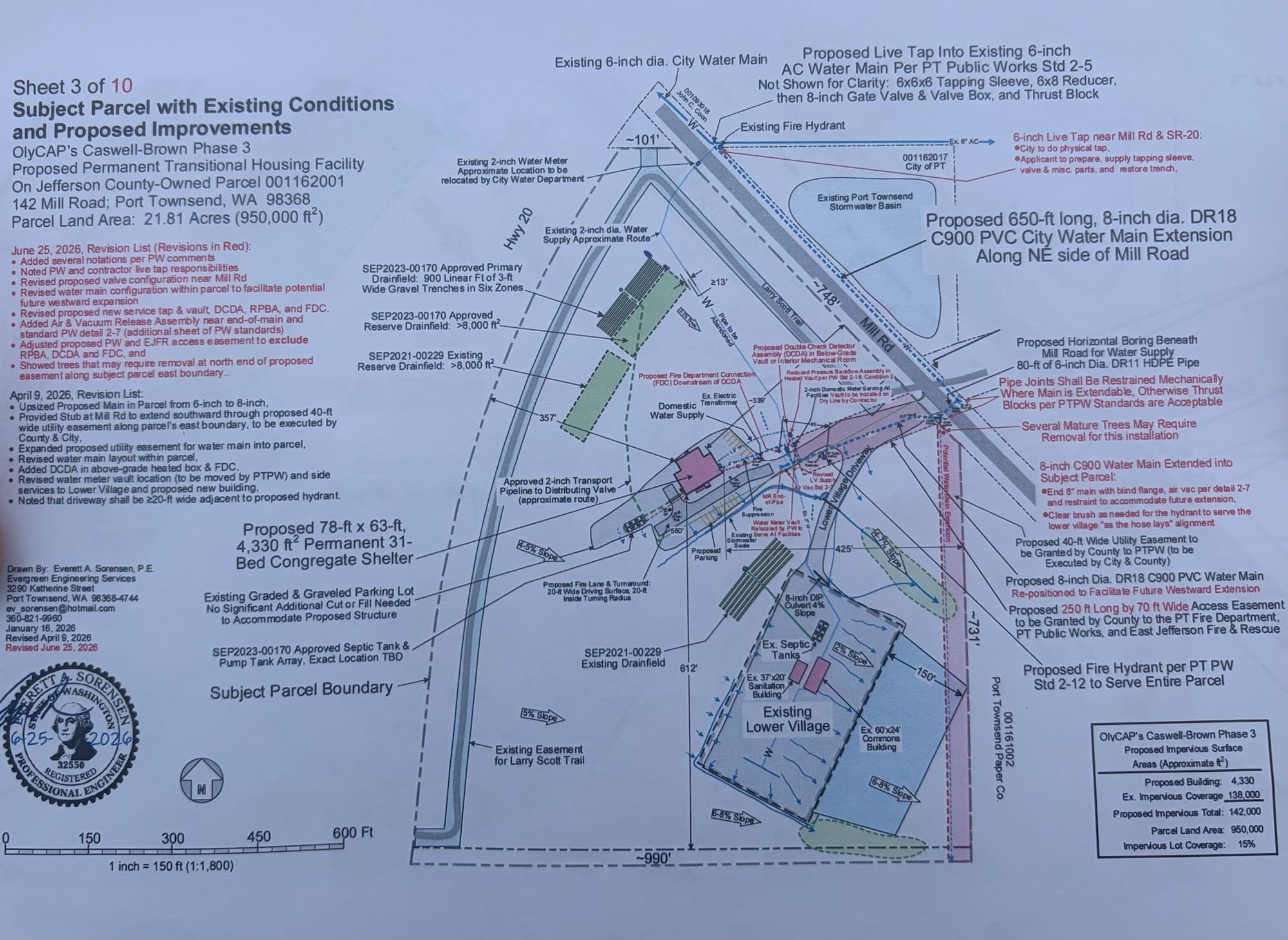
Webster acknowledged the critical partners who made the milestone possible, including Tim Johnson from Shold Excavating, who will handle the site work, septic and water line installation, and Everett Sorensen, the civil engineer. She also gave special thanks to state Rep. Steve Tharinger, who helped reconfigure "the commons grant to be able to build this," and Nick Douglas from Bloom, whose efforts were instrumental in securing the necessary funding.
County Commissioner Greg Brotherton echoed this sentiment. He praised "the dogged and professional Peggy Webster" and the OlyCap team: "The county is really dedicated to raising the floor in our social fabric," and that this purpose-built shelter will "serve generations of people."
He further emphasized that the project is "the first step," explaining that "you have to have a sturdy foundation to be able to build that first floor, and the second floor and the third floor." He acknowledged that "not everyone needs the same kind of housing, having a place for medical respite, having a place for families. This is going to be a critical element too."
Olycap stated that the site work will soon begin, including installing the septic system and water line, laying the groundwork for everything to come. Olycap is awaiting approval of the modules from Washington State Labor and Industries, after which they will apply for a building permit from Jefferson County to allow foundation work to begin.
Module delivery is anticipated in late 2026, followed by "a carefully choreographed effort of connecting the modules, roof, foundation and all of the electrical, plumbing and mechanical systems into one cohesive village."
The accidental encampment fire
Completion of this congregate shelter cannot happen soon enough, especially given recent events that have underscored the urgent need for safe, designated spaces for the unhoused.
On June 24, a fire ignited in the wooded area near Caswell-Brown Village, presumably started by someone camping there. East Jefferson Fire Rescue (EFJR) Chief Bret Black provided a detailed account, saying that they were dispatched to "the report of a smoke investigation in the area of 142 Mill Road," with the reporting party calling from the Caswell-Brown Encampment and saying they noticed "a large amount of smoke and ash coming from the woods near the power lines."
While en route, Battalion 13 of EJFR observed a large amount of smoke and directed Jeffcom to upgrade the call to a full wildland fire response. Once they arrived, Battalion 13 reported "an approximate 40'x40' fire that was burning in heavy brush with flame heights approx. 6'-10' high spreading into the timber."
Chief Black described the significant challenges firefighters faced due to "the thick, dense vegetation and unsanctioned encampments," requiring them to use hand tools and chainsaws to cut through the dense forest.
The fire had grown to about 50 feet by 100 feet, and an evacuation of the encampment was initiated. However, the firefighters' aggressive efforts quickly brought the fire under control, and the evacuation was canceled.
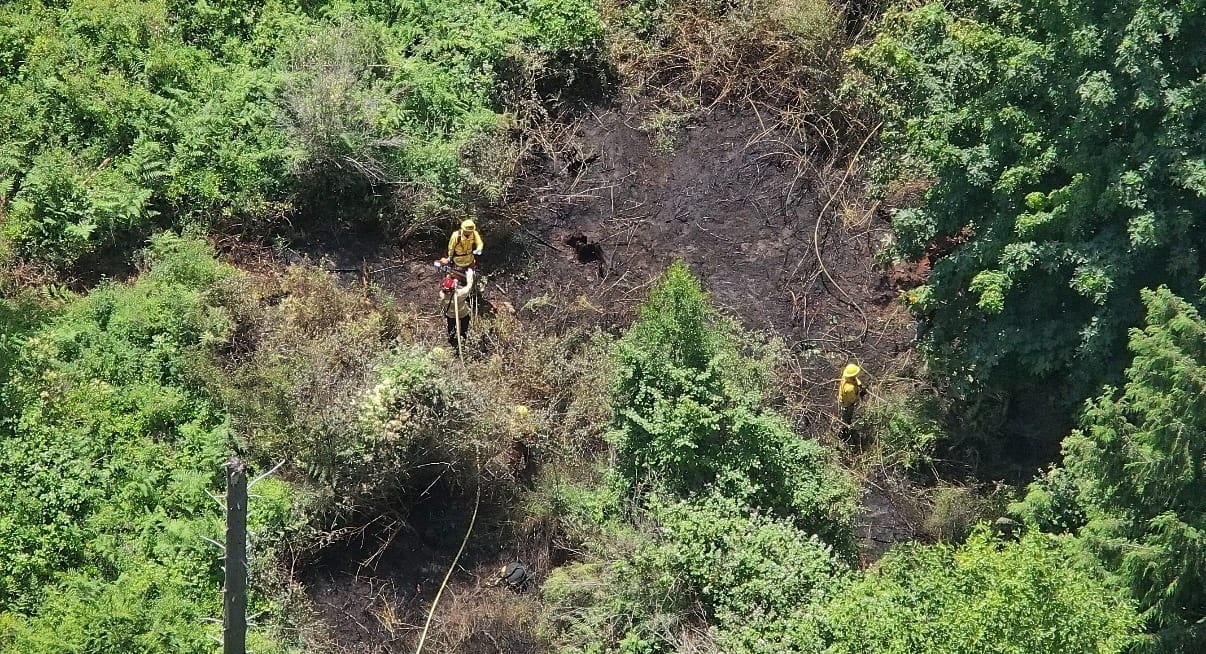
Chief Black noted that over 35 people were involved in this incident, and early escalation of the 911 response was pivotal to the successful outcome, with no injuries or property damage. But he also acknowledged a bit of luck: The fire was in the morning, before it heated up and dried out, while the winds were calm.
He warned that if there had been "a mild onshore [wind] flow of 5 – 10 mph, which is typical for Port Townsend, the fire would have immediately threatened the utilities and main power supply for the city." A mild southeasterly wind would have caused "ember cast to immediately threaten the Caswell-Brown compound and adjacent neighborhoods," he said.
In a follow-up memo to the county commissioners on June 25, Chief Black wrote: "I plead with the county to abate the site and take immediate steps to mitigate the dangerous conditions present at the forested area along Mill Road in the Glen Cove community, which directly impacts our most vulnerable community, the unhoused."
He further urged the county to prioritize a long-term strategy for providing a safe and supportive environment, noting, "We are not helping anyone (particularly the unhoused) by letting these conditions persist."
A memo from the Sheriff's Office on June 25 detailed the "urgent need for the County to take immediate action to vacate the encampment," citing the documented fires, health risks, and imminent threat of Port Townsend Paper gating the access road, which would further "limit emergency access and service delivery."
The urgency of the situation has also been documented by Sheriff Andy Pernsteiner, who wrote in an April 9 statement how the encampment violates Jefferson County's Unauthorized Encampment Removal Policy.
The policy says that "camping on county-owned property is prohibited, unless expressly permitted" and identifies criteria warranting removal, including fire hazards, excessive trash accumulation, limited access for services, environmental damage, lack of sanitation facilities and proximity to critical infrastructure. Pernsteiner noted that all of those criteria are present at the Mill Road site.
The call to collective action amidst the upcoming sweep
This incident spurred an urgent call to action from Holly Morgan, executive director of OlyCap, in an email on June 30 to Port Townsend City Council and staff, Jefferson County commissioners and various service providers, including Bayside Housing, Dove House, The Nest and the Warming Center.
Morgan wrote, "Last week we experienced a near miss when a fire ignited in the wooded area adjacent to Caswell-Brown Village, presumably started by someone camping in that area. Fortunately, the fire was contained before it caused significant damage, but it served as a stark reminder that the challenges surrounding unsheltered homelessness remain unresolved."
She noted that following the closure of a large encampment in November 2025, "the underlying problem did not disappear. People simply dispersed throughout the community and continue to do the best they can to survive, often in locations that present safety concerns for themselves, neighboring residents, service providers and the broader community."
Morgan invited recipients to participate in a focused discussion about unsheltered encampments, expressing that she believes "we have an opportunity to work together toward a more coordinated and compassionate response."
Heather Dudley-Nollette, District 1 county commissioner, told the Beacon she is "deeply encouraged by the ways that our housing and behavioral health providers, city and county elected officials and staff, law enforcement, fire districts, faith communities, local businesses and people with lived-experience are all coming together right now to problem-solve on this issue."
She emphasized that "the needs of unhoused people living in encampments are just as varied as you would expect in any neighborhood or community" and that there will not be a single solution.
However, Dudley-Nollette said, "the recent fire has made it crystal clear to me that the costs of not providing a place for unhoused people to live safely could far outweigh the costs of providing at least a minimally-supported location for people to live, receive services and have any chance of improving their lives." She concluded by saying she looks forward to working with this deeply committed community coalition to find a way forward together.
An anticipated sweep of the encampment is scheduled for July 15 because the fire poses an immediate hazard, underscoring the importance of the joint conversations about where the unhoused population will go next.