Chlorophyll Corner: Poplar — The Tree who Speaks the Language of Streams
Chlorophyll Corner is a monthly column exploring the cultural, ecological, and medicinal relationships between people and plants. Grounded in ethnobotany and the One Health model, it examines how traditional plant knowledge supports our access to land-based healing across diverse communities.
Cascadia continues to feel unsettled. The weather can’t quite remember what season it is, as rain dumps from the sky in some places while it snows in others. The soil sings with gratitude, as the land drinks from the sky so all the rain drops can join the drinking water below our feet. All this water makes me think of Poplar, Populus spp., the tree who speaks the language of the streams.
When the wind moves through a stand of Poplars, their simple leaves rustle in a way that replicates the sounds of trickling water. The leaf’s green tops and silvery undersides flash back and forth, shimmering like sunlight on a river’s surface. Poplars’ shoot straight up from the ground, tall and proudly exclaim “Hey, the water is this way!”
Poplars are quiet hydrologists of the forest, revealing where the underground waterways run, the same waters that feed our wells, taps and bodies. In a time of climate confusion, they remind us how much we depend on the unseen currents beneath our feet.
Poplars, cottonwoods and aspens are all members of the genus Populus, and they share a handful of unmistakable traits. They carry tiny seeds inside of cotton lookalikes that drift through the air like spring snow. The bark is silvery pale with some furrows and their love of water means you can always find them growing alongside rivers, wetlands, and seepage zones.
In early spring, female trees release their cottony seeds in great clouds. The air fills with drifting fluff, and people often blame these soft, visible tufts for their allergies. Yet the irony is, the cotton itself is not the culprit as it’s too large to enter the respiratory tract. The true allergens are usually the invisible pollens released earlier by male trees. But the cotton becomes the scapegoat, the visible “evidence” people latch onto.
For me, cottonwood fluff is not an irritant at all. I love the early spring blizzard of seeds swirling through the air. Don’t get me wrong, I have my fair share of spring allergens, but these fluffs move with the quiet hush of snowfall, while still carrying the playful joy of spring.
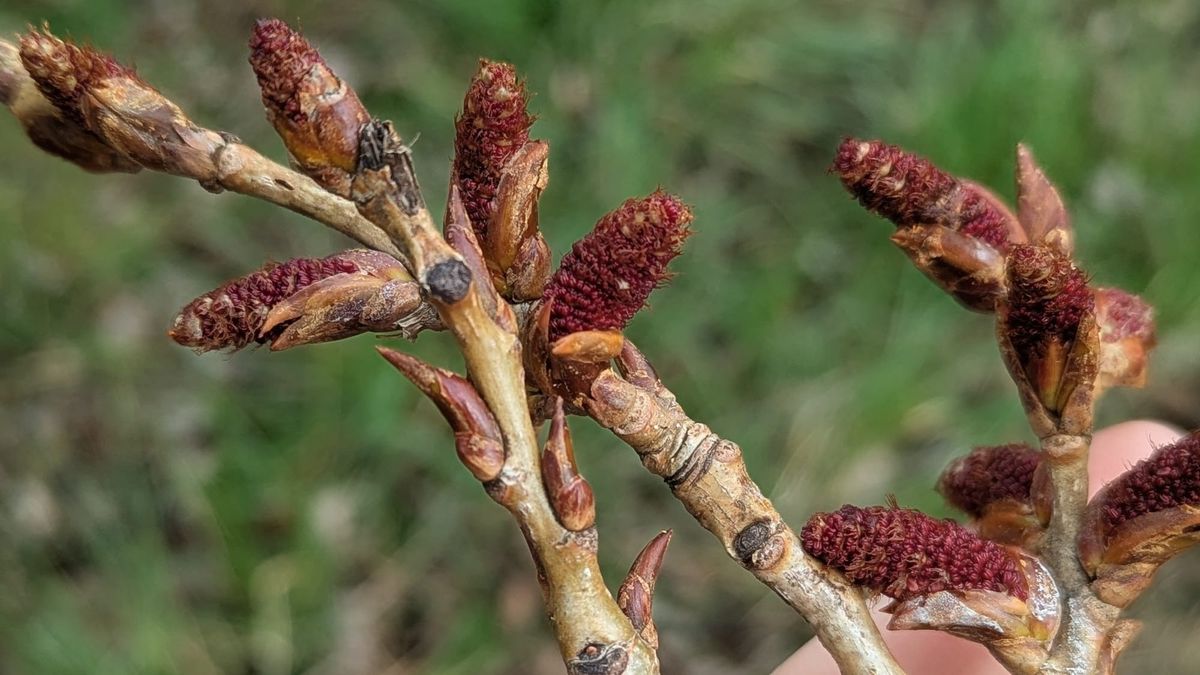
Poplar’s medicine lives in its resin-rich buds.These buds contain compounds that help calm irritated tissues and support the body’s natural healing processes.The leaf buds are known for their aromatic, sticky, glowing resin that protect the growing leaves against tissue damage from insects and cold weather. These swollen, dripping buds are one of my personal markers of winter’s end. Over the years, I’ve grown increasingly fond of the moment in which the wind carries the poplar buds aromatics right to my nose.
Poplar can be found across the world through time and history, from medicine to tools and architecture. Some of the tallest species of Poplar were brought to the Americas as wind breaks for flat farm land after settlers removed native plants. The native Poplar species were used by almost all Indigenous Populations in North America. Ethnobotanist Nancy J. Turner has found more than fifty indigenous languages that spoke of this tree's medicine, fuel, canoe material, and food.
The genus Poplar is a member of the Salicaceae family, the same family that holds willow trees. Although it’s highly debated, Poplar is believed to appear in the Hebrew Bible as the Balm of Gilead. This was written as a high-quality ointment with healing properties known for being a rare medicinal perfume from the region of Gilead. This would have been before this region became a desert and was still a vast green landscape.
Poplar has become a consistent part of my life this time of year. I make infused oil from the resinous buds, turning it into salves. As someone with tattoos, I’ve found cottonwood salves wonderfully soothing during the healing process.
While I haven’t personally used cottonwood internally, herbalists have long spoken of its supportive qualities. World renowned herbalist Michael Moore wrote that tinctures made from the buds can help support during chest colds by encouraging the body to produce moisture and ease discomfort. These traditional uses reflect the same soothing, resinous qualities that make cottonwood such a beloved topical ally.
Today, Poplars are cherished because of their ability to play a targeted role in ecological restoration. Plant-based clean-ups can remediate human-made contamination sites as a relatively inexpensive, renewable, and ecological friendly way to remediate. Poplars deep tap root can intercept contaminated water drawing toxins before entering our drinking water.
In a world that feels like a slowly sinking ship, blaming the things we see normalizes discomfort and forces us to accept harm as inevitable. But the Poplars stand tall in the confusion, refusing to bend to the status quo, a virtue that often feels just out of reach. Poplar reminds us to rise above the noise. To stand tall when society feels off-kilter. To be the one who points toward water, toward compassion, clarity, and life when others have forgotten where to look.
Beyond chemistry and ecology, poplar offers something more—a reminder to stand tall during times of uncertainty, to listen to water, and guide others toward the well of compassion when the world feels unmoored.