City to Reopen Public Process After GMA Board's Comprehensive Plan Decision
The Growth Management Act Hearings Board issued a final decision, and here's what this means for growth and affordability.

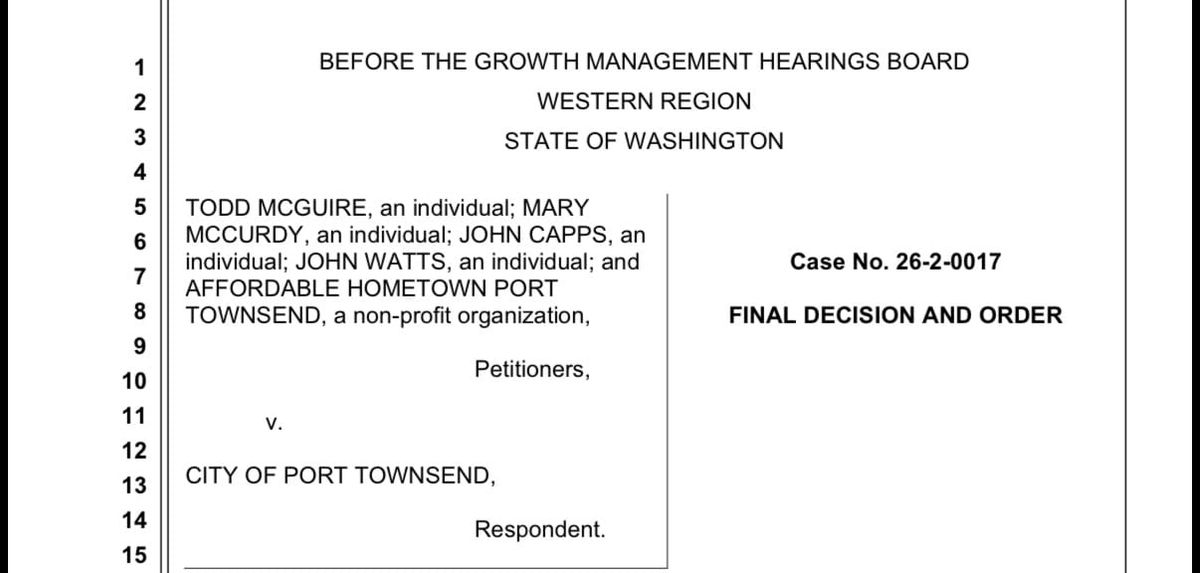
PORT TOWNSEND, WA – The Washington State Growth Management (GMA) Hearings Board issued a final decision on August 19, 2026, invalidating a key portion of Port Townsend's 2025 Comprehensive Plan (Comp Plan) update, siding with a citizens' group that challenged the City's zoning changes. This decision came just five days after Port Townsend won the 2026 Excellence in Planning Award from the American Planning Association. But while Affordable Hometown Port Townsend (AHPT) is celebrating the ruling, the underlying housing crisis remains unresolved—and the City has to try again.
The decision
The Board found the process was flawed—not that increased density itself violated the GMA.
The Board found the City's adoption of Ordinance 3361 (Comp Plan) "clearly erroneous" in four areas: public participation violations, housing element deficiencies, transportation planning gaps and capital facilities planning. The most consequential ruling: the Board issued a Determination of Invalidity for the R-II upzone, voiding the sixplex density allowance.
The Board found the problem was procedural. The Planning Commission had recommended 32 units per 40,000 square feet (roughly a city block)—a fourfold increase that went through full public hearings. But after those hearings closed, the City Council added language allowing six units per 5,000 square feet (48 units per block). The Board called the City's description of the change "at best confusing and at worst deceptive" and noted, "it is likely that most people . . . knew nothing about the late amendment until it was a fait accompli."
The Board also found the City improperly "collapsed" income categories, lumping extremely low, very low and low-income households together—a violation of requirements to identify housing needs for each economic segment individually. Transportation and capital facilities planning were also found inconsistent.
However, the Board acknowledged the City made "significant efforts" and "a valiant effort" to comply with complex new requirements. It explicitly noted the City retains discretion to adopt the same density with proper process and adequate analysis. The Board declined to invalidate the entire plan, stating: "Given the minimal growth rate and the size of the city, it is unnecessary and unproductive for the Board to invalidate the City's comprehensive plan."
The community mobilization
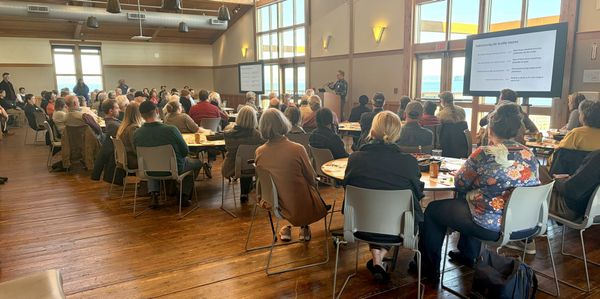
The decision comes after 10 months of community conflict over the plan. On Dec. 7, 2025—8 days before the City Council voted on the Comp Plan—a group calling themselves Accountable Port Townsend gathered at the Quimper Grange to organize opposition. Most of the attending residents owned homes in R-II zoning.
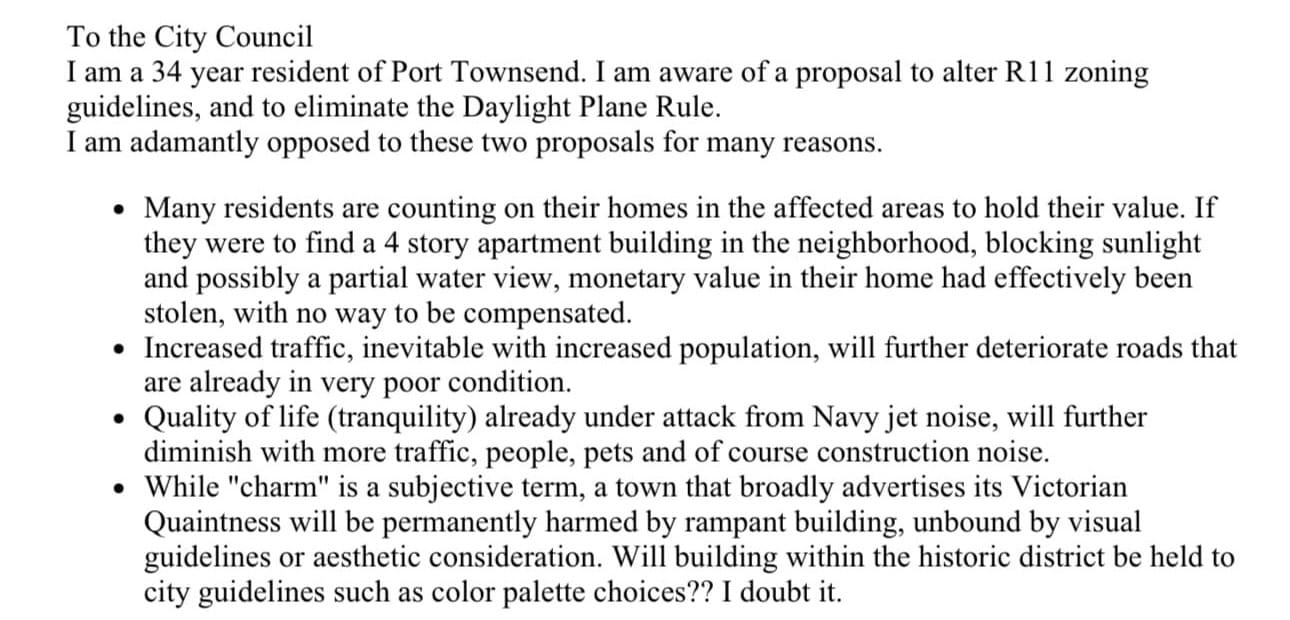
By the end of that December meeting, the group had settled on shared demands, such as postponing the removal of construction height protections, reintroducing "small town character" language into city documents and delaying the adoption of the plan. The group discovered that the City did not specify housing needs by income brackets in the 2025 Comp Plan, as required by recent GMA guidelines. Some of the same individuals—Mary McCurdy and Todd McGuire—later became petitioners named alongside with Affordable Hometown Port Townsend (AHPT), the group that formally appealed the plan.
Accountable Port Townsend and AHPT are separate entities, but their goals are similar: reopening the public process and invalidating the density increase in R-II zoning.
What the City was trying to achieve
To understand why the City pursued the upzone, it’s important to understand the economics of affordable housing in Port Townsend—and how the City identified that the previous zoning wasn't working.
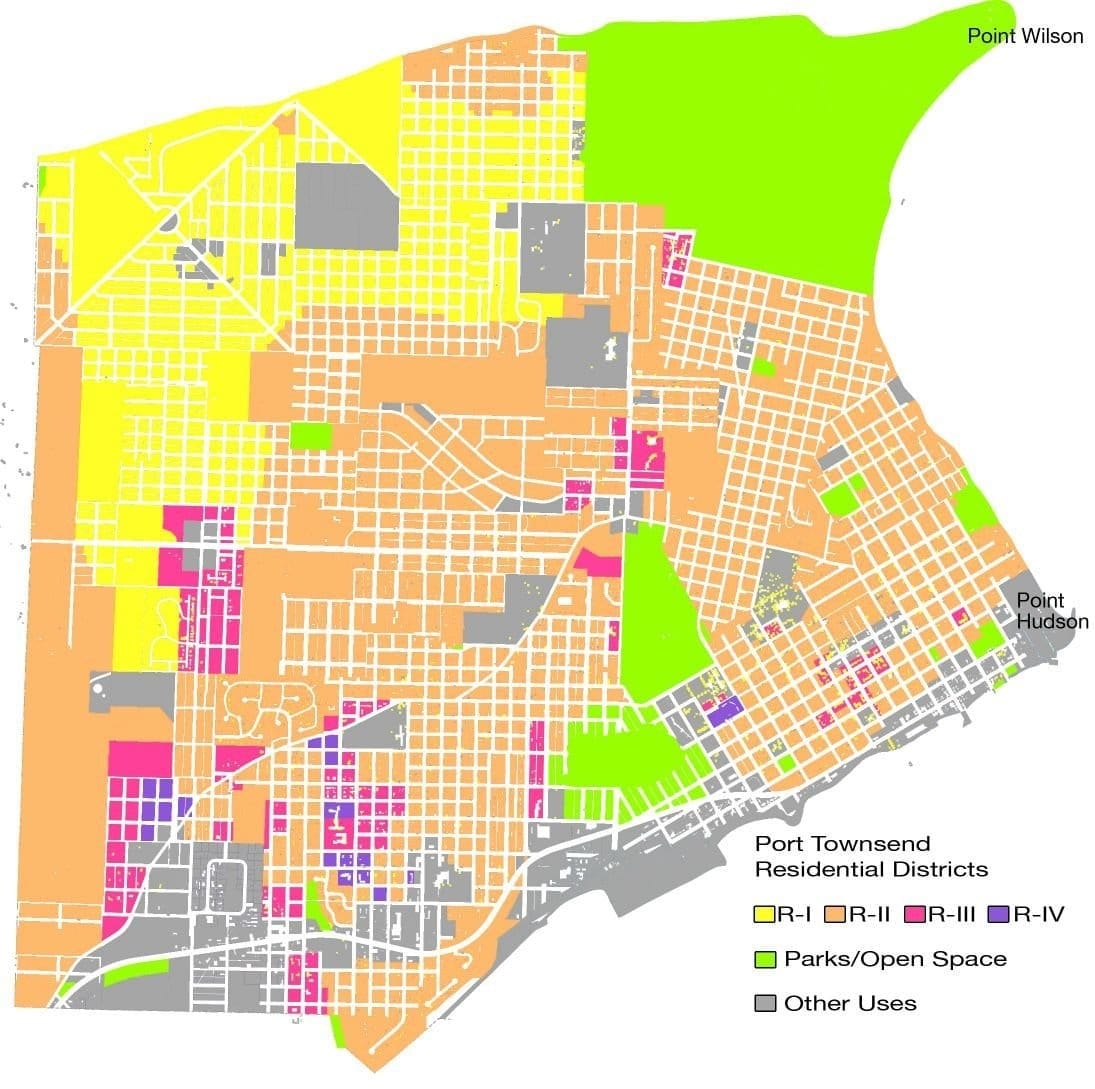
The majority of Port Townsend is zoned R-II, which is primarily single-family, medium-density residential housing that allows for accessory dwelling units (ADUs). Multifamily developments, like apartment complexes, were only allowed in residential R-III and R-IV zones. The upzone of R-II zoning in the 2025 Comp Plan allowed multifamily development throughout most of Port Townsend.
Prior to the adoption of the Comp Plan, property owners could theoretically convert existing homes into fourplexes and add two ADUs, for a total of six housing units. However, no one applied for an application for this scenario. The combination of land costs, construction costs and regulatory hurdles made it financially infeasible for homeowners to carry the burden of increasing housing stock.
AHPT’s press release
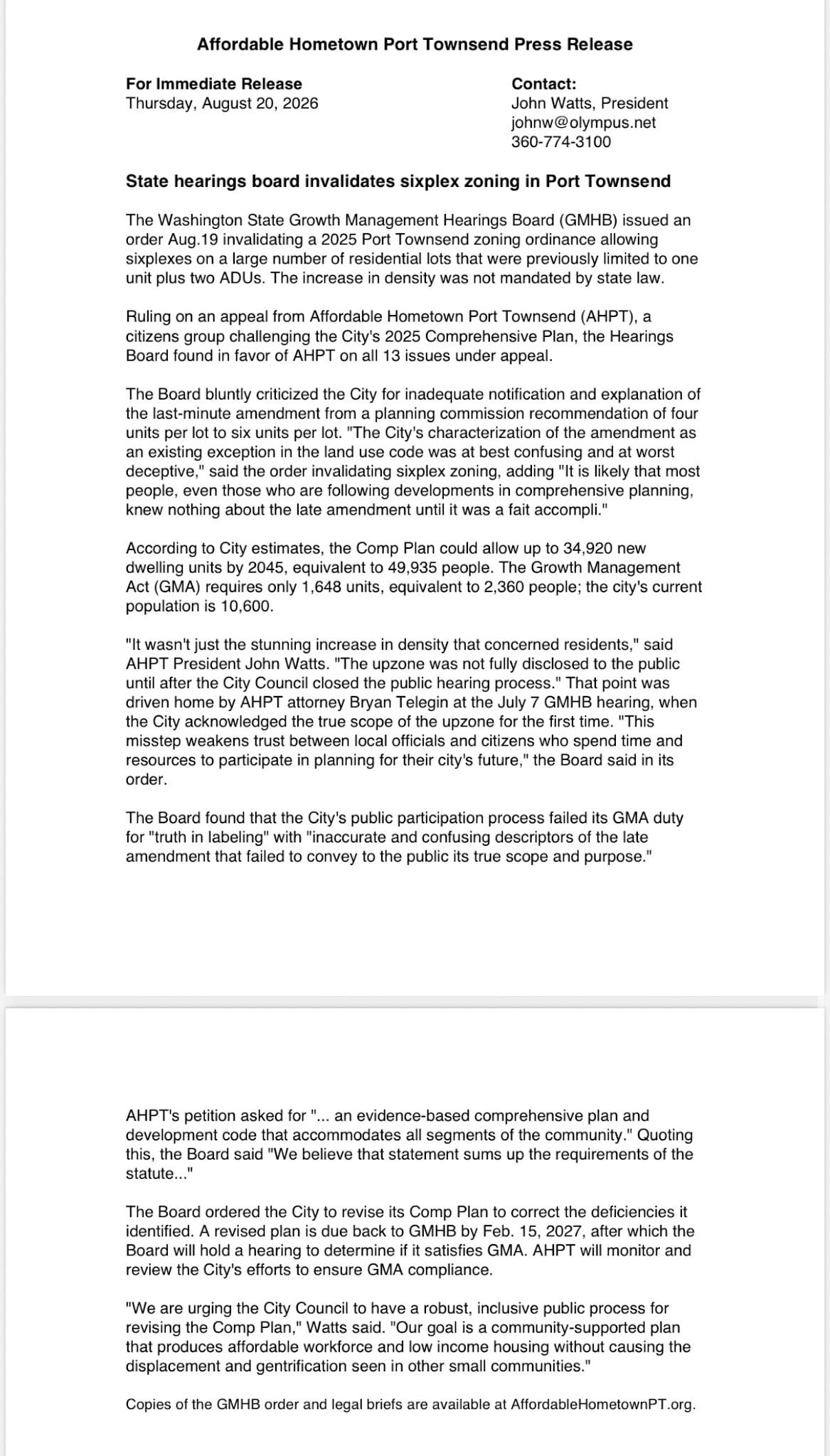
AHPT's press release on August 20, 2026, celebrating the decision claims the Board "found in favor of AHPT on all 13 issues under appeal." That's misleading—the board only explicitly invalidated the increased density in R-II zoning.
The press release also states the plan "could allow up to 34,920 new dwelling units by 2045." That number is a theoretical maximum—the buildout of every parcel under the new zoning, regardless of market conditions, infrastructure constraints or economic feasibility. Existing homes would need to be demolished to achieve this maximum density. The City's actual projected growth rate is 1.1% annually—consistent with its nearly static growth over the past 30 years.
City Council Special Meeting
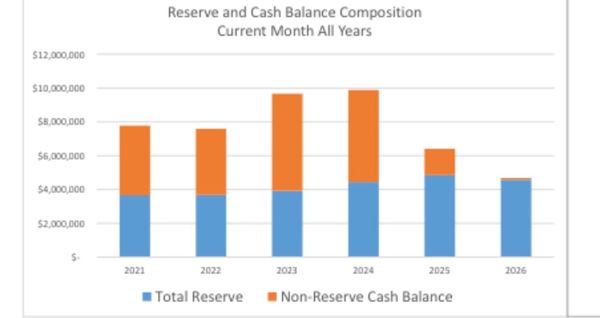
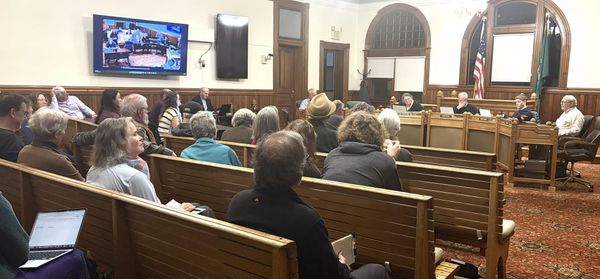
At the August 24 Special City Council meeting, the council confronted a stark choice: accept the Board's remand and redo the work through a new public process or pursue a judicial appeal. Staff warned that the Comp Plan elements needing remand alone would cost "well in excess of $500,000" and that non-compliance would immediately bar the city from applying for future state grants—a threat to major infrastructure funding.
Public comment: A call for reopened public process
The weekend before the council meeting, Accountable Port Townsend urged residents to attend and demand that the council accept the board’s decision. Public comments were electronically submitted to the agenda item, including calls for council and planning staff to be “tarred and feathered,” and various other insulting comments not suitable for publication.
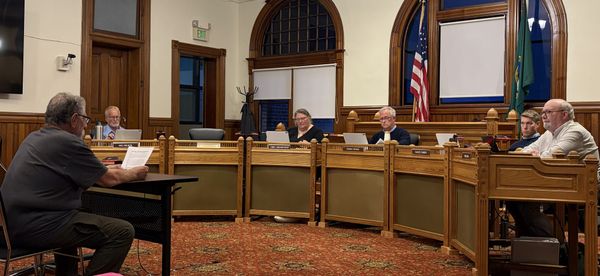
AHPT President Watts urged the council to accept the ruling during public comment. Fellow appellant John Capps warned that fighting the decision would only compound costs. Others, like Planning Commission Board member Viki Sonntag, stressed the need to rebuild public trust through reopening public process. "How you respond to this and how you move forward is going to determine a lot about whether we start to rebuild the relationship between the public and council," she said.
Council debate
The council was split. Councilmember Fred Obee, who had criticized the original process during his campaign, argued the council erred by deviating from the Planning Commission's recommendation. "I could see that something was awry," he said. "I would rather start being constructive now . . . go back to the original Planning Commission recommendation."
Councilmember Neil Nelson countered that the bigger picture—protecting the city's grant eligibility and preventing permitting chaos—justified an appeal. "I'm afraid that the bigger picture for the community as a whole says we need to at least appeal certain parts of this so that we can work with this," he said.
Councilmember David Faber framed the appeal as a matter of statewide importance, arguing the Board's ruling was inconsistent with other decisions and would create confusion for cities across Washington. "This decision really throws open the door to chaos and havoc," he said.
The path forward
The council ultimately approved a middle path. They authorized the city manager and attorney to pursue a judicial appeal to protect grant funding and seek clarity. In addition, the council unanimously passed an emergency moratorium on accepting applications for five- or sixplexes in R-II zones.
City Attorney Austin Watkins explained that this measure would help strengthen the city's case for obtaining a stay from the courts or the Board. Finally, the council authorized a request to the Board for more time—beyond the six months typically allowed—to complete the remand work, citing its complexity.
The City is pursuing what Interim City Manager Steve King called a "two-track process":
Track One: The Planning Track—Staff will work through the remand issues identified by the Board—housing element, capital facilities, transportation—through the normal planning process, with planning commission review and public engagement.
Track Two: The Appeal Track—The City will request a stay from the Hearings Board while simultaneously pursuing judicial appeal to clarify the scope of the decision. King emphasized this is about "preserving our grants, preserving our revenues from the state," not fighting the Board's findings.
"The general public, when they see [the word] appeal, will automatically assume fight, and that's not what it is because everybody is tired," King said. "Fighting takes so much energy when we have real major systemic issues to deal with."
Planning Director Emma Bolin explained that the true scope of invalidity is unclear—it may extend beyond just five- and sixplexes to other density, bulk, and dimensional standards in Title 17. Until a stay is granted, staff will evaluate permits on a case-by-case basis, which "frustrates the permitting predictability" and creates uncertainty for developers and affordable housing providers.
King warned that without a stay, the City could lose eligibility for state grants. Public Works Board grants require GMA compliance at the time of application. "If we don't get a stay, then we would be out of compliance, and we would not even apply," he said.
AHPT responds
At the meeting, AHPT leaders reiterated their position to the Beacon. Capps voiced concern about the cost of litigation, saying, "It's the cost of fighting it plus doing what is required, instead of just doing what is required. It's going to cost more."
King estimated that the remand work alone could cost up to $500,000 for consultants and staff, with an additional $100,000 - $200,000 for appeal costs. “That seems like a lot of money, until you don’t get a grant,” He said. “Then it’s not very much money.”
Watts said AHPT is still studying the decision and that the Board's findings were substantive, not just procedural. “We hope the city opens up a public process, a full public process, to address all of the issues raised by the board, and we look forward to being part of that process.”
AHPT has pledged to "monitor and review the City's efforts"—a promise that suggests more legal challenges may follow. AHPT and Accountable Port Townsend have scheduled a meeting at the Port Townsend Grange on August 30 to celebrate the decision and plan next steps.
Correction: Mary McCurdy clarified that she is not an AHPT Board member, but only a petitioner of the appeal and a supporter of AHPT.