ILWU Pickets Gain Momentum as West Coast Ports Rally Against American Cruise Lines
The informational pickets are gaining ground, plus a former American Cruise Line employee shares experience.

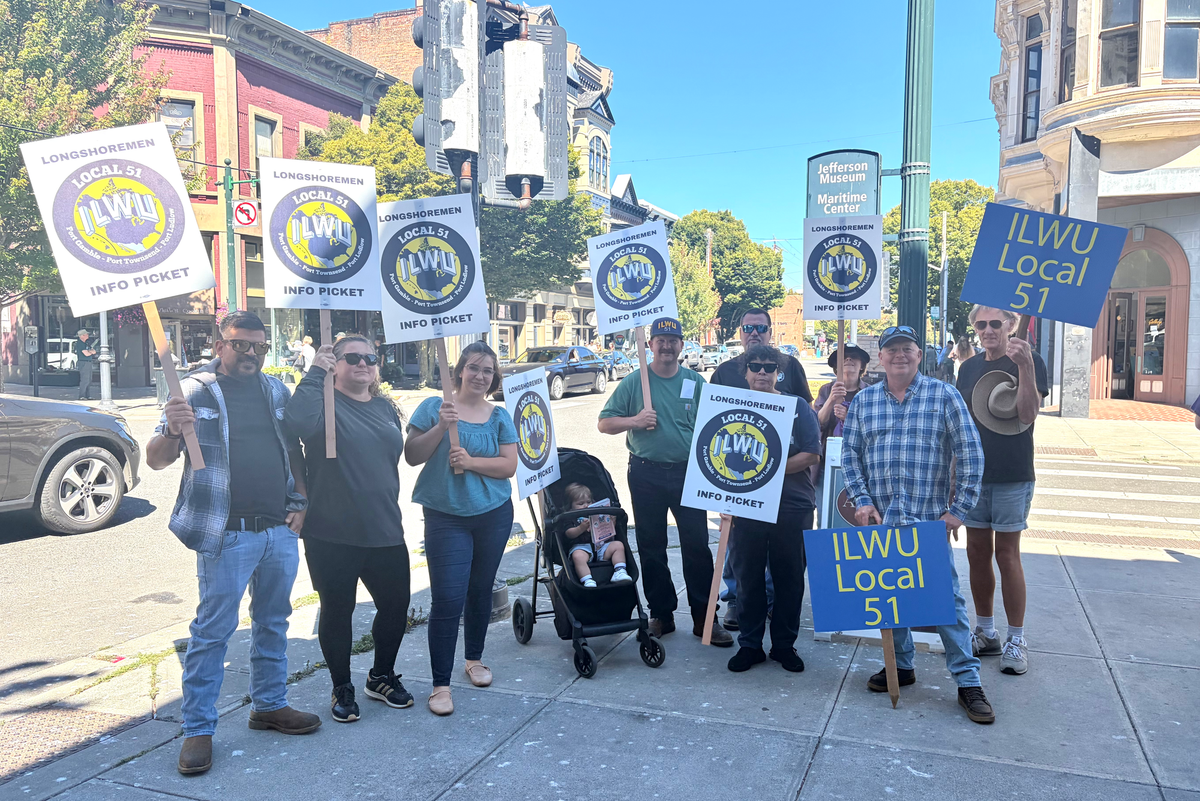
PORT TOWNSEND, WA — Members of the International Longshore and Warehouse Union (ILWU) held another informational picket in Port Townsend on August 20, 2026, as their campaign against American Cruise Lines (ACL) continues to attract attention and support from ports along the West Coast. The action marks the latest escalation in a coast-wide effort to pressure the cruise line to use union longshore labor.
Supporters join the picket line
The picket drew members of other unions and community supporters. Retired teacher Bob Deweese and retired nurse Kris Deweese came out to show solidarity, sharing how a union neighbor had shaped their views years ago.
“He said, 'I want you to know that whatever you've heard in Texas about unions, it's not true. And union jobs are the best jobs,'” Kris Deweese recalled. “That made a huge impression on us. Unions definitely have a big stigma to try to overcome. He was right, and eventually we joined unions and made all the difference to our lives.”
State Representative candidate Kaylee Kuehn also stood with the picketers. "I am here standing with our local union workers who should be working when ACL is here. I support union labor and our skilled workers, and I'm happy to be here supporting them, and hope to see some change in the future," she told the crowd.
ILWU members from San Diego, California, traveled to Washington in solidarity. "We're all ILWU, so when our brothers and sisters reach out for that support, we gotta come," said a member from ILWU Local 29. "We want to truly be there for brothers and sisters up here because if there's a situation like that down there, we may need to call on them for support."
Passing pedestrians picked up signs in solidarity with ILWU members, as passing vehicles shouted support as they drove by.
Port of Port Townsend’s agreement
The Port of Port Townsend maintains an established relationship with the Teamsters Local 589, as it has a collective bargaining agreement with them. Port Executive Director Eron Berg has stated that unless port employees change their union, the Port will continue to recognize the Teamsters. He has also noted that the Port's involvement with ACL is limited to providing one employee as a courtesy, not as part of a labor agreement.
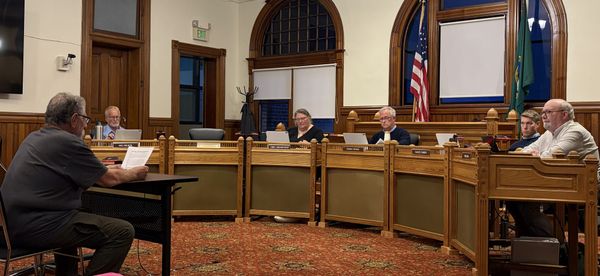
While the Port does not have an agreement with the ILWU and doesn't believe it performs longshoreman work, it has shown a willingness to regulate ACL. The Port Commission voted to increase ACL's docking fee to $2,000 and limit dockings to 40 per year. They also preemptively rejected a long-term docking deal with the cruise line.
ILWU members, however, dispute the Port's stance, arguing that longshore work is being performed on Port property.
ILWU members say the Port of Port Townsend's argument that its collective bargaining agreement with the Teamsters exempts it from ILWU jurisdiction ignores a fundamental reality of West Coast maritime operations: nearly every port from San Diego to Bellingham maintains its own employee contracts, while ILWU members still perform all longshore work. This is standard practice across the industry—port employees and longshore workers operate under separate agreements covering different scopes of work. The ILWU's coastwide jurisdiction over cargo handling, vessel docking and related maritime labor is well established.
Ports rally behind union
According to Nick Matson, Vice President of ILWU Local 51, support for the union's efforts against ACL is building across Puget Sound ports.
The Port of Anacortes supports the ILWU. Matson told the Beacon that ACL has threatened to legally respond if the Port of Anacortes tries to stand its ground, but the Port says if the ILWU must begin picketing on Port property, "ACL is out,” according to Matson. As of August 24, the Port of Anacortes is cancelling their contract with ACL.
A Seattle ILWU member explained that, until recently, ACL had been home-porting their ships in Tacoma with seven-day cruises. But after a street racing incident and an incident where shots were fired near the Tacoma dock, ACL moved their home port to Seattle. ACL's move to Seattle comes after ILWU members picketed at the Tacoma Dock over 20 times.
When the ACL shifted operations from Tacoma to the Port of Seattle at Shilshole Bay Marina within the last two weeks, the ILWU began picketing there. King County Councilmember Teresa Mosqueda posted on social media: "Standing in solidarity with ILWU local 19 . . . demanding American Cruise Lines honor and respect the Port of Seattle Responsible Contractor policy and allow skilled, trained, safe #UNION workers to dock and load ANY cruise ship coming to our PUBLIC ports." The City of Seattle supports the ILWU's calls for the Port of Seattle to back the union.
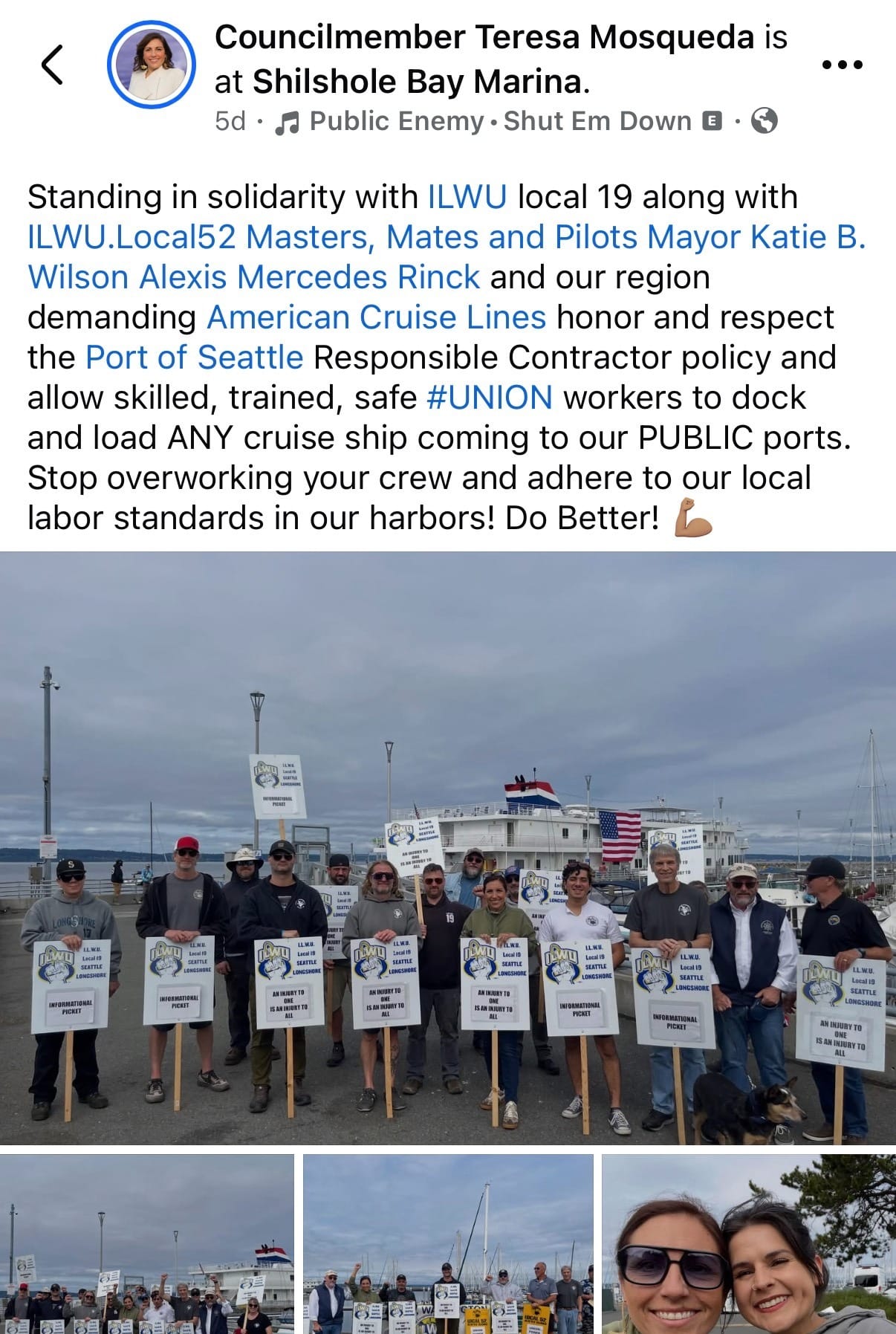
The ports of Olympia and Everett are supporting the union; "ILWU or no ACL," according to Matson. In Olympia, the ACL is attempting to circumvent the Port and contract directly with the City of Olympia. Matson said that the ILWU will be ready to picket if this happens.
Meanwhile in our closest port, the Port of Port Angeles, union Members say ACL is using a city-owned dock where the ILWU has jurisdiction. Members have contacted Port Angeles City staff with no response.
ILWU members from San Diego noted they had picketed in Port Angeles the previous day and planned to be in Seattle on August 22. "It's got to go both ways," a San Diego ILWU member said. The union is building a coast-wide solidarity network to pressure ACL wherever it docks.
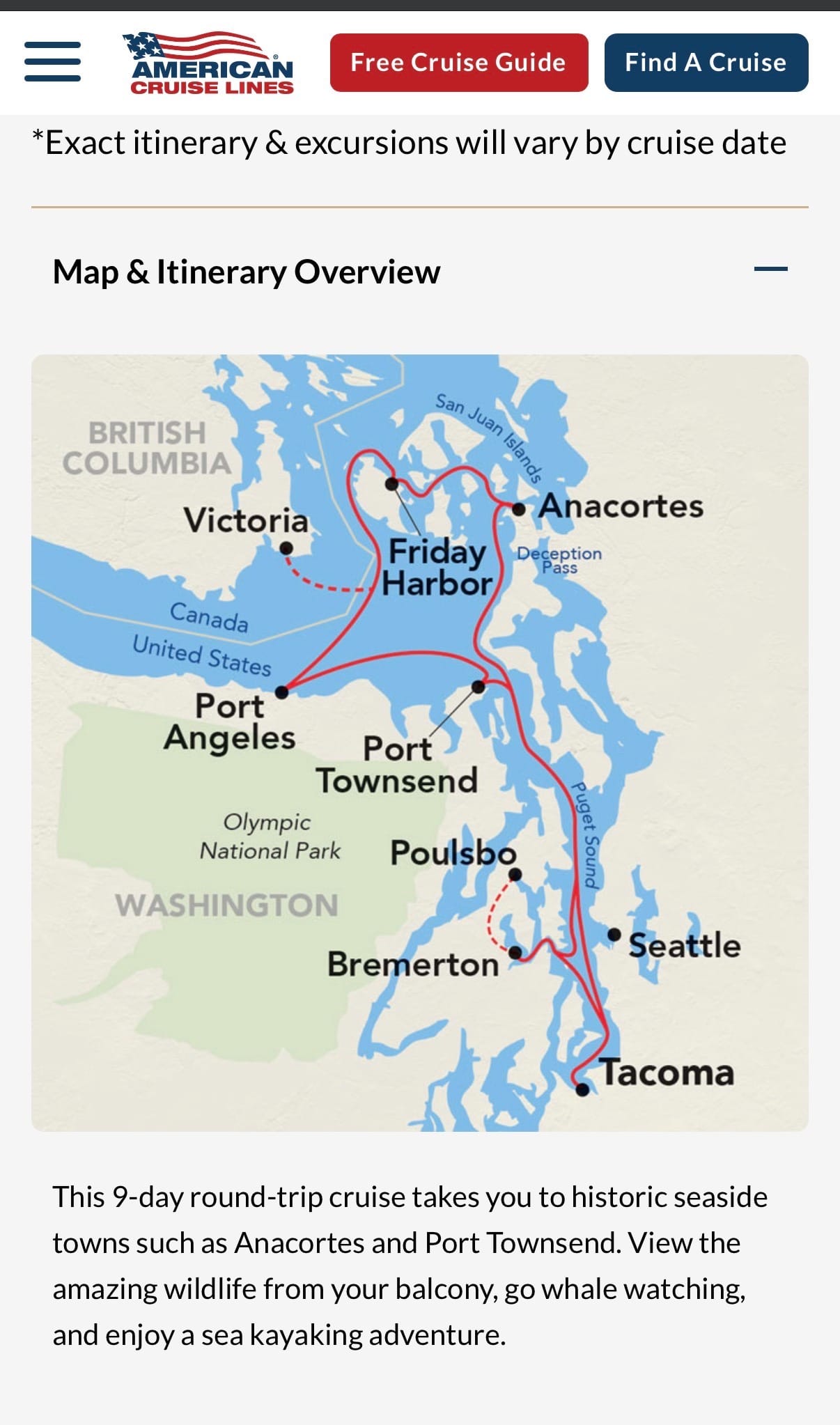
Every viable port in the Puget Sound—from Everett to Olympia, Anacortes to Seattle—has either already declared support for the ILWU or faces active picketing. To escape the union entirely, ACL would have to leave the Puget Sound altogether, a move that would effectively remove it from one of its most lucrative cruising regions. The message from Washington's ILWU is clear: ILWU or no ACL.
‘Ship life isn’t for everybody’: Former ACL employee speaks out
John Myhre, a former ACL employee who quit mid-shift in Tacoma this past March, says broken promises, exhausting hours and a dismissive corporate culture marked his experience. "Every job I've ever had, I gave two weeks to a month's notice. This job, I literally quit without notice," Myhre told the Beacon.
Myhre said new hires are flown to Salt Lake City for training, only to be told upon arrival to the ship that their training is irrelevant. Workdays run from 6 a.m. to 9:30 p.m.—with no days off and wages that average out to around $10 an hour after extra work hours, well below Washington State’s minimum wage. A promised two-to-three hour break is often reduced to 45 minutes, with managers using break time as leverage. When Myhre raised concerns, he received the company’s standard response: “Ship life isn’t for everybody.”
Myhre said workers sign contracts barring them from speaking to the press—clauses they lose after leaving ACL. ACL also withholds a $3,000 contract completion hiring incentive bonus from anyone who leaves early, including if an individual gets an internal promotion. “They’re trying not to give it [bonuses],” Myhre said. “I’ve heard of people being let go a month before their contract ends.”
Myhre detailed instances that restaurant staff were tasked with loading supplies for the ship’s restaurant while the cruise was docked, which is a longshoremen duty. “On shipment days, we’d bring in all the food and new materials for the ship,” he said. “It has nothing to do with restaurant duties, and to me, that should be [done by] the deckhands and managers.”
Correction: an earlier version of this article had King County Councilmember Teresa Mosqueda labeled as from Seattle City Council